
Subscribe!
NVIDIA pitches a reimagined PC — not just something you use, but something you ask
by Nancy Thomas, RINewsToday News Team
Overnight for Rhode Island, but mid-afternoon in Taipei, NVIDIA, in partnership with Microsoft, unveiled what it is pitching as the next chapter of the personal computer. A Steve Jobs-like presentation… chips, computers and the way we work.

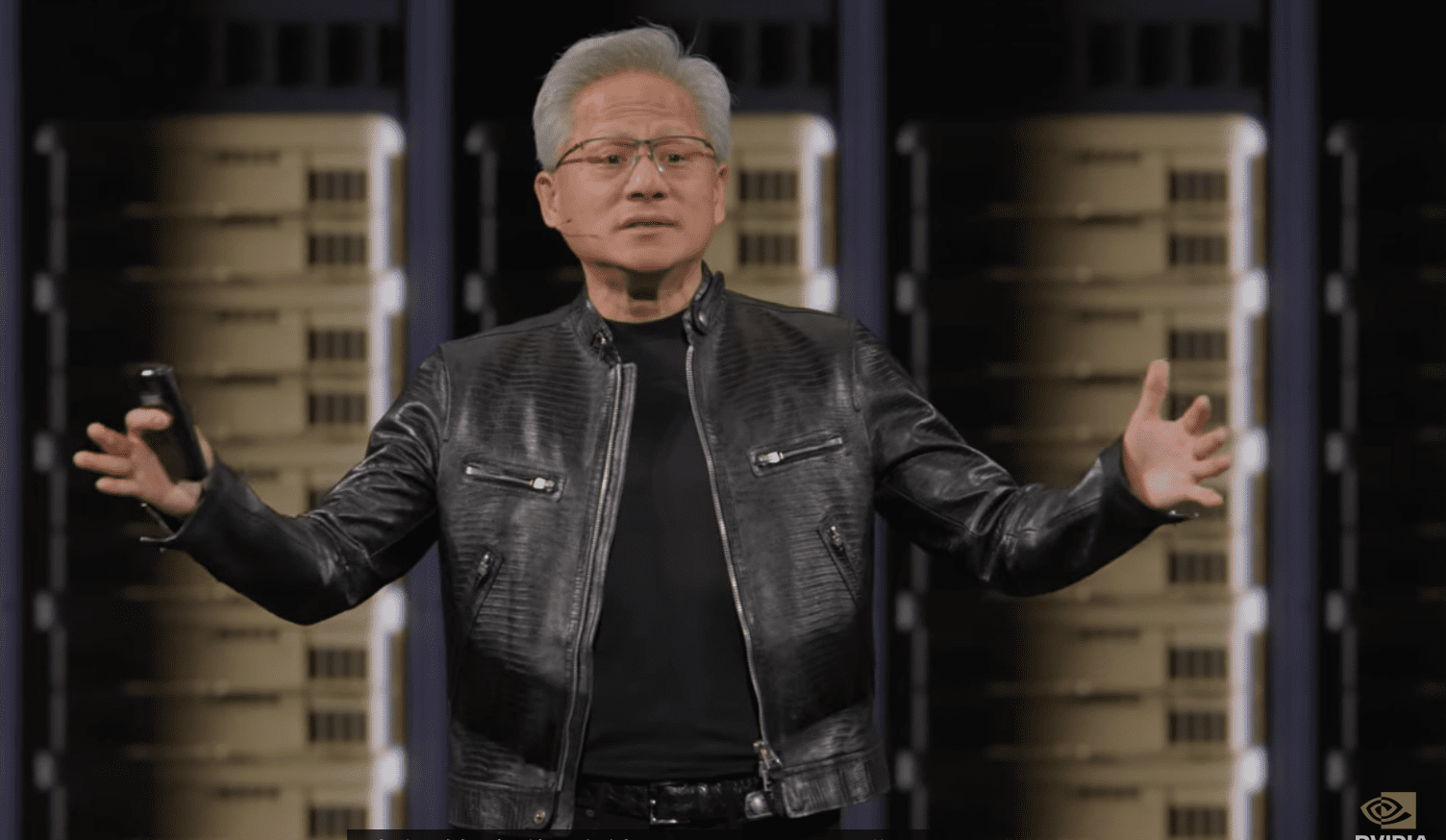
Jensen Huang, Founder, President, and CEO, NVIDIA
At NVIDIA’s GTC Taipei keynote, held alongside the COMPUTEX technology show in Taiwan, NVIDIA founder and CEO Jensen Huang introduced a new class of Windows computers built for the age of personal artificial intelligence — machines designed less like tools and more like assistants.
The announcement centers on NVIDIA RTX Spark, a new chip platform designed to power slim Windows laptops and compact desktop computers that can run powerful artificial intelligence tools directly on the device — not only through the cloud.
For everyday users, the details can get technical quickly. But the plain-English version is this: NVIDIA and Microsoft are trying to make artificial intelligence a built-in part of the personal computer itself.
That was the almost Steve Jobs-style message of Huang’s keynote: the PC is being reimagined.
NVIDIA described the new computers as moving “from tool to teammate,” a phrase that captures the company’s larger message. The computer of the near future may not simply wait for users to open programs, click menus and type commands. It may be able to help complete tasks more actively.
“For forty years, you launched apps. Click. Type. With RTX Spark and Microsoft Windows, you ask — and the PC does the work,” Huang said in NVIDIA’s announcement.
Or, said another way: the computer may no longer be just something you use.
It may become something you ask.
What is RTX Spark?
RTX Spark is an NVIDIA brand and chip platform, not a new computer company.
Consumers should not think of the future as simply “PC, Apple or RTX.” A better way to understand it is this:
Apple/Mac computers use Apple’s own M-series chips.
Windows PCs are computers made by companies such as Dell, HP, Lenovo, ASUS, Microsoft Surface, MSI and Acer.
RTX Spark is NVIDIA’s new chip platform that will power some of those Windows PCs.
In other words, consumers may soon see a new category of NVIDIA-powered Windows PCs — laptops and small desktops from familiar brands — built around NVIDIA’s RTX Spark technology.
Think of it like “Intel Inside” or “Apple Silicon,” except this time it is NVIDIA inside a Windows PC.
Are these new computers or upgrades?
These are expected to be new computers, not upgrade kits for existing laptops.
NVIDIA is providing the new RTX Spark chip — essentially the high-powered AI and graphics engine — while companies such as Dell, HP, Lenovo, ASUS, Microsoft Surface and MSI will build new laptops and compact desktops around it.
Consumers would buy a new RTX Spark-powered computer, much as they would buy a new MacBook with an Apple M-series chip. For most users, this is not something that would be added to a computer they already own.
Think of it less like replacing a tire on your car and more like buying a new kind of car with a different engine.
Who will make them?
Major computer makers are expected to be involved. NVIDIA says RTX Spark laptops and compact desktops are planned for release this fall from ASUS, Dell, HP, Lenovo, Microsoft Surface and MSI, with Acer and GIGABYTE to follow.
Microsoft is also part of the announcement, which is important for consumers. This is not just a chip story. It is a Windows PC story.
For ordinary users, Microsoft’s involvement means these new AI-powered computers are being designed for the mainstream Windows world — the laptops and desktops many people use at work, at school and at home.
What about phones?
One thing NVIDIA did not emphasize in this announcement: phones.
This rollout is aimed at the personal computer market — Windows laptops and small desktops — rather than smartphones. Phones already have their own AI-chip race underway through companies such as Apple, Qualcomm, Google and Samsung.
NVIDIA’s Taipei message is different. It is trying to make the PC feel new again.
This is not “AI is coming to your phone.” That has already been happening. This is: AI may be coming back to the laptop and desktop in a way that makes the personal computer exciting again.
What about Mac users?
For Mac users, this announcement does not mean a new NVIDIA-powered Mac is coming.
Apple now uses its own Apple Silicon chips — the M-series processors — and has been building AI features around that hardware. NVIDIA’s Taipei announcement is aimed at the Windows PC market, where Microsoft, Dell, HP, Lenovo, ASUS and others are trying to answer Apple’s tightly integrated Mac approach with a new generation of AI-ready Windows machines.
In other words: Mac users will not be buying an RTX Spark MacBook.
But they may see the effects of this competition. If NVIDIA and Microsoft make Windows AI laptops more powerful and easier to use, Apple will be under more pressure to keep improving AI features on Macs.
For loyal Mac users, this is the kind of announcement that may at least make them look across the aisle.
What will they cost?
NVIDIA and Microsoft have not announced prices yet, which may be one of the biggest questions for consumers — especially for Mac users who might be tempted to switch.
Early indications are that the first RTX Spark Windows PCs will be aimed at the premium market, not the budget laptop aisle. That likely means prices closer to high-end creator laptops and MacBook Pro-style machines than ordinary school or home laptops.
NVIDIA says lower-priced versions are expected later, but the first wave appears designed for people who need serious computing power: creators, developers, gamers and users who want to run advanced AI tools directly on their own machines.
For now, the simplest buying advice is: interesting, but wait for pricing, reviews and real-world battery tests before switching.
What about Chromebooks in schools?
The implications for schools could be enormous.
For more than a decade, many districts have built their classroom technology around inexpensive Chromebooks — simple, browser-based devices that work well for Google Docs, online testing and web research.
But if the next generation of computing is built around asking the computer to help, not just using it to type and search, schools may face a new technology divide.
Right now, a Chromebook is mostly a low-cost device built around the browser: web access, Google Docs, classroom portals and online assignments. An AI-powered PC model could be something very different: a device with a built-in learning assistant, writing coach, research helper, creative tool and tutor.
That raises big questions for schools.
Will basic Chromebooks remain “good enough,” or will they start to feel underpowered as AI tools become more central to learning?
Will students search less and ask more?
Will teachers have to rethink assignments if every device can help write, revise, summarize, design and explain?
Will wealthier districts move first to AI-capable laptops, while lower-income districts stay with older or cheaper devices?
And what happens to student privacy if more AI tools are built directly into the device?
One possible benefit of local AI is that some work could happen on the computer itself instead of being sent to the cloud. But that will depend on how Microsoft, NVIDIA, Google and school technology departments design and manage these systems.
For education, the next digital divide may not simply be who has a device.
It may be who has a device smart enough to answer back.
Why this matters
The bigger consumer story is that NVIDIA is no longer just the company behind powerful graphics cards and AI data-center chips. It is moving more directly into the heart of the personal computer market.
That puts NVIDIA into a space long associated with Intel, AMD, Apple and Qualcomm.
The new RTX Spark PCs are being designed for AI, creative work and gaming. NVIDIA says the chip brings together its graphics, AI and software technologies for thin laptops with all-day battery life and compact desktop PCs.
The first wave appears aimed at higher-end users — creators, developers, gamers and people who need serious computing power — but the announcement signals a broader shift.
The original PC put computing on the desk.
The laptop made it portable.
The smartphone put it in the pocket.
The Chromebook helped put low-cost devices into classrooms.
Now, NVIDIA and Microsoft are betting that AI will make the computer more conversational, more predictive and more personal.
The computer may no longer be just something you use.
It may become something you ask.
Watch the keynote
NVIDIA’s full GTC Taipei keynote with CEO Jensen Huang is available on YouTube:
https://www.youtube.com/live/wSp6AiNIrsY?si=TQSigij0_Lq32HWy
The keynote is technical in places, but the consumer takeaway is simple: NVIDIA and Microsoft are trying to make the Windows PC feel new again — and to make artificial intelligence part of the computer itself.