
Subscribe!
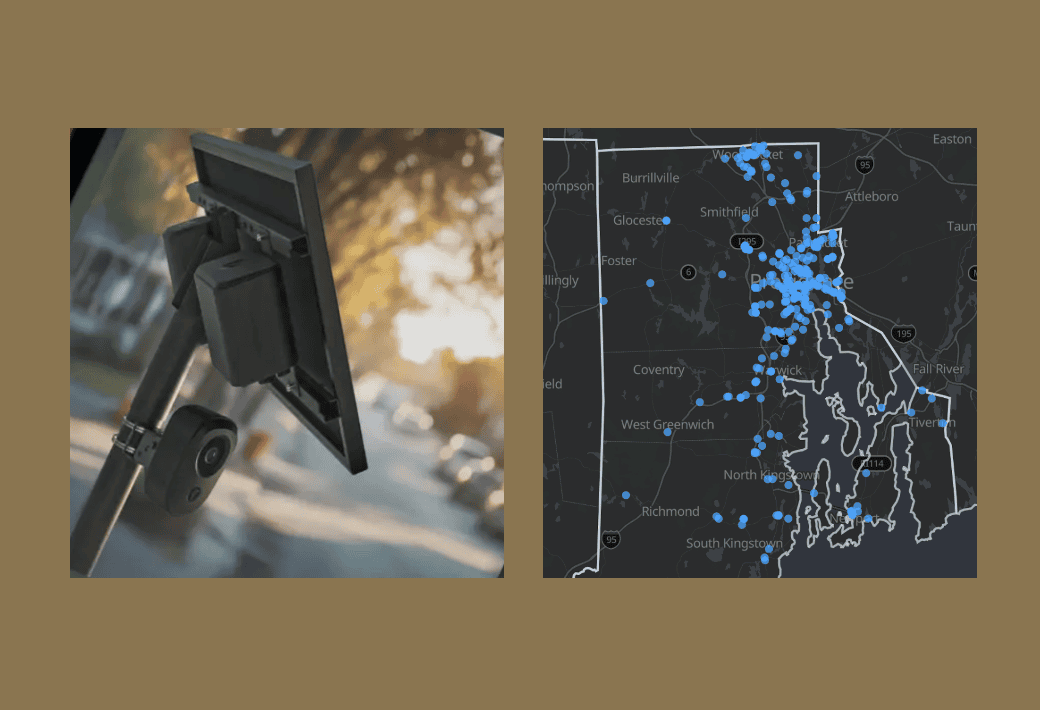
UPDATE: Flock Issues Changes: Cameras a Sign of the Times Throughout the Land
by RINewsToday Team
Today I want to share several updates on how Flock is further addressing three areas that are critical to the company: strengthening privacy, accountability, and security.
FLOCK ISSUES CHANGES

Flock has announced several new measures to strengthen privacy, local control, and proactively address officer abuse of the system.
These changes come following a year of listening to customers, communities, and civil liberties groups and build on Flock’s impact of supporting approx. 1M investigations last year & helping locate roughly 10K missing people, more than one person found every hour.
Sharing more details and a note that went out to customers today from Flock’s CEO Garrett Langley below and in a blog here. Also, sharing a video of Garrett discussing the new changes here that you can use for coverage.
Privacy
When we started Flock 9 years ago, we set the default ALPR retention period to 30 days, unless state or local policy decided on a shorter or longer period. We believed this struck a careful balance between safety and privacy.
Now, we are updating our recommendation and default to a 7 day retention, and introducing “Evidence Mode.” Our analysis shows that over 90% of searches without a full plate are done within a week. Evidence Mode, which will roll out in the coming weeks, addresses the exceptional cases that take longer: detectives can preserve specific ALPR data as evidence for an active investigation in cold storage, consistent with existing laws and policies.
Existing customers will keep their current, democratically approved retention periods. Customers who adopt the 7-day recommendation will receive Evidence Mode at no cost. Every community will continue to choose the retention period that fits its public safety strategy.
We are also introducing Offense filtering for sharing. Now, cities can choose which type of offenses are permissible for other agencies to access their cameras. For example, City A could allow City B to search its cameras only for a stolen vehicle, missing person, or violent crime while blocking searches related to immigration enforcement. This gives communities more control over data sharing while preserving collaboration where policies align.
Accountability
Abuse of Flock technology, at any level, is unacceptable. We have strengthened safeguards over the past nine years, from basic audit logs to proactive monitoring. 16 weeks ago, we introduced Audit Assistance, which detects abnormal activity and flags it for Administrator review. In recent weeks, those reviews have been associated with arrests of several law enforcement officers who allegedly abused the system. More than one-third of our customers have voluntarily adopted Audit Assistance.
We will now require all law enforcement customers to adopt this feature by the end of this year. In addition, we will institute proactive lockout. When a user’s activity meets defined criteria for abnormal behavior, Flock will automatically suspend access pending administrator review. The goal is to intervene before misuse becomes recurring or widespread.
In July 2025, we introduced an optional case code requirement for searches. Results from participating agencies have been promising, so we will now require case codes for all law enforcement searches by the end of year. Agencies may bypass the requirement in emergencies, but every exigent search will be flagged for administrator review.
Data Ownership
From the beginning, we have been clear that our customers own the data captured by their ALPR cameras. This has always been the case, but some of our contractual language has confused the public on this crucial point. To make that commitment easier to understand, next week we will publish an easy to read / plain English explanation of our contract on our website, organized section by section. The principle is simple: customers own the data, decide who can access it, and choose who they share with.
Data Security
Flock is committed to the strongest security program in the industry. This year we retained Bishop Fox, a leading independent security firm, to conduct a thorough review of our products and capabilities. We will publish its summary of findings and our remediations in September.
We’re also launching a Coordinated Vulnerability Disclosure program (CVD). Flock’s CVD gives security researchers a safe, credited path to report and disclose their work while receiving recognition. Researchers can disclose issues at [email protected].
At the beginning of this month, we also made multi-factor authentication (MFA) mandatory for anyone logging into Flock, increasing our security standards for all customers.
Security is an ongoing responsibility. We will continue testing, improving, and updating our controls.
Data Accuracy
A recent story described a wrongful traffic stop involving an auto journalist. The central point is simple: an alert is a lead, not a conclusion, which should be confirmed by an officer.
Let me explain a little about how this technology works. Basic optical character recognition can see the numbers and characters on a license plate and report whatever it sees. Flock goes further, using machine learning models trained on plate designs from all 50 states, including stacked and undersized characters, and are retrained weekly as plate designs change. Every read carries a confidence score, and low-confidence reads are flagged as such, never presented as certainties and never sent as alerts to officers.
Recognition is only the first step. Before an alert goes out, the Flock system matches both the plate and the issuing state against the hotlist record. The system then filters out low-confidence reads before sending alerts to officers.
The final safeguard is human. Before acting, an officer visually confirms the plate and confirms the stop complies with law and agency policy. No stop should ever rest on an unverified alert standing alone.
This combined system of safeguards results in fewer than 9 human reported errors for every 1 million alerts.
Transparency
More than 1,500 agencies have published a Flock Transparency Portal. If your agency has not published one, please, turn it on. The portal gives your community a direct view of your policy, retention period, sharing partners, and search activity, in your agency’s own words.
Why Now?
Nine years ago, we set out to build a company that would make communities safer. Today, Flock technology assists your officers in more than one million crimes solved annually. In July alone, with your help, we detected over 1,000 missing people and over 20,000 stolen cars.
These changes reflect years of work and deliberation. They are not the end of that work, but simply the continuation of our commitment to both safety and privacy. We are not perfect, so we will keep listening, improving, and building a better standard for public safety technology together. You’ll receive additional updates from us in the weeks and months ahead as these changes roll out.
___
The Atlantic also did a story this week:
– https://www.theatlantic.com/ideas/2026/08/flock-safety-cameras-ai-surevillance/688219/ – where they make the case that the issue is how to regulate its many features and not about destruction of Flock – and why they feel the technology is worth using
UPDATE 8-12-26:
Since we published this article, more Rhode Island cities and towns have voted to terminate existing Flock programs, to pause or to cap expansion, and South Kingstown is now challenging a separate State Police camera.
| Community | Current status |
|---|---|
| South Kingstown | Voted 5-0 on July 27 to terminate its municipal contract. The town cameras were deactivated pending removal. On August 11, the council also voted to ask State Police to remove a separate camera at Routes 2 and 138, installed after the police chief approved it without informing the council. State Police have not yet responded publicly. South County Star |
| Narragansett | Voted unanimously August 3 to cancel immediately. Its three remaining cameras were ordered out of service; a fourth had previously been stolen. The town may forfeit approximately $12,600 already paid. Uprise RI |
| Glocester | Voted 4-1 on August 6 to terminate the program and remove the cameras. Physical removal has not yet been confirmed, and the town may remain responsible for $10,000–$15,000 under its contract. NBC 10 |
| Lincoln | Paused implementation August 10 while officials conduct additional research. This is a freeze, not yet a cancellation. The Cumberland false-arrest allegations helped prompt the review. The Local Insider |
| North Smithfield | No formal vote, but town leaders agreed that no additional cameras should be installed without the matter returning to them. Two State Police cameras on Route 146 remain. The Local Insider |
| Warren | Rejected the State Police request to install cameras. |
| Portsmouth | Rejected the State Police request and has repeatedly declined municipal or state deployment proposals. NBC 10 |
| Little Compton | Unanimously tabled its proposed installation in June, effectively stopping it for now. NBC 10 |
| Bristol | Allowed one State Police camera but adopted unusually detailed restrictions: any expansion requires council approval; no facial recognition, photographing occupants, immigration enforcement, traffic or parking enforcement; 30-day retention; documented searches; restricted sharing; and quarterly audits. Bristol ordinance |
| Providence | Has not reduced or removed cameras, but its ordinance restricts sharing with federal immigration authorities without a judicial warrant and limits collection of demographic information through Flock and other city surveillance systems. Providence City Council |
Tiverton belongs in a separate category: it has not pulled back. It retained two existing cameras and approved four more, but required solicitor review and a termination clause.
Warwick voted 8-0 to keep 11 Flock cameras in operation
Pawtucket – Pawtucket Police Chief Tina Goncalves: “Flock cameras have proven to be a highly useful tool, helping the Pawtucket Police Department identify suspects and make arrests. In addition to its ability to aid in criminal investigations, it has also proven useful to help locate missing people, including at-risk adults.” (Valley Breeze)
The next communities to watch are especially timely:
- Foster is scheduled to discuss and potentially act on its cameras tonight, August 13, at 6 p.m.
- North Kingstown is scheduled to discuss and potentially act on Flock at its August 17 council meeting.
- Cumberland has not suspended its system, but the ACLU is asking the council to cancel after a federal lawsuit alleged that a Flock image contributed to a woman’s wrongful identification and arrest.
___
Cranston says its 29 readers have helped locate 17 missing people and make more than 200 arrests. They find missing people, catch violent criminals, recover stolen cars—but Rhode Island is deciding whether the public-safety benefits outweigh the surveillance concerns.
Someone recently tried — and failed — to disable one of Cranston’s Flock Safety cameras.
The incident brought a national fight over automated license-plate readers home to Rhode Island. A few weeks ago, in Houston, four Flock camera poles were precisely sawed through and the equipment was placed on the ground. Cameras have also been damaged or cut down in New York, Connecticut, South Carolina and Georgia.
Whatever one thinks about the technology, vandalism is not a public-policy process. Rhode Island cities and towns are now having that policy argument in council chambers — and reaching very different conclusions.
The strongest local argument for keeping the cameras may be found in Cranston itself.
The city operates 29 Flock cameras at an annual cost of approximately $81,000, according to figures supplied by Police Chief Michael Winquist earlier this year. Since the program began, Cranston police say the cameras have helped officers locate 17 missing people, make 89 warrant arrests, 104 stolen-vehicle arrests and 28 stolen-property arrests. Police have also used them in homicide, drive-by shooting, carjacking and other major investigations.
Those are measurable results, not a general claim that the technology is merely “helpful.” They also build substantially on the results RINewsToday reported in January 2024, when Cranston extended its contract for five years.
What the cameras do
Flock cameras are automated license-plate readers, commonly called ALPRs. They photograph vehicles traveling past fixed locations and record such details as the plate, time, location, vehicle color, make and body style. Police can compare that information with a “hot list” of vehicles connected to a stolen-car report, missing or endangered person, wanted suspect or other investigation.
The cameras do not, by themselves, identify the driver or prove that the owner of a vehicle committed a crime. They produce a lead that officers must investigate. That distinction matters both when the system works and when it points police toward the wrong vehicle.
The speed can be extraordinary.
In Southington, Connecticut, police said a person left a suicide note and drove away. Officers entered the plate into Flock and received a camera hit about one minute later. They found the person at a storage facility before the threatened suicide and brought the individual to a hospital.
In Ohio this past weekend, authorities said a sheriff’s deputy used Flock data to identify a travel pattern involving a missing girl. An alert then helped officers find her in less than 30 minutes, along with an 18-year-old man who was allegedly carrying a loaded handgun.
In the Denver area last December, police credited a Flock alert with locating a stolen vehicle carrying a 14-month-old child before an AMBER Alert could be issued. The child was recovered in less than 10 minutes. Aurora’s police chief later told the PBS NewsHour that the technology saved the baby’s life.
Atlanta police also said license-plate readers helped them locate a stolen car with a 2-year-old girl in the back seat in under 15 minutes. The child was rescued and a suspect arrested. Police, however, identified the tool only as “license plate readers” and did not name the company that produced the hit. It is a dramatic example of ALPR technology.
Rhode Island’s patchwork of decisions
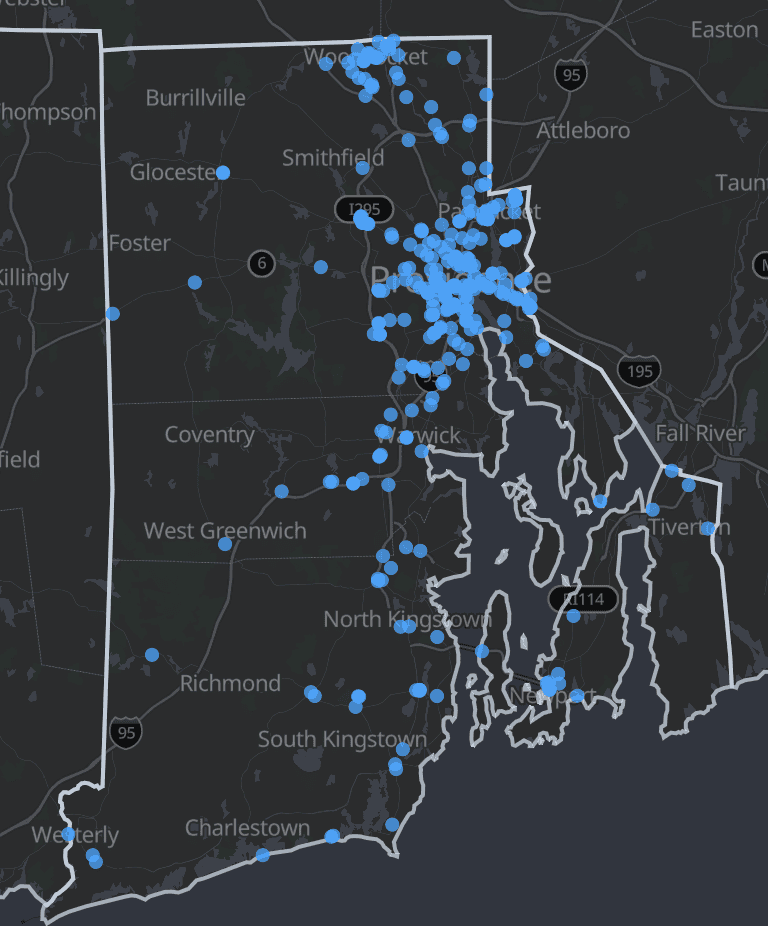
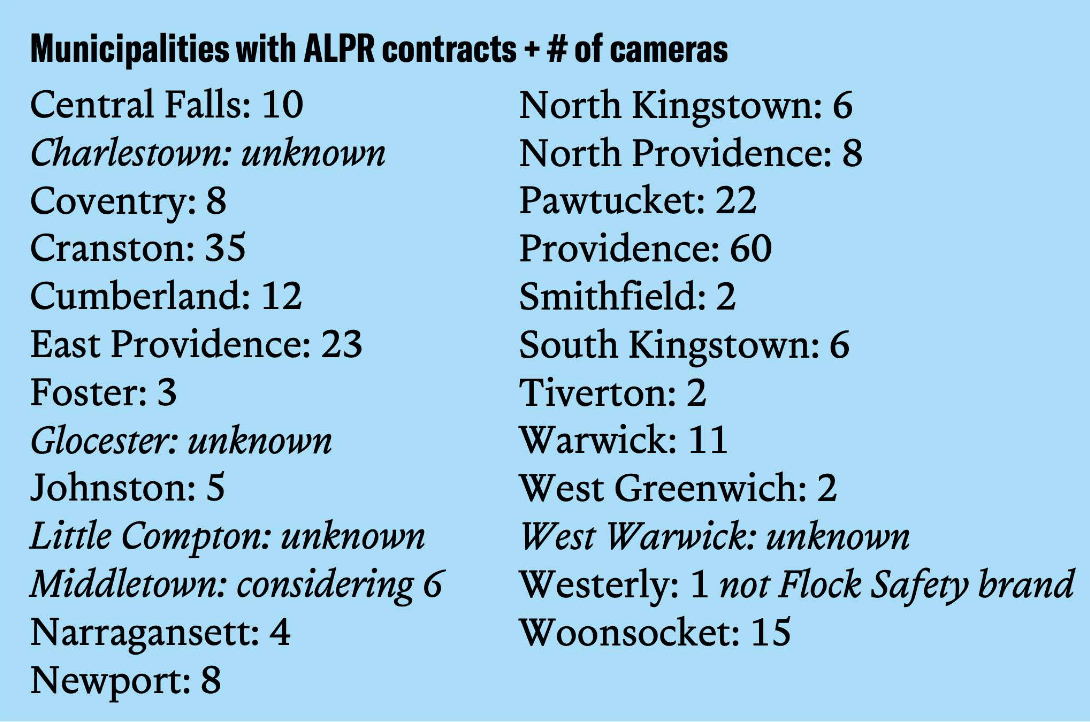
The ACLU of Rhode Island estimates that at least 295 Flock cameras are operating across the state and scanning more than 2.8 million vehicles a month, although it says the exact number is difficult to determine.
Rhode Island State Police has entered a three-year, approximately $597,000 contract for 39 cameras.
On July 27, the South Kingstown Town Council voted 5-0 to terminate its Flock contract and requested that seven cameras be removed. As of the following day, the cameras had not been physically taken down; they remained on their poles, but had been deactivated.
Warren and Portsmouth rejected requests to allow State Police Flock cameras in their communities.
Little Compton did not move forward with a proposed installation.
Tiverton, by contrast, approved four cameras, subject to legal review and the addition of a contract-termination clause.
Narragansett, which had four cameras in operation, voted unanimously at last night (Aug. 3) meeting to pay a penalty to break their contract with the camera company and end if now, regardless of the local police chief speaking to its benefits. One member sited the “low crime” flavor of the town. discuss and potentially act on its contract this week.
These communities have not all taken the same action. Some rejected proposed installations. South Kingstown voted to end an existing contract, but its deactivated cameras had not yet been removed. Other municipalities continue to use and expand the technology.
The map of the network
A searchable network spanning communities is already somewhat in place – certainly so in Rhode Island.
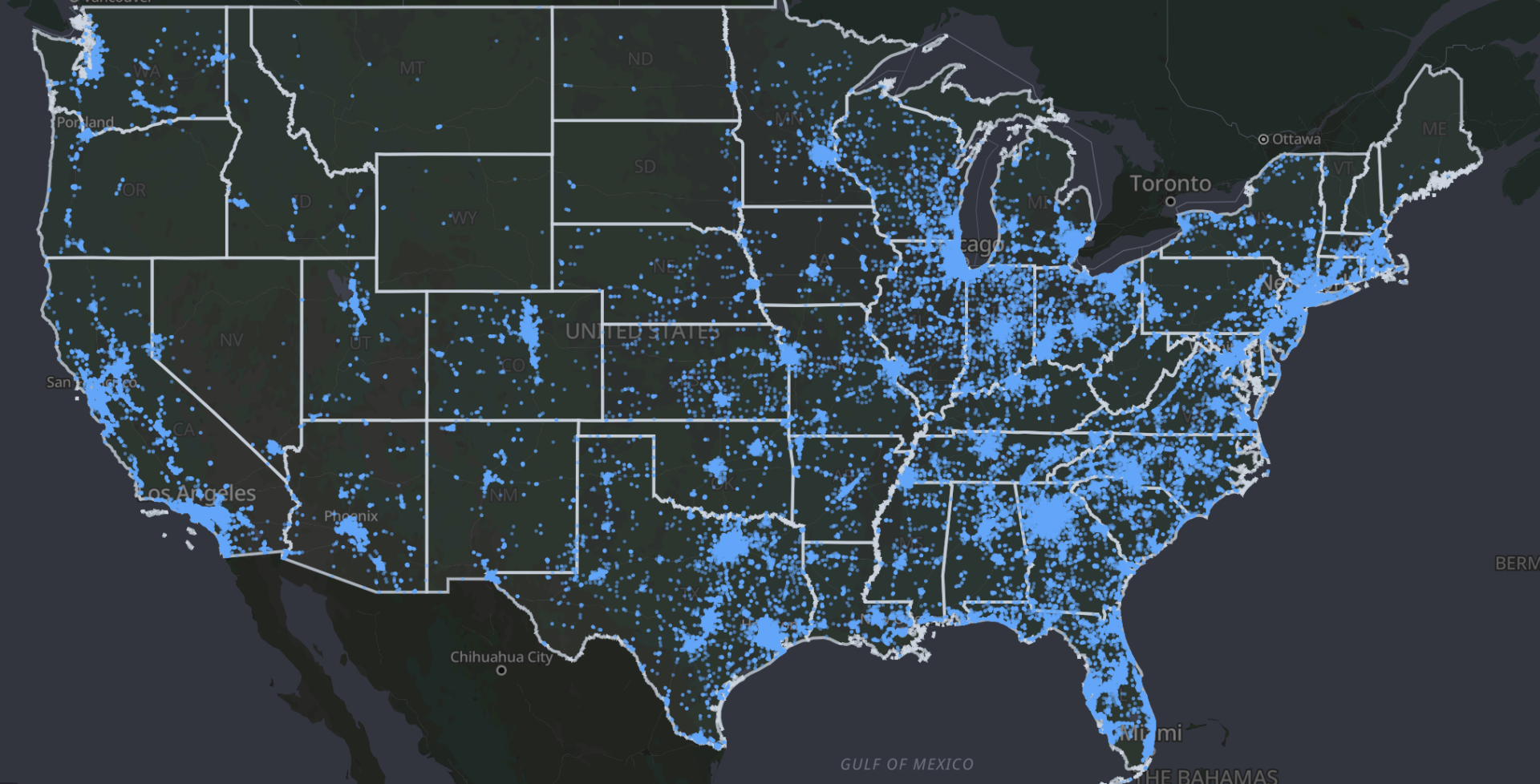
The open-source DeFlock map plots known automated plate readers around the country. It is crowdsourced, includes brands other than Flock and should not be treated as an official or complete inventory. Eyes on Flock uses information from official Flock transparency portals to show participating agencies and some of their data-sharing relationships.
Together, those maps make the scale of the technology visible. A plate captured in one town may be searched by an agency a distance away, depending on the permissions and sharing arrangements selected by the participating departments.
Known automated license-plate reader locations in United States and in Rhode Island. Locations are crowdsourced and may be incomplete or outdated. Source: DeFlock/OpenStreetMap contributors:
Critics are not only asking what the Cranston Police Department does with Cranston’s cameras. They are asking who else can search the data, for what purpose, for how long and with what oversight.
There are reasons for concern, and mistakes do happen. In Colorado, a woman was wrongly charged with stealing packages after a Flock-based lead pointed police toward the wrong vehicle. The charge was dropped after she produced evidence showing she could not have committed the crime.
A few other departments around the country have investigated officers accused of using plate-reader systems for personal or unauthorized searches.
Immigration enforcement has become another flashpoint. Flock says it does not provide direct system access to Immigration and Customs Enforcement and ended broad federal access to its national network. Investigations have nevertheless found instances in which federal agents sought information indirectly through local police departments. Flock says individual agencies control those local sharing decisions.
Changing camera companies does not necessarily disconnect a community from wider plate-reader networks. Flock, Motorola, Axon and Genetec maintain different systems, but police agencies can connect them through software integrations, common command-center platforms and direct information requests. Different brands may also check the same national and state hot lists. The important question is therefore not simply which company supplies the camera, but whether the contract allows outside searches, data exports, API connections or uploads to shared repositories.
Systems can talk to one another
Here are several ways the systems can “talk”:
| Connection | What happens |
|---|---|
| Common hot lists | Flock, Motorola/Vigilant, Axon and other readers may all compare plates against the same NCIC, AMBER Alert, stolen-vehicle and state police lists. Each system generates its own alert. |
| Same-vendor networks | Flock agencies can share within Flock; Motorola’s VehicleManager provides access to shared detections within its participating network. Those remain separate vendor databases. |
| Software integrations | APIs can send alerts and other information into police command-center platforms. Flock lists integrations with Motorola CommandCentral Aware, Axon Fusus and Genetec, among others. Flock’s API description |
| Third-party hubs | Genetec, for example, documents a plugin that can ingest Flock ALPR hits alongside information from other systems. Genetec documentation |
| Police-to-police requests | An officer can ask another department to search its system, even when the departments use different companies. An agency may also subscribe to more than one network. |
By the Numbers
From the RI ACLU, as of February of 2026 – numbers have changed in the last 2-3 weeks:
Advocacy — and a real policy vacuum
The ACLU’s national “Get the Flock Out” toolkit is an advocacy campaign, not a neutral review of the technology. It calls the devices “creepy cameras” and supplies organizers with model resolutions and other material intended to persuade communities to cancel contracts or impose restrictions.
That language largely leaves out the documented recoveries, arrests and missing-person cases cited by police. But the campaign also points to a genuine Rhode Island problem: the state has no comprehensive law governing every municipal ALPR system.
State Police do have a written policy with meaningful limits. It generally requires deletion after 30 days, a case number and reason for each search, written approval before data are released, and quarterly audits. It prohibits use for routine traffic enforcement, civil fines and immigration-status enforcement.
Municipal policies and sharing settings, however, are not necessarily identical.
The choice therefore does not have to be unrestricted use or no cameras at all.
Salem, Massachusetts, offers one possible middle course. The city said Flock readers played a principal role in nearly every recent major investigation, including arrests connected to shootings, rapes, stabbings, armed robberies and the bombing of The Satanic Temple.
Salem nevertheless chose not to renew with Flock. It plans to replace the cameras with another ALPR system that city officials say will provide greater local control of the data.
Cambridge is another caution against oversimplifying the debate. The city shut off 16 Flock readers and terminated the contract after Flock technicians installed two additional cameras without the city’s knowledge. Cambridge called it a material breach of trust.
The city has expressed interest in considering a different plate-reader vendor, and in bringing back the technology, but perhaps with a different vendor.
The evidence says automated plate readers can work — sometimes with life-saving speed. Cranston’s results alone make a serious case for their value. The national network, the potential for misuse and the lack of a single statewide rulebook make the case for limits.
The central question for Rhode Island is no longer whether the cameras can solve crimes. It is whether the state can write enforceable rules strong enough to preserve that public-safety value while controlling who may search the system, what constitutes a legitimate search, how long information is retained and where the data may go.
That is a harder question than simply voting the cameras in or out. It is also the question Rhode Island now has to answer.