
Subscribe!
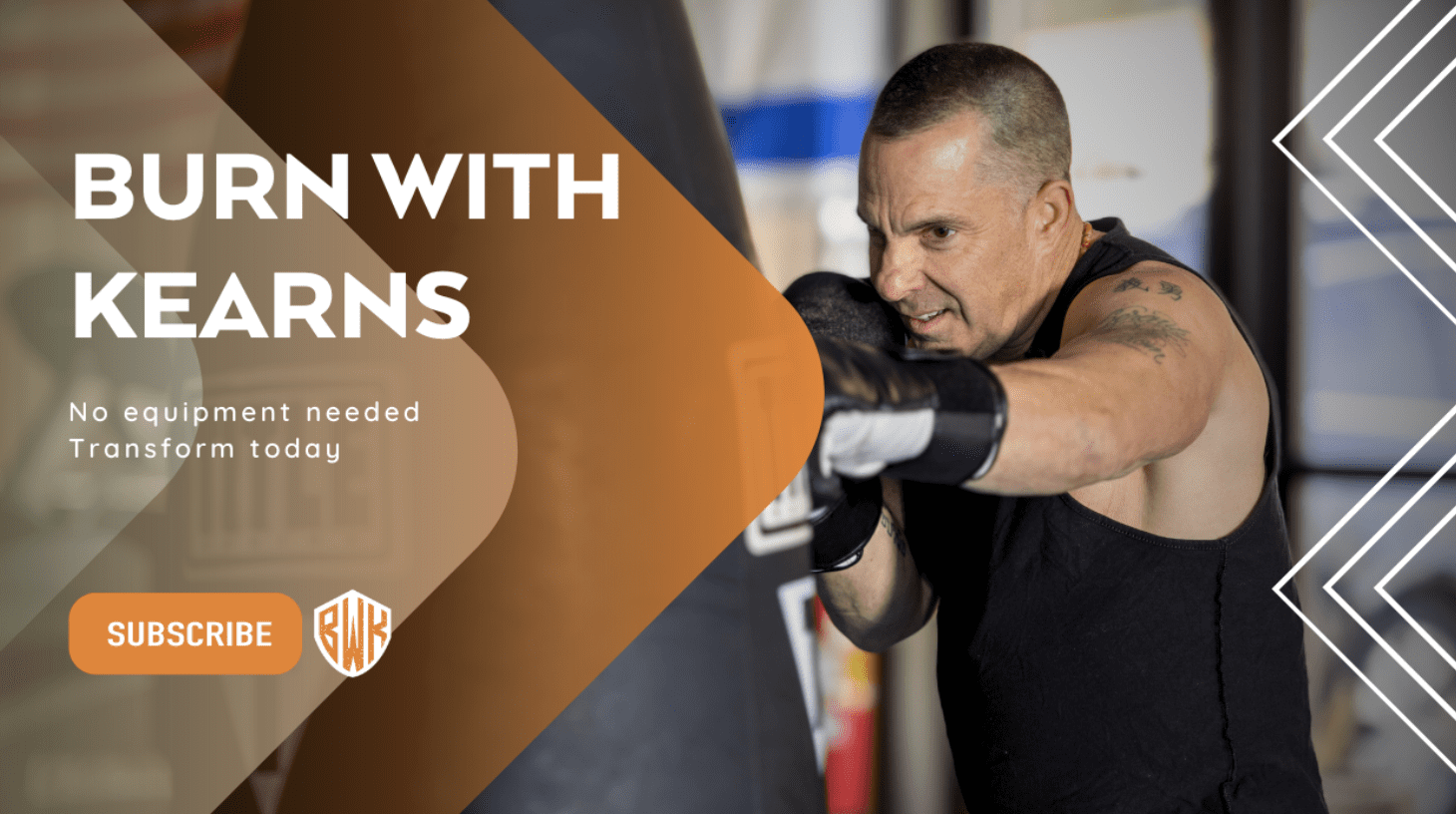
Burn with Kearns: Strength vs. “Looking Strong” – Kevin Kearns
by Coach Kevin Kearns, contributing writer
Why Muscle Size Doesn’t Equal Performance — or Longevity
BioHackYourself.com Series: Martial Arts, Functional Training & Human Performance
The Central Problem
One of the most persistent myths in fitness is that bigger muscles equal greater capability.
In reality, many individuals who appear strong in the gym:
- fatigue quickly under stress
- lose coordination when movement becomes complex
- struggle with balance, rotation, and deceleration
- suffer preventable joint and soft-tissue injuries
Martial arts, combat sports, and real-world movement expose this disconnect immediately.
This is because strength is not a single quality.
Two Types of Strength
- Structural (Cosmetic) Strength
This is strength developed primarily through:
- machine-based resistance
- bilateral, symmetrical lifts
- isolated muscle loading
- controlled, predictable environments
It emphasizes:
- muscle hypertrophy
- visual development
- linear force production
This form of strength can look impressive — but it is context-limited.
- Functional (Transferable) Strength
This is strength expressed when:
- balance is challenged
- force must transfer across joints
- movement occurs in multiple planes
- timing and coordination matter
Functional strength depends on:
- nervous system integration
- joint stability
- connective tissue integrity
- efficient kinetic-chain sequencing
Martial arts require this second type — every time.
Why Martial Arts Reveal the Truth About Strength
A punch, takedown, throw, or kick is not generated by a single muscle.
It requires:
- ground reaction force
- unilateral loading
- contralateral coordination
- rotational acceleration and deceleration
When someone relies only on cosmetic strength:
- power “leaks” through weak links
- joints absorb stress meant for larger systems
- movement becomes inefficient and injury-prone
This is why many bodybuilder-style athletes feel “strong but awkward” in dynamic environments.
The Nervous System Is the Governor
Strength is ultimately constrained by the nervous system.
Muscle fibers do not contract independently — they are recruited by motor units, which are coordinated centrally by the brain.
Functional strength improves:
- motor unit synchronization
- intermuscular coordination
- timing of force production
- reflexive stabilization
This explains why smaller, well-trained martial artists often generate more usable power than larger, less-integrated individuals.
🔍 FIGURE 1: Cosmetic Strength vs Functional Strength
Description:
A split diagram.
- Left side: Isolated muscle activation (e.g., biceps curl on a machine) with minimal joint involvement.
- Right side: Full kinetic chain activation (foot → hip → core → shoulder → hand) during a strike or throw.
Key takeaway:
Functional strength distributes load across the entire system; cosmetic strength concentrates stress locally.
Unilateral & Contralateral Loading: The Missing Ingredient
Most real-world movements occur:
- on one leg
- while resisting rotation
- with asymmetrical loads
Unilateral training (e.g., single-leg deadlifts, split squats) and contralateral loading (load opposite the working limb) force the body to:
- stabilize through the core
- coordinate across hemispheres
- protect the spine and joints
These patterns closely mirror martial arts movement demands.
🔍 FIGURE 2: Bilateral vs Unilateral Force Transfer
Description:
Side-by-side illustration.
- Left: Bilateral squat — symmetrical load, minimal rotational demand.
- Right: Single-leg hinge with offset load — visible activation through hip, obliques, and stabilizers.
Key takeaway:
Unilateral loading exposes and corrects asymmetries that bilateral training hides.
Why This Matters More After 40
As we age:
- reaction speed slows
- stabilizer muscles weaken
- connective tissue becomes less tolerant of abrupt load
- compensatory patterns increase
This makes traditional “chase the numbers” lifting riskier and less effective.
Functional strength training:
- distributes stress intelligently
- improves joint centration
- preserves coordination
- reduces injury risk
For longevity-focused adults, this is not optional — it is foundational.
Burn with Kearns Perspective: Strength Must Transfer
Burn with Kearns training evolved in an environment where:
- inefficiency is punished immediately
- poor force transfer results in injury
- strength must survive chaos
Therefore, programming prioritizes:
- movement quality over load quantity
- strength in multiple planes
- anti-rotation and deceleration capacity
- structural durability
The result is strength that shows up when it matters.
Force Leakage vs Force Transfer
Description:
A human figure performing a punch.
- Version A: Arrows showing force dissipating at the knee, hip, and spine.
- Version B: Continuous arrows flowing cleanly from ground to fist.
Key takeaway:
Functional training seals energy leaks, increasing performance and protecting joints.
The BioHack Takeaway
Strength that cannot be:
- transferred
- stabilized
- repeated
- decelerated
…is incomplete.
Martial arts training exposes this reality, and functional training corrects it.
In Part 3, we’ll explore why explosiveness is a nervous-system skill, why it declines with age, and how to preserve it safely.
___
Read ALL articles by Kevin Kearns here: BURN WITH KEARNS

Coach Kevin Kearns is the founder of Burn with Kearns, a global training system with over 2,400 certified coaches. He has worked with UFC fighters, professional athletes, and everyday people for more than 30 years. At 59, he continues to teach and inspire people to live stronger, longer, and healthier lives.
Follow Coach Kearns: BurnWithKearns.com
Coach Kevin Kearns Founder Burn With kearns.com Founder MMA Fighter Fit
2012 Top UFC Magazine S and C Coaches