
Subscribe!
Why Are Most World Cup Players Wearing Hot Pink Cleats? It’s Not What Many Viewers Think
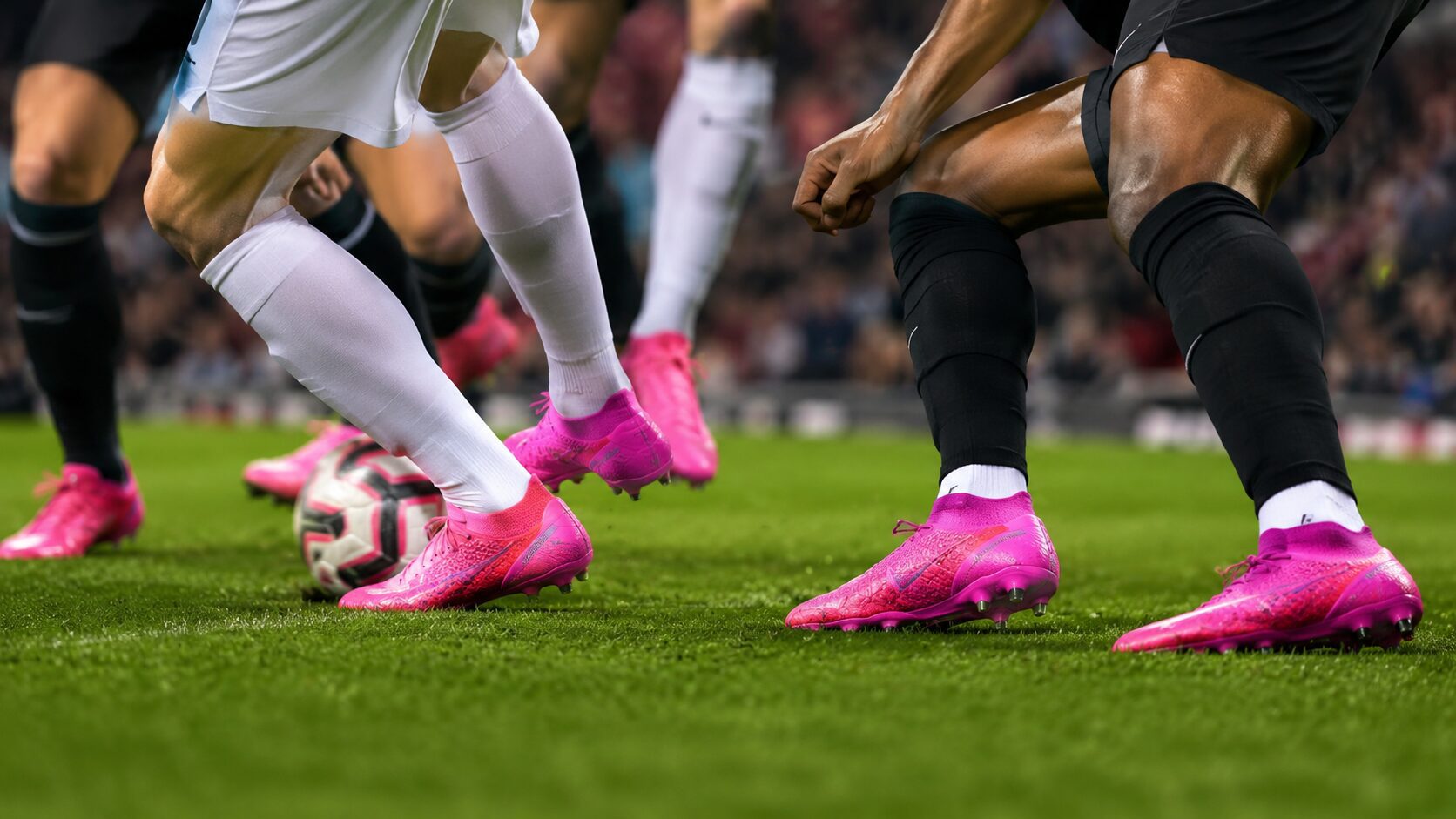
Watch even a few minutes of World Cup soccer this year and one thing jumps off the screen before the ball even does: the shoes. Hot pink. Fuchsia. Salmon. Bubblegum. Neon rose.
Soccer fans overseas may call them boots. In the U.S., most viewers call them cleats. Whatever the word, the hot-pink shoes are hard to miss.
Whatever name you give the color, it is everywhere — on players from different countries, different teams and different shoe sponsors. For American viewers especially, the first reaction is understandable: Is this a breast cancer awareness campaign? Did someone important in soccer have breast cancer? Is this a tribute to a player’s wife, mother or family member?
Apparently, no.
This year’s hot-pink soccer shoe is something different: a mix of marketing, television strategy, fashion, World Cup visibility and sneaker culture.
And it is very much on purpose.
Why pink works on the field
Soccer is played on green “grass”. Hot pink is nearly the opposite of that field color visually, which means it pops. That matters more than it used to. Soccer is no longer viewed only from the stands or on a large television screen. It is watched on phones, clipped for social media, slowed down in highlight reels and replayed in tight shots that focus on a player’s feet. In that world, the shoe is no longer just equipment. It is part of a game billboard.
A black shoe may look traditional. A white shoe may look clean. But a hot-pink shoe on bright green grass is almost impossible to miss. Even when those closeup camera shots pan wide and you lose track of the ball (ooh, pink balls next time? 2030 World Cup?) you can follow the play by the color contrast.
That contrast helps viewers follow a player’s footwork, especially during fast movement, close control, tackles and shots on goal. It also helps shoe companies get noticed. When a player scores, the boot is in the replay. When a player celebrates, the shoe may be in the photo. When a highlight goes viral, the color travels with it.
That may be the simplest explanation: pink gets seen.
Not one company, not one team
Another reason the color feels so noticeable is that it is not limited to one country or one uniform.
This is not a team color. It is not one league’s campaign. It is not even one shoe company’s look.
Nike, Adidas, Puma, New Balance, Skechers and other brands have all had versions of pink or pink-accented soccer footwear in the World Cup moment. Some are bright fuchsia. Some are more salmon or rose. Some mix pink with orange, blue, black or neon trim. But on television, the overall effect is the same: hot-pink feet all over the field.
That is why viewers may feel as if “everyone” is wearing the same shoe, even when they are not.
They are not all made by one manufacturer. They are not all necessarily licensed by FIFA. They are not all part of one official campaign. They are different brands arriving at roughly the same marketing conclusion: pink is a color people will notice.
When pink on the court, or on the pitch, meant breast cancer
In American sports, pink has meant breast cancer awareness for decades.
Pink ribbons became widely associated with breast cancer awareness in the early 1990s. Over time, that symbolism moved into sports. Fans became used to seeing pink uniforms, pink socks, pink sneakers, pink cleats, pink gloves, pink towels and “pink out” nights at high school, college and professional games.
Women’s basketball helped build that connection through pink games and cancer-awareness events. Nike supported the Kay Yow/WBCA Cancer Fund with special uniforms, pink-and-white shoes and pink game-ball details in 2008. The NFL also made pink highly visible in October games beginning in 2009, when players wore pink cleats, gloves and accessories as part of breast cancer awareness efforts.
So when viewers see pink athletic shoes, many naturally think: breast cancer.
That is cultural memory – and the campaign to make us think it has been by all measures, life-savingly successful.
But this World Cup shoe trend is not “cause pink.” This is “visibility pink.”
Cause pink vs. marketing pink
There are really two different kinds of pink in sports now. There is cause pink: the pink ribbon, breast cancer awareness, fundraising, October campaigns, “pink out” games, survivor recognition and team events tied to a specific cause.
Then there is marketing pink: bright footwear designed to stand out, sell, photograph well and travel across television and social media.
The World Cup cleats appear to fall squarely in the second category.
That does not make the color meaningless. It simply means the meaning has changed depending on context. In one setting, pink may be a tribute. In another, it may be a fashion and branding strategy.
At this World Cup, the cleats are about helping to be seen than.
FIFA may license the World Cup — but it does not own hot pink
There is also a licensing issue worth noting.
FIFA licenses official World Cup merchandise: shirts, hats, scarves, balls, mascots, logos and tournament-branded products. If a product uses official World Cup marks, tournament names, logos, host-city branding or FIFA symbols, that generally falls into licensing territory.
But a hot-pink soccer shoe is not automatically a FIFA product just because a World Cup player wears it – or they all wear them.
A Nike pink cleat is still a Nike product. An Adidas pink cleat is still an Adidas product. A Puma pink cleat is still a Puma product. A regular hot-pink sneaker sold in a store may have nothing official to do with the World Cup at all.
In other words, FIFA owns its marks. It does not own hot pink.
Soccer shoes were not always this loud
For many years, soccer shoes were mostly black. Black leather boots were the traditional look — serious, plain and practical.
That changed gradually as color television, synthetic materials, player branding and global sports marketing grew. Non-black boots began appearing decades ago, but they were not always accepted. Bright shoes were once seen as flashy, cocky or even inappropriate for young players.
The old rule seemed to be: earn the right to wear loud shoes.
Now the opposite may be true. The louder the shoe, the more likely it is to be noticed.
World Cup footwear has had color moments before. In the 1990s and early 2000s, Ronaldo helped make blue and silver boots iconic. In 2014, Puma made a splash with its “Tricks” boots — one pink boot, one blue boot. In 2018, Nike’s World Cup pack used a mostly white and chrome look with bright orange, volt, crimson and blue accents. In 2022, Adidas leaned into colorful, iridescent designs connected to the Al Rihla World Cup ball.
So pink is not the first World Cup shoe color story. It is just the latest — and perhaps the most noticeable because so many brands leaned into it at once.

The trend is not staying on the soccer field.
Hot-pink cleats, turf shoes, training shoes, running shoes and lifestyle sneakers are now part of the broader sports-footwear market. Some are true performance shoes. Some are casual sneakers. Some are for youth players. Some are for adults. Some are expensive elite models. Others are lower-priced takeoffs for everyday wear.
That is how the sports-fashion cycle works. First the star wears it. Then the highlight shows it. Then the fan notices it. Then the store sells something like it.
And because pink is no longer limited to breast cancer awareness or girls’ sports, the color has become something else: bold, visible, unisex and highly marketable.
And then there is Caitlin Clark
The bigger story is not just soccer. It is what sports shoes have become.
The sneaker world still has one undisputed celebrity king: Air Jordan. But the next wave is broader — Travis Scott drives hype drops, Yeezy changed the celebrity sneaker business, and Caitlin Clark’s coming Nike shoe shows women athletes are now stepping into the signature-sneaker market in a serious way.
Caitlin Clark, the WNBA star with the Indiana Fever, is now part of Nike’s signature athlete roster. Nike officially announced Clark as a signature athlete in 2025, unveiling her personal logo and saying her first signature shoe and apparel collection would debut in 2026.
That shoe is expected to be called the Nike Caitlin 1.
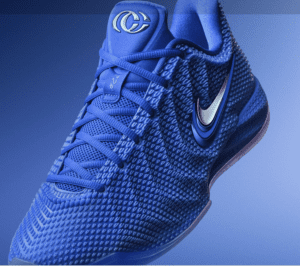
Unlike the hot-pink soccer cleats, Clark’s first signature shoe is not pink. The first look is blue — bold, bright and unmistakable. The design shown in early reports includes Clark’s logo on the tongue, a silver Nike swoosh, and a textured upper featuring small “C” shapes worked into the surface. Sneaker reports say the shoe is expected to launch October 1, 2026, with an adult price point of about $140.
Nike is also expected to release apparel tied to Clark’s signature line, including items such as shirts, hoodies, shorts and pants.
This matters for more than basketball fans.
Clark has often been associated with Nike Kobe models, including player-edition shoes tied to her own story and style. But the Caitlin 1 would be different. It would be her own named shoe — her own logo, her own line, her own place in sneaker culture.
That puts Clark in a small but growing group of women’s basketball stars with major signature shoes. The list includes names such as Sabrina Ionescu and A’ja Wilson, and it reflects a larger shift: women athletes are no longer just wearing shoes designed around men’s sports marketing. They are becoming the marketing.
Clark’s sneaker also shows why this World Cup pink-shoe moment is not just a cute fashion note. Shoes have become sports storytelling.
A shoe can tell us who the sponsor is. It can tell us what player a child wants to be. It can show up in a viral clip, a school hallway, a rec league game, a fan collection or a retail display. It can be performance gear, fashion statement, identity marker and business strategy all at once.
Sometimes the shoe is hot pink on green grass. Sometimes it is Caitlin Clark blue on a basketball court. Either way, the message is the same: look down, because the footwear is talking.
The bottom line
The hot-pink shoes may look like a breast cancer tribute to many American viewers. That is understandable because sports trained us to make that association. But this time, the explanation appears to be different.
The pink cleats are not a hidden tribute. They are not all made by one company. They are not all official FIFA merchandise. And they are not simply a random fashion accident.
They are bright because bright gets noticed. On green grass, under stadium lights, across TV screens and inside social media clips, hot pink does exactly what the shoe companies want it to do. It makes you look down. And once you do, you realize the shoes are not just shoes anymore.
In sports shoes, the celebrity is no longer just endorsing the sneaker. The celebrity is the sneaker.