
Subscribe!
U.S.-Iran Deal Opens Door to Peace — With Eyes Wide Open
A U.S.-Iran agreement announced Sunday afternoon could become one of the most consequential diplomatic breakthroughs in the Middle East in decades — not because of what it may do to gasoline prices, but because of what it may prevent: a wider war with nuclear implications.
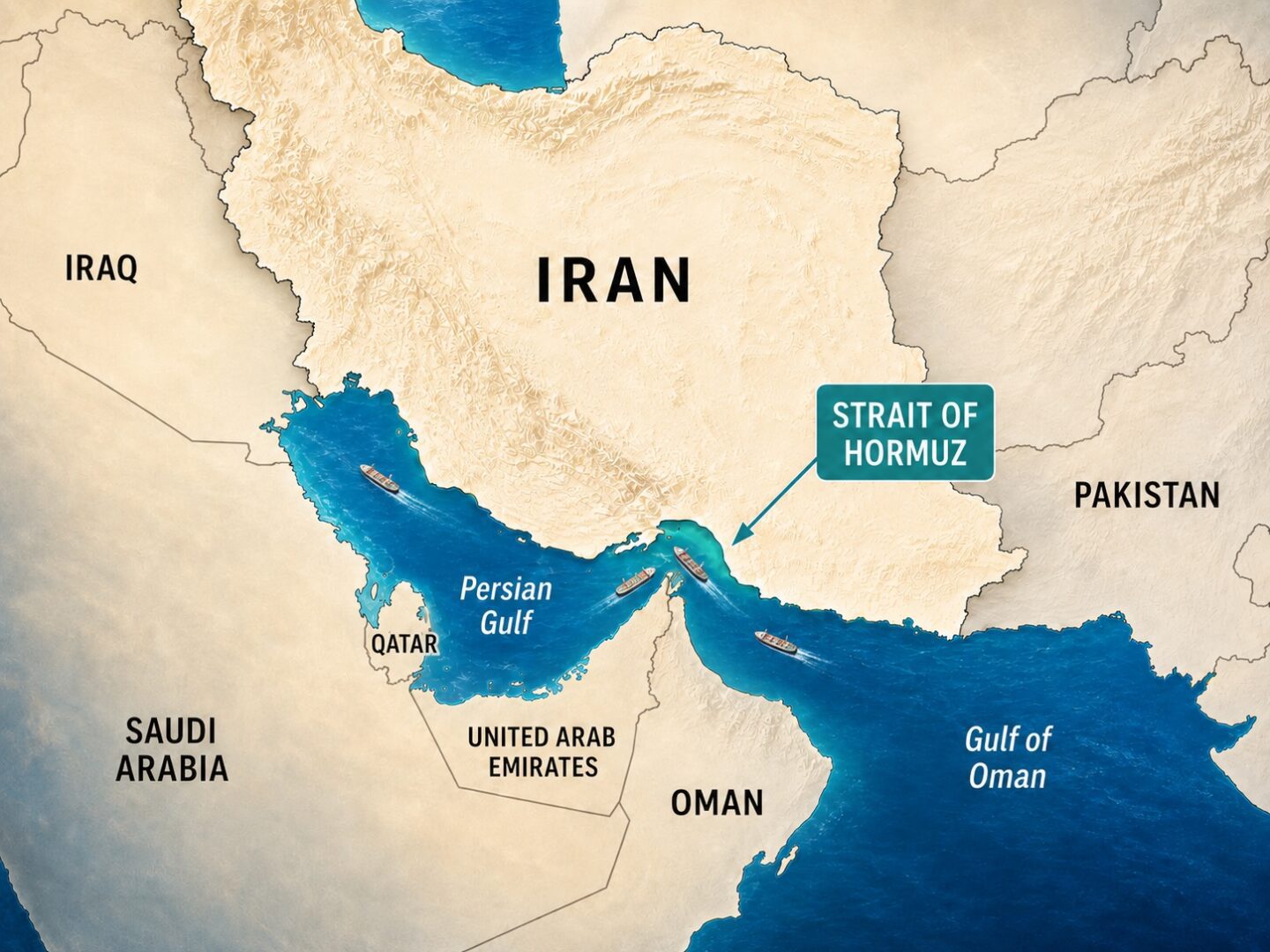
Washington and Tehran have publicly acknowledged a preliminary framework to end hostilities, reopen the Strait of Hormuz, and move the most difficult nuclear and sanctions questions into a follow-up negotiation period, reportedly lasting 60 days.
Pakistan announced the breakthrough first. President Donald Trump quickly declared the deal “complete,” and Iranian officials followed with statements saying military operations would end and the naval blockade against Iran would cease. A formal document-signing ceremony is expected Friday in Switzerland, with Geneva reported as a possible location.
The mood around the agreement is one of cautious optimism. Diplomacy appears to have created a rare opening to pull the region back from a wider war. But the agreement’s real meaning will depend on compliance, verification and follow-through.
President Trump celebrated the shipping implications in vivid language, telling the world’s vessels, “Ships of the world, start your engines.” That may become one of the defining quotes of the moment.
The Strait of Hormuz is expected to be declared open. The blockade is expected to be declared over. Markets may respond immediately. But commercial shipping does not return to normal by announcement alone.
Maritime advisories reviewed overnight still showed traffic through the Strait of Hormuz severely reduced, with recent transits far below normal levels and warnings still in place involving mine risk, navigation interference and blockade-enforcement activity. Japanese shippers have reportedly welcomed the agreement, but are waiting for more detail, particularly around mine-clearance assurances, before moving stranded vessels.
That does not diminish the breakthrough. It defines the next phase.
Iran is a nation of more than 90 million people. For nearly 47 years, U.S.-Iran relations have been shaped by revolution, hostage-taking, sanctions, military confrontation and deep mutual suspicion — but not by a formal declaration of war.
This is not just a Middle East story. It is a nuclear-war-prevention story.
Israel is a nuclear-armed regional power. The United States is the world’s most powerful military nation. Gulf countries, Russia, China, European allies and global shipping interests all have stakes in whether this agreement succeeds.
Vice President JD Vance framed the stakes in generational terms during a live television interview: “If the Iranians comply with this deal, it is going to fundamentally transform the Middle East for the next 50 years,” Vance said.
The key word is “comply.” That is where cautious optimism meets verification.
Iran’s government has a long history of secrecy, evasion and proxy activity, and no agreement should be accepted on words alone. But diplomacy is often most necessary with adversaries, not friends. The goal now is not trust for its own sake. The goal is a structure that can be verified, enforced and tested over time.
The final push after over 30 stops and starts in agreement making reportedly required extraordinary mediation. The Washington Post reported that Qatari mediators worked for 17 straight hours in negotiations, underscoring the intensity of the diplomatic effort. Pakistan was also involved, while Switzerland is expected to host the formal ceremony later this week.
Between now and Friday, the agreement exists in its most delicate form: announced, publicly acknowledged, welcomed by markets — but not yet fully visible in final text, legal mechanics or shipping behavior.
The old Cold War phrase was “trust, but verify.” In this moment, that phrase fits. The agreement deserves to be recognized as a major diplomatic opening. It also deserves the steady follow-through that gives any peace agreement its lasting power. It is also clear that the US can never take its eyes off this part of the world, with implications to the safety of Americans.
Verification is not the opposite of hope. It is how hope survives contact with history.
The agreement will also face political resistance in both countries.
In the United States, supporters will call it a diplomatic breakthrough that may prevent a wider war, reduce nuclear risk and reopen one of the world’s most important shipping routes. Critics will ask whether the United States gave up too much, too soon — especially if the agreement includes sanctions relief, oil waivers or the release of Iranian frozen assets.
An unfortunately timed live appearance on Fox News Sunday, prior to the agreement announcement by Rhode Island’s own Sen. Jack Reed showed distrust of America’s efforts and a negative feeling about what the actions and agreements may hold. That interview was playing on a loop on Monday morning by media outlets intent on covering the peace-keeping move by puncing holes in it.
Does this mean Iran gets its money back? The funds at issue are not new U.S. taxpayer payments, but Iranian assets restricted under sanctions. Whether releasing or unfreezing them is wise will be one of the central political arguments over the deal. U.S. officials have indicated in earlier reporting that any release would be structured and tied to performance, but until the legal documents are public, the mechanics remain uncertain.
Inside Iran, the reaction may be just as divided. Many Iranians may welcome an agreement that lowers the risk of war, reduces isolation and opens the door to economic relief. But hardliners will criticize the terms, arguing that Tehran may be giving up too much leverage without enough guaranteed benefit in return.
For them, the Strait of Hormuz, sanctions relief, frozen assets and nuclear negotiations are not separate issues. They are bargaining chips.
That means the agreement’s success will depend not only on signatures and ceremonies, but on whether leaders in both countries can hold enough domestic support to implement it.
Peace deals are rarely embraced by everyone at once. Often, the first evidence that a deal matters is that opponents on both sides begin trying to define it.
The agreement also puts the past several days of public messaging in a different light.
Statements from President Trump, U.S. officials, Middle Eastern leaders and Iranian leaders were not necessarily directed only at reporters or domestic audiences. In a crisis like this, public words can be diplomatic instruments. They can pressure an adversary, reassure an ally, calm a market, preserve political face, or signal to negotiators what room still exists.
President Trump repeatedly said the media did not know what was really happening, and that only he, his team and the negotiators understood the true state of the talks. Some statements that seemed confusing or contradictory in the moment may have been aimed less at the press and the public than at Tehran, Gulf capitals, Israel and negotiators still working behind closed doors.
That does not remove the need for scrutiny. It reminds us that diplomacy is often conducted in two languages at once: the public language heard by the world, and the private language understood by the parties at the table. In a nuclear-risk crisis, words are not only explanations. They are tools.
Markets reacted quickly to the announcement. Oil prices fell, Asian equities rose, and global leaders broadly welcomed the framework. That matters because markets do not usually price relief this aggressively unless traders believe there is at least a credible diplomatic off-ramp.
Gas prices will get attention, as they always do when international conflict touches the household budget. But gas prices are a narrow measure of a much larger event. As with the price of eggs, consumer costs dominate headlines when they rise and often disappear from the news when they fall.
Peak U.S. Gas Prices by Major Peak Years
- 2008 (George W. Bush)
~$4.11/gal (summer peak) — financial crisis + oil spike- 2012 (Barack Obama)
~$3.94 avg / higher in some months — highest inflation-adjusted year- 2022 (Joe Biden)
~$5.00+ peak, ~$4.06 annual avg — highest modern annual average- 2026 (Donald Trump)
~$4.20+ average recently — highest since 2022 due to Iran conflict
This story is larger than the price at the pump. Gas prices are often the receipt Americans get from world crises. The 1970s gas lines followed war and embargo. The early 1980s shock was tied to Iran. The 2008 spike came before a financial crash. The 2022 record followed Russia’s invasion of Ukraine. And the current concern is not simply gasoline — it is whether diplomacy can prevent a larger conflict with nuclear implications.
The Strait of Hormuz is the economic trigger point. Nuclear-war prevention is the human story.
That is why the agreement should not be judged only by Monday’s stock market, the first movement in oil prices, or even the ceremony expected Friday. It should be judged by what it makes possible.
If ships move, if weapons stay silent, if nuclear commitments hold, and if governments comply, the agreement could become more than a pause in conflict. It could become a turning point.
Cautious optimism may be the most honest response: hope, with eyes open.
A ceremony can mark a deal. Compliance can make it history.
What to watch next
Formal signing: Expected Friday in Switzerland; Geneva has been reported but should be confirmed.
Shipping: Whether tanker and commercial traffic actually resumes through the Strait of Hormuz.
Security: Mine-clearance notices, navigation warnings, and any updated maritime advisories.
Sanctions/assets: Whether frozen Iranian assets are released in stages, under restrictions, or only after compliance benchmarks.
Nuclear talks: The reported 60-day follow-on negotiation period over nuclear limits and verification.
Political response: U.S. critics will focus on concessions; Iranian hardliners will focus on whether Tehran gave up too much leverage.
This is a developing story. The full agreement has not yet been publicly released. This article will be updated.
This is an excellent article outlining all the facts in the Iran US Israel, conflict.. We have to hope and pray that this diplomacy actually works. So that we can look forward to a peaceful future.
Thank you, Judith…. a long week to Friday! ✌️