
Subscribe!

RI’s New Budget Considered a Win for Older Adults – Herb Weiss
By Herb Weiss, contributing writer, aging issues
As the 2026 legislative session wraps up, lawmakers approved a $15.2 billion state budget for Fiscal Year 2027. The budget blueprint (H 7127 Aaa) aims to provide economic relief, improve education and health care, and advance government reforms without raising broad-based taxes or fees.
According to House Communications Director Larry Berman, the House floor debate began at 3:35 p.m. on Friday, June 5, and lasted 3 hours and 45 minutes. House lawmakers offered 16 amendments, and 10 were approved (none of these targeted aging programs and services). At 7:20 p.m., the budget passed on a vote of 65 to 10, with 64 Democrats and one independent voting in favor, while all 10 Republicans opposed it.
Greg Paré, Senate Communications Director notes:“On Tuesday, June 9, 2026, the upper chamber debated the House proposal for two hours and 17 minutes, beginning at 4:20 p.m. and concluding at 6:37 p.m. Senators considered 12 amendments, but none were approved. The Fiscal Year 2027 budget passed 32-6 without changes. Senators Samuel W. Bell (D-Dist. 5, Providence) and Leonidas “Lou” Raptakis (D-Dist. 33, East Greenwich and West Greenwich) joined the four Republican Senators in opposing passage of the budget proposal.”
Three days later, Gov. Dan McKee signed the 393-page Rhode Island General Assembly Fiscal year 2027 budget proposal at 10:30 a.m. at Children’s Friend in Providence.
While much of the attention surrounding the Fiscal Year 2027 budget focused on programs and services, lawmakers also approved several significant policy changes and revenue measures. Chief among them is a new tax on annual income exceeding $1 million. The phased-in surtax is expected to generate approximately $142 million annually when fully implemented, providing additional revenue to help support state services and offset potential reductions in federal funding.
The state’s budget also creates an independent Office of Inspector General to strengthen government accountability and oversight. In addition, the Rhode Island General Assembly approved increased funding for hospitals, behavioral health and home-care providers, child welfare programs, public transit, and higher education, while authorizing an audit of the Rhode Island Department of Transportation.
Investing in Rhode Island’s Aging Programs and Services
Although these initiatives will affect Rhode Islanders across all age groups, the budget also contains provisions that directly impact older adults, caregivers, and aging-service providers throughout the Ocean State.
The Fiscal Year 2027 budget expands eligibility for exempting Social Security income from state taxation by removing the age threshold. Under current law, taxpayers who have reached full Social Security retirement age (67 or older) and have incomes below $107,000 for individuals and $133,750 for joint filers are exempt from paying state income tax on their Social Security benefits. With the passage of the budget, the age requirement has been eliminated.
The state budget also increases funding by $200,000, bringing total funding for senior services grants to $1.8 million.
Meals on Wheels, which provides nutrition services to older adults, was also on lawmakers’ radar. Meals on Wheels, which provides nutrition services to older adults, was also on lawmakers’ radar. Meals on Wheels, which provides nutrition services to older adults, received level funding from FY26 when the organization saw a $50,000 increase in its budget.
The Rhode Island General Assembly’s approved budget allocates $4.1 million to fund the “Eat Well, Be Well” program for Supplemental Nutrition Assistance Program (SNAP) recipients. This funding will help older Rhode Islanders struggling with the high cost of groceries.
Under the program, eligible SNAP households will receive an incentive of 50 cents for every dollar spent on fruits and vegetables, with the benefit loaded onto their electronic benefits transfer (EBT) cards, up to a maximum amount to be determined by the Rhode Island Department of Human Services.
The budget also increases funding for the Rhode Island Community Food Bank by $1 million, bringing total state support to $2.95 million to address food insecurity among families, including older adults.
In response to a significant increase in complaints regarding care, the budget provides additional funding to the state’s Office of Healthy Aging to support the Long-Term Care Ombudsman Program, administered by the Alliance for Better Long-Term Care.
The budget allocates funding for full cost-of-living increases in nursing home reimbursement rates, with 80 percent of the increase directed toward direct-care staff compensation. Gov. McKee’s proposed budget had limited the increase to 2.5 percent.
As for the state’s nursing facility minimum staffing requirements, the budget includes $200,000 to implement the Nursing Home Staffing and Quality Care Act. The provision requires the Rhode Island Department of Health to enforce staffing requirements at all nursing homes. The funding will support contracted services to collect and analyze data and calculate penalties for noncompliant facilities.
The state budget also includes $3.1 million to begin a phased opening of new beds at the Rhode Island Veterans Home. The funding is expected to increase capacity by 16 beds in each of the next two years, bringing the facility to its maximum capacity of 192 residents.
Assisted living facilities will see increased Medicaid reimbursement rates for caring for residents with dementia and those with higher personal-care needs. Advocates say the increase will help facilities accept and care for these residents while reducing premature nursing home placements.
The Fiscal Year 2027 budget also doubles the amount of assets that Medicaid home-care recipients may retain, helping older adults cope with rising housing costs and other basic needs.
Several provisions within the budget are intended to address the growing shortage of primary care providers, including assisting providers with medical school costs and seed funding for a new medical school at the University of Rhode Island (both of which were components of the Senate’s package of priority health care bills).
In addition, the budget fully funds rate increases for home- and community-based services recommended by an Office of Health Insurance study. The governor’s budget proposal had funded only half of the recommended increases. SACRI says the additional funding should improve worker compensation and help prevent waiting lists for services.
A nursing home behavioral health per diem add-on included in the budget provides additional resources for facilities caring for residents with both nursing and behavioral health needs, helping to avoid unnecessary transfers to acute-care settings.
Finally, an additional $13.5 million was included in the Fiscal Year 2027 budget to help the Rhode Island Public Transit Authority maintain services and avoid service reductions.

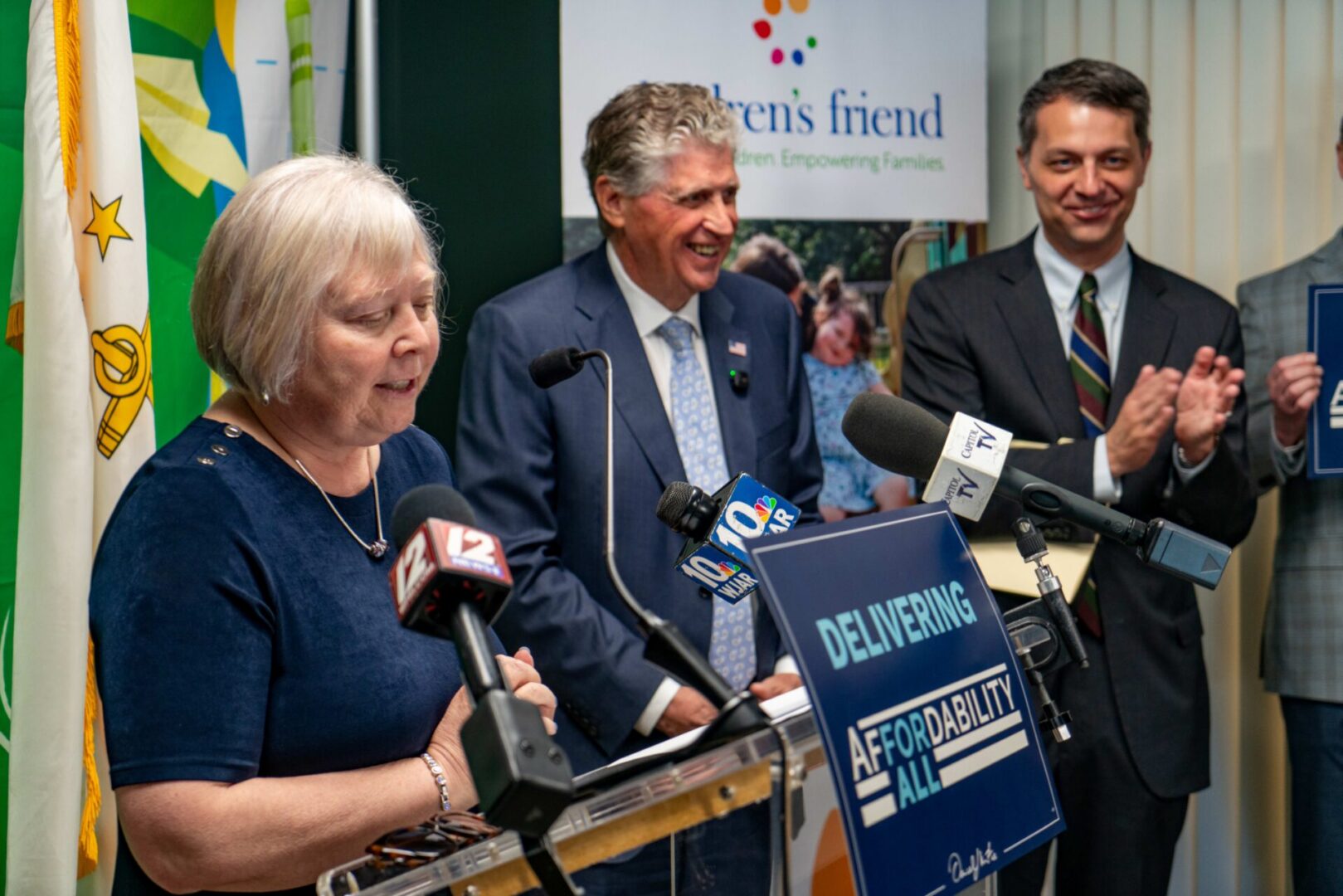
House Speaker Christopher R. Blazejewski and Senate President Valarie J. Lawson with Gov. Daniel J. McKee at the signing of the new RI state budget, held at Children’s Friend in Providence. They are joined by advocates including House Majority Leader Katherine S. Kazarian, House Finance Committee Vice Chairman Scott A. Slater, and Senate Finance Committee Chairman Louis P. DiPalma, Sen. Lammis J. Vargas, and children.
The Aftermath: Lawmakers and Aging Groups Debate Budget Proposals’ Impact
“I am proud of this budget, which addresses the concerns and struggles of everyday Rhode Islanders, including our older residents, who need access to health care, who need to be able to pay their bills, and who need to know that their government is honest and effective,” said Christopher R. Blazejewski. “This budget is the result of months of listening, prioritizing, and identifying ways to fix what isn’t working, he stated.
“It provides relief today while being fiscally responsible and putting our state in a better position in the years to come,” notes Blazejewski.
“This budget reflects many of the Senate’s priorities, including funding health care initiatives and supporting seniors and Rhode Islanders in need,” said Senate President Valarie J. Lawson (D-Dist. 14, East Providence). “This is a responsible, balanced budget that provides relief for Rhode Islanders, including our older residents, while investing in and strengthening programs that support seniors, she says, noting that it complements other legislation the Senate passed this year to support older adults. She sponsored legislation to protect against the growing national threat of deed theft, a scam by which thieves defraud seniors of their real estate.
“These budget decisions reflect real progress for Rhode Islanders who rely on long-term services and community supports,” said Executive Director Carol Anne Costa. “We are encouraged to see the state make investments that strengthen care, support the workforce, and help older adults remain in the settings that best meet their needs.”
According to Costa, “SACRI fully intends to return in the next session to pursue the Medicare Saving Program’s asset test removal, the creation of the Office of the Elder Advocate, and secure a tax credit for caregivers. “These efforts do not come with huge price tags and in fact, infuse money back into the RI economy,” says Costa.
Costa emphasizes that Rhode Island’s aging population and adults with disabilities deserve nothing less, as the organization continues to be the voice for progress on their behalf.
“As the cost of food continues to skyrocket, our seniors, those with long-term care, and other Rhode Islanders living on a fixed income are being further squeezed. This budget helps ensure they can still get the healthy meals they need through targeted investments in SNAP and organizations like Meals on Wheels and the RI Community Food Bank. This budget brings us closer to ensuring food security for all Rhode Islanders,” says Lt. Gov. Sabrina Mattos, says Lt. Gov. Sabina Matos, chair of the state’s Long-Term Care Coordinating Council.
“We appreciate the legislature’s commitment to strengthening Rhode Island’s long-term services and supports through this year’s budget,” says Mag Morelli, president of LeadingAge Connecticut & Rhode Island. “The investments in assisted living, community-based services, and nursing home care recognize the growing needs of older adults.
By supporting Medicaid reimbursement rates that more closely reflect the cost of care, this budget helps providers deliver essential services while promoting stability, access, and choice for aging Rhode Islanders.”
Hopes Dashed: Budget Fails Rhode Island’s Caregivers
Meredith L. Sheehan, Director of Public Policy, Alzheimer’s Association, Rhode Island Chapter: “More than 22,000 Rhode Islanders live with Alzheimer’s disease, and 37,000 serve as caregivers. We applaud budget investments in senior centers, the Long-Term Care Ombudsman Program, and assisted living providers, but are disappointed funding was not included for a Dementia Services Coordinator, a dedicated position needed to develop a coordinated statewide response to dementia.”
“I am encouraged by the 2027 budget’s funding that strengthens our support for people with Alzheimer’s disease and related dementia (ADRD) and their caregivers, including increased Medicaid reimbursement for specialized assisted living and for nursing home care,” says Chris Gadbois, DNP, RN, chair of RI’s Council on ADRD.
“People’s ability to remain safely in their homes will be supported by increased rates for home and community-based services and an increase in the asset limits,” notes Gadbois.
However, like Sheehan, Gadbois expressed disappointment that funding for a state Dementia Service Coordinator within the Rhode Island Department of Health was not advanced in the past budget proposal, adding, “We will continue to collaborate with state leadership for this critical position, as well as reintroduce legislation to ensure healthcare providers’ and facilities’ competency in caring for individuals with dementia.”
“The Office of Healthy Aging appreciates Governor McKee’s continued commitment to older Rhode Islanders and to the systems of support that help people age with dignity, connection, and independence. We remain focused on working with state and community partners to strengthen access to services and supports for older adults, caregivers, and families across Rhode Island,” says Maria E. Cimini, MSW, Director, RI Office of Healthy Aging.
Lori Light, the state’s long-term care ombudsman, welcomes FY 2027 budget investments in aging-in-place programs. “It strengthens our advocacy for nursing home and assisted living residents,” Light said. She urges continued funding to expand ombudsman services, allowing the agency to handle increasingly complex complaints and ensure all residents receive timely support.
To view all provisions of H 7127Aaa, the state’s enacted 2027 Fiscal Year Budget proposal, go HERE – https://webserver.rilegislature.gov/BillText26/HouseText26/H7127Aaa.pdf
___
To read more articles by Herb Weiss, go to: https://2×8.ea2.myftpupload.com/herb-weiss/

Herb Weiss, LRI, 12, is a Pawtucket-based writer who has covered aging, healthcare, and medical issues for more than 45 years. To purchase his books, Taking Charge: Collected Stories on Aging Boldly and its two sequels, visit herbweiss.com.

I don’t know if you received my comment from yesterday, but have you forgotten the 31,000 elderly retirees who are members of ERSRI ?
Lifetime workers have been robbed of the right to retire with comfort and dignity, despite having paid into a pension plan that guaranteed both.