
Subscribe!
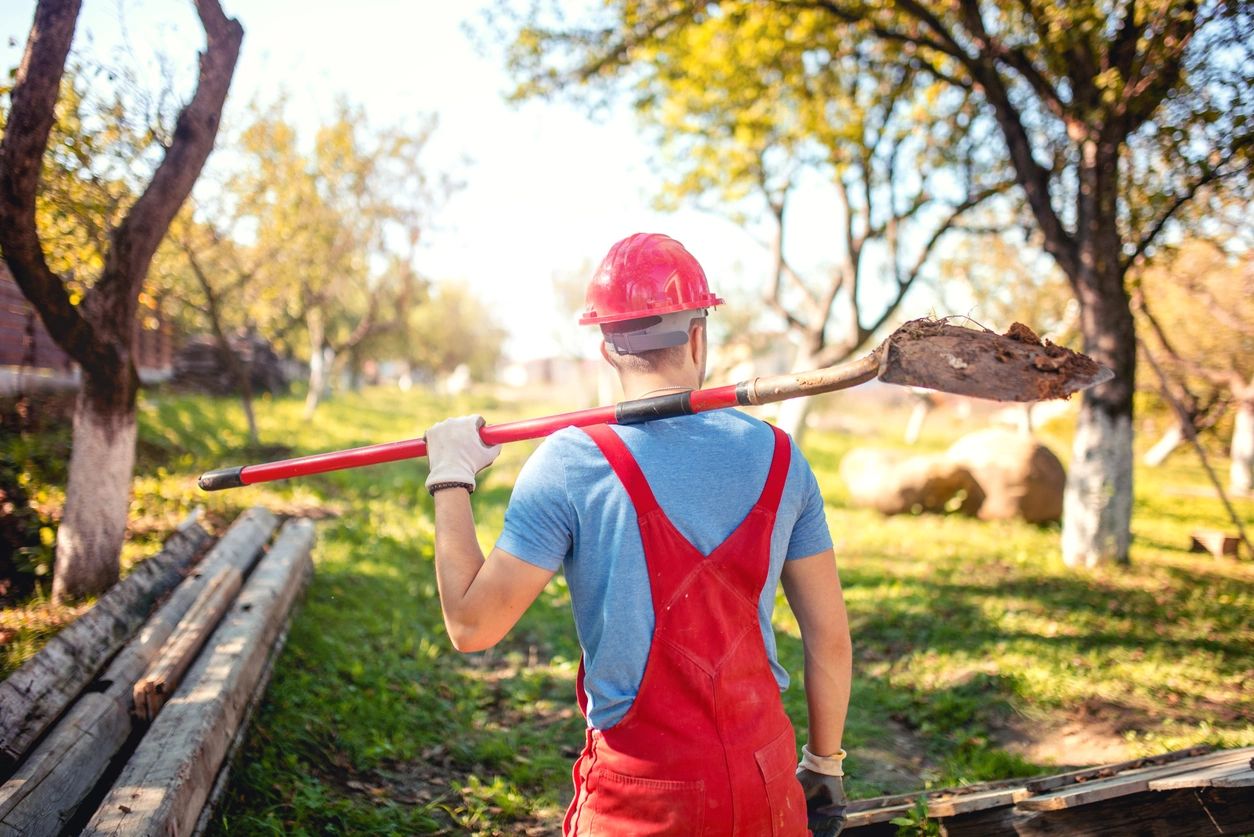
A Short Story by Michael Fine: “Now Vern Has a Groundhog in the HAVAHART Trap”
By Michael Fine, contributing writer
© 2026 by Michael Fine
This is a work of fiction. Names, characters, businesses, places, events, locales, and incidents are either the products of the author’s imagination or used in a fictitious manner. Any resemblance to actual persons, living or dead, or actual events is purely coincidental. Without limiting the author’s exclusive rights, any use or reproduction of this work to “train” generative AI technologies is strictly prohibited. The author reserves all rights to license this work for AI training and development.
–
Don’t say I didn’t warn him.
Vern got the idea that you can do something about groundhogs by trapping them.
I understand his concern.
–
Groundhogs have neither shyness nor shame. They are rodents. Very big rodents. They will eat anything and everything they can get their teeth into. They eat tomatoes. They eat the young zucchini plants. They eat flowers and tulips down to the bulbs and the peas before the pods have filled out. They eat cucumbers growing on the vine and then they eat the vines themselves. They’ll eat columbine and grape hyacinths and delphinium and foxglove. They don’t care. If it is a plant and is growing, they will eat it. Like a man, when it comes to eating, to tell the truth.
–
The same thing happens every year. We start seeds inside in April. Set them on the windowsills and keep the potting soil moist. Nothing makes me happier than seeing those seeds sprout, seeing the green shoots pushing up through the dark brown soil.
–
I nurture those plants. I do. I look at them every day. I talk to them and water them and urge them on, so that they will be ready to grow big and grow quick the moment we set them out.
–
Then in May, when the midday sun gets stronger, just after the asparagus comes up, we make a garden. We take turns, Vern and I. We layer on a thick bed of compost. Then Vern digs and turns over the soil, digging in the compost that will feed the seedings we’ll plant. I rake. I break up the clods and make a nice smooth seed bed, though sometimes I get impatient and turn over some of the soil myself. You can plant peas early. And lettuce. And chard. And spinach. But you have to wait until the soil warms up before you plant anything else.
–
Toward the end of May, I set our seedings out, then hope and pray. I think about the garden we’ll have: cucumbers, carrots, tomatoes, peppers, eggplant. Zucchini and summer squash. Potatoes and lettuce. I can almost see and smell the flowers that will grow in the flower garden we keep right near the house: zinnias, cosmos, columbine, foxglove, calla lilies, daisies, sunflowers – all those blue and yellow irises, peonies, nasturtium and moonflower, hollyhock, and hibiscus – yellow and orange, red and blue and white, all together, a garden drenched in color, brilliant in the afternoon sun.
–
But then, just as the ground warms up and all my little seedings start to grow and then suddenly get bigger, that old groundhog comes out of his burrow, and starts to waddle around like he owns the place. First flowers disappear – tulips eaten right off their stems, peonies, their wide, dark green leaves spreading out, the dense round peony bud-balls, bigger than golf balls and ready to burst, eaten whole, leaves and all, the stems left lying on the ground like so much trash left behind from a party or a parade.
–
Then the vegetables start to disappear, the cucumbers and the squash plants first.
–
It just ain’t fair, what that groundhog does, eating all our vegetables and flowers like that.
–
We try to prevent it, of course. We do all sorts of things to scare that creature away. Fences. Big plastic owls in the garden. I even hung old DVDs from the trees near the garden, figuring the bouncing light that they reflect from the sun would scare that old groundhog away. Poured Epson salts down the groundhog holes. Even got me a solar powered motion-detector alarm that makes a siren and sets off flashing lights as soon as anything comes near.
–
But none of it worked.
–
So Vern sat out in his lawn chair with his 12 gauge shotgun for two whole days, thinking to blow that critter to smithereens. And I started another set of plants on the windowsill.
–
But that old groundhog is smarter than us. It didn’t come around when Vern was out there.
–
The next morning, though, it ate my cucumbers and my turnips, right down to the ground.
–
“Got to get us a dog,” Vern said. “A mean old dog with a loud bark. That can chase the furry little bugger down. A dog that can mark the place with his scent. So no groundhog ever comes around here again.”
“I don’t know about that,” I said. “Costs a bundle to feed a dog. You got to get it shots. They poop in the yard. Dogs run away. Children is easier than dogs, I said. They grow up and leave home, most of the time. Dogs, they just stick around. People get attached to them, and I got all I can handle, just having you around this place.”
–
That was when Vern went and bought himself one of them HAVAHART traps.
–
Now, those traps are pretty spectacular. They are boxes made out of shiny metal wire with hooks and bars and plates inside. Bigger than a breadbox. Smaller than most of the cartons that come from Amazon. Those traps are low and long and lie next to the ground. Got a door on one end or two ends, and a place you put the bait, so when that groundhog or raccoon or possum or whatever comes inside to nibble at the bait, they step on a plate that triggers the doors to spring shut, and lock. Simple in its way. And very smart at the same time.
–
Except if I was a groundhog, I wouldn’t go in there. It’s a little box. With only one way out. I’d be smarter than that, I think.
–
But Vern, he outsmarted that old groundhog. He put on gloves when he was setting that trap, so the groundhog wouldn’t smell him. Let the trap sit out near the garden for a week so that the old groundhog would get used to seeing it and would start to think it was a rock or a tree or a stump. Then Vern buried the trap in dried leaves and grass clippings from when he mowed the lawn. Same theory. Cut grass smells like cut grass, not like people, though only people are dumb enough to cut grass, cause only people have nothing better to do with themselves. Then Vern put in rotting cantaloupe as bait. You ever smell rotting cantaloupe? Stinks to high heaven – and it covers up all our human smells we don’t notice because we are all used to one another, more or less.
–
I set out some tomato plants, a few squash and cucumber plants and one or two peppers, just to tempt that old groundhog. I kept my remaining plants on the windowsill, though, so as not to tempt fate, not to count chickens before they were hatched, or count out groundhogs before they were caught, so to speak.
–
Then we just sat and waited.
–
One day passed. Then two days. Then three days. There was flies buzzing all around that old piece of cantaloupe and it surely did stink.
–
I thought that groundhog had wised up to us, and our garden was a lost cause again, but I went into the garden every day and none of those tender young plants were gone. Not yet.
–
The morning of the fourth day, we woke up to a terrible rattling around. Dawn was early, about 5 am then, and it was light already so you couldn’t just put that rattling away, like it was in a dream or something, and go back to sleep. Vern got himself out of bed, put his overalls on, put his work boots on, got the 12 gauge down from where it sits on the rack in the mudroom, and walked outside, that gun under his arm. I waited a few minutes and then I come out too, in my nighty and slippers after I put a housecoat on.
–
It was early, like I said, and already warm. The early morning light was yellow and strong. The grass was covered in dew, which glinted and sparkled in that light. A fine mist had started to rise from the cars and the driveway. Everything smelled fresh and clean, except I could smell that cantaloupe, syrupy sweet but also rotten, as I got closer, and there was also a bitter, burnt, gamy smell, like the smell of mud in a creek-bed and the bad breath of a big dog, all wrapped together.
–
Maybe we got us a skunk, I thought, and I suddenly realized how dumb we were to put out a trap because you are as like to catch a skunk around here as you are a groundhog or a raccoon.
–
Vern was standing over that trap with his hands in the air, looking like he did not know what to do first. The trap was shaking and rolling something awful. It was rattling so bad I thought it might explode.
–
Sure enough we had caught ourselves a big daddy groundhog. It was bigger than a breadbox itself – about the size of a little vacuum cleaner but ten times more powerful. It was brown and grey and black, with beady little eyes and a moist black nose and whiskers like a cat has. It had shoulders like a linebacker, those buck teeth you see on beavers, and black claws that looked like shovels with razor-sharp silvery nails.
–
That varmint was fit to be tied. It was clawing at the wire, biting it and kicking with its hind legs as it clawed at the wire with its front legs and it moved so hard and so fast that the trap rolled from side to side and had rolled over once. All that was keeping the trap from flipping again was the garden fence on one side and Vern’s foot on the other.
–
“We got that groundhog,” Vern said. “What now?”
“Whatdaya mean, what now?” I said. “That trap was your idea.”
“Wish we’d bought a dog,” Vern said. “But you don’t like dogs.”
I took one giant step backward. The groundhog was now Vern’s problem. Not mine.
“I’m going to make coffee,” I said. “Then I am going back to bed.”
–
There is a problem, of course, with trapped animals. Once upon a time, you might close your eyes, grit your teeth, apologize to God and the animal itself, and then do what has to be done, which is drown the bugger in a barrel, or shoot it, all of which you can do without taking it out of that cage, whether you have a heart or not. Or you could throw the beast inside the cage in the back of your pickup truck, drive it to the next county or the next state, open up the door of that trap, let the thing bust out, disappear into the brush, and emerge as somebody else’s problem.
–
Because the reality is, it is either the critter or it is you. Either you want a garden or not. There isn’t a nice way to go about this. It isn’t pretty and it isn’t about whose feelings might get hurt or what some people think is just and fair. Not about microaggression, thank you very much. About life and death, at least for the groundhog, and a garden or not, for us humans. This cannot be finessed. There is no meeting everybody in the middle. And no way to compromise. Sorry. That’s the truth, the whole truth, and nothing but the truth, and there is nothing pretty or a nice way around it.
–
But now, in 2026, we got us laws and we got rules and we got all sorts of people on the internet and social media and all their conspiracy theories and so forth. It ain’t legal anymore to just throw the critter in the back of your truck and drive it to the next county or the next state and let it go. Now, there is all sorts of people – the animal rights people and the animal control people, the environmental police, the real police, the fish and game people and whatnot. And you never know when someone sees you do something, pulls out the camera on their cellphone, and the next thing you know someone is doxxing you or threatening your life because you disrespected some poor little animal, as if human beings aren’t animals too – animals that like to have a garden and a zucchini and a home grown tomato, once in a while. It probably ain’t even legal to shoot groundhogs without a hunting license anymore, and they probably have themselves a groundhog hunting season so you can likely only shoot groundhogs of a certain size for maybe two weeks in the year, on Tuesdays at 6 am in the morning. Or something like that.
–
Which is why certain people vote for this one and that one for president, just sayin, even though none of them politicians on either side is any good. People just want to get these monkeys off our backs. Not that voting this way or that way helps. Not for one second.
–
So I laid myself down with my fingers in my ears. I didn’t know what Vern would do. I didn’t want to know. Or think about it.
–
When I woke up Vern was driving up the driveway in his old truck. I saw him park that truck. And take the HAVAHART trap out of the bed. Hang the trap from a hook in the garage. No groundhog in it.
–
“Well?” I said, when Vern comes into the kitchen. “I’m reheating the coffee I made this morning for you.”
“Don’t ‘well’ me,” Vern said. “I’ll take a cup of coffee though.”
I poured out the coffee and put it down on the table where he always sits. He sat down.
“Well?” I said again.
“Ask me no questions. I’ll tell you no lies.” Vern said. “I took it out to Big River and let it go. Twelve miles away. Should be enough. Ain’t no cause to go killing living things,” he said. “Even the one’s I don’t like. That don’t like me. Law or no law. It was five-thirty in the morning. None of them animal rights people is up yet.”
–
I shrugged and shook my head. He takes risks, that man. That’s what I like about him.
–
Later that day, I went out to the garden to admire the squash plants and the cucumbers that were growing there. And the remaining peonies, nasturtiums and zinnias near the house.
–
It wasn’t one day and not two days and not three days later that the zinnias and then the cucumbers started to disappear again.
–
I bought a dog.
___
Many thanks to Carol Levitt for proofreading, and to Lauren Hall for all-around help and support.
Please click here to receive Michael Fine’s monthly short stories and his new series, What’s Crazy in Health Care. Please invite others to join by sending them the link here.
Or even better, ask them to join us on Substack: https://michaelfinemd.substack.com/
Information about Michael’s books, stories, posts, talks and performances is available at www.MichaelFineMD.com or by clicking the link here. Join us!
___
Read more short stories by Michael Fine, go here: https://2×8.ea2.myftpupload.com/dr-michael-fine/

Michael Fine, MD is currently Health Policy Advisor in Central Falls, Rhode Island and Senior Population Health and Clinical Services Officer at Blackstone Valley Health Care, Inc. He is facilitating a partnership between the City and Blackstone to create the Central Falls Neighborhood Health Station, the US first attempt to build a population based primary care and public health collaboration that serves the entire population of a place.He has also recently been named Health Liaison to the City of Pawtucket. Dr. Fine served in the Cabinet of Governor Lincoln Chafee as Director of the Rhode Island Department of Health from February of 2011 until March of 2015, overseeing a broad range of public health programs and services, overseeing 450 public health professionals and managing a budget of $110 million a year.
Dr. Fine’s career as both a family physician and manager in the field of healthcare has been devoted to healthcare reform and the care of under-served populations. Before his confirmation as Director of Health, Dr. Fine was the Medical Program Director at the Rhode Island Department of Corrections, overseeing a healthcare unit servicing nearly 20,000 people a year, with a staff of over 85 physicians, psychiatrists, mental health workers, nurses, and other health professionals.He was a founder and Managing Director of HealthAccessRI, the nation’s first statewide organization making prepaid, reduced fee-for-service primary care available to people without employer-provided health insurance. Dr. Fine practiced for 16 years in urban Pawtucket, Rhode Island and rural Scituate, Rhode Island. He is the former Physician Operating Officer of Hillside Avenue Family and Community Medicine, the largest family practice in Rhode Island, and the former Physician-in-Chief of the Rhode Island and Miriam Hospitals’ Departments of Family and Community Medicine. He was co-chair of the Allied Advocacy Group for Integrated Primary Care.
He convened and facilitated the Primary Care Leadership Council, a statewide organization that represented 75 percent of Rhode Island’s primary care physicians and practices. He currently serves on the Boards of Crossroads Rhode Island, the state’s largest service organization for the homeless, the Lown Institute, the George Wiley Center, and RICARES. Dr. Fine founded the Scituate Health Alliance, a community-based, population-focused non-profit organization, which made Scituate the first community in the United States to provide primary medical and dental care to all town residents.Dr. Fine is a past President of the Rhode Island Academy of Family Physicians and was an Open Society Institute/George Soros Fellow in Medicine as a Profession from 2000 to2002. He has served on a number of legislative committees for the Rhode Island General Assembly, has chaired the Primary Care Advisory Committee for the Rhode Island Department of Health, and sat on both the Urban Family Medicine Task Force of the American Academy of Family Physicians and the National Advisory Council to the National Health Services Corps.
All of Michael Fine’s stories and books are available on MichaelFineMD.com or by clicking here

.