
Subscribe!

Words Matter: Homes or Units? Rhode Island Blurs the Difference – Commentary
by Nancy Thomas
Rhode Island needs affordable rentals, emergency shelter and homes people can purchase. But those are different outcomes—and political language should stop blurring them together.
Rhode Island’s housing debate has developed a language problem.
On August 28, one Democratic candidate for governor drew this contrast: “His housing bond will only produce 600 housing units. And I want to build 20,000 new homes and apartments.” In the same Ocean State Media program, the incumbent governor described the state’s record as more than 8,300 “housing units” and referred to the challenger’s proposal as “20,000 units.”
One campaign’s units become homes when they belong to its plan. The other campaign turns those homes back into units when criticizing it.
The state did something similar one day earlier. Its August 27 announcement was headlined “147 New Affordable Homes.” The project descriptions and accompanying statement called them units. The social-media announcement said “147 new affordable units”—then described the state’s broader target as “15,000 new homes.”
The pattern also appears at the municipal level. Providence’s August 27 housing report said the city brought “nearly twice as many new homes online” and quoted its mayor saying Providence was “building and completing new homes.” The measurable result was 988 new residential units, approximately 40 percent affordable. The report did not say how many were rentals and how many were intended for owner-occupants.
The Providence report also said $58.7 million supported more than 1,700 “deed-restricted affordable homes.” But a deed restriction can preserve the affordability of a rental property. It does not mean the resident owns the deed, and it is not a count of 1,700 new homeowners.
This is not a partisan gotcha. Campaigns, state agencies and municipal governments all move between the words. But “home” carries an emotional and financial meaning that “unit” does not.
Every housing unit can become someone’s home in the human sense. A rented apartment may be where a family raises children, celebrates holidays and builds a life. But in public accounting, a rental unit, a shelter bed and a property offered for purchase are not interchangeable. Only one gives the resident a deed and the opportunity to build equity.
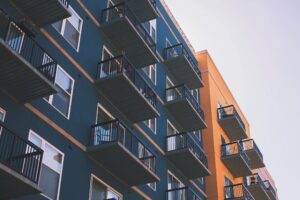
A unit is not necessarily a home, just as a snack is not a meal and an entry-level job is not a career. The entry-level job was traditionally understood as a starting point—a first rung on a ladder—not the place where a worker was expected to remain forever. Housing has a ladder, too. At least in Rhode Island it does. A shelter can lead to an apartment; an affordable apartment can provide stability; and homeownership can provide permanence, equity and something to leave to the next generation. Every rung matters, but the rungs are not interchangeable. When government calls all of them “homes,” it becomes harder to see which part of the ladder is missing.
Rhode Island is not New York City with subways and stores and services at your front door, where hundreds are living, commuting and maneuvering around big city life. Building large apartment buildings, often these days without parking, does more than obscures sight lines – it can restrict people to life in and around their immediate area. No ease of transportation, nor access of services, stores, entertainment, recreation. It can make life quite small.
What did the $38.7 million actually produce?
The August 27 awards will support three affordable rental developments: 76 units at Tidewater School Street in Pawtucket, 29 senior units at Winsor Gardens in Smithfield and 42 units at Public and Pine in Providence.
Rhode Island needs affordable apartments for families, seniors, people with disabilities and households with very low incomes. But these awards are producing 147 rental units—not 147 new homeowners. Taxpayers should not have to read through the project descriptions to discover that distinction.
The awards total $38,702,384, or approximately $263,000 in announced state funding per rental unit. That is not the total construction cost. Two projects are also expected to attract approximately $22.87 million in private investment through federal Low-Income Housing Tax Credits, and all three received municipal contributions that were not itemized in the announcement. A business publication repeated the “affordable homes” working in its initial report, then more precisely described Tidewater’s residences as “affordable apartments”.
The honest terminology is simple: affordable rental units, and homes for purchase. Count each category, fund each category and report each one plainly.
A 70-square-foot shelter is not a permanent home

The language becomes even more elastic at ECHO Village, Rhode Island’s Pallet shelter site. In public conversation, its structures have been called tiny homes and Pallet homes. I even heard someone describe them as “little homes.”
The official specifications tell us what they are. ECHO Village contains 45 one-room Pallet units, each measuring 70 square feet. Bathrooms, laundry and community space are in separate shared structures. The Executive Office of Housing calls ECHO Village a “pallet shelter pilot,” counts it as shelter capacity and describes it as a temporary step toward permanent supportive housing.
A private room with a locking door, heat, air conditioning and protection from the weather can be lifesaving for someone coming off the street. Emergency shelter can provide safety, privacy and dignity.
But its dignity does not depend on calling it something it is not. A temporary 70-square-foot shelter without a private bathroom gives a person a safer place to sleep while seeking housing. It provides no deed, no equity and no asset to pass to the next generation. Calling it a “little home” makes a bridge sound like a destination—and risks lowering the standard of what we believe a permanent home should be.
Pallet shelters were meant to provide emergency, short term housing for homelessness or weather-related situations. Nationally, Pallet says residents average three to six months. Several news reports around the country noted stays of 1, 2, 3 years – or more.
At Providence’s ECHO Village, the projected stay was approximately nine months. House of Hope has said residents may remain as long as they follow the rules and actively work with case managers toward permanent housing. One couple at ECHO Village’s first anniversary had lived there since it opened—about one year. 14 residents had moved into permanent housing during ECHO’s first 14 months—approximately one successful permanent-housing move per month.
So, for Rhode Island, the most accurate shorthand is: planned for about nine months, but many may live there for a year or longer because permanent housing simply is not available. These shelters are called “temporary,” but the housing shortage can make them semi-permanent in practice.
Homeownership and generational wealth
The difference between renting and owning is not merely semantic. It is financial.
A tenant pays for a place to live. An owner pays for a place to live while gradually converting part of a mortgage payment into equity. If the property appreciates, that gain generally belongs to the owner. The asset may later help leverage a larger home as a family grows, or pay for education, finance a business, support retirement, survive an emergency or provide an inheritance.
The latest U.S. Census Bureau report on household wealth found that households owning their homes had median wealth 48.3 times that of renters in 2024. That does not mean a deed magically creates wealth. Homeowners tend to be older and have higher incomes, and ownership brings debt, taxes, repairs and market risk. The Census Bureau found that owners remained wealthier even when home equity was excluded.
But the report also demonstrates how important the house itself can be. Among households with home equity, the median amount was $220,000. For households below the wealthiest 1 percent, home equity represented 31.3 percent of aggregate wealth. For many working- and middle-class families, their home is their largest financial asset.
That path is narrowing in Rhode Island. In July 2026, the median single-family sale price reached $525,000 and the median condominium price reached $399,900, according to the Rhode Island Association of Realtors. Even condominiums—long an entry point for first-time buyers—are moving beyond the reach of many households.
Rhode Island has taken one meaningful step. In June, the state awarded the first $7.5 million from its $20 million Entry-Level Homeownership Program. The projects will contain 172 owner-occupied homes, with the funding directly supporting 90 homes priced below $400,000. They include single-family houses, townhouses and condominiums. The announced grant averages about $83,000 for each of those 90 directly funded homes. The state correctly describes this program as a path to equity and long-term financial security.
The $83,000 ownership figure and the $263,000 rental figure are not an apples-to-apples comparison. Rental developments serving very-low-income households frequently need deeper capital support, while ownership projects recover part of their cost when buyers obtain mortgages. But the comparison raises a legitimate policy question: How many ownership opportunities could Rhode Island unlock through targeted help with land, infrastructure, construction or purchase prices?
Homeownership should not be a small side program within an overwhelmingly rental-focused production system. If Rhode Island is serious about generational wealth, it must count not only how many places are built, but how many Rhode Islanders gain ownership of an asset.
Garden City, Cranston, was more than a development
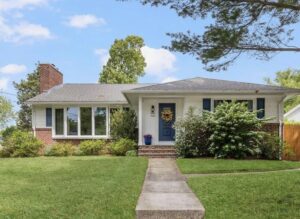
Garden City in Cranston, has a history that offers another way to think about housing production.
Garden City is sometimes called America’s first planned community. The better-supported description remains impressive: it was one of the earliest planned communities of the postwar era and one of Rhode Island’s defining experiments in joining residential and commercial life.
Construction began in 1946 to meet demand from soldiers returning from World War II, newly married couples and young families. The community included single-family houses, minimal apartments largely intended to accommodate single men not yet ready for a home, basic stores, a Catholic church and school, and an elementary school placed deep inside the neighborhood. Its ranches, Cape Cods and split-levels sat on winding streets and substantial landscaped lots.
The design reflected the typical assumptions of that time: a newly married couple, one wage earner, one parent at home, one car and children soon to follow. Most of the original houses had three bedrooms. They were large enough to begin family life but were not intended to satisfy every possible need for the next 50 years.
The pattern was almost built into the community. Young couples bought in and began raising children. By the time a second child arrived and the family wanted more room, those who could afford it often moved up and out. Usisng the equity in their homes was critical in their ability to do so. Seniors then bought many of the ranches and other one-story houses because they offered a manageable way to downsize.
Garden City supported a housing ladder: a place to begin and a place to simplify. The starter home did not have to become a forever home because families could realistically imagine taking the next step. Those who stayed due to low crime, good access to services, good schools, and a friendly neighborhood, often added rooms – great rooms, or even adding another level – and most finished off their basements. Today, a few ADUs can be seen being constructed.
Those original days provided an early-life support system. The shopping center originally offered the basics people used regularly; it was not merely a collection of destination restaurants and upscale stores. The church, parochial school and neighborhood elementary school supported families close to home. Garden City Center’s history describes the original goal as allowing people to live, work and play within walking distance.
Garden City has no sidewalks, yet it became a walking neighborhood because the streets connected residents to one another, the schools and the commercial center. A modern version should certainly include sidewalks and safer pedestrian infrastructure, but it should preserve the principle that useful places belong inside the community—not miles away across a highway interchange.
Garages reveal another change. Many now function as storage while the cars remain in driveways. A house designed for a one-car family encountered a future of multiple vehicles and far more possessions than its original planners anticipated.
Those changes show that a successful community evolves. Garden City’s homes kept their individual identities while adapting to new families and new eras. More than seven decades later, the neighborhood remains recognizable and its commercial center remains active.
Those who bought 30 years ago in the low $100s are today able to reap rewards for themselves – or their families at their passing – as homes in the high $500s are not rare there.
Garden City shows that planning and individuality are not opposites. Rentals and owner-occupied homes can coexist. A development can become a place.
Could a smaller Garden City work today?
Yes—but only if Rhode Island sets out to build a community rather than simply reach a unit count.
A version one-quarter or one-half the size of Garden City would still be large enough for hundreds of residences, a neighborhood commercial center, green space and essential services. It should be more compact than the original and include small detached houses, duplexes, townhouses and condominiums for purchase, along with well-designed rental apartments for people who need or prefer them.
Most importantly, ownership cannot be whatever remains after the rental financing is assembled. It must be a stated and measurable goal from the beginning.
A modern plan should restore the housing ladder: attainable first purchases for young households, larger choices for growing families and one-story or accessible homes for older owners who want to downsize without leaving the community. That mix would encourage natural turnover while allowing residents to remain nearby as their needs change.
The houses should be designed to grow without requiring enormous lots. Plans can reserve a sensible location for a future rear or side addition, use roof framing that permits another bedroom, rough in basements for future living space and include enough actual storage that garages can hold cars. A small house capable of expanding is more useful—and potentially more attainable—than requiring a young buyer to purchase every square foot the family might ever need on the first day.
The modern community cannot assume one car, one wage earner or one parent at home. It would need sidewalks, traffic calming, realistic parking and storage, child care, accessible design, energy efficiency and connections to public transportation. Houses should have distinct addresses and varied architecture, while porches, trees, paths, greens, schools and neighborhood businesses create a shared identity.
The greatest obstacles are land and finance, not design. A developer buying costly land, installing every road and utility and carrying years of approval expenses will build at the highest price the market permits. A truly attainable Garden City would likely require publicly controlled or underused land, master zoning approved in advance, public infrastructure investment and financing structured for buyers as well as rental developers.
Affordability restrictions also require balance. A strict permanent resale cap may preserve the price for the next buyer while denying the first owner the wealth-building opportunity the program was created to provide. A shared-appreciation model could protect the public investment and future affordability while allowing homeowners to retain a meaningful portion of the gain.
This is achievable. Rhode Island already subsidizes land, infrastructure and construction. It already coordinates zoning relief and complex financing packages. The question is whether those tools will be used deliberately to build neighborhoods where ordinary Rhode Islanders can acquire an attainable home with its own identity—and an asset they can someday pass on.
Count what Rhode Island is actually creating
Rhode Island needs all three levels of response. People sleeping outside need safe emergency shelter tonight. Renters need stable, affordable apartments. Families who are ready to buy need a realistic path to ownership.
We do not need to diminish shelter or rental housing to elevate homeownership. We need to stop blurring these outcomes together.
Call a shelter bed a shelter bed. Call an affordable rental unit an affordable rental unit. Call a house, townhouse or condominium offered for purchase an ownership opportunity. Report all three numbers—and report how many Rhode Islanders will actually build equity.
Every housing unit may become someone’s home. But not every unit creates a homeowner, and public policy should stop pretending those outcomes are interchangeable.
Reporting note
The per-residence public-funding figures are simple averages based on announced awards. They are not total development costs and should not be treated as construction-efficiency comparisons without complete project budgets, financing sources, affordability terms and operating requirements.
A Home Is Not a Unit—and a Unit Is Not Homeownership
Rhode Island needs affordable rentals, emergency shelter and homes people can purchase. But those are different outcomes—and political language should stop blurring them together.
Rhode Island’s housing debate has developed a language problem.
On August 28, one Democratic candidate for governor drew this contrast: “His housing bond will only produce 600 housing units. And I want to build 20,000 new homes and apartments.” In the same Ocean State Media program, the incumbent governor described the state’s record as more than 8,300 “housing units” and referred to the challenger’s proposal as “20,000 units.”
One campaign’s units become homes when they belong to its plan. The other campaign turns those homes back into units when criticizing it.
The state did something similar one day earlier. Its August 27 announcement was headlined “147 New Affordable Homes.” The project descriptions and accompanying statement called them units. The social-media announcement said “147 new affordable units”—then described the state’s broader target as “15,000 new homes.”
The pattern also appears at the municipal level. Providence’s August 27 housing report said the city brought “nearly twice as many new homes online” and quoted its mayor saying Providence was “building and completing new homes.” The measurable result was 988 new residential units, approximately 40 percent affordable. The report did not say how many were rentals and how many were intended for owner-occupants.
The Providence report also said $58.7 million supported more than 1,700 “deed-restricted affordable homes.” But a deed restriction can preserve the affordability of a rental property. It does not mean the resident owns the deed, and it is not a count of 1,700 new homeowners.
This is not a partisan gotcha. Campaigns, state agencies and municipal governments all move between the words. But “home” carries an emotional and financial meaning that “unit” does not.
Every housing unit can become someone’s home in the human sense. A rented apartment may be where a family raises children, celebrates holidays and builds a life. But in public accounting, a rental unit, a shelter bed and a property offered for purchase are not interchangeable. Only one gives the resident a deed and the opportunity to build equity.
A unit is not necessarily a home, just as a snack is not a meal and an entry-level job is not a career. The entry-level job was traditionally understood as a starting point—a first rung on a ladder—not the place where a worker was expected to remain forever. Housing has a ladder, too. A shelter can lead to an apartment; an affordable apartment can provide stability; and homeownership can provide permanence, equity and something to leave to the next generation. Every rung matters, but the rungs are not interchangeable. When government calls all of them “homes,” it becomes harder to see which part of the ladder is missing.
What did the $38.7 million actually produce?
The August 27 awards will support three affordable rental developments: 76 units at Tidewater School Street in Pawtucket, 29 senior units at Winsor Gardens in Smithfield and 42 units at Public and Pine in Providence.
Rhode Island needs affordable apartments for families, seniors, people with disabilities and households with very low incomes. But these awards are producing 147 rental units—not 147 new homeowners. Taxpayers should not have to read through the project descriptions to discover that distinction.
The awards total $38,702,384, or approximately $263,000 in announced state funding per rental unit. That is not the total construction cost. Two projects are also expected to attract approximately $22.87 million in private investment through federal Low-Income Housing Tax Credits, and all three received municipal contributions that were not itemized in the announcement. Providence Business News repeated the “affordable homes” wording in its initial report, then more precisely described Tidewater’s residences as affordable apartments.
The honest terminology is simple: affordable rental units, shelter beds and homes for purchase. Count each category, fund each category and report each one plainly.
A 70-square-foot shelter is not a permanent home
The language becomes even more elastic at ECHO Village, Rhode Island’s Pallet shelter site. In public conversation, its structures have been called tiny homes and Pallet homes. I even heard someone describe them as “little homes.”
The official specifications tell us what they are. ECHO Village contains 45 one-room Pallet units, each measuring 70 square feet. Bathrooms, laundry and community space are in separate shared structures. The Executive Office of Housing calls ECHO Village a “pallet shelter pilot,” counts it as shelter capacity and describes it as a temporary step toward permanent supportive housing. That is the accurate description.
A private room with a locking door, heat, air conditioning and protection from the weather can be lifesaving for someone coming off the street. Emergency shelter can provide safety, privacy and dignity.
But its dignity does not depend on calling it something it is not. A temporary 70-square-foot shelter without a private bathroom gives a person a safer place to sleep while seeking housing. It provides no deed, no equity and no asset to pass to the next generation. Calling it a “little home” makes a bridge sound like a destination—and risks lowering the standard of what we believe a permanent home should be.
Homeownership and generational wealth
The difference between renting and owning is not merely semantic. It is financial.
A tenant pays for a place to live. An owner pays for a place to live while gradually converting part of a mortgage payment into equity. If the property appreciates, that gain generally belongs to the owner. The asset may later help pay for education, finance a business, support retirement, survive an emergency or provide an inheritance.
The latest U.S. Census Bureau report on household wealth found that households owning their homes had median wealth 48.3 times that of renters in 2024. That does not mean a deed magically creates wealth. Homeowners tend to be older and have higher incomes, and ownership brings debt, taxes, repairs and market risk. The Census Bureau found that owners remained wealthier even when home equity was excluded.
But the report also demonstrates how important the house itself can be. Among households with home equity, the median amount was $220,000. For households below the wealthiest 1 percent, home equity represented 31.3 percent of aggregate wealth. For many working- and middle-class families, their home is their largest financial asset.
That path is narrowing in Rhode Island. In July 2026, the median single-family sale price reached $525,000 and the median condominium price reached $399,900, according to the Rhode Island Association of Realtors. Even condominiums—long an entry point for first-time buyers—are moving beyond the reach of many households.
Rhode Island has taken one meaningful step. In June, the state awarded the first $7.5 million from its $20 million Entry-Level Homeownership Program. The projects will contain 172 owner-occupied homes, with the funding directly supporting 90 homes priced below $400,000. They include single-family houses, townhouses and condominiums. The announced grant averages about $83,000 for each of those 90 directly funded homes. The state correctly describes this program as a path to equity and long-term financial security.
The $83,000 ownership figure and the $263,000 rental figure are not an apples-to-apples comparison. Rental developments serving very-low-income households frequently need deeper capital support, while ownership projects recover part of their cost when buyers obtain mortgages. But the comparison raises a legitimate policy question: How many ownership opportunities could Rhode Island unlock through targeted help with land, infrastructure, construction or purchase prices?
Homeownership should not be a small side program within an overwhelmingly rental-focused production system. If Rhode Island is serious about generational wealth, it must count not only how many places are built, but how many Rhode Islanders gain ownership of an asset.
Garden City was more than a development
I live in Garden City in Cranston, and its history offers another way to think about housing production.
Garden City is sometimes called America’s first planned community. The better-supported description remains impressive: it was one of the earliest planned communities of the postwar era and one of Rhode Island’s defining experiments in joining residential and commercial life.
Construction began in 1946 to meet demand from soldiers returning from World War II, newly married couples and young families. The community included single-family houses, apartments, basic stores, a Catholic church and school, and an elementary school placed deep inside the neighborhood. Its ranches, Cape Cods and split-levels sat on winding streets and substantial landscaped lots.
The design reflected the typical assumptions of that time: a newly married couple, one wage earner, one parent at home, one car and children soon to follow. Most of the original houses had three bedrooms. They were large enough to begin family life but were not intended to satisfy every possible need for the next 50 years.
The pattern was almost built into the community. Young couples bought in and began raising children. By the time a second child arrived and the family wanted more room, those who could afford it often moved up and out. Seniors then bought many of the ranches and other one-story houses because they offered a manageable way to downsize.
Garden City supported a housing ladder: a place to begin and a place to simplify. The starter home did not have to become a forever home because families could realistically imagine taking the next step.
It also provided an early-life support system. The shopping center originally offered the basics people used regularly; it was not merely a collection of destination restaurants and upscale stores. The church, parochial school and neighborhood elementary school supported families close to home. Garden City Center’s history describes the original goal as allowing people to live, work and play within walking distance.
Garden City has no sidewalks, yet it became a walking neighborhood because the streets connected residents to one another, the schools and the commercial center. A modern version should certainly include sidewalks and safer pedestrian infrastructure, but it should preserve the principle that useful places belong inside the community—not miles away across a highway interchange.
The houses were also capable of changing. Because the lots were substantial, owners could add upward or outward as expectations changed. From walking and living in the neighborhood, I would estimate that perhaps 30 percent of the houses have acquired additions—extra bedrooms, enlarged kitchens, family rooms or the great rooms later generations wanted. Many basements remain unfinished.
Garages reveal another change. Many now function as storage while the cars remain in driveways. A house designed for a one-car family encountered a future of multiple vehicles and far more possessions than its original planners anticipated.
Those changes show that a successful community evolves. Garden City’s homes kept their individual identities while adapting to new families and new eras. More than seven decades later, the neighborhood remains recognizable and its commercial center remains active.
Garden City shows that planning and individuality are not opposites. Rentals and owner-occupied homes can coexist. A development can become a place.
Could a smaller Garden City work today?
Yes—but only if Rhode Island sets out to build a community rather than simply reach a unit count.
A version one-quarter or one-half the size of Garden City would still be large enough for hundreds of residences, a neighborhood commercial center, green space and essential services. It should be more compact than the original and include small detached houses, duplexes, townhouses and condominiums for purchase, along with well-designed rental apartments for people who need or prefer them.
Most importantly, ownership cannot be whatever remains after the rental financing is assembled. It must be a stated and measurable goal from the beginning.
A modern plan should restore the housing ladder: attainable first purchases for young households, larger choices for growing families and one-story or accessible homes for older owners who want to downsize without leaving the community. That mix would encourage natural turnover while allowing residents to remain nearby as their needs change.
The houses should be designed to grow without requiring enormous lots. Plans can reserve a sensible location for a future rear or side addition, use roof framing that permits another bedroom, rough in basements for future living space and include enough actual storage that garages can hold cars. A small house capable of expanding is more useful—and potentially more attainable—than requiring a young buyer to purchase every square foot the family might ever need on the first day.
The modern community cannot assume one car, one wage earner or one parent at home. It would need sidewalks, traffic calming, realistic parking and storage, child care, accessible design, energy efficiency and connections to public transportation. Houses should have distinct addresses and varied architecture, while porches, trees, paths, greens, schools and neighborhood businesses create a shared identity.
The greatest obstacles are land and finance, not design. A developer buying costly land, installing every road and utility and carrying years of approval expenses will build at the highest price the market permits. A truly attainable Garden City would likely require publicly controlled or underused land, master zoning approved in advance, public infrastructure investment and financing structured for buyers as well as rental developers.
Affordability restrictions also require balance. A strict permanent resale cap may preserve the price for the next buyer while denying the first owner the wealth-building opportunity the program was created to provide. A shared-appreciation model could protect the public investment and future affordability while allowing homeowners to retain a meaningful portion of the gain.
This is achievable. Rhode Island already subsidizes land, infrastructure and construction. It already coordinates zoning relief and complex financing packages. The question is whether those tools will be used deliberately to build neighborhoods where ordinary Rhode Islanders can acquire an attainable home with its own identity—and an asset they can someday pass on.
Count what Rhode Island is actually creating
Rhode Island needs all three levels of response. People sleeping outside need safe emergency shelter tonight. Renters need stable, affordable apartments. Families who are ready to buy need a realistic path to ownership.
We do not need to diminish shelter or rental housing to elevate homeownership. We need to stop blurring these outcomes together.
Call a shelter bed a shelter bed. Call an affordable rental unit an affordable rental unit. Call a house, townhouse or condominium offered for purchase an ownership opportunity. Report all three numbers—and report how many Rhode Islanders will actually build equity.
Every housing unit may become someone’s home. But not every unit creates a homeowner, and public policy should stop pretending those outcomes are interchangeable.