
Subscribe!

Outdoors in RI: Sakonnet Vineyard all winter, URI Stone Walls, Boy Scout AI Badge, Geothermal Mansion, Surfing
Sakonnet Vineyard Continues Free Live Music Series this Winter
Local and regional artists to perform each Saturday afternoon
Sakonnet Vineyard, located at 162 West Main Road in Little Compton, is continuing its series of free live music into the off-season. Local and regional musical artists will perform on Saturday afternoons at the vineyard from 1:00 p.m. to 4:00 p.m. For more information, visit www.sakonnetwine.com/events.
Guests can enjoy wine tastings in the tasting room accompanied by a variety of music styles along with seasonal offerings from the café, including small plates such as bruschetta, truffle fries and whipped ricotta, as well as cheese and charcuterie boards, and flatbreads.
- Saturday, January 17: Stefan Couture (modern acoustic)
- Saturday, January 24: Ruby Mac (pop, songwriter)
- Saturday, January 31: Dave Alves (acoustic covers)
- Saturday, February 7: Ruby Mac (pop, songwriter)
- Saturday, February 14: Frank Foot (one man cover band)

About Sakonnet Vineyard:
Founded in 1975, Sakonnet Vineyard is New England’s oldest vineyard and a pioneer of the Southeastern New England AVA. Set on 169 scenic acres in Little Compton, Rhode Island, with more than 20 acres under vine, Sakonnet produces award-winning wines shaped by the region’s coastal climate.
The growing conditions of Southeastern New England yield wines with bright acidity, elegant structure, and vibrant fruit character—hallmarks of Sakonnet’s style. Through sustainable farming, patient cellar practices, and a deep respect for the land, the Sakonnet team crafts wines that reflect both place and purpose. Guided by core values of agriculture, preservation, and community, the vineyard remains a leader in the evolving identity of East Coast wine.
Voted “Best Vineyard†in Boston Magazine’s New England Travel Awards and the Editors’ Choice for Best Vineyard in Rhode Island in Yankee Magazine, Sakonnet is a favorite day-trip destination. Guests can sip wines in the tasting room, enjoy light fare from the café, and stroll the vineyard’s expansive grounds. A full calendar of seasonal events, including live music, a weekly farmers’ market, fitness classes, and more, makes Sakonnet a gathering place for locals and visitors alike. Select Sakonnet wines are also available at restaurants and retailers throughout Rhode Island, Massachusetts, Maine, and South Carolina. For details and seasonal hours, visit www.sakonnetwine.com.
___
Prepared. For Life. Scouts introduce cybersecurity, A.I. merit badges at the 2026 Merit Badge College

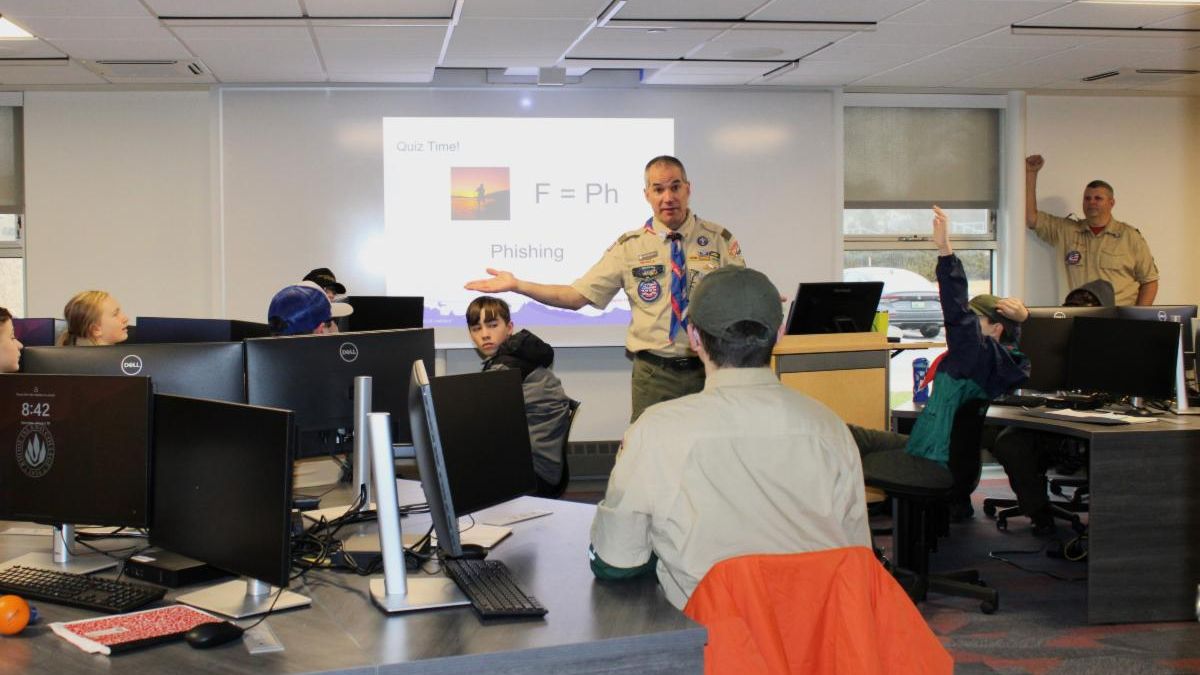
The 22nd Merit Badge College offered Scouts the first opportunity to earn coveted merit badges that will prepare them for the evolving digital age. This year, Narragansett Council – Scouting Americaoffered Scouts classes in cybersecurity and artificial intelligence (AI), along with almost 50 other badges.
Merit Badge College is a one-day immersive learning experience held at Rhode Island College that brings Scouts together with subject-matter experts. Designed to encourage learning, real-world skill-building and personal growth, Participants gain hands-on skills, explore career paths and earn merit badges by completing coursework in specialized fields.
|
|
|

|
|
|
___
‘The Cigarette Surfboard’ documentary draws attention to dangers of beach litter
The film will make its Rhode Island premiere at URI on Jan. 28
During the International Coastal Cleanup in Rhode Island from September to November 2025, cigarette butts made up 17.8% of all trash collected. In all, 20,908 cigarette butts were picked up from Rhode Island’s beaches—making up the largest single category of trash items collected.
The documentary “The Cigarette Surfboard,†which will make its Rhode Island premiere at URI’s Graduate School of Oceanography on Wednesday, Jan. 28 at 6:30 p.m. in Corless Auditorium on the Narragansett Bay Campus, draws attention to this environmental hazard.
The film screening is free and open to the public, but reservations are required.
-

- Photo 6 – Ciggy Board 3.0. Photo by Ben Judkins One of the cigarette surfboards that was designed and made by Taylor Lane. (Photos courtesy of Ben Judkins)
-

- Hannah Bennett surfing a Ciggy Board in Fiji The cigarette surfboards don’t just make a striking visual statement about beach litter, they’re also highly functional, as surfer Hannah Bennet showed in Fiji.
-

- Film Still 15 – Taylor Lane with Ciggy Boards_THECIGARETTESURFBOARD Taylor Lane, surrounded by surfboards he designed using cigarette butts that were littered on the beach.
The film is a collaboration between two friends who met through California’s surfing community and had a common interest in environmental issues. Taylor Lane, who has a bachelor’s degree in industrial design, began designing and making surfboards with thousands of littered cigarette butts to inspire surfers to be good stewards of the sea. Filmmaker Ben Judkins documented the surfboard fabrication process and the impact the finished boards have had on making people aware of an ongoing environmental problem.
“Everyone has the capacity to take action in their personal lives and local communities to help protect the ocean and planet,†said Judkins. “It feels good to stand up for something you believe in. No matter how big or small, our collective actions add up, and our local efforts help catalyze global change.â€
The documentary, which made its debut in May 2024, has won 16 awards at film festivals in the United States and abroad.
Judkins will attend the screening at URI and will have some of the surfboards from the film with him. Following the screening, Judkins will answer questions from the audience and take part in a panel that will include URI Professor of Oceanography J.P. Walsh and Jacqueline Rosa, an oceanography student at URI. Local surfing and environmental organizations will also be represented at the event.
Cigarette butts are a source of emerging contaminants, specifically microplastics, which is a focus of Walsh’s research.
“There is concern is about the chemicals that leach from cigarette butts,†said Walsh.
An avid surfer, Judkins had a message for Rhode Island’s vibrant surfing community.
“As surfers, we have an awesome opportunity to be leaders in protecting our coastlines and ocean,†said the film director. “We witness ocean health issues firsthand, and we can use our collective voices to help protect what we love. Utilizing art, media, and activism can truly spark tangible change for our ocean and planet.â€
Save The Bay organized the International Coastal Cleanup in Rhode Island, which drew 2,971 volunteers. Following the cleanup, the organization published a report which included the types of trash picked up as well as how much was collected in each county. Judkins emphasized how much efforts like these with a strong grassroots component can make a difference.
“No matter what skills you have, or what you’re passionate about, it takes a multifaceted approach across many different disciplines to effectively create change,†said Judkins. “To create change, it’s imperative to enjoy the efforts, and even make it fun, when possible, in order to have the energy for ongoing activism.â€
___
Climate-Friendly Geothermal System Being Installed at Marble House
One of this city’s most famous 19th-century mansions soon will benefit from 21st-century green-energy technology.
 An extensive geothermal climate-control system is being installed at Marble House, a National Historic Landmark museum toured by nearly 150,000 visitors every year. The system will maintain steady, mild temperatures and a humidity level of 50 percent inside the house, helping to protect its contents, especially textiles, leather, paintings, paper and wooden objects. Another important benefit will be fuel oil savings of up to 80 percent, which reduces the building’s carbon footprint.
“Geothermal is a winning investment for our properties,†said Trudy Coxe, CEO and Executive Director of The Preservation Society of Newport County, which owns Marble House and nine other historic house museums. “These systems are expensive – the estimate for the Marble House project is $1.5 million. But we are committed to reducing carbon and caring for our houses in a sustainable way, and the long-term benefits make the investment well worthwhile.â€
This is the fifth geothermal installation by the Preservation Society. Similar installations have been successful at Chepstow (installed in 2015), The Elms Carriage House (2016), The Breakers (2018) and Chateau-sur-Mer (2024).
Geothermal climate control draws upon the Earth’s year-round subsurface temperature of about 55 degrees to warm the house in winter and cool it in summer. At Marble House, contractors have drilled 21 wells, each 425 feet deep, in the expansive backyard. A series of tubes will circulate water into the wells, where the liquid will be cooled or warmed to the underground temperature. The water will then be piped into the house to regulate the interior temperature through a system of electric heat pumps and air handlers.
The Preservation Society expects to complete the project in the late spring of 2026. The major contractors are Donovan & Sons, JAM Construction and Shamrock Electric, all of Middletown.
The Preservation Society of Newport County, Rhode Island, is a nonprofit organization accredited by the American Alliance of Museums. It is dedicated to preserving and interpreting the area’s historic architecture, landscapes, decorative arts and social history. Its 11 historic properties – seven of them National Historic Landmarks – span more than 250 years of American architectural and social development.
For more information, please visit www.NewportMansions.org.
___
URI researchers launching local stone wall study
Natural Resources Science faculty hope to examine the environmental legacy of New England’s iconic stone walls
This year’s snowy winter makes New England’s iconic stone walls look even more picturesque. The sturdy markers dot our local landscape, a backdrop to yards, property lines, photos and views. But what else do they do?
Kathleen Carroll and Shelby Rinehart in the University of Rhode Island’s Department of Natural Resources Science are asking that question and have launched a project examining the effects of stone walls on biodiversity and ecosystem processes across New England to better understand their biological importance. They hope to solicit public interest, support and participation for this effort.

URI grad Shelby Rinehart ’13, now an assistant professor of watershed ecology, is examining the ways animals impact environmental processes in stone walls. (Photo / Robert Thorson)
“Growing up, stone walls were all around me,†says Rinehart, a new assistant professor of watershed ecology at URI, who grew up in rural Connecticut. Rinehart runs URI’s Watershed Bio(diversity)-Funk(tion) Lab, which studies how plant and animal biodiversity can support local efforts to conserve, manage, and restore important ecosystems, like salt marshes.
New postdoctoral researcher Jamie Bucholz is working with him on this new project, looking to understand the ecosystem of stone walls. Bucholz will use what she learns about stone walls to better understand the genetic biodiversity of the species that call them home. New to New England, she is beginning her work by examining stone walls found across the region by utilizing RIGIS environmental data provided by URI’s Jason Parent and Elliot Vosburgh ’18 ’24. The pair created a rich data set, the Rhode Island Stone Wall Mapping Project, showing where all of Rhode Island’s stone walls exist.
Bucholz says she was surprised by how many stone walls crisscross her new home state. “Rhode Island is dense with them,†she comments, with historical societies estimating there were once 240,000 miles of stone walls across New England.
Stone walls exist across Europe and in other parts of the world, but their historical role took a new form in the landscape here. Today, they are a remnant of both glacial impact and colonial agricultural practices. Over time, the walls also created their own unique ecosystems.
URI’s team hopes to access more walls to get a better understanding of these ecosystems for their study. They hope to connect with others interested in stone walls, from local land trusts to property owners. This spring and summer, they’ll conduct community outreach and hope to connect with other regional groups and individuals interested in the stone walls of southern New England.
They are hoping to not only share the stories of these rocks, but to find the stories in the stone walls themselves — and they are looking for public participation.
The public is invited to participate in the project by offering access to stone walls for study or even donating in support of the project’s work. Gifts of any size are welcome, says Carroll, and can help support the purchase of sampling equipment, camera traps, timers and soil samples. They plan to install camera traps at varied locations to see animal activity around stone walls. Some walls will be monitored, to get a better sense of the inhabitants calling them home or using them to travel, such as squirrels, weasels, and other small mammals.

An iconic New England landscape feature is now the subject of focus for URI researchers, launching a study of local stone walls. (URI Photo / Amy Mayer)
Rinehart says there is a growing concern about preserving stone walls as markers not only of history, but also local environmental features.
They note their project is looking at historic and established stone walls and hope to capture and record their impact before further development removes them or they are disassembled for materials and resale. Researchers hope to hear from land trusts and expand their work statewide to gain a holistic view of these iconic structures and the wildlife they are home to, including in urban areas.
Rinehart says, “We know these walls are all around us. We want to understand why they are so important.â€
To learn more about the New England Stone Wall Research project, visit their website or contact [email protected] or [email protected]. Donations are also welcome to help support stone wall research.