
Subscribe!
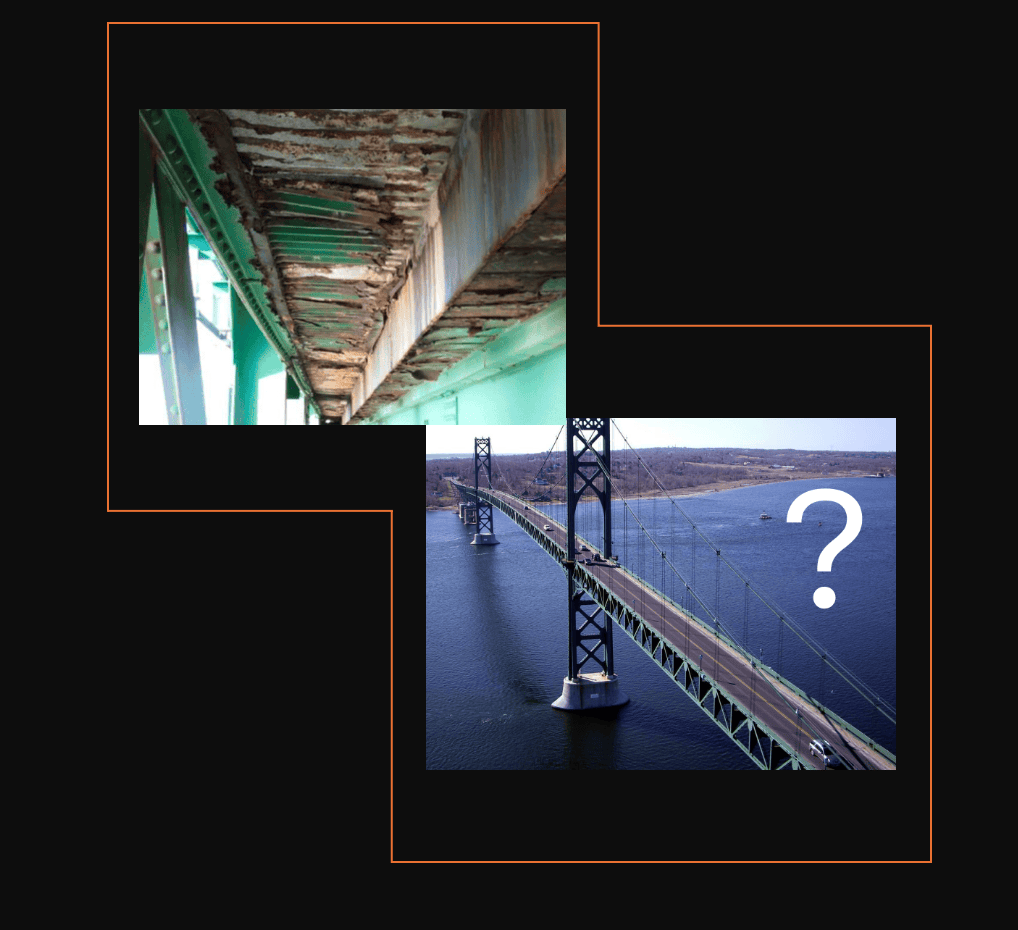
Mt. Hope Bridge Updates: Many Questions and Issues – Nick Landekic, for The Mt. Hope Bridge Watch
by Nick Landekic, for The Mount Hope Bridge WATCH
There have been several recent developments regarding the Mt. Hope Bridge.
After the Rhode Island Turnpike and Bridge Authority (RITBA) denied multiple Access to Public Records Act (APRA) requests for release of a November 2024 inspection report on the bridge, Bristol township filed a lawsuit in federal court to compel its release.
After two requests for delays, running out of time on July 10 RITBA finally released the November 2024 inspection report.
Up until that time RITBA had contended it could not release the report because it was classified as Sensitive Security Information (SSI) by the Transportation Security Administration (TSA). However, it turns out the report does not appear to have been SSI after all as reported by WPRI, and there seems to have been no justification for withholding the report for over a year and a half.
https://www.youtube.com/watch?app=desktop&v=dQYe0oyESaY&ra=m
Despite the 530 page length of the November 2024 inspection report, a number of important unanswered questions remain and the full condition of the bridge is not yet known.
1. The November 2024 report did not inspect the critically important main suspension cables, nor the underwater structures of the piers.
One of the main questions regarding the Mt. Hope Bridge is the condition of the main suspension cables. The large cables holding up the bridge are actually each made up of 2,450 individual wires wrapped together inside the large outer shell that is the visible portion.
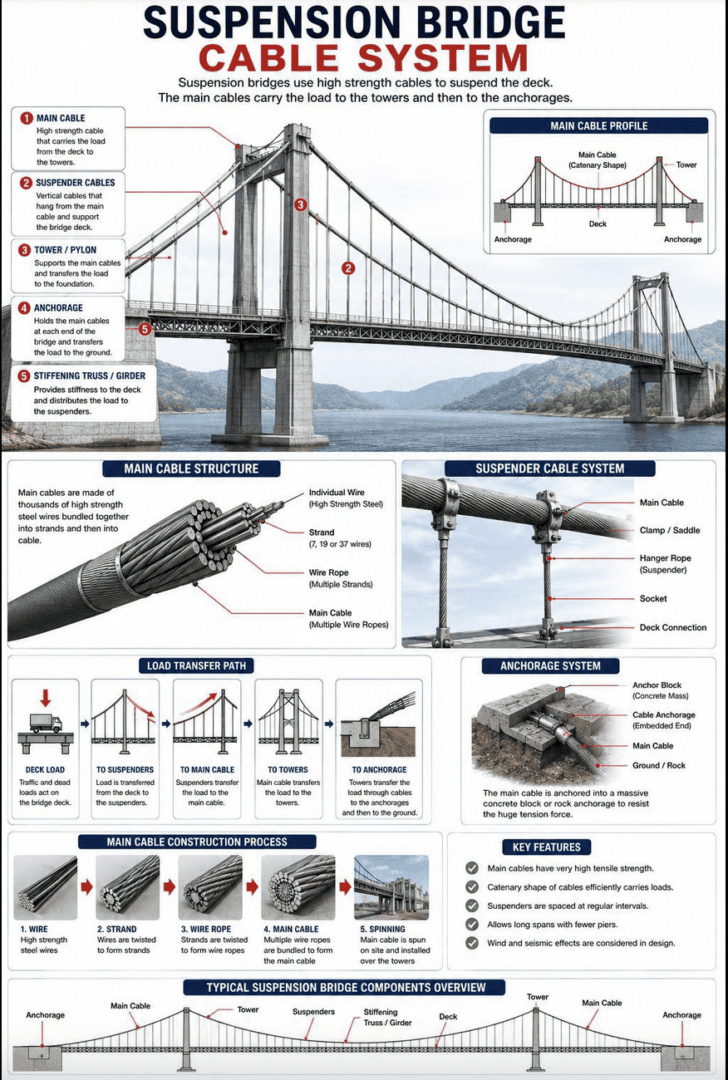
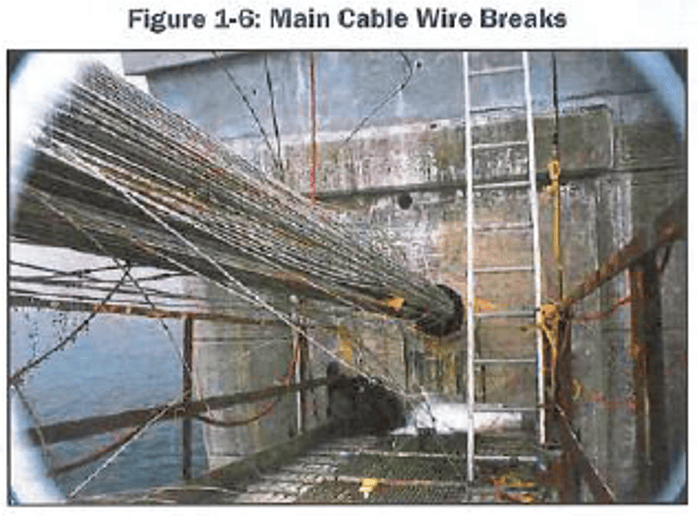
A 2021 grant application for the cable dehumidification project (the work currently underway) disclosed a 2000 inspection that found over 30% of the wires within the suspension cables had rusted through and broken. That report also said the wires were continuing to break and stated “There is no practical way to replace the strength lost in a cable due to corrosion.”
This is one of the most important open questions with the bridge. Unfortunately, despite being 530 pages long the otherwise extensive November 2024 inspection report did not specifically address the condition of the wires and the main suspension cables.
The 2021 grant application describes a “load safety factor” of 2.15 as the minimum for unrestricted safe use. A factor of 2.62 was estimated in 2015. However, the report also states “it is likely this estimate is optimistic and the true safety factor at that time was lower.” Was this calculated based on the number of broken wires reported in 2000? Certainly more have broken since then. How many, and what is the current load safety factor?
The suspension cables support the weight of the bridge deck on which cars drive. The wire strands inside the suspension cables were not formally inspected in November 2024 and supposedly will be inspected as part of the ongoing cable dehumidification project taking place over the next couple of years. This cable inspection must be done and done properly, examining a statistically significant number of sampling sites.
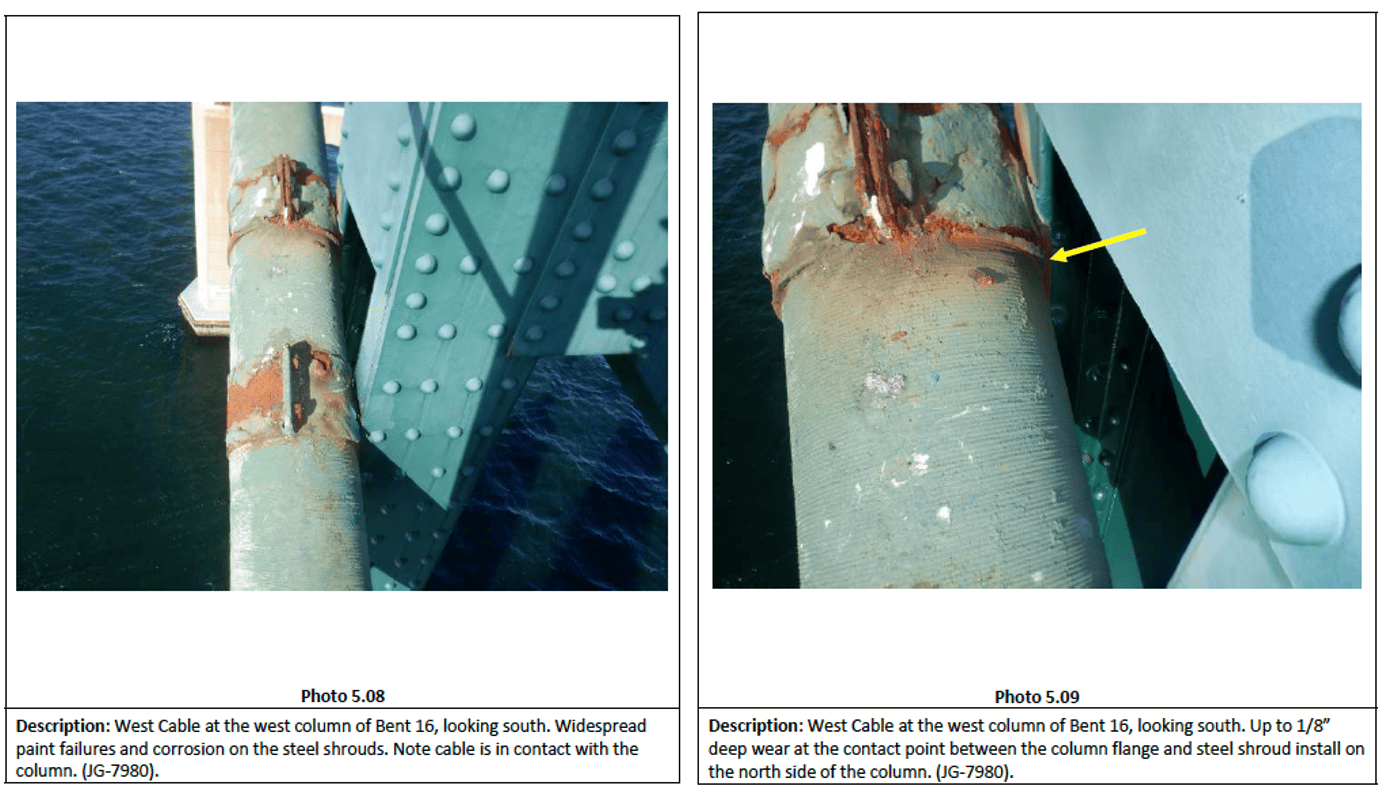
The inspection found “Widespread paint failures and corrosion on the steel shrouds.” If the shrouds protecting the main suspension cables are rusted and leaking allowing water in, what has been happening to the wires inside?
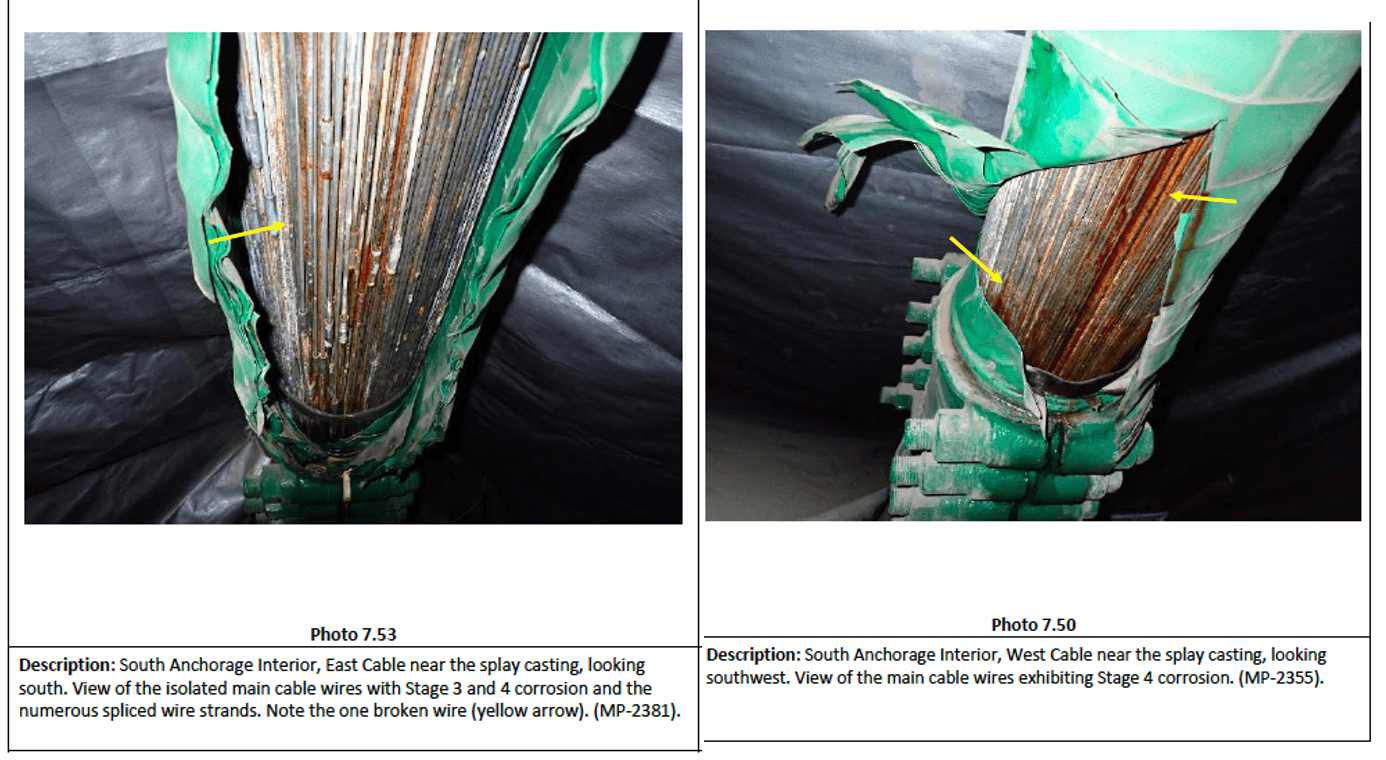
Photos from the November 2024 inspection report:
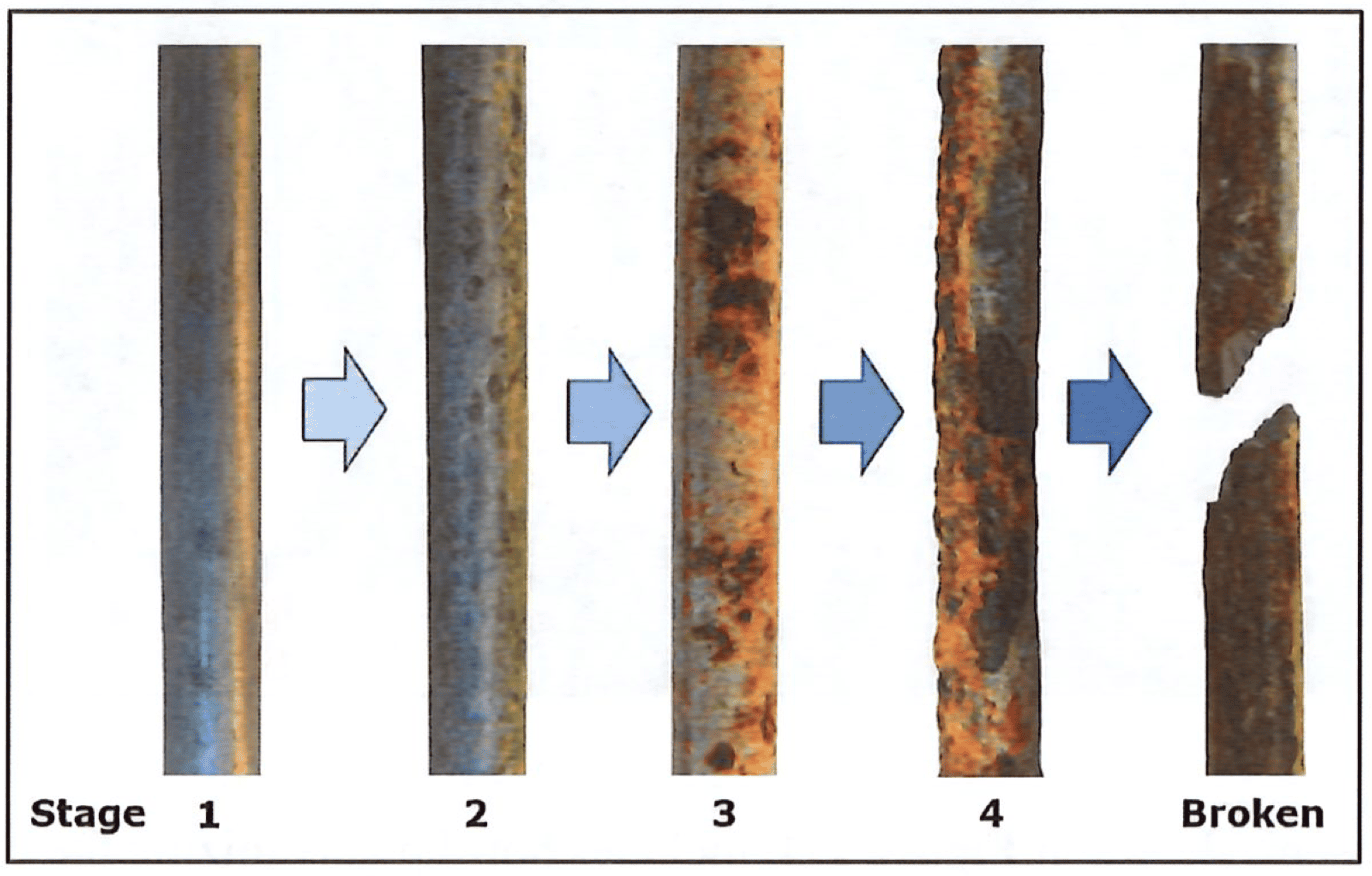
Inspection of the main suspension cables was not a goal and beyond the scope of the November 2024 inspection. However, opportunistic qualitative observations seem to have been made. There were observations of main suspension cable wires at Stage 2 to 4 corrosion, with a comment of “… widespread areas of Stage 4 corrosion of the main cable…” and observations of what seem to be new broken wires.
Stage 4 is the last stage before a wire breaks:
A cable is only as strong as its weakest point. Given the importance of the main suspension cables it might be reasonable to ask, why weren’t the cables inspected before starting the $65 million cable dehumidification project? If the cables are already too deteriorated and the dehumidification would be too little, too late, could the money have been better spent planning for the replacement of the bridge?
The public must be made aware of the results of this important cable inspection. Based on how tenaciously RITBA fought to not disclose this November 2024 inspection what assurance can we have they will be forthcoming with future inspection results?
2. There are many significant corrosion issues with the bridge which speaks to long term poor maintenance, but no plan has been presented as to how they will be addressed.
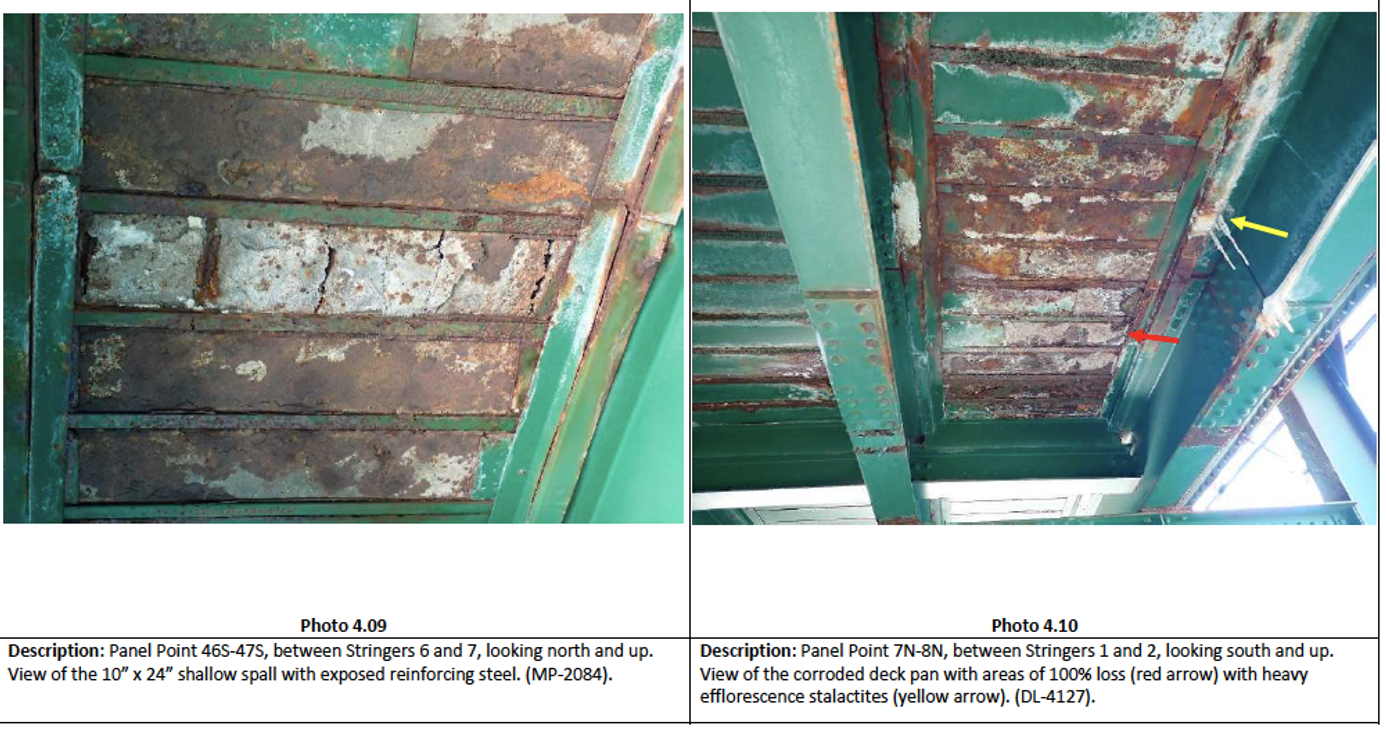
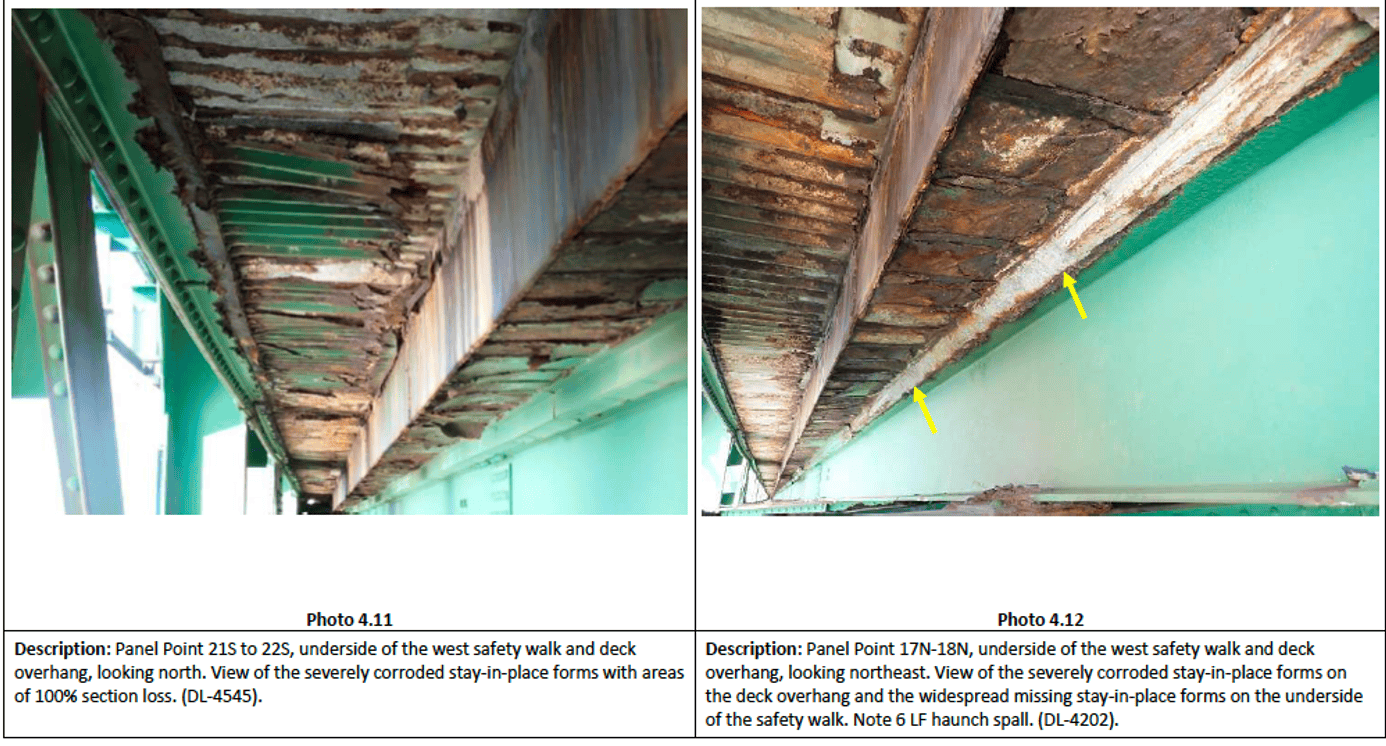
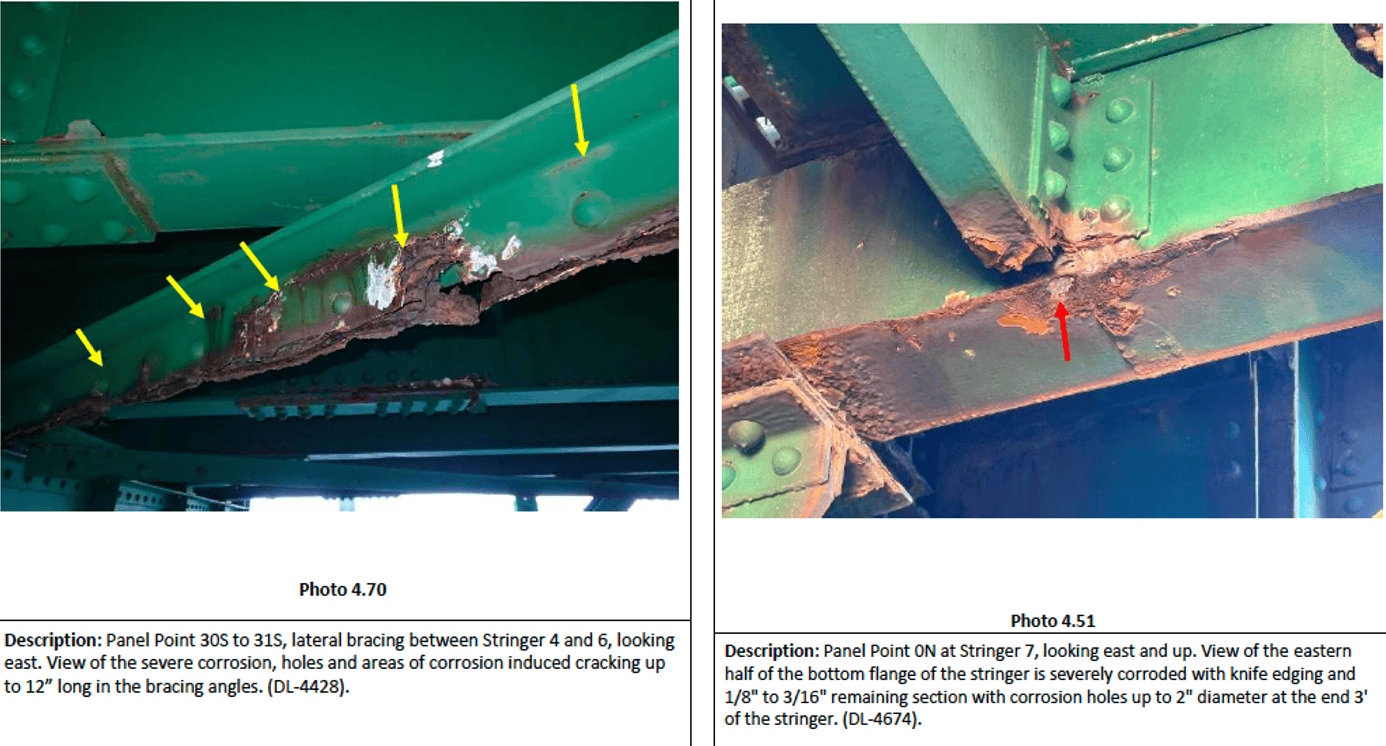
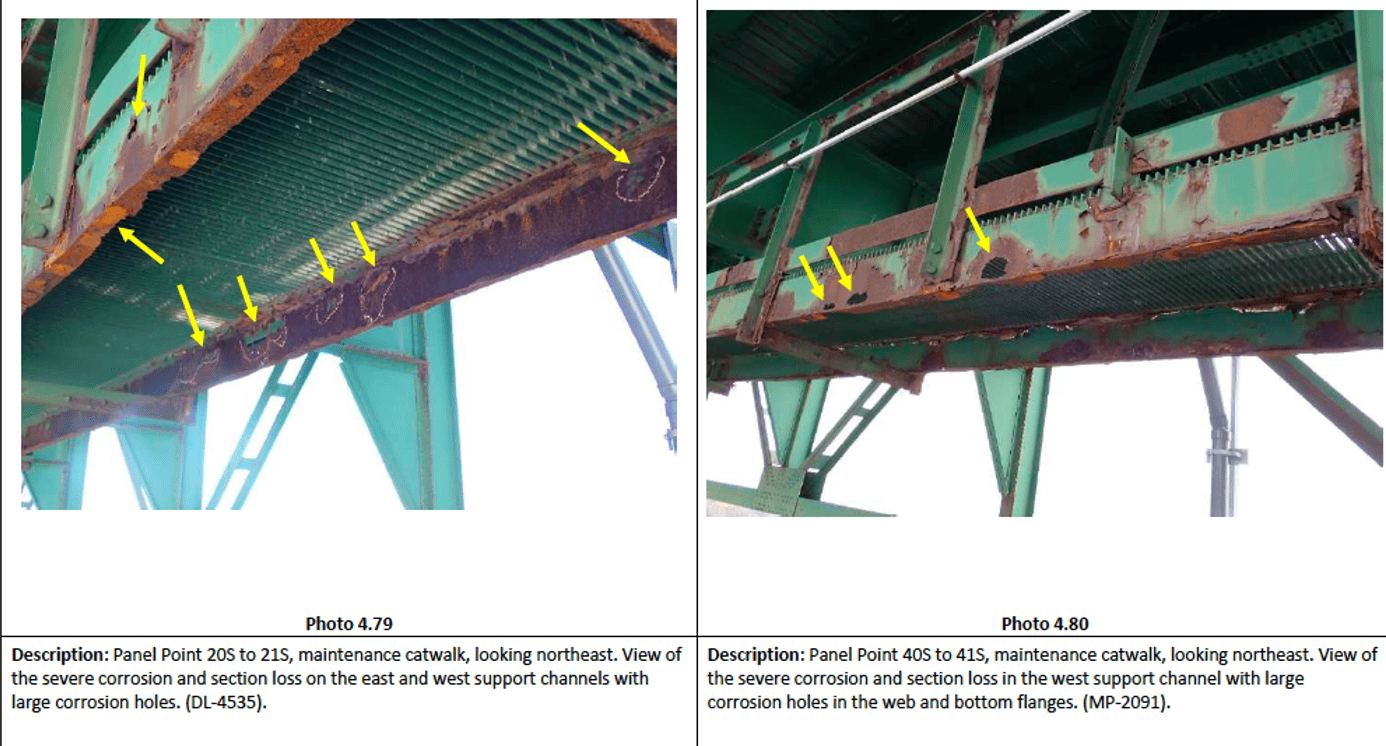
The November 2024 inspection found multiple areas of corrosion, rusting, perforation, and other deficiencies on the bridge, including:
- “Areas of active corrosion and section loss located throughout the stiffening truss members and gusset plates the severely corroded lateral bracing members.”
- “Tack welding Uni-Strut channels to the gusset plates on the exterior of the stiffening truss top chords at multiple locations throughout; the severe corrosion and pumping of stringer bearings.”
- “The severely deteriorated stringer bearings at the towers and cable bents; the
locations with broken and corroded stringer anchor bolts.” - “Widespread deterioration of the paint system throughout” the bridge.
- Rebar in concrete rusted.
- Numerous reports of cracking floorbeams and girders.
- Numerous reports of missing or broken bolts and rivets.
The following photos are a few examples, all from the November 2024 inspection report:
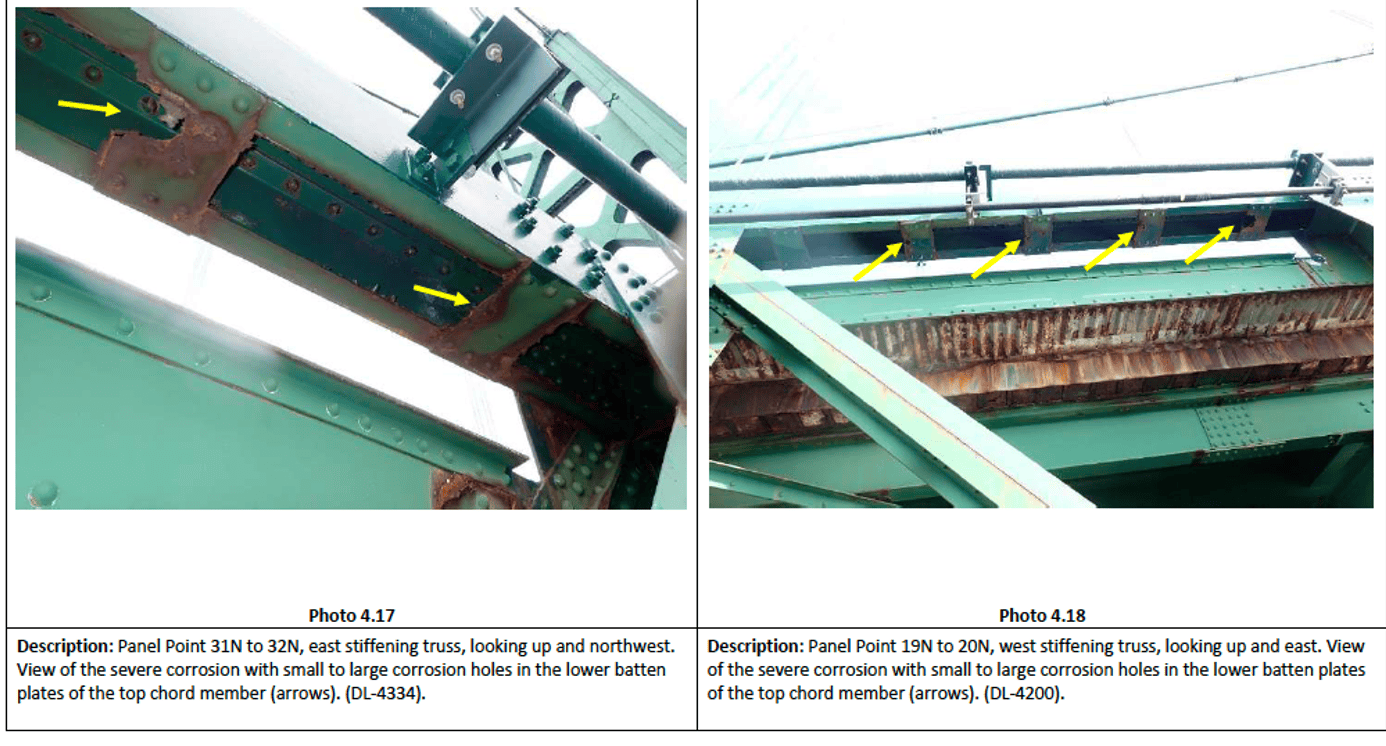
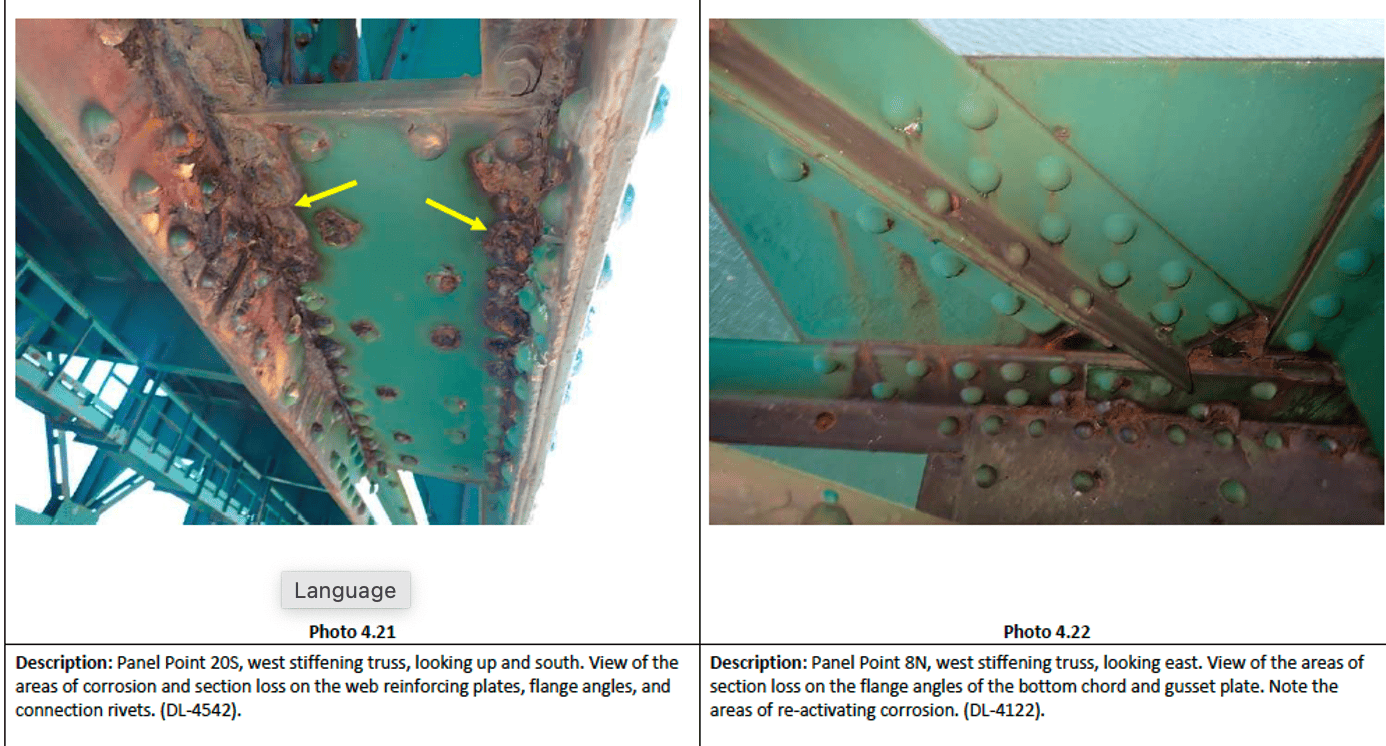
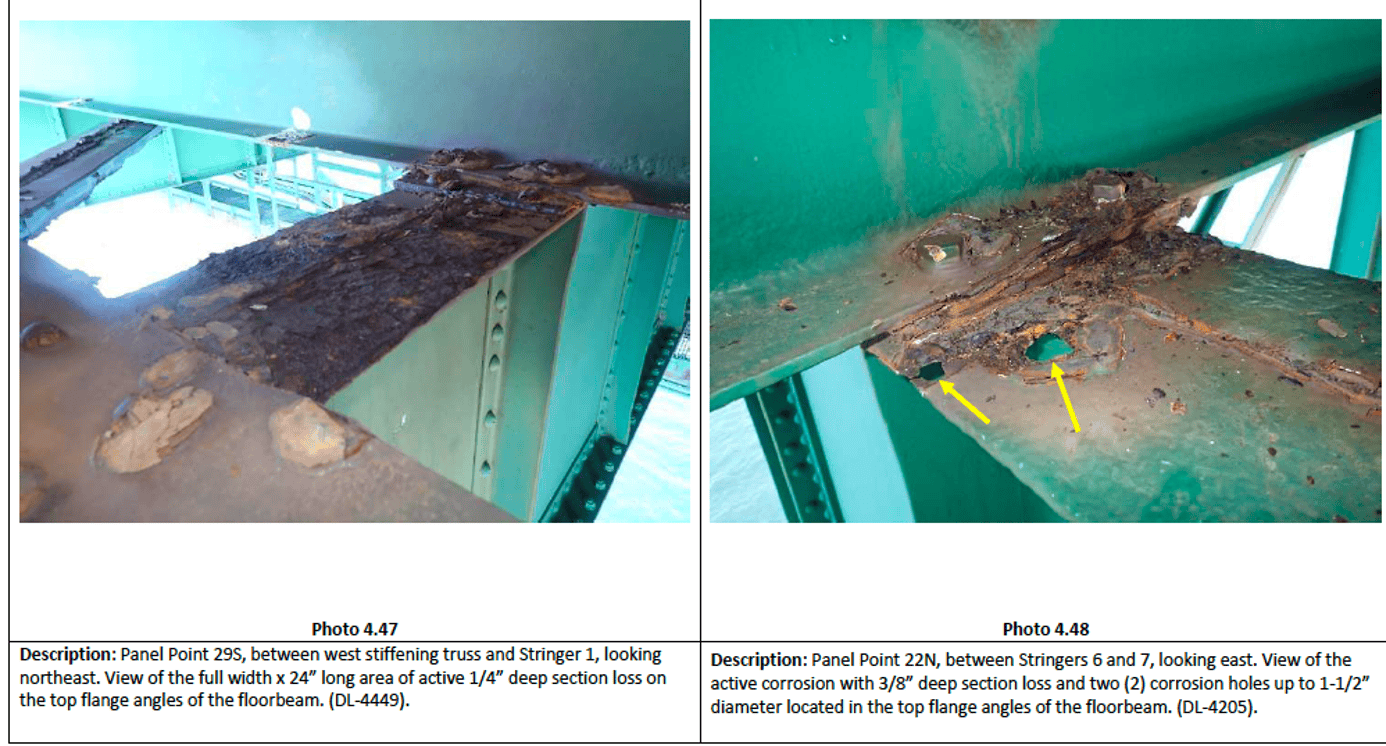
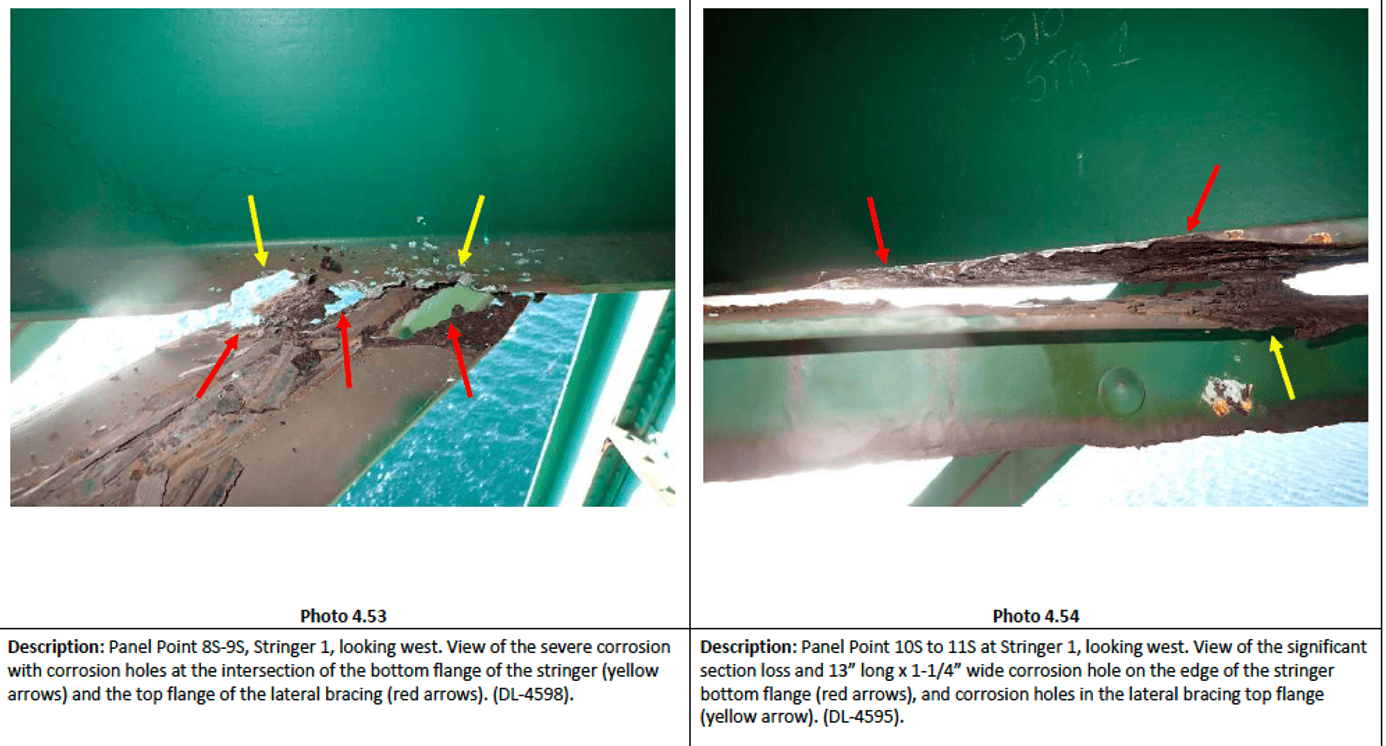
All bridges and other structures deteriorate with age. Bridges are designed with additional capacity and redundancies to allow for this expected wear and tear. Rust is expected and accounted for in the design and construction of bridges.
However, deterioration ultimately becomes too much and exceeds the planned capacity to withstand. A bridge does not need one catastrophic failure to become unusable. Multiple deteriorating components can reach a critical point simultaneously and conditions can worsen rapidly, leading to emergency restrictions or closure.
The inspection findings are sobering and document extensive corrosion in structural members of the nearly 100-year-old bridge. RITBA has characterized the findings as “all pretty routine,” which is troubling as is the pace of the response. We are told that priority items from the 2024 report are being designed as part of a larger repair package, with a contract potentially to be awarded in late 2026. Two years will have passed before work even begins on identified priority deficiencies.
The corrosion documented in 2024 did not develop overnight and has only gotten worse in the nearly two years since the last inspection. What did the 2022, 2020 and 2018 inspection reports show? What actions did RITBA take? Was there a preventative maintenance program? If so, why has the list of priority items grown so substantially? The public deserves answers – and the release of those reports, along with the interim inspection conducted this past winter and the upcoming cable inspection report.
RITBA says the Mt. Hope Bridge is in “fair” condition. We were also assured the Washington Bridge was structurally sound and concerns were being addressed – right up until the sudden emergency closure of the bridge on December 11, 2023 with no warning, just before the evening rush hour.
3. The bridge is obsolete and realistically at the end of its service life.
The Mt. Hope Bridge was built for pre-World War II traffic levels. It now carries more than 7 million vehicles annually. It has one lane in each direction, no breakdown lanes, no dedicated emergency or bus lanes, no bicycle or pedestrian lanes, no suicide protection and strict weight limits.
RITBA has said the current ongoing cable dehumidification project “could extend the life of the bridge by 50 to 75 years.” However, no data have been publicly presented to substantiate this claim and it seems unfounded.
The American Association of State Highway and Transportation Officials specifies a standard 75-year design service life for typical bridge infrastructure. The Mt. Hope Bridge is now 97 years old and with significant wear and deterioration. There comes a point where continued patching and repair becomes economically infeasible or even impossible.
The Army Corps of Engineers recognized these issues when it concluded that replacing the two Cape Cod bridges, Bourne and Sagamore – both 6 years newer than the Mt. Hope Bridge – was preferable to endless rehabilitation of aging infrastructure that would ultimately fail anyway.
The bridge needs to be replaced, yet there are no plans in motion to do so – nor how to fund the likely $2 billion cost of a new bridge.
4. If we are to have confidence in reports on the condition and safety of the bridge, there must be independent review.
Given all the questions and concerns regarding the Mt. Hope Bridge, Rhode Island should establish an independent commission of bridge engineers to evaluate the inspection findings, determine whether continued rehabilitation of nearly 100-year-old steel is technically and economically justified, and a study for full bridge replacement. These engineers and firms should be comprised of those with no prior connection to Rhode Island, to reduce the possibility of bias, conflict of interest, or political influence. This work must begin immediately.
What can you do?
RITBA is a ‘quasi-public’ agency that answers directly and only to the Governor, who also solely appoints the Board members. If you live, work, or play on the East Bay, if you use the Mt. Hope Bridge and want to be assured there will be a safe and reliable bridge into the future, write or call the Governor.
Rhode Islanders will be electing a new Governor this November. Let all the candidates know your vote depends on their commitment to transparency with full disclosure of all bridge inspection reports, past, present, and future, and to expeditiously planning for a replacement for the beautiful but aging Mt. Hope Bridge.
Governor Dan McKee
(401) 222-2080
https://governor.ri.gov/contact
Helena Foulkes
Aaron Guckian
Ken Block
https://www.blockforgovernor.com
You can also contact your local representative in the Rhode Island legislature and demand an independent commission be formed to evaluate the inspection findings.
We can’t afford the usual politics of ‘kicking the can down the road.’ RITBA has suggested it would take 20 to 25 years to plan and build a replacement for the Mt. Hope Bridge. However, the Massachusetts Department of Transportation and the Army Corps of Engineers have shown that public outreach, planning, permitting, design and construction can be completed in 12 to 15 years, as is the plan with the Bourne and Sagamore Bridges. The Mt. Hope Bridge might not have that much time left.
Rust does not wait for bureaucracy and the bridge continues to deteriorate. We may be one inspection away from a finding that could force an emergency shutdown of this critical transportation link. The time to begin planning for the future of the Mount Hope Bridge is now.
___
Publisher’s Note: On July 31st, The Rhode Island Turnpike and Bridge Authority provided updates on current construction projects on the Mount Hope Bridge:
- The Mount Hope Bridge dehumidification project is ongoing, and daily alternating lane closures will continue from 9:00 am to 3:00 pm Monday through Thursday and 9:00 am to 1:00 pm on Fridays.
- On Wednesday, August 5, (weather permitting) traffic will be held in both directions at several intervals between 9:30am and 2:30 pm, for two large lifts and drivers should expect delays.
- Weather permitting, surface repairs will take place on the next five Sundays (August 2, August 9, August 16, August 23 and August 30) from 8pm until 5am.
The Mt. Hope Bridge Watch is a working group of engaged citizens and engineers from across the East Bay keeping a close eye on this treasure which is essential to our daily life. Members include Steve Ruggieri, George LeBlanc, Richard Fournier, Robert Page, Myra Page, Steve Kloeblen, and Nick Landekic.
This is a no-brainer from one who lives at the foot of the bridge, and crosses it multiple times a week. A new bridge with a design at least as comparable to the Pell Bridge should be in the planning stage immediately, or we’ll witness another Washington Bridge fiasco. The only response to that disaster would be the rebirth of the Bristol Ferry, for which the Portsmouth landing still exists!
Thank you Nick for providing the fantastic article. As an engineer, I had observed and suspected that the bridge is not being maintained in accordance with its age. While the replacement bridge is being planned and undertaken, the existing bridge must be maintained properly with up-to-date techniques and materials.
Further, an expedited plan for the replacement bridge should be initiated. Sooner rather than later, get rid of those responsible for this neglect of Rhode Island’s vital transportation resources.
This is terrifying. And whoever wrote this did such a great job..