
Subscribe!
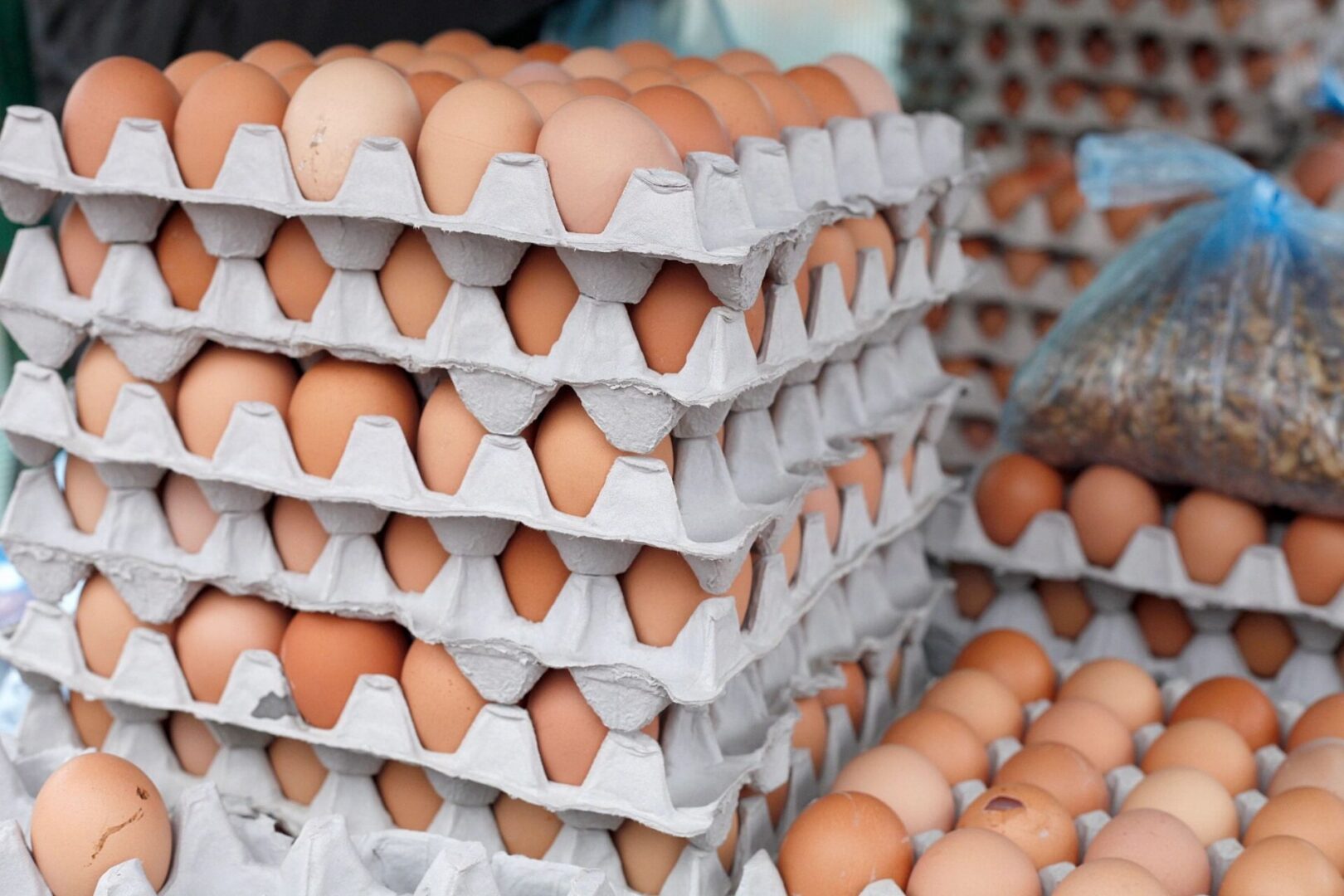
Breakfast Table Politics: Who Scrambled Egg Prices? DOJ Accuses Egg Producers of Price Manipulation
by Nancy Thomas & RINewsToday News Team
This is our first story in our new feature, Breakfast Table Politics Today.
About Breakfast Table Politics Today
Breakfast Table Politics Today is a new RINewsToday feature looking at how politics shows up in everyday life — often in places people least expect it. From the price of eggs to local landmarks, public projects, neighborhood disputes, family budgets and consumer costs, the series examines how ordinary issues become political arguments, campaign talking points or tests of public trust.
The goal is to look past the noise, ask who is making the claims, what facts support them, and how readers can better separate politics from reality.
___
DOJ Says Egg Producers Manipulated Prices While Americans Argued Over Inflation
Eggs became one of the most visible symbols of inflation in America — showing up in grocery carts, restaurant menus, political speeches, social media posts and family budgets.
Now, the U.S. Department of Justice says three major egg producers illegally coordinated to manipulate a key pricing benchmark used across the country.
The Justice Department’s Antitrust Division, joined by 17 state attorneys general, filed a civil antitrust lawsuit against Cal-Maine Foods Inc., Hickman’s Egg Ranch Inc., and Versova-related companies, alleging that the producers coordinated bids to artificially inflate daily egg price quotations published by Urner Barry Publications. Those quotations are widely used in contracts that determine what grocery stores, restaurants and other businesses pay for eggs.
The case was filed in U.S. District Court for the Northern District of Iowa. At the same time, DOJ filed proposed settlements that, if approved by the court, would prohibit the companies from engaging in similar coordinated conduct in the future. The companies have not admitted wrongdoing under the settlements.
According to the complaint, the alleged conduct occurred between June 2022 and March 2025 — the same period when egg prices became a national flashpoint amid inflation, supply-chain disruptions, election politics and outbreaks of avian flu.
DOJ says the companies coordinated their bidding activity in ways that made the market appear stronger than it was. The complaint alleges that the producers agreed to submit large numbers of bids, place bids shortly before Urner Barry published its daily quotations, submit bids unlikely to result in actual trades, and execute some trades at premium prices.
The alleged scheme was highly technical. The consumer impact was not.
Higher benchmark prices can mean higher wholesale egg prices. Higher wholesale prices can eventually show up in what consumers pay at grocery stores, diners, restaurants, bakeries and food-service operations.
The complaint says that billions of eggs are sold each year under contracts tied to Urner Barry’s price quotations. DOJ alleges that manipulating those quotations raised prices paid by retailers and, ultimately, consumers.
The Incredible – Political – Egg
For President Trump’s critics, eggs became an almost daily weapon — a simple grocery-store number used to argue that his promise to bring prices down was not matching what shoppers were seeing at the register.
The case brought by DOJ included internal communications. In one December 2022 example, the complaint says a Hickman’s executive urged others to post strong bids “early and often.” Another message quoted in the complaint said, “As a group we need to bid like they vote in Chicago, early and often.”
During the past several years, eggs were repeatedly used as a measure of whether inflation was easing or getting worse. Consumers saw prices rise sharply. Restaurants added surcharges. Grocery bills became campaign material. Depending on the political argument, the blame was placed on federal policy, corporate greed, bird flu, supply constraints or all of the above.
The Justice Department’s case does not erase the role of avian flu or broader inflation. The U.S. Department of Agriculture has said egg prices were affected by highly pathogenic avian influenza and reductions in egg production. USDA has also projected egg prices to decrease in 2026 as production recovers.
Under the proposed settlements, the companies would be barred from communicating with competitors about bidding strategies, prices, timing or numbers of bids, and from agreeing with competitors on bids or transaction terms. They would also be required to adopt antitrust compliance programs, appoint compliance officers and report potential violations.
A fine in millions of dollars – and – millions of eggs
A multi-state settlement announced by New York Attorney General Letitia James says the companies will provide 53 million eggs to food banks and nonprofit organizations across participating states and pay a combined $3.3 million to the states.
Rhode Island was not listed among the 17 state attorneys general joining the DOJ complaint and proposed settlements. The participating states are Arizona, California, Colorado, Connecticut, Florida, Hawaii, Iowa, Maryland, Minnesota, New York, North Carolina, Ohio, Pennsylvania, Texas, Utah, Vermont and Wisconsin.
For Rhode Island consumers, the case still matters. Egg prices are national prices. Rhode Island families, restaurants, bakeries, diners, food pantries and small businesses all operate in that same market.
And that is where “Breakfast Table Politics” begins.
A product as ordinary as a carton of eggs became part of the country’s political argument over inflation. Now, the federal government says the story may also include alleged manipulation by major producers in the background.
Egg prices hit a national average of $6.23 a dozen in March 2025, according to BLS data, before falling to $2.19 by May 2026 — a dramatic drop from the peak, but not before eggs had become one of the country’s most visible political symbols of inflation.
The case is also a reminder for citizens to be more critical when claims are made with political motivations. Who is making the claim? What do they want voters to believe? What facts are they leaving out? What are they trying to influence?
Prices can rise for many reasons: supply, disease, weather, regulation, global markets, corporate decisions or, as DOJ alleges in this case, possible manipulation. The challenge for consumers and voters is to separate fact from politics — to look beyond the loudest accusation and ask what independent data, court filings, audits or credible reporting actually show.
And that’s RINewsToday’s Breakfast Table Politics today!