
Subscribe!
The Judgeship rests in the Details: Matos Named, but Timing May Leave the Choice to the “Next” Governor
by Nancy Thomas
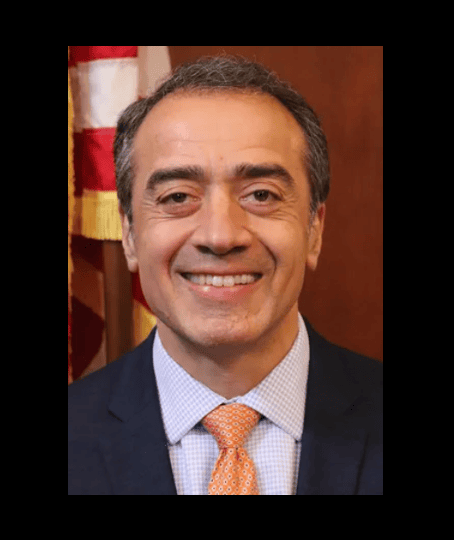
Governor Dan McKee has publicly named Superior Court Associate Justice Luis M. Matos as his choice for the Rhode Island Supreme Court—but when Matos officially and legally becomes the nominee may be as important as whom the governor selected.
McKee announced Wednesday that he had nominated Matos to fill the vacancy created by the retirement of Justice Maureen McKenna Goldberg. Matos was one of five candidates advanced by the Rhode Island Judicial Nominating Commission.
Yet House Speaker Christopher R. Blazejewski and Senate President Valarie J. Lawson subsequently clarified that the nomination has not been formally submitted to the General Assembly—and will not be until after the November 3 general election.
That distinction is more than semantics. It determines when the Legislature’s 60-day confirmation period begins, whether the statutory command to forward a nomination “forthwith” has been satisfied and, potentially, which governor ultimately gets to fill the lifetime seat.
Named—but formally nominated?
McKee’s official announcement uses the word “nominated.”
“Judge Matos is a Rhode Island success story who has served both his country and home state with distinction, and I am honored to nominate him to the Rhode Island Supreme Court,” McKee said.
But Blazejewski and Lawson said the formal submission will come later.
“Vetting and confirming a lifetime appointment to the state’s highest court requires deliberate review and careful consideration by both chambers,” they said in a joint statement.
“In keeping with past practice and regardless of who he has selected, we will work with the Governor on a timeline so that the nomination is officially submitted to the General Assembly for consideration after the November 3rd general election.”
The legislative leaders said they had informed McKee of their shared goal of taking politics “as much as possible” out of what they called an overly politicized Supreme Court nomination process.
Rhode Island law, however, contains several specific timing requirements.
The governor must act within 21 days after the Judicial Nominating Commission publicly submits its list. The law then states:
“Each nomination shall be forwarded forthwith to the senate and to the house of representatives.”
“Forthwith” ordinarily means immediately or without unnecessary delay.
The House and Senate must consider the nomination separately. Their Judiciary committees must conduct separate investigations and public hearings, and both chambers must consent before the governor may appoint the nominee.
The statute says consideration begins after seven calendar days following receipt of the nomination. If either chamber fails to confirm the nominee within 60 days after submission, the governor must choose someone else and send that person to the House and Senate.
That creates a legal and procedural puzzle.
If McKee’s August 12 announcement constitutes the nomination, the requirement that it be forwarded “forthwith” would appear to have been triggered.
If it was merely the announcement of his intended choice—and the legal nomination will not occur until a formal letter is transmitted—then the “forthwith” requirement may not yet apply. But that interpretation raises another question: how can a formal nomination delayed until after November 3 comply with the law’s 21-day requirement?
The governor’s office and legislative leaders appear to be treating formal submission to the chambers as the event that starts the 60-day clock. No official explanation thus far has reconciled all three phrases in the statute: the 21-day deadline, “forwarded forthwith” and the 60-day period after submission.
For now, Matos has unquestionably been selected and publicly announced. But the paperwork that starts the legislative process apparently has not been delivered.
The judgeship may indeed rest in the details.
Could the next governor make the final nominee choice?
Waiting until after November 3 means Rhode Islanders will have chosen a governor and elected a new General Assembly before consideration begins—even though those newly elected officials may not yet have taken office.
The delay does not mean Matos will be rejected. He could receive hearings and be confirmed by both chambers after the election.
But confirmation cannot be assumed.
If either the House or Senate votes against Matos, the Judicial Nominating Commission must prepare a new list of three to five candidates. State law expressly allows that new list to include candidates from the earlier list who were not previously sent to the General Assembly.
That could place former House Speaker K. Joseph Shekarchi—or any of the other unsuccessful candidates—back in consideration.
If the chambers simply fail to confirm Matos within 60 days, the governor must choose another person and submit that appointment for confirmation.
The exact submission date will therefore matter enormously. Rhode Island’s next governor takes office on the first Tuesday in January. Depending on when the nomination is formally transmitted, when the Legislature acts and whether Matos is confirmed, rejected or left without a vote, the authority to select another nominee could remain with McKee or pass to his successor.
In other words, McKee has made his choice. The timing could determine whether it becomes the final choice.
Where Shekarchi fits now
Shekarchi cannot be confirmed for this opening because McKee did not nominate him. Matos is the person selected.
But Shekarchi may not be entirely out of the Supreme Court picture.
He stepped down as House speaker on May 7 to pursue the vacancy but did not resign from the House itself. He remains the state representative for District 23 in Warwick for the rest of his current term.
He did not file for reelection in 2026, so his legislative service is expected to end when the new General Assembly takes office in January.
His eligibility for the Supreme Court also remains the subject of an unresolved court fight.
Superior Court Judge Richard A. Licht ruled July 27 that Shekarchi was legally permitted to apply for the Supreme Court while serving as a state representative. Licht held that the Supreme Court is a constitutional office and that Shekarchi’s candidacy falls within the constitutional-office exception to Rhode Island’s revolving-door ethics restrictions.
The Rhode Island Ethics Commission filed a notice of appeal after voting 4-1 to challenge that ruling.
McKee’s selection of Matos does not necessarily make the underlying legal issue disappear. Shekarchi was passed over for this nomination, but his name could be placed on a new list if Matos is rejected, and the question is likely to recur with other elected officials seeking judicial appointment.
The appeal proceeding to a full decision, is affected by the changing circumstances or encounters a question of mootness will be for the courts to determine. Until then, Licht’s ruling provides Shekarchi a legal pathway unless it is stayed or overturned.
However, in a recent, updated statement from the RI Ethics Commission:
“The last few months have shown us that this is a significant issue of gret public concern, likely to repeat itself. Therefore, it is appropriate and necessary to continue the appeal to bring the matter to our highest court for a final resolution,” – statement attributed to Jason Gramitt as reported on WPRI-12
It is also possible Rhode Island has not heard the last of Shekarchi as a potential Supreme Court candidate.
Chief Justice Paul Suttell is 77 and Justice William P. Robinson III is 86.
Rhode Island Supreme Court justices receive lifetime appointments and face no mandatory retirement age, and neither justice has announced plans to leave. Their ages nevertheless make additional vacancies during the next governor’s term a realistic possibility.
The man at the center of it
Lost amid the political maneuvering is the personal story of the man McKee selected. We thought you’d want to know who this highly respected judge is, so…
First, his name! One small personal detail may surprise some Rhode Islanders: Matos pronounces his name in the Portuguese fashion—approximately Loo-EESH Mah-TOSH. He is not related to Rhode Island Lieutenant Governor Sabina Matos, whose surname is generally pronounced MAH-tos, a more common pronunciation. The Lt. Gov. is Dominican.
Born in Batalha, Portugal, Matos emigrated with his family to Providence at age five. The family settled in Fox Point, where he learned English through a bilingual program at Fox Point Elementary School.
His father, who had a fourth-grade education, worked in factories. His mother, who had no formal schooling, was a housekeeper at Rhode Island Hospital.
After graduating from La Salle Academy, Matos became the first member of his family to attend college. He earned his bachelor’s degree from Brown University in 1986 and graduated with honors from the University of Connecticut School of Law.
When he was first nominated to the Superior Court in 2012, Matos credited his parents with shaping both his life and his commitment to public service.
“After coming to Rhode Island from Portugal, my parents achieved the American Dream,” Matos said at the time. “They have greatly shaped the person I am today.”
Matos began his legal career with the U.S. Department of Justice in Washington, D.C., serving as a trial and appellate attorney and representing the United States before the Federal Court of Claims.
He later became an assistant U.S. attorney in Delaware, concentrating on criminal and civil health-care fraud prosecutions, and served as national health-care fraud coordinator. His work earned him the Justice Department’s Director’s Award.
Matos returned to Rhode Island in 2001 as an assistant U.S. attorney. His work included health-care fraud, white-collar crime and public-corruption prosecutions. He served as chief of the office’s Civil Division, chief of its Criminal Division, First Assistant U.S. Attorney and Acting U.S. Attorney for Rhode Island.
His work earned recognition from Rhode Island Lawyers Weekly as a Lawyer of the Year and the Inspector General’s Integrity Award from the U.S. Department of Health and Human Services.
Governor Lincoln Chafee nominated Matos to the Rhode Island Superior Court in 2012. Since then, he has handled both civil and criminal cases across the court’s calendars and developed a reputation as a hardworking, thoughtful and open-minded jurist.
Chief Justice Suttell appointed him to the Committee on Racial and Ethnic Fairness in the Rhode Island Courts. Through that work, Matos became involved in a program through which indigent defendants can ask to have court costs waived, reduced or remitted.
According to the governor’s announcement, Matos has heard petitions from more than 650 people and remitted over $1.2 million in court costs.
“I am deeply honored and humbled at the opportunity to continue to serve the people and State of Rhode Island,” Matos said following Wednesday’s announcement. “I am grateful to Governor McKee for his confidence, and I look forward to the work ahead.”
A relationship with PALCUS going back to 2012
For Rhode Island’s Portuguese-American community, Matos’s selection carries particular meaning.
His relationship with the Portuguese-American Leadership Council of the United States—PALCUS—goes back to the beginning of his judicial career.
When Chafee nominated Matos to the Superior Court in 2012, PALCUS did not simply issue a congratulatory statement. The national organization spearheaded a letter-writing campaign supporting his confirmation.
Following unanimous votes by the Senate Judiciary Committee and the full Senate, PALCUS praised Matos for his integrity, work ethic and excellence in the law. The organization also singled out what it described as the “non-political nature” of his selection.
At Matos’s June 25, 2012, swearing-in, more than 300 dignitaries, colleagues, relatives, friends and community members gathered at the Rhode Island State House.
PALCUS reported that the Portuguese-American community was present “in force” and that Matos said he was humbled by its outpouring of support.
Then-PALCUS Chairman Fernando Rosa and Vice Chair Marie Fraley attended the ceremony.
PALCUS identified Matos at the time as the first person born in Portugal to be appointed to Rhode Island’s state judiciary. If confirmed now, he would become the first Portuguese-born justice to serve on the Rhode Island Supreme Court.
The relationship continued in 2015, when PALCUS worked with the Embassy of Portugal and Portugal’s Ministry of Foreign Affairs to sponsor the Third Meeting of Portuguese-American Elected Officials in Washington.
The gathering included meetings at the White House and U.S. Capitol, followed by a Day of Portugal celebration at the residence of Portuguese Ambassador Nuno Brito.
During that occasion, the Portuguese Republic decorated Matos as a Grand Officer of the Order of Prince Henry the Navigator, one of the country’s national honors.
In its statement following his Supreme Court selection, PALCUS said Matos’s accomplishment was “personal to our community.”
“He is Portuguese American, and his success represents the strength, determination and values carried forward by generations of Portuguese families who came to this country, built their communities and encouraged their children to dream bigger,” the organization said.
PALCUS also pointed to what the nomination represents for two generations: parents and grandparents who made sacrifices after coming to America and young Portuguese Americans now seeing someone of their heritage selected for the state’s highest court.
“For the next generation, Judge Matos’s story sends an equally powerful message: you can honor where you come from while reaching the very highest levels of American life and leadership,” PALCUS said.
Matos is a respected Portuguese-American public figure whose judicial career PALCUS has supported and celebrated for more than a decade.
More than five decades after arriving in Fox Point as a five-year-old immigrant learning English, Luis Matos now stands on the threshold of Rhode Island’s highest court.
He has been selected. He has been celebrated. But until the formal nomination is delivered and both chambers vote, the lifetime seat—and perhaps even the identity of the governor who ultimately fills it—remains unsettled.
___
HIGHLIGHT | Portuguese from Batalha (Leiria) nominated for the highest judicial instance in the state of Rhode Island
Judge Luís Matos was chosen by Governor Dan McKee for a position on the Supreme Court of that state, in a nomination that places a magistrate with a long career in the Federal Public Service and more than a decade in the Superior Court at the center of the highest judicial instance in the state, in a nomination that places a judge with a long career in the Federal Public Service at the center of the highest judicial instance in the state.
Matos, whose personal history is deeply linked to the Portuguese community of Rhode Island, arrived in the United States as a child, in 1969, with his family. They settled in the neighborhood of Fox Point, in Providence, where he grew up.The choice comes after the Rhode Island Judicial Nominating Commission recommended to the governor the five candidates who reached the final stage of the process: Luis Matos, the former president of the House of Representatives K. Joseph Shekarchi, the judge of the Family Court Laureen D’Ambra, the prosecutor Christopher Bush and the lawyer John E. Roberts.From Batalha to Providence
Luis Matos’ career is marked by a professional ascent built from humble origins. Born in Batalha, in the district of Leiria, he emigrated to Rhode Island with his family when he was a child.His father, Arménio Matos, worked in factories and had only completed the fourth grade. His mother, Maria Fernanda Matos, worked as a cleaning lady at the Rhode Island Hospital. Luis Matos was the first member of the family to complete higher education. The official biography released by the Government of Rhode Island, when he was appointed to the Superior Court, in 2012, highlighted the jurist’s career and his Portuguese origins.Matos attended La Salle Academy, in Providence, before entering Brown University, where he completed his bachelor’s degree in 1986. Four years later, he obtained, with distinction, the degree of Juris Doctor from the University of Connecticut School of Law.His professional career led him subsequently to the Department of Justice of the United States and to the offices of the federal prosecutors of Delaware and Rhode Island.Before reaching the bench of the Superior Court, Matos worked for years as a federal prosecutor. He joined the office of the U.S. Attorney for the District of Rhode Island in 2001 and held several positions of responsibility, including that of First Assistant U.S. Attorney and Criminal Chief. In 2009, he temporarily took on the role of Federal Prosecutor.During his career as a prosecutor, he was involved in fraud cases in the health sector, financial crimes, and public corruption. Among the most high-profile cases was the investigation known as Operation Dollar Bill, related to bribery schemes involving state legislators and executives from the health sector.His work was recognized with several awards and honors, including distinctions awarded by the Department of Justice and the Office of Inspector General of the United States Department of Health and Human Services. In 2006, he was chosen as one of the Lawyers of the Year by the publication Rhode Island Lawyers Weekly.Over the years, he also maintained a recognized presence in the Portuguese community. In 2014, he was chosen as the Grand Marshall of the Portuguese Day parade in Providence, one of the main celebrations of the Lusican community in the state.Despite the governor’s choice, Luís Matos is still not a member of the Rhode Island Supreme Court. The appointment will have to be confirmed by the House of Representatives and the Senate.The confirmation process could become particularly important. Rhode Island is approaching the primary elections, and if the legislative leaders do not call an extraordinary session before the vote, the process could extend.For the Portuguese community in Rhode Island, the appointment has its own special dimension: more than five decades after arriving in the United States as a son of immigrants from the Battle, Luis Matos is now one step away from joining the highest court in the state that has become his home.Translation:
O governador do estado norte-americano de Rhode Island, Dan McKee, escolheu o juiz Luís M. Matos, natural da histórica vila da Batalha, pertencente ao distrito de Leiria (Portugal), para preencher a vaga existente no Supremo Tribunal daquele estado, numa nomeação que coloca no centro da mais alta instância judicial do estado um magistrado com uma longa carreira no Ministério Público federal e mais de uma década no Superior Court.Matos, cuja história pessoal está profundamente ligada à comunidade portuguesa de Rhode Island, chegou aos Estados Unidos ainda criança, em 1969, com a família. Instalaram-se no bairro de Fox Point, em Providence, onde cresceu.A escolha surge depois de a Rhode Island Judicial Nominating Commission ter recomendado ao governador os cinco candidatos que chegaram à fase final do processo: Luis Matos, o antigo presidente da Câmara dos Representantes K. Joseph Shekarchi, a juíza do Family Court Laureen D’Ambra, o procurador Christopher Bush e o advogado John E. Roberts.A trajetória de Luis Matos é marcada por uma ascensão profissional construída a partir de origens humildes. Nascido na Batalha, no distrito de Leiria, emigrou para Rhode Island com a família quando era criança.O pai, Arménio Matos, trabalhou em fábricas e tinha concluído apenas a quarta classe. A mãe, Maria Fernanda Matos, trabalhou como empregada de limpeza no Rhode Island Hospital. Luis Matos foi o primeiro membro da família a concluir o ensino superior. A própria biografia oficial divulgada pelo Governo de Rhode Island, aquando da sua nomeação para o Superior Court, em 2012, destacou o percurso do jurista e as suas origens portuguesas.Matos frequentou a La Salle Academy, em Providence, antes de ingressar na Brown University, onde concluiu a licenciatura em 1986. Quatro anos mais tarde, obteve, com distinção, o grau de Juris Doctor pela University of Connecticut School of Law.O seu percurso profissional levou-o posteriormente ao Departamento de Justiça dos Estados Unidos e aos gabinetes dos procuradores federais de Delaware e Rhode Island.Antes de chegar ao banco do Tribunal Superior, Matos trabalhou durante anos como procurador federal. Ingressou no gabinete do U.S. Attorney para o Distrito de Rhode Island em 2001 e ocupou várias posições de responsabilidade, incluindo a de First Assistant U.S. Attorney e Criminal Chief. Em 2009, chegou a exercer interinamente as funções de Procurador federal.Durante a carreira como procurador, esteve envolvido em processos de fraude na área da saúde, crimes financeiros e corrupção pública. Entre os casos de maior visibilidade esteve a investigação conhecida como Operation Dollar Bill, relacionada com esquemas de suborno envolvendo legisladores estaduais e executivos do setor da saúde.O seu trabalho foi distinguido com vários prémios e reconhecimentos, incluindo distinções atribuídas pelo Departamento de Justiça e pelo Office of Inspector General do Departamento de Saúde e Serviços Humanos dos Estados Unidos. Em 2006, foi escolhido como um dos Lawyers of the Year pela publicação Rhode Island Lawyers Weekly.Em 2012, o então governador Lincoln Chafee nomeou-o para o Tribunal Superior de Rhode Island. A nomeação foi confirmada e Matos tomou posse como juiz nesse mesmo ano.Ao longo dos anos, manteve também uma presença reconhecida na vida da comunidade portuguesa. Em 2014, foi escolhido como Grand Marshall da parada do Dia de Portugal em Providence, uma das principais celebrações da comunidade lusa no estado.Apesar da escolha do governador, Luís Matos ainda não é membro do Supremo Tribunal de Rhode Island. A nomeação terá de ser submetida à confirmação da Câmara dos Representantes e do Senado estaduais.O calendário dessa confirmação poderá assumir particular importância. Rhode Island aproxima-se das eleições primárias democratas e, caso os líderes legislativos não convoquem uma sessão extraordinária antes da votação, o processo poderá prolongar-se.Para a comunidade portuguesa de Rhode Island, a nomeação tem ainda uma dimensão própria: mais de cinco décadas depois de chegar aos Estados Unidos como filho de emigrantes da Batalha, Luis Matos está agora a um passo de integrar o mais alto tribunal do estado que se tornou a sua casa.___Editor’s Note: RINewsToday has been a PALCUS member for several years

Why is national origins of candidates in this tiny state so important? My origins are French Canadien but that is not a valid reason to vote for anyone.
It is not a reason to vote or support as we see it – but his Portuguese heritage and work from the age of 5 is of interest. RI is one of the most densely populated Portuguese community in the country. We provide the focus as members of PALCUS for many years (which we have added as an Editor’s note)
Shouldn’t the process of Judicial Nominations be fulfilled properly ………..
Judge Matos is most deserving of this seat on the Supreme Court. I hope that this nomination does not get stalled by a new Governor. He was an outstanding AUSA and an absolute pleasure with whom to collaborate. He represents the absolute best of Rhode Island.