
Subscribe!
“Taylor Swift Tax” Hits Providence: 350+ Non-Owner Occupied Luxury Properties Get Billed to Fund Low-Income Housing
, City News Reporter for The Providence Eye – shared by agreement as members of the RI News Collaborative
This spring, Rhode Island adopted a “Non-Owner Occupied Property Tax,” which became more commonly known as the “Taylor Swift Tax,” in reference to the pop star’s Watch Hill Estate. The tax on luxury properties will fund low-income housing at a time when Rhode Islanders desperately need it, and on September 15, over 300 properties in Providence were hit with a bill for the tax’s first round of payments.
While most Providence residents have been struggling with a “housing emergency,” the state of Rhode Island currently believes 356 properties in the city are worth over a million dollars and sit empty for most of the year. The final number is subject to change as property owners appeal the decision, but as of now, the state expects to collect $1,845,733 each year from the “Taylor Swift” tax on Providence properties alone. Proceeds will go towards the state’s low-income housing tax credit fund, which is playing a role in financing more affordable housing in Providence.
A Tale of Two Cities: Homelessness Rises as Luxury Properties Sit Empty
The Rhode Island tax on luxury second-homes was inspired by a crisis: no household earning $100,000 each year can afford to buy a home anywhere in the state. Rhode Island’s homeless population doubled since 2020. If we include the number of people who are “doubled-up,” or staying temporarily with friends and family, then the number of homeless individuals in Providence alone approaches 3,000. People are struggling to find shelter after rents in the city increased more than 40% since the beginning of the COVID-19 pandemic.
“The argument for an additional property tax on expensive, second homes is that wealthy people with second, third, fourth, and additional homes possess excess living space—and are mostly not living in them—while so many others go without adequate housing,” said Weayonnoh Nelson-Davies, executive director of the Economic Progress Institute. “These owners also benefit from local and state services, and they can afford to contribute more to the Rhode Island economy.”
The new tax collects $2.50 for every $500 of value over the $1 million assessed value of properties that sit empty for at least 183 days or more each year, with exemptions for rentals. Revenue from the tax is set aside for the State Low-Income Housing Tax Credit, which was established in 2023. This credit program has already helped support production and preservation of 330 units in Providence at three developments: The Flynn and Lockwood Plaza on the Southside and the property at 322 Washington Street in Federal Hill.
Providence is building income-restricted housing at twice the rate that state law requires, but it remains to be seen whether the City’s increased building will actually deliver affordable prices for residents.
Where Are Providence’s Luxury Homes?
The state did not disclose which houses are subject to the Non-Owner Occupied Property tax, but local realtors have an educated guess.
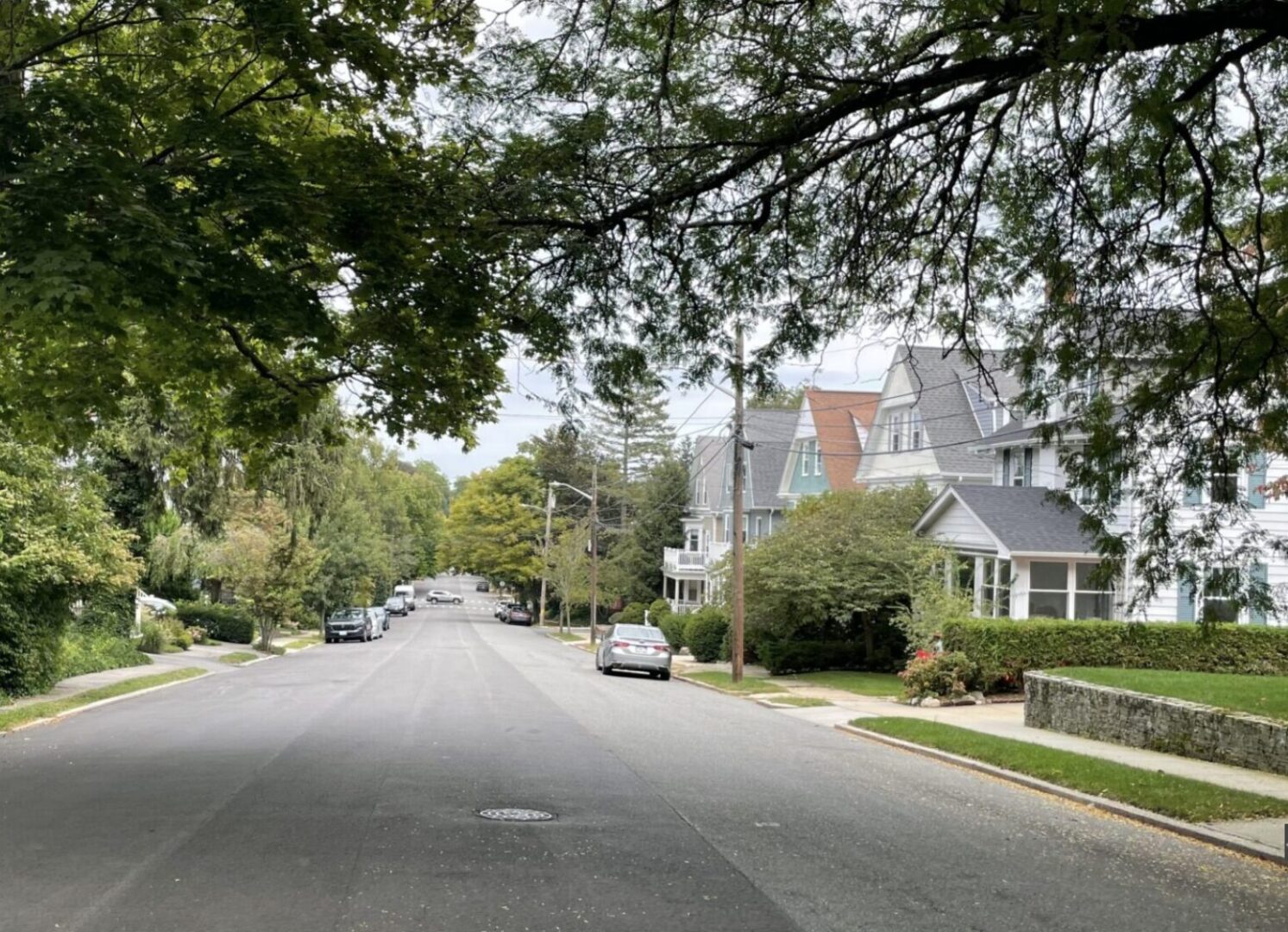
“It could be some of those higher end condominiums on the high rises, I could easily see that being somebody’s second home,” said Mike Pereira, president of the Rhode Island Association of Realtors. “I’m sure there’s some stuff on the East Side, whether it’s on Benefit Street or Blackstone Boulevard or President Ave.”
According to RI Realtors, out-of-state buyers account for 41% of luxury home sales in Rhode Island, compared to 23% of all home sales.
“You’ve got higher incomes coming in here because it’s still an affordable option in the New England Greater New York area,” said Pereira.
Pereira expects the number of properties that are subject to the tax to decrease as people challenge their categorizations, but he still has concerns that the tax will prohibit these properties from finding new buyers down the line. With the Taylor Swift Tax coming into effect and the Real Estate Conveyance Tax increasing 63%, Pereira fears that real estate property values and sale prices will drop.
“If that person does decide to sell, and you can’t find a buyer who wants to live here full time in a house like that, it’s going to lose tremendous value,” said Pereira, who said he has not heard many complaints from property owners yet. “The next buyer is not going to want to come in and take on that tax burden. I think that’s where the biggest concern is.”
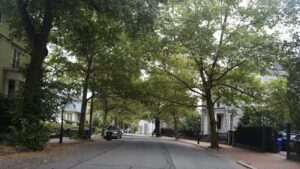
Benefit Street, Providence
Moving the Needle on Housing?
Nelson-Davies dismissed concerns of impacts on those who can afford second-homes, saying this tax is becoming more common, with D.C., Vermont, Hawaii and New York City considering or adopting some version of a higher tax burden on luxury unoccupied properties.
“It’s not like the tax is going to drive down the values of all the $20 million (or $10 or $5 million vacation homes) to $1 million,” said Nelson-Davies. “Also, our tax policy should not be based on the profits that might be made by mostly out-of-state and speculative real estate investors.”
A state analysis showed more than 90% of properties facing the tax are valued between $1 and $5 million. Less than 1% of the homes facing the tax cost more than $15 million. For public policy researcher Tom Sgouros, the Non-Owner Occupied Property tax is a way to address a flaw in the taxing of real estate: “the value of your house just doesn’t scale with your income, and that makes the tax regressive.”
“A million dollar house has three times the value of a $300,000 house but [the property owner] might have ten times or twenty times the income, that’s what makes it regressive,” said Sgouros, who served on Providence’s Special City Commission for Taxation and Revenue. “Anything that makes the rate more progressive is probably a good thing.”
As Rhode Island adopts laws like the millionaire’s tax to make up for federal funding cuts by the Trump Administration, their impacts are starting to hit the ground in Providence, where housing is once again revealing divisions over policies and politics.
“The intentions were great. There’s going to be unintended consequences upfront,” said Pereira. “But like any type of legislation that we’ve dealt with at the State House, sometimes they can be modified, right? It’s just too early to see.”
Stop being a sanctuary state for millions of illegal immigrants and the need for affordable homes disappears as the demand for rental options and homes declines along with the prices.
I agree…..
What Bob said!