
Subscribe!
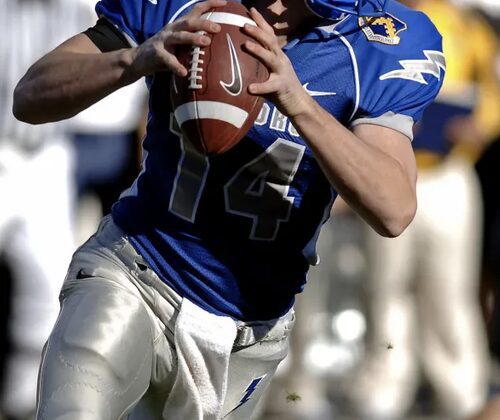
RI High School Football players receive protective Guardian Cap Helmet Covers, courtesy RI Shriners
Rep. McNamara lauds Shriners for purchasing Guardian Cap helmets for Rhode Island high schools – Organization will present helmets to coaches at Sunday event
A student science project, a State House safety proposal and now a major charitable gift are coming together to put additional head protection on Rhode Island’s high school football fields.
The Shriners of Rhode Island Charities Trust will purchase approximately 1,080 Guardian Caps, providing 30 of the soft-shell football helmet covers to each of 36 public high schools across the state.
The Shriners will present the equipment to high school football coaches on Sunday, Sept. 6, at 1 p.m., at the Rhode Island Shrine Center, One Rhodes Place in Cranston.
Rep. Joseph M. McNamara, chairman of the House Education Committee, will present the organization with a House citation recognizing the donation.
“The legendary generosity of the Rhode Island Shriners means that the state will be able to provide its football players with better protection,” said McNamara, a Warwick Democrat whose district also includes part of Cranston.
“This is such incredibly good news for our student athletes,” he said. “I cannot praise the Shriners enough for stepping up and providing this level of safety on our school fields.”
A proposal becomes equipment—even without a mandate

McNamara introduced legislation in both 2025 and 2026 that would have required players participating in Rhode Island Interscholastic League football to wear impact-reducing soft-shell helmet covers during practices and games whenever traditional football helmets were being used.
The latest version, 2026-H 7115, passed the House on May 28 but was not enacted during the 2026 regular legislative session. It would have required schools to provide the covers beginning in 2028, while allowing a student, parent or guardian to opt out.
The Shriners’ donation does not create a statewide mandate, but it places the equipment directly into the hands of public-school football programs without waiting for another legislative session—and without making a school district’s budget the deciding factor.
What is a Guardian Cap?
A Guardian Cap is not a replacement helmet. It is a lightweight, padded cover that fits over a player’s regular hard-shell football helmet and is designed to absorb and disperse some of the force generated during a collision.
Created in 2010, the covers are now used by more than 5,000 high schools, more than 500 colleges and every NFL team, according to Guardian Sports.
The NFL requires players at most positions to wear Guardian Caps during contact practices. Quarterbacks, kickers and punters are exempt, and players may choose to wear the covers during games.
Laboratory testing and NFL data have pointed to reductions in impact forces and practice concussions. Independent high-school research, however, has been less conclusive. A 2025 study involving 2,610 players at 41 Wisconsin high schools did not find a statistically significant reduction in concussions among players who wore the caps during practices.
Guardian Caps are therefore best viewed as one more layer of protection—not concussion-proofing and not a replacement for properly fitted helmets, safer tackling instruction, limits on full-contact practices and immediate medical evaluation when a concussion is suspected.
Football injuries, repeated impacts and CTE
Football players can suffer injuries ranging from sprains, fractures and torn ligaments to heat illness and damage to the head or neck. Brain injuries present a particular concern because their effects are not always immediately visible.
A concussion is a traumatic brain injury caused by a blow or force that makes the brain move rapidly inside the skull. But not every potentially harmful head impact produces obvious concussion symptoms. According to the Centers for Disease Control and Prevention, concern increasingly extends to the cumulative effect of repeated hits—including “subconcussive” impacts that may not cause an athlete to feel or report symptoms.
Tackling is responsible for nearly two-thirds of concussions in high school football, according to CDC sports-injury data.
Chronic traumatic encephalopathy, or CTE, is a progressive brain disease associated with long-term exposure to repeated head impacts. It can affect memory, thinking, behavior and mood, but it currently can be definitively diagnosed only after death through examination of brain tissue.
A major study published in The BMJ in August examined former NFL players who died between 2016 and 2021. Of 878 deceased former players, 235 had their brains donated for research and 215 were found to have CTE. Researchers calculated that at least 24.5%—approximately one in four—of all the former players who died during that period had CTE, although the true percentage remains unknown and could be higher.
The findings do not mean that one in four high school football players will develop CTE. They do underscore why researchers are increasingly focused on reducing the total number and severity of head impacts accumulated over an athlete’s years in youth, high school, college and professional football.
Who are the RI Shriners?
Recognizable by their red fezzes, parade appearances and miniature cars, the Shriners are members of a Masonic fraternity with a long tradition of philanthropy and community service.
Their best-known charitable work is Shriners Children’s, a pediatric health care system specializing in orthopedic conditions, burns, spinal cord injuries and other complex medical needs. Rhode Island Shriners also help identify children who may benefit from specialized care, transport children and their families to hospitals, volunteer and support outreach clinics.
The statewide Guardian Cap donation through the Shriners of Rhode Island Charities Trust brings that child-safety mission directly onto Rhode Island’s high school playing fields.
From a Pilgrim student’s science project to the State House
The legislative effort also had a distinctly local beginning.
Pilgrim High School student and football player Tre Roberson studied soft-shell helmet covers for a science project, using watermelons to demonstrate the differences in impact with and without the added padding.
McNamara, who was judging the science fair, saw Roberson’s demonstration and invited him to testify before the House Education Committee. Roberson told lawmakers that after studying the issue, he intended to wear a Guardian Cap for the remainder of his high school football career.
McNamara’s connection to football extends well beyond his work at the State House. He played center for Pilgrim High School and was named to the Providence Journal’s 1968 All-State football team during his senior year.
His playing days came decades before concussion protocols, return-to-play rules and padded helmet covers became part of the sport. In 2024, the Emo DiNitto/Rhode Island Chapter of the National Football Foundation and College Hall of Fame presented him with its Distinguished American Award.
That history gives McNamara’s football-safety campaign a personal dimension: He is seeking greater protection for today’s players in the same game—and at the same high school—where he once competed.
A student’s experiment helped move the safety issue into the State House. Now, the Rhode Island Shriners are helping move the equipment onto football fields statewide.