
Subscribe!

Homeless in RI: Point in Time, The Hidden Homeless, Pawtucket Shower on the Move, Safety in Food Donation
by RINewsToday News Team
Counting the overlooked ‘hidden homeless’
URI professor studies the extent ‘doubling up’ factors into homelessness crises
A person asking for change on the corner or living in a makeshift dwelling outside is easy to identify as homeless or unhoused. But there’s a segment of the population without permanent housing that goes unnoticed.
Molly Richard, assistant professor of public health in the University of Rhode Island’s College of Health Sciences, studies the homelessness crisis, including an overlooked form of homelessness called – doubling up.
“Homelessness is hard to define, and for many—especially families with children—it manifests as ‘doubling up,’ or ‘hidden homelessness,’” said Richard. “To avoid shelters or the streets, people do whatever they can to stay with friends or relatives until they figure out housing of their own. The adult on the corner asking for change doesn’t represent the scale of the issue; that person is just the tip of the iceberg.”
There are many forms of doubling up. Examples include a young adult couch surfing between friends’ homes, a mother and her children sleeping in one room at a grandparent’s house, or multiple working adults sharing an overcrowded apartment intended for fewer residents. Because doubling up is often an unstable or inadequate experience, it can lead to other forms of homelessness.
The U.S. Department of Housing and Urban Development (HUD) requires every state to conduct an annual census of the unhoused population. Known as a Point in Time count, conducted on an evening toward the end of January, the tally only captures the most visible forms of homelessness, such as those in warming centers, shelters, and outdoor encampments. It does not include those who are doubling up.
Doubling up – or couch surfing – not eligible for most programs
“Because the federal definition of homelessness excludes those who are doubling up, someone who is couch surfing is not eligible for most programs designed to address homelessness,” said Richard. “Sometimes families have to decide to enter a shelter or stay in their car so that they become eligible for these programs.”
To inform strategies to help those living doubled up, Richard and community partners developed a measure of doubled-up homelessness. Their estimates come from the Census Bureau’s American Community Survey (ACS), an annual representative survey of all U.S. households. Because a small percentage of the population is sampled every month and data is aggregated to represent period estimates, the ACS survey captures data for a rolling point in time compared to the HUD survey.
“Researchers, policymakers, and advocates use these data sources to understand the full scope of homelessness, the parts we can see and those that are unseen,” said Richard.
Since publishing an article in the Journal of Urban Affairs on “Community-level predictors of doubled-up homelessness,” Richard has worked with cities and states across the country to examine local doubled-up homelessness data. Her research also contributed to doubled-up information in the National Alliance to End Homelessness’ 2025 report.
The report estimated that 94 out of every 10,000 people in the United States live doubled up, for a total of 3.2 million people. Of the 50 states and Washington, D.C., Hawaii, and California were tied for the highest rate of doubled-up homelessness, Rhode Island ranked 33rd, and Vermont had the lowest rate.
5,641 Rhode Islanders from 2020-2024
In Rhode Island, an average of 5,641 individuals experienced doubled-up homelessness from 2020–2024, which was 4.6% of all Rhode Islanders living in or near poverty. In 2024, those figures were much higher than the five-year average—with an average of 9,998 Rhode Islanders per day experiencing doubled-up homelessness, equating to 6.94% of the population living in or near poverty.
“The higher estimate in 2024 could reflect worsening affordability conditions,” said Richard.
The National Alliance’s data comparing the cost of rent in 2023 and sheltered and unsheltered homelessness rates from January 2024 supported Richard’s theory. Rhode Island had the 12th highest rate of homelessness (22 out of every 10,000 people) and the state’s median gross rent was $961. In 2024, the state’s median rent rose to $1,418. Providence specifically had the highest increase in rents of any metro area in the nation.
According to Richard, addressing doubled-up homelessness should be part of broader plan to address homelessness, housing insecurity, and affordability.
Recommended strategies include:
· Expanding definitions of homelessness to allow people living doubled up to qualify for city- or state-funded programs. Expanding eligibility can help households access support earlier, before experiencing the harmful health effects of living on the streets or in shelters.
· Offering rental assistance, flexible financial assistance, housing navigation, mediation and legal services (including eviction prevention), and other forms of short-term support to help people create a stable situation or find new housing they can afford.
· Producing more housing, preserving existing affordable housing, and protecting renters from steep rental increases to reduce the pressures that drive households to double up.
· Providing stronger employment opportunities, higher wages, and social safety net programs to help people maintain stable housing and reduce the likelihood of housing loss or overcrowding.
“These strategies are complementary rather than competing approaches,” said Richard. “Long-term progress requires coordinated efforts across homelessness services, housing policy, and economic policy.”
___
Rhode Island Coalition to End Homelessness Releases 2026 Point-in-Time Count
The Rhode Island Coalition to End Homelessness has released the results of Rhode Island’s 2026 Point-in-Time (PIT) Count, identifying 2,236 people experiencing homelessness across the state during the count period.
Conducted in partnership with Rhode Island’s Executive Office of Housing and coordinated with outreach teams, shelters, municipalities, volunteers, victim service organizations, and state agencies, the annual PIT Count provides a one-day snapshot of homelessness statewide. The data is used to track trends, identify service gaps, and guide state and federal housing policy and funding decisions.
According to the 2026 findings, 416 people were living unsheltered while 1,820 individuals were staying in shelters, including both state-funded and non-state-funded facilities. In comparison, the 2025 count identified 618 unsheltered individuals and 1,755 sheltered individuals.
Officials said the reduction in unsheltered homelessness reflects expanded shelter access, stronger outreach coordination, and continued housing intervention efforts. However, advocates cautioned that the numbers also underscore the ongoing need for additional affordable housing, homelessness prevention efforts, and long-term housing stability solutions.

“The Point-in-Time Count is more than a number — it represents our neighbors, families, and community members facing overwhelming housing challenges,” said Colby O’Brien, executive director of RICEH. “While the PIT Count remains an imperfect measure, the data makes clear that Rhode Island must continue investing in affordable housing, homelessness prevention, shelter capacity, and long-term supportive housing solutions.”
Charlie Thomas-Davison, chair of the Rhode Island Continuum of Care Board of Directors, said the PIT Count represents only one measure of homelessness and noted that significant unmet housing needs remain across the state.
RICEH also emphasized that the annual count does not fully capture the number of Rhode Islanders who experience homelessness at some point during the year, pointing to the continued importance of coordination among housing providers, shelters, healthcare organizations, and government agencies.
Some of the biggest takeaways from the 2026 Rhode Island Point-in-Time (PIT) Count by the Rhode Island Coalition to End Homelessness:
- Overall homelessness declined slightly statewide
- 2,236 people were counted as homeless in 2026, down from about 2,373 in 2025.
- Unsheltered homelessness dropped significantly
- 416 people were unsheltered in 2026 versus 618 in 2025 — a notable decrease of roughly one-third.
- Officials credit expanded shelter access, emergency winter pop-up shelters, and stronger outreach coordination.
- Shelter use increased
- 1,820 people were staying in shelters in 2026 compared to 1,755 the year before.
- This suggests more people were indoors, but also reflects continuing heavy demand for shelter beds.
- Housing affordability remains the core issue
- The report repeatedly emphasizes that Rhode Island still lacks enough affordable and stable housing options.
- Even with fewer unsheltered individuals, the system remains under pressure.
- The PIT Count is only a snapshot
- The count measures homelessness on a single night and does not capture everyone who experiences homelessness during the year.
- Advocates stressed that many people cycle in and out of instability and may not appear in the annual count.
- Emergency shelters played a major role
- State leaders specifically pointed to temporary winter “pop-up” shelter sites as helping reduce outdoor homelessness during the coldest months.
- Providers are pushing for long-term solutions
- The Coalition says continued investment is needed in:
- affordable housing
- homelessness prevention
- supportive housing
- shelter capacity
- coordinated services
- The Coalition says continued investment is needed in:
- More detailed demographic data is still coming
- Additional breakdowns on families, veterans, youth, chronic homelessness, racial disparities, and system trends are expected in follow-up releases.
One interesting point in the data is that Rhode Island appears to have shifted more people from “unsheltered” into shelters — but not necessarily into permanent housing. So while the street homelessness numbers improved, the broader housing crisis remains largely unresolved.
The full report is available at Rhode Island PIT Count Results
___
Pawtucket Partners with YMCA of Pawtucket to Support the Unhoused With “Shower on the Move”
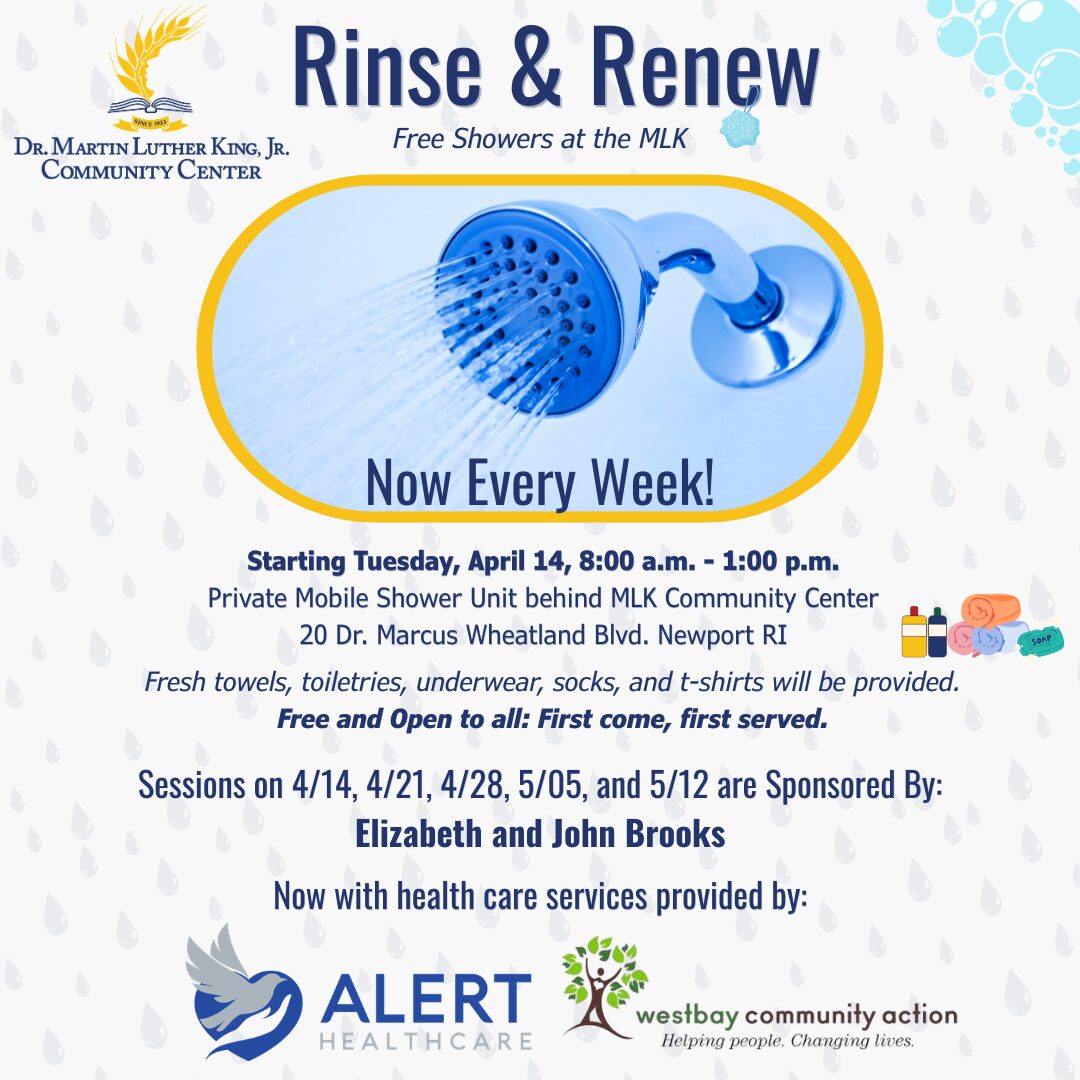
• Thursdays, 7:00 AM – 11:00 AM at 68 Broadway
• Fridays, 7:00 AM – 11:00 AM at 36 Park Place (in front of Weber/RENEW)
URI Cooperative Extension offering guidance to institutions and commercial kitchens looking to donate unused food
June 4 food safety conference will examine food donation liability and myths
Commercial kitchens often have surplus food that can be donated to organizations in need — but what is the best way to do that?
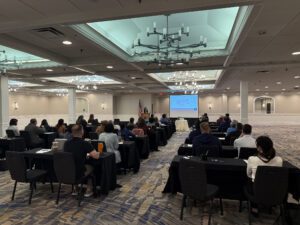
The University of Rhode Island’s Cooperative Extension is hosting its 32nd annual Rhode Island Food Safety Task Force Conference on Thursday, June 4, from 8:30 a.m. to noon at Chelo’s Restaurant, 2225 Post Road in Warwick.
This year’s conference is geared toward institutions — such as colleges, hospitals, restaurants, and catering businesses — interested in learning how to donate unused food from their commercially licensed kitchens. Conference attendees will learn more about “Food Donation and Liability: Leveraging Technical Assistance to Navigate Safety, Risk, and Compliance.”
Nicole Richard, a food safety researcher with URI Cooperative Extension, said the conference will dispel food donation liability myths and offer the facts on food safety and donation; offer technical assistance for businesses on reducing wasted food, increasing donation, and composting; and provide resources to help make it happen.
“This year’s conference will address common misconceptions surrounding food donation liability and provide clear, evidence-based information on food safety and legal protections,” she said. “Participants will gain a better understanding of how to safely donate food while minimizing risk, including an overview of applicable laws and best practices.”
The session will highlight available technical assistance to support businesses in reducing wasted food, increasing food donation, and implementing composting strategies. Attendees will gain practical tools, resources, and connections to help them confidently adopt sustainable compliance with existing food safety laws.
The conference will be led by Richard, who has more than 20 years of experience developing food safety resources and programming for businesses and consumers through the University’s Food Safety Research and Education Program. She is a frequently-requested expert on issues of food safety in both business and home settings. Richard also chairs the Rhode Island Food Safety Task Force.
She will be joined at the conference by speakers Brendalee Viveiros, chief, Rhode Island Department of Health Center for Food Protection; Samantha Salvatore, waste reduction consultant; Isaac Bearg, Rhode Island Food Policy Council; and Robyn Perry and Ingrid Lofgren, URI Department of Nutrition / Feinstein Center for a Hunger Free America.
Advanced registration for the conference is required. The cost to attend is $25 per person (non-refundable; free for any student). All are welcome.
To learn more about the URI Food Safety Education program, or get on the email list for future events, contact Nicole Richard at URI at [email protected] or visit URI’s Cooperative Extension website.
___
Encampments are Back – but did they ever really leave?
Tune in at approximately 21:00 – to 25:00 – with callers talking to Mayor Smiley about new encampments and their plans, or lack thereof. Coordination with the state, police departments, AMTRAK, and RIDOT.
___
Senator Raptakis Bill on Homelessness Employment for State Services as Alternative to Panhandling
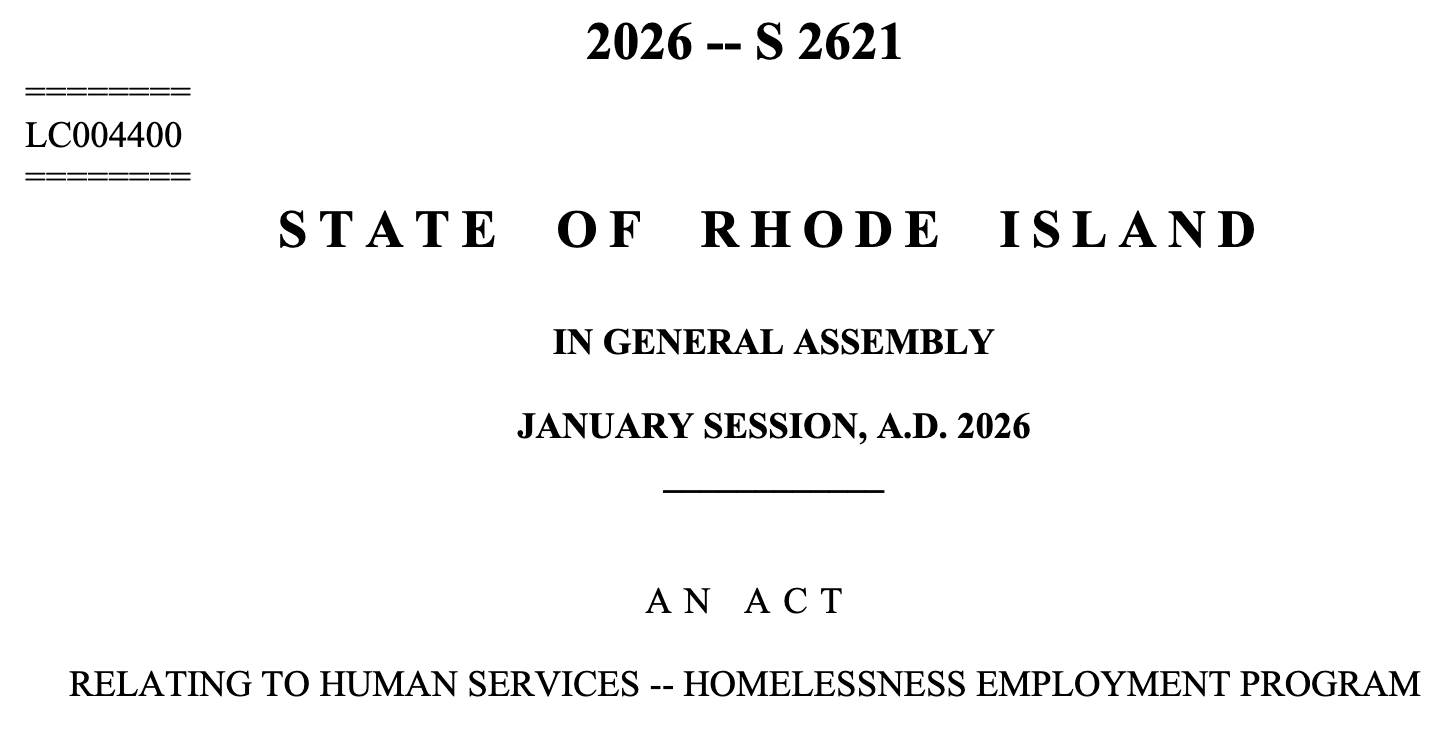
S-2621 – HOMELESSNESS EMPLOYMENT PROGRAM – is a bill sponsored by Sens. Raptakis, Paolino, Thompson, Patalano, Acosta, Murray, McKenney, Kallman, Bell, Raptakis, and Gu. It creates a 3-year demonstration project offering pairing paid employment for individuals experiencing homelessness with community beautification and cleanup efforts, while connecting participants to supportive services. View the whole bill – HERE.
___
Cooling Centers – information will be shared soon on the state’s plans for Cooling Center programs for the summer