
Subscribe!
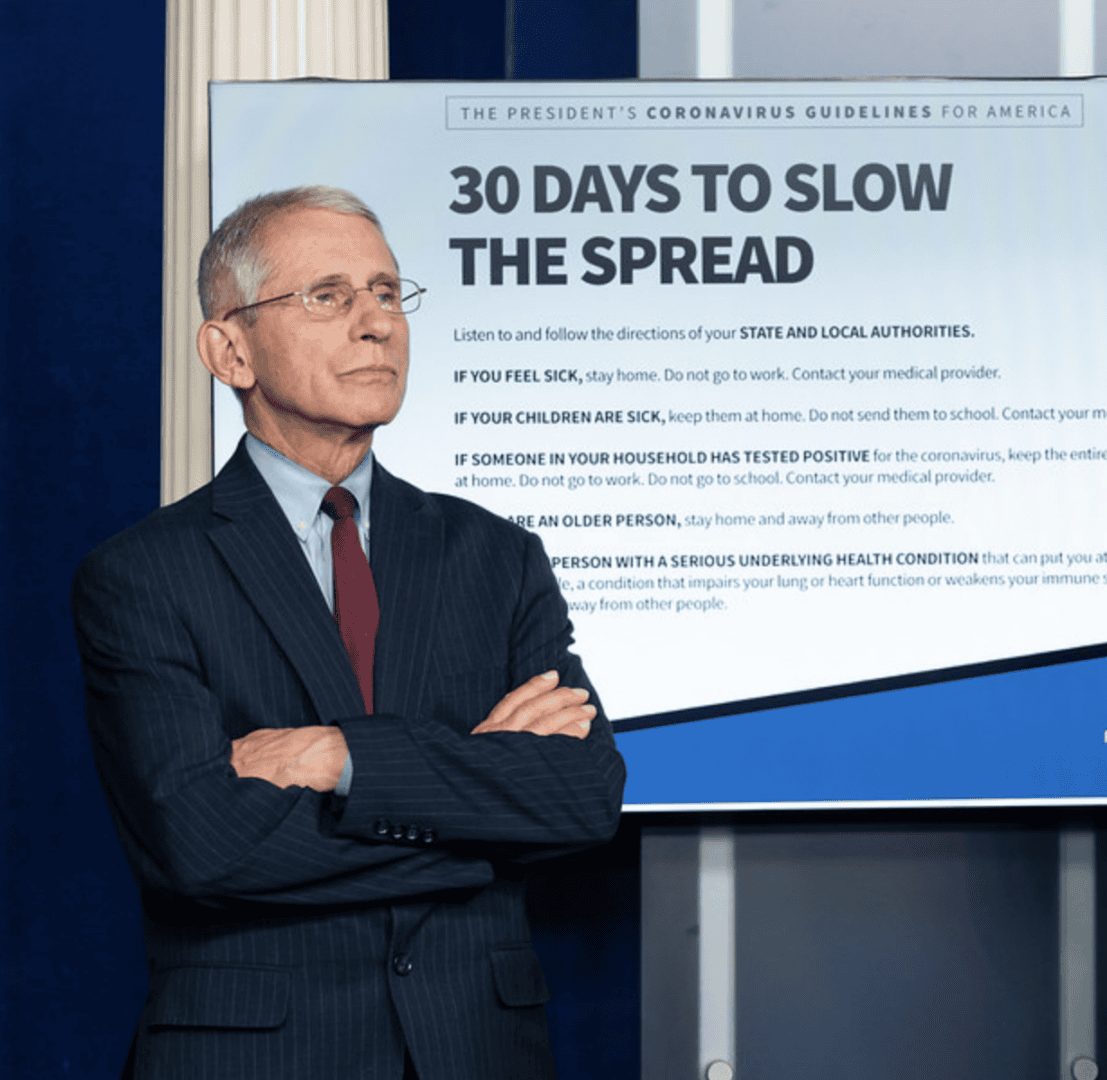
UPDATE: Dr. Fauci Testifies on Capitol Hill — What to Watch For – Read 1,100+ page Diary
UPDATE: Dr. Fauci is reading his 5th Amendment right to answer any questions (he has full, broad pardons in place) – he is reading his refusal to answer to each and every question – including “do you see the red folder in front of you?” – at one point his attorney interjected and was evicted from the chambers.
Hearing adjourns without comment from Dr. Fauci to media – with 111 5th Amendment actions. Next week Congress will consider a contempt action as pardons cannot be used to limit information gathering – first time this has been considered by the courts.
Dr. Anthony Fauci will return to Capitol Hill Wednesday morning for a potentially contentious confrontation with one of his most persistent critics, Sen. Rand Paul.
The Senate Homeland Security and Governmental Affairs Committee hearing begins at 8:30 a.m. Eastern on Wednesday, July 29. Fauci, who directed the National Institute of Allergy and Infectious Diseases from 1984 through 2022, is the only announced witness.
The hearing will be streamed live on the Senate committee’s hearing page and carried live by C-SPAN.
The committee has given the hearing the unusually broad title “Testimony of Anthony Fauci,” leaving Chairman Paul considerable room to question Fauci about the origins of COVID-19, federally funded research, vaccine policy, his private diary and whether his previous public statements squared with what he knew privately.
Dear Diary…
In the days leading up to the hearing, Paul released a 1,141-page collection from Fauci’s private pandemic-era diary, covering his meetings, telephone calls, television appearances and personal reactions as COVID-19 unfolded.
READ: Fauci’s complete 1,141-page pandemic diary
Note: The diary is a large PDF of approximately 69 MB.
One entry in particular has attracted attention. After noting a “very flattering” front-page Washington Post article, Fauci wrote on May 21, 2020:
“It is not hyperbole to say that today I am the most famous and talked about person in the country.”
On June 12, 2021, Fauci described plans for a commissioned “motion portrait” for the National Portrait Gallery. He wrote that the portrait’s theme was to depict him as a symbol of truth and science being attacked by what he called the “forces of untruth and evil.”
Whether these entries represent ordinary private reflection during an extraordinary period—or an excessive preoccupation with celebrity and personal image—is likely to become part of Wednesday’s questioning.
Paul has highlighted other entries that he says reveal a gap between what Fauci discussed privately and what he later said publicly—particularly concerning the possibility that COVID-19 originated in a laboratory, gain-of-function research and the scientists who authored the influential “Proximal Origin” paper.
On Monday, Paul released an additional 465-page “prequel” containing Fauci’s historical records and email exchanges from 2001 through 2015. All of Paul’s recent document releases are available through the Senate investigation’s COVID Reading Room.
Private uncertainty, public certainty?
Following a February 1, 2020 conference call with leading virologists, Fauci recorded that the participants did not agree on whether genetic material had been deliberately inserted into the virus. Some considered it possible, and Fauci noted that coronavirus research underway at the Wuhan Institute of Virology made the question important enough to investigate further.
On April 17, 2020, however, Fauci cited the subsequently published “Proximal Origin” paper during a White House briefing and said the virus’s mutations were “totally consistent with a jump of a species from an animal to a human.”
The two statements were made more than two months apart, during which scientists continued studying the virus. The question Paul is expected to raise is whether Fauci’s increased public certainty resulted from new scientific evidence—or whether he failed to disclose the doubts expressed privately and his own role in convening the scientists who produced the paper.
The blacked-out entry
Another entry likely to attract attention is dated June 19, 2021. Most of it is blacked out in the publicly released copy.
The following day, Fauci wrote that he was still processing news he had received the previous day and would have to live with uncertainty for the next three months.
HHS Secretary Robert F. Kennedy Jr. has alleged that the redacted material concerns a pulmonary infarction suffered by Fauci several months after his Moderna COVID-19 vaccination. Kennedy also alleged that Fauci received private medical treatment without disclosing the condition publicly.
The released diary does not identify the diagnosis, however, and no medical records establishing either the condition or a connection to vaccination have been made public.
Fauci received his first Moderna vaccination on December 22, 2020, and his second dose on January 19, 2021. Even if the alleged medical event is confirmed, its occurrence several months after vaccination would not, by itself, demonstrate that the vaccine caused it.
Watch to see whether Paul raises the allegation and whether Fauci confirms or denies the underlying medical event.
What to look for
1. Another Paul-Fauci confrontation
Paul and Fauci clashed repeatedly during earlier Senate hearings, particularly over whether NIH-funded coronavirus experiments met the definition of gain-of-function research.
Watch whether Paul asks Fauci to reconcile his earlier sworn testimony with documents, emails and scientific records released since those appearances.
2. What Fauci knew about a possible laboratory origin
The newly released documents show that Fauci participated in early-2020 discussions in which scientists expressed concern that unusual features of the virus might indicate laboratory manipulation.
Paul is likely to ask why Fauci later spoke publicly with much greater confidence about a natural origin and whether the public was given a complete account of the early scientific uncertainty.
3. The “Proximal Origin” paper
The influential March 2020 paper concluded that SARS-CoV-2 was not a laboratory construct and presented natural emergence as the likely explanation.
Private messages released since then show that its authors debated a possible laboratory origin before publication. The central question will be whether Fauci influenced the paper, its conclusions or its subsequent public promotion.
4. Context for the private diary
Paul is using Fauci’s diary to contrast some of his private discussions and observations with his public statements.
Fauci may be asked whether the diary is authentic, whether individual passages have been taken out of context and why portions—including most of the June 19, 2021 entry—were blacked out before public release.
5. The pulmonary-infarction allegation
Kennedy’s allegation adds an unexpected personal-health question to the hearing.
The public diary does not substantiate the diagnosis or establish vaccine causation. Watch to see whether Paul asks Fauci about it directly and whether Fauci answers, disputes the premise or invokes the privacy of his medical information.
6. Salary, prizes and outside recognition
Paul has released records concerning prizes awarded to Fauci—including what Paul describes as a $900,000 award from a foreign institution—and the role taxpayer-funded government employees may have played in preparing nominations.
At the time of his retirement, Fauci’s reported annual federal salary was $480,654, more than the president’s $400,000 salary. He was widely described as the highest-paid employee in the federal government.
Questions could focus on disclosure requirements, government staff involvement, possible conflicts of interest and whether Fauci actively sought some of the awards he received.
7. Fauci’s defense
Fauci is likely to argue that scientific judgments changed as evidence accumulated, that critics conflate different definitions of gain-of-function research and that selected emails and diary passages are being presented without their full scientific and historical context.
He may also defend his record by pointing to his work on the rapid development of COVID-19 vaccines, his warnings about the seriousness of the pandemic and his efforts to navigate conflicting political pressures during both the Trump and Biden administrations.
Who is Anthony Fauci?
Anthony Stephen Fauci was born in Brooklyn, New York, on December 24, 1940. He graduated from Cornell University Medical College in 1966 and joined the National Institutes of Health in 1968.
Fauci became director of the National Institute of Allergy and Infectious Diseases in 1984 and remained in that position until his retirement from government service in December 2022. He also served as President Joe Biden’s chief medical adviser during 2021 and 2022.
Over more than five decades in government, Fauci advised seven presidents and became particularly known for his work involving HIV/AIDS, the President’s Emergency Plan for AIDS Relief, Ebola, Zika and COVID-19.
His national profile changed dramatically during the COVID-19 pandemic, when his frequent appearances at White House briefings and on television made him one of the country’s most recognizable public officials—and one of its most polarizing.
What has Fauci been doing since leaving government?
Fauci joined Georgetown University in July 2023 as a Distinguished University Professor. He holds appointments in the School of Medicine’s Division of Infectious Diseases and the McCourt School of Public Policy.
Since leaving government, he has continued teaching, delivering public addresses and participating in discussions about infectious diseases, pandemic preparedness and public health policy.
In June 2024, he published his memoir, On Call: A Doctor’s Journey in Public Service, recounting his career and his work with seven presidential administrations.
Fauci’s federal pardon
In one of his final acts as president, Joe Biden issued Fauci a broad, preemptive federal pardon on January 20, 2025. The pardon covered any federal offenses Fauci may have committed or participated in from January 1, 2014, through the date of the pardon.
Biden said the pardon should not be interpreted as an acknowledgment of wrongdoing or its acceptance as an admission of guilt. Fauci had not been charged with a crime.
The pardon does not prevent Congress from questioning Fauci, and it would not protect him from any new offense arising from Wednesday’s testimony.
Watch live
When: Wednesday, July 29, at 8:30 a.m. Eastern
Witness: Anthony Fauci, former NIAID director
Committee: Senate Homeland Security and Governmental Affairs Committee
Chairman: Sen. Rand Paul
Watch: Senate livestream | C-SPAN