
Subscribe!
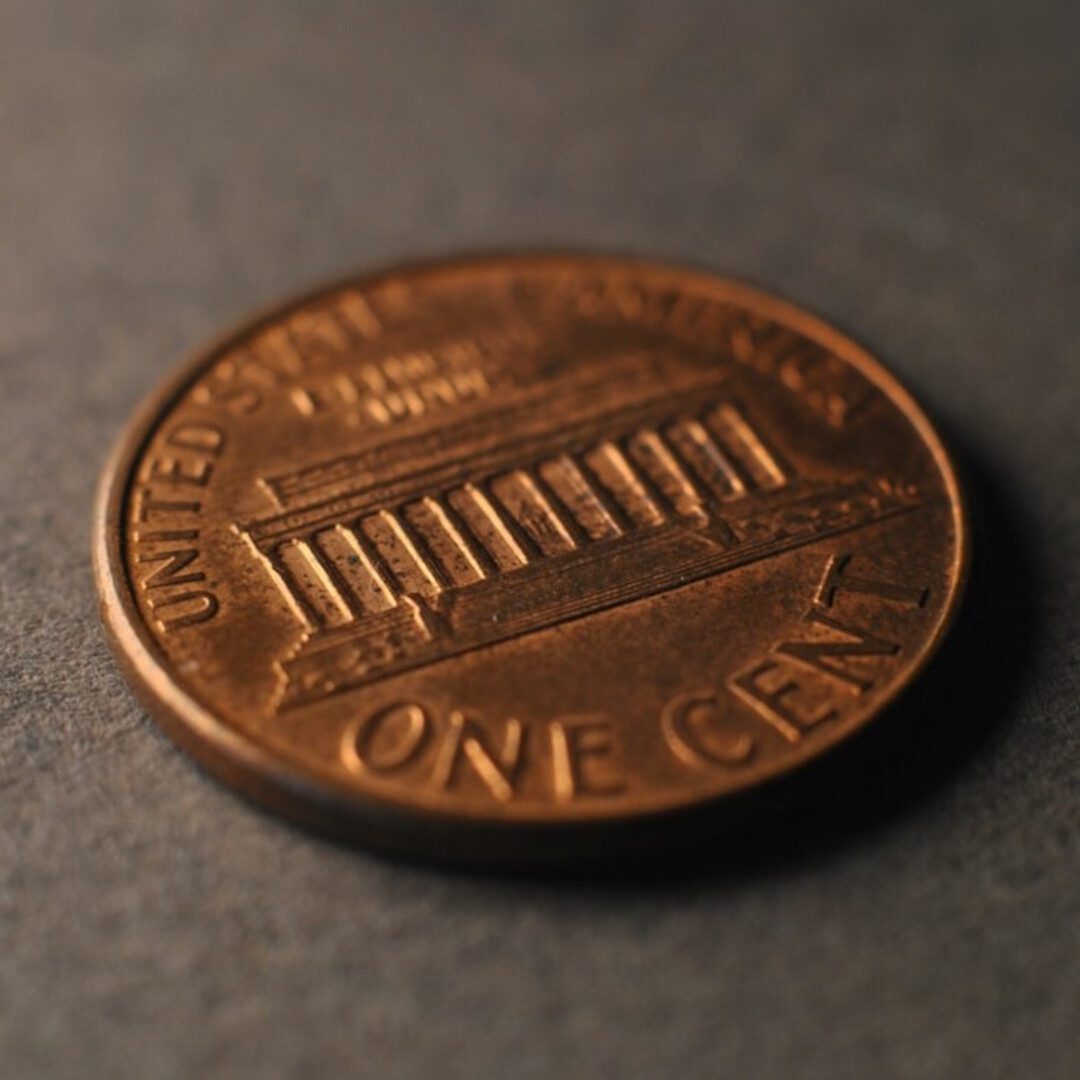
Business Monday: If you dropped a penny on the ground, would you pick it up? – Bob Salvas
– by Bob Salvas
If you dropped a penny on the ground, you might not see picking it up as worth the effort. Some might not even pick up a quarter. Would you make the effort if it was a dollar? Twenty dollars? A thousand dollars?
It is probably safe to say that many people would pick up the twenty and most would make an extensive effort to retrieve one thousand dollars. Yet, those same people might not make the effort to pick up a one-dollar bill one thousand times. Interesting…
I remember a sermon I heard many years ago about the Biblical parable of the lost coin:
“Or suppose a woman has ten valuable silver coins and loses one. Won’t she light a lamp and look in every corner of the house and sweep every nook and cranny until she finds it? And when she finds it, she will call in her friends and neighbors to rejoice with her because she has found her lost coin.”
-Luke 15:8
So, in the parable, the woman makes the strong effort to find what was missing. While the parable in the Bible might be a spiritual lesson, I think it could also be used as a business lesson.
You see, most businesses lose between 10% and 40% of their customers each year. The exact number depends on the industry and how good or bad their customer service is. Let us assume that you are in a reasonably stable industry and you have good customer service- you may not be Disney or Nordstrom, but you have a fair price, good product, pleasant staff, and a clean, interesting place of business. Your business will still statistically lose 10% of your customers each year. And the chances are, you are not doing anything about it. Remember the parable? She lost 10% of what she had and did all she could to ‘get it back’. Why aren’t you doing the same?
A good businessperson will often say “What can I do? I offer a great product at a fair price and have exceptional service. I am friendly and easy to do business with. I cannot help it if a customer decides to leave.”
This is incorrect thinking. You must remember that most people who decide to stop doing business with you do NOT have a good reason for doing so. They may be bored, or often, they feel you are indifferent towards them (that you don’t care about them or the business they bring you). A simple reaching out to that customer may be all it takes to win them back.
“Use logic and emotion to keep your customers. Give them the best products and service and give great value for the money. However, always remember, your competitors will be doing the same thing. The difference will be determined by how you communicate with your customers…”
-Alan Fairweather, author
So, how do you win customers back? Well, it all starts with finding the right customers in the first place. If you are trying to attract new customers only through low prices, you are likely to end up with customers who have values based mostly on price. These are transactional buyers. The kinds of customers you want to attract are relationship buyers. Again, this runs counter to what the typical businessperson might think. They have a big sale, and the line is out the door. But remember, those same people in that line will be down the street at the competitor’s next week when they offer their big sale. A much better model is to differentiate your business – you can still offer some kind of enticement (free samples are good if that applies to your business) to get new customers through the door. But once through the door, you need to offer them an amazing customer experience and the more different and exceptional it is the better. By doing this, you are communicating to that new customer that you care about them enough to offer this great experience.
The next step is to use what I call the TAP method (Track, Analyze, and Promote). How this works in win-backs (winning back lost customers) is you accumulate the data about your customer’s buying habits. You then analyze that data to see the patterns. And when a pattern is broken, you send a communication to the client who is in danger of going away for good.
Let’s use a restaurant as an example. John goes to your restaurant once a month, if you do not see him for a month – that is normal. But if Bill goes to your restaurant once a week and you do not see him for a month, something may be wrong. Bill has broken his pattern of attendance. All the ‘Bills’ (those who broke their pattern) should be sent a WE MISS YOU card (or some type of messaging to indicate you CARE) with an offer (like free desert) to come back. Routinely, I have seen these types of campaigns get responses of well over 20% (unheard of in regular direct mail).
The cost of doing this is an absolute bargain when you consider that it costs at least five times as much money to get a brand-new customer than what it costs to keep an existing one.
So, you have customers that were ‘lost’ and now are ‘found’ and just like the parable, it is time to celebrate! The reason you celebrate is not just because you saved some customers and the revenue they give you, but you have moved them more towards the direction of becoming a relationship buyer (instead of a transactional buyer) and a more loyal customer. A loyal customer is known to buy more often, buy higher priced items, are open to new products you might offer and have the capacity to give you referrals. It is not unusual for a saved customer to be worth twenty times what you paid to ‘save’ them. Kind of like picking up that dollar bill and discovering it is really A TWENTY! Worth the effort!
“An ounce of loyalty is worth a pound of cleverness.”
– Elbert Hubbard
___

Bob Salvas is a Professional Development Manager for the RI Builders Assn, a marketing consultant, the founder of Momentum Networking, and the co-founder of THE MARKETING CAMP, a yearly conference to help small businesses achieve success. For more information about THE MARKETING CAMP, go to themarketingcamp.com. Bob can be reached at 401-359-1602 or at [email protected].
Nice article Bob. I think many small busnesses could learn a lot from it.