
Subscribe!
Burn with Kearns: Steel Strength, Lessons from Carrying a Steel Beam Down Blue Hills – Kevin Kearns
by Coach Kevin Kearns, contributing writer
On Tuesday I had one of those workouts that reminds you why old-school training still matters.
No fancy machines.
No climate-controlled gym.
Just gravity, balance, and a piece of steel.
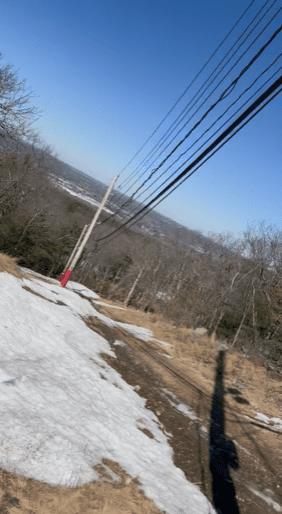
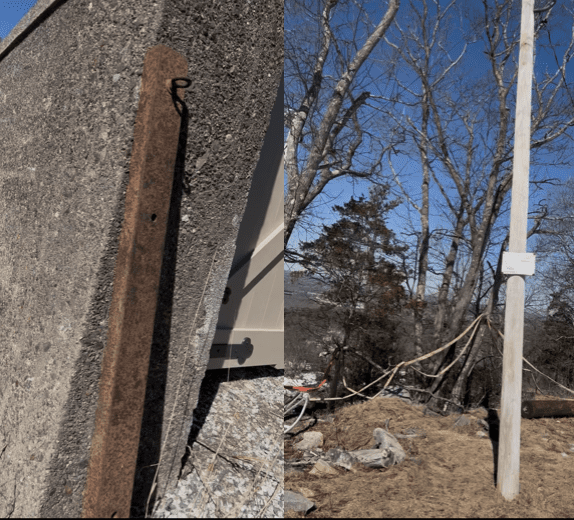
I climbed to the top of the observatory at the Blue Hills wearing a 20-pound weighted vest. At the top I found something interesting: a five-foot rusted steel girder, probably about 75 pounds.
Most people would walk past it.
But sometimes the best workouts are the ones nature and circumstance hand you.
So I picked it up and carried it down.

Real Strength Happens Outside the Gym
There’s a big difference between gym strength and real-world strength.
Gym strength is controlled:
- flat floors
- stable equipment
- predictable movement
Real-world strength is unpredictable:
- uneven ground
- awkward objects
- changing conditions
That day the conditions were about as real as it gets.
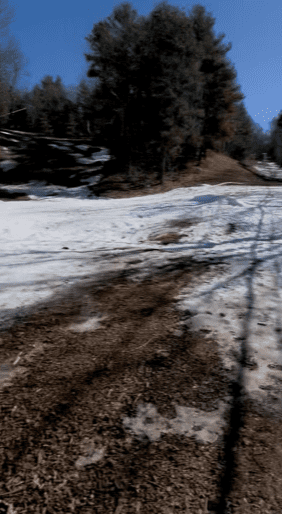
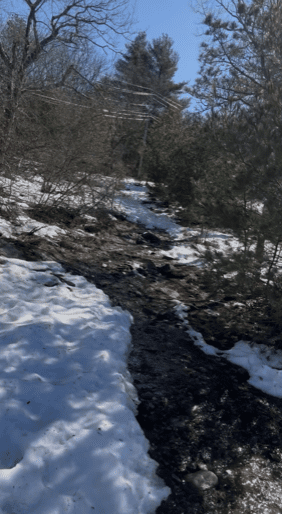
The trail down was covered with ice and snow.
Every step required attention. If I slipped, that beam wasn’t just dropping — it could twist my shoulder or throw my balance off completely.
So every few steps I had to:
- adjust my stance
- shift the beam
- watch the terrain
And most importantly, alternate shoulders.
That’s functional training in its purest form.
Why Old-School Workers Were So Strong
Think about steel workers, dock workers, farmers, or construction crews from earlier generations.
They didn’t train in gyms.
But they were incredibly strong.
Why?
Because their work required:
- carrying awkward loads
- constant balance
- grip strength
- rotational control
- core stability
Exactly the same qualities you need in functional training.
A barbell moves straight up and down.
A steel beam doesn’t care about your program.
It forces your body to adapt.
The Hidden Challenge: Balance and Terrain
The interesting thing about that carry wasn’t just the weight.
It was the terrain.
Going downhill on ice required constant micro-adjustments.
At one point I realized something important:
Walking directly on the ice was actually harder than stepping into deep snow.
The snow gave me traction and stability, allowing me to sink slightly into the surface instead of sliding.
So instead of fighting the environment, I worked with it.
That’s a lesson many people miss in training.
Sometimes strength isn’t about pushing harder.
Sometimes it’s about adapting smarter.
Shoulder Switching and Real-World Mechanics
Another key piece was switching shoulders on the way down.
Carrying weight on one side challenges the body in ways machines never will.
It forces:
- anti-rotation core strength
- spinal stabilization
- grip endurance
- shoulder resilience
These are the exact qualities that help prevent injury in everyday life.
This is why movements like:
- farmer carries
- sandbag lifts
- sled drags
- odd-object carries
are so valuable.
Your body learns to solve problems under load.


The Moment at the Bottom
When I reached the bottom, a couple of workers saw the beam and asked:
“Where did you carry that from?”
I pointed back up the hill.
“From the top.”
They looked at each other and said:
“You carried that all the way down?”
I laughed and said, “Did I do something wrong?”
They said:
“No, we were just curious.”
But their reaction said something important.
Most people today don’t expect to see someone doing physical work voluntarily.
But for generations before us, this kind of effort was normal.
Why Functional Training Still Matters
The lesson here isn’t that everyone should go pick up steel beams.
The lesson is this:
Your body is designed to move in the real world.
Functional training prepares you for:
- carrying heavy objects
- hiking uneven terrain
- maintaining balance
- protecting your joints
- building practical strength
It connects the gym to life.
And sometimes the best training session isn’t a perfectly programmed workout.
Sometimes it’s just:
A hill.
A heavy object.
And the willingness to carry it.
Old-School Strength Still Wins
There’s a reason many of the toughest men in history were not bodybuilders.
They were:
- laborers
- farmers
- soldiers
- craftsmen
Their strength came from real work.
Functional training brings us back to that idea.
Lift things.
Carry things.
Move your body through the environment.
Strength doesn’t always come from machines.
Sometimes it comes from a rusted steel beam on a snowy hill.
Old school training still works.
Strength isn’t always built in perfect conditions.
Sometimes it’s built in the snow, on uneven ground, carrying something heavy downhill while your body figures out how to adapt.
That’s functional strength.
___
Read ALL articles by Kevin Kearns here: BURN WITH KEARNS

Coach Kevin Kearns is the founder of Burn with Kearns, a global training system with over 2,400 certified coaches. He has worked with UFC fighters, professional athletes, and everyday people for more than 30 years. At 59, he continues to teach and inspire people to live stronger, longer, and healthier lives.
Follow Coach Kearns: BurnWithKearns.com
Coach Kevin Kearns Founder Burn With kearns.com Founder MMA Fighter Fit 2012 Top UFC Magazine S and C Coaches