
Subscribe!
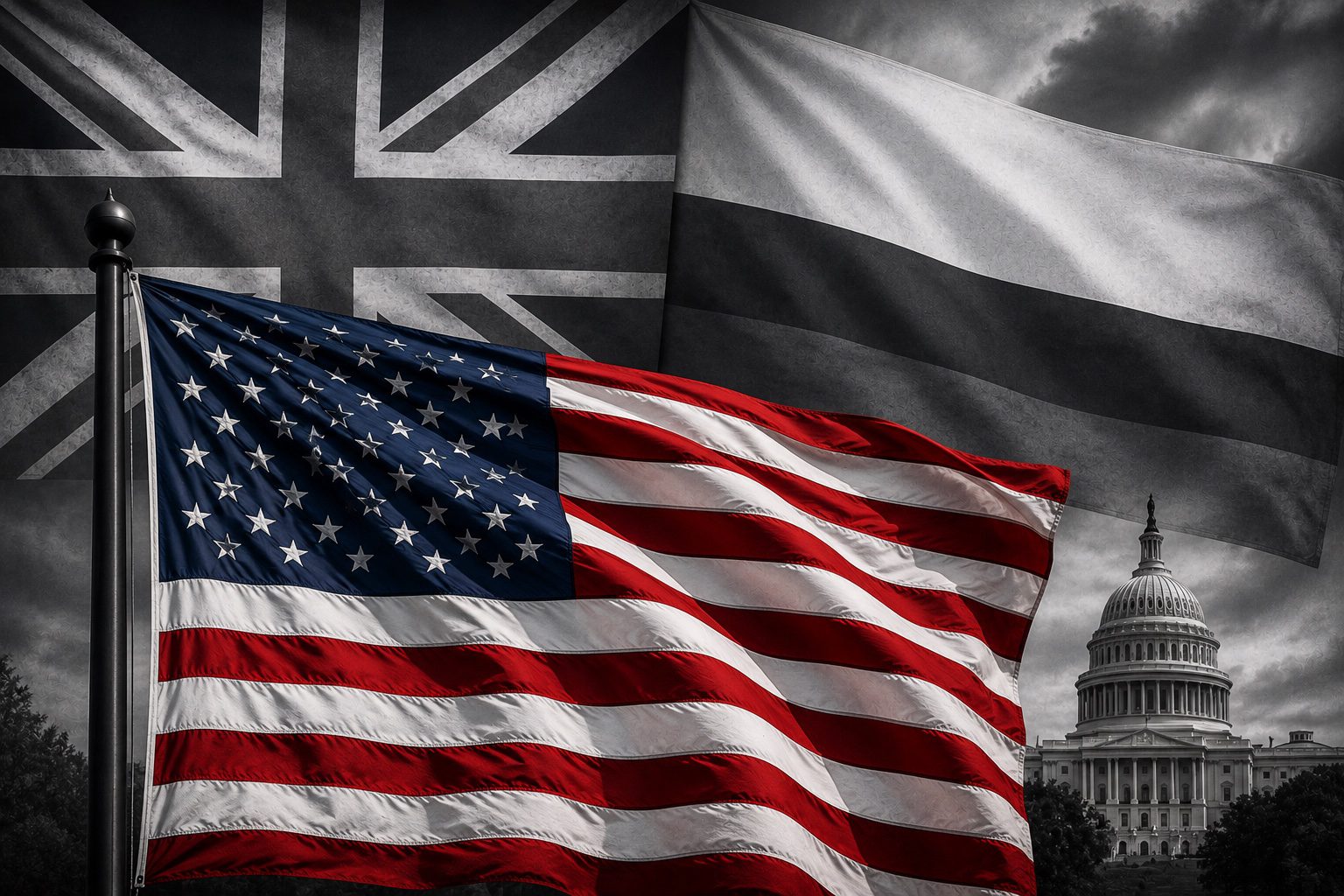
Britain and Colombia offer a cautionary tale for those on the socialist path
by Nancy Thomas, commentary
In two very different countries, voters and political leaders are sending the same message: reform promises cannot survive when government loses control of borders, security, energy and public order.
Two very different countries delivered a similar political message this week: voters may accept promises of reform, compassion and social change, but they will turn sharply when they believe – and experience – that their government has lost control.
In the United Kingdom, Prime Minister Keir Starmer announced he would resign after less than two years in office, despite having led Labour to a historic landslide victory in 2024.
In Colombia, voters are swinging right in a razor-thin presidential runoff, with nationalist lawyer and political outsider Abelardo De La Espriella defeating left-wing senator Iván Cepeda, the candidate most closely associated with continuing the policies of outgoing President Gustavo Petro, where their left turn began.
The two stories are not the same. Britain is a parliamentary system, where a prime minister can be forced out by his own party without a general election. Colombia held a national presidential runoff. Britain’s crisis centered on immigration, energy, public services, weak political identity and the rise of Nigel Farage’s Reform UK. Colombia’s centered on crime, armed groups, drug trafficking, oil and gas, and whether Petro’s “total peace” policy had made the country safer or less secure.
But the political warning is similar: when voters think the basics are slipping — borders, security, energy, public services, economic confidence and national authority — the rest of a reform agenda can collapse.
United Kingdom: Starmer’s landslide turns into a warning

Keir Starmer came to power in July 2024 promising to end years of Conservative chaos. He was not elected as a firebrand. He was elected as a stabilizer — serious, legal-minded, careful, disciplined and boring in a way many voters thought Britain needed after Brexit fights, Boris Johnson, Liz Truss, Rishi Sunak and years of political exhaustion.
Labour’s victory was enormous. Starmer entered Downing Street with one of the biggest parliamentary majorities in modern British history. On paper, he had power. But within two years, he had lost authority.
That distinction matters. A prime minister can have the votes in Parliament and still lose the confidence of voters, markets, media, his own party and the broader public. That is what happened to Starmer.
His core problem was that he never seemed to define what his government was for. He promised change, but the change was not clear enough or fast enough. He promised competence, but his administration became associated with policy reversals, awkward appointments, poor communication and a sense of drift. He promised stability, but Britain still felt unstable.
To critics on the right, Starmer’s Labour looked too left-leaning and too state-heavy. His government leaned into worker protections, renter protections, wage rules, child poverty measures and a more active role for government in the economy. Supporters saw that as necessary repair after Conservative austerity. Opponents saw it as socialism by increments — more regulation, more spending pressure, more taxes and less confidence for business.
At the same time, Starmer did not satisfy many on the left. Labour activists and progressive voters often saw him as too cautious, too managerial, too willing to compromise and too anxious about offending business or swing voters. That left him trapped: too interventionist for the right, not bold enough for the left, and too unclear for the middle.
Immigration became one of the most politically damaging issues.
Official net migration did fall sharply. That gave Starmer a statistic he could point to. But politics is not lived in spreadsheets. Voters saw small boats crossing the Channel, asylum hotels, legal appeals, housing pressure, public-service strain and a sense that border control remained unresolved. Reform UK turned that perception into a powerful argument: Labour had not taken back control.
That phrase — control — is central. Starmer’s opponents did not need to prove that every immigration number was worsening. They needed voters to believe the system still looked disorderly. And many did.
Energy became another pressure point. Conservatives and Reform figures attacked Labour for being too restrictive toward North Sea oil and gas and too committed to green-transition policies at a time when voters were still worried about bills, reliability and economic growth. Former President Donald Trump publicly criticized Starmer over immigration and energy, sharpening the sense that Starmer had lost standing with the political right at home and abroad.
Foreign policy also became part of the story. Starmer’s government had some successes in rebuilding Britain’s relationships with European allies and maintaining support for Ukraine. But he was criticized by conservatives for hesitancy in moments of hard power. One flashpoint came during the Iran conflict, when Starmer initially resisted full U.S. use of British bases for offensive action, later permitting more limited defensive use. To supporters, that was legal caution and restraint. To critics, it was weakness.
That episode fit a larger image problem: Starmer often looked careful, but not commanding.
Then came the internal Labour problem. Poor local election results frightened Labour MPs. Reform UK was gaining ground. Nigel Farage was no longer simply a nuisance on the right; he was becoming a real threat to Labour’s working-class and protest-voter base. Once Andy Burnham returned to Parliament and emerged as a credible alternative, Starmer’s position became far more fragile.
Burnham represented something Starmer had lost: a sense of plain-spoken connection with voters outside London, especially in the north of England. He was seen by some Labour MPs as a better fighter against Reform. That mattered because Starmer’s own party began to believe the next election could not be fought under his leadership.
In the end, Starmer did not fall because of one scandal. He fell because of accumulated doubt.
The public doubted his direction. The right doubted his strength. The left doubted his conviction. The center doubted his effectiveness. His own MPs doubted his ability to beat Farage.
He won a landslide as the answer to chaos, then lost power because he could not convince Britain he had command of the moment, nor that socialism could go from a theory to a workable model.
Colombia: Petro’s promise of “total peace” meets a law-and-order backlash

Colombia’s political earthquake came through the ballot box.
Outgoing President Gustavo Petro made history in 2022 as Colombia’s first left-wing president. His victory was a major break in a country long governed by centrist, conservative and establishment forces. Petro promised social reform, environmental change, a move away from fossil fuels, stronger labor protections, pension support for the poor and a new approach to violence through what he called “total peace.”
That idea was ambitious. Colombia has lived for decades with guerrilla groups, paramilitary violence, drug trafficking, criminal organizations, displacement and rural conflict. Petro’s argument was that the country could not simply shoot its way to peace. He wanted negotiations, ceasefires and political settlements with armed groups.
Supporters saw that as humane and necessary. Colombia’s conflict has left generations of victims. Many Colombians wanted a different path from militarized crackdowns and endless war. Petro’s approach promised not only peace, but a reimagining of the state — more social investment, more inclusion, less dependence on extractive industries and a government more focused on the poor.
But the question voters eventually asked was simple: did it work?
By the end of Petro’s term, the peace strategy had become a political vulnerability. Critics argued that armed groups used ceasefires and negotiations to regroup, recruit, expand territory and deepen control over drug routes, illegal mining and extortion networks. In regions where the state already had weak presence, many voters did not experience “total peace” as peace. They experienced insecurity.
Security became the central issue of the Colombian election. Voters were asking whether the government controlled the territory. Were armed groups stronger or weaker? Were rural communities safer? Was extortion spreading? Were drug traffickers gaining confidence? Was the state negotiating from strength or weakness?
Iván Cepeda, the left-wing runoff candidate, was not Petro. But politically, he carried Petro’s legacy. He supported continuing much of the outgoing government’s agenda, including social programs, labor reforms, pension support, the moratorium on new oil projects and continued peace efforts with armed groups.
For voters who still believed in Petro’s project, Cepeda represented continuity and protection of the left’s gains. For voters angry about crime and insecurity, he represented more of the same.
That opened the door for Abelardo De La Espriella.
De La Espriella is a 47-year-old lawyer and political outsider nicknamed “The Tiger.” He ran as the anti-Petro: nationalist, pro-President Trump, pro-business, pro-security, pro-oil and openly hardline against armed groups. His campaign promised to reduce the size of the state, broaden the tax base, revive oil and gas development, allow fracking, end peace talks with armed groups and respond with military force.
His image is part of the story. De La Espriella used a military-style salute during the campaign despite not having served in the military. He is known for luxury style, designer sunglasses and a larger-than-life persona. He has drawn comparisons to El Salvador’s Nayib Bukele, who became famous across Latin America for a sweeping gang crackdown and mega-prisons. De La Espriella denies he is simply copying Bukele, but he has proposed building mega-prisons in Colombia.
He is also a citizen of Colombia, the United States and Italy, and has openly supported President Trump. That matters because Colombia’s election is part of a broader rightward shift in Latin America, where voters in several countries have turned away from the left amid frustration over crime, weak economies and public disorder.
But Colombia is not El Salvador. It is larger, more complex and has a long history of guerrilla conflict, paramilitary violence, drug-trafficking networks, rural inequality and strong democratic institutions. A Bukele-style approach may be easier to promise than to implement. De La Espriella will also face a divided Congress and a country that remains deeply split.
That split was visible in the election results. The runoff was extremely close. Cepeda challenged results from thousands of voting stations, and a final verified count was still required under Colombian law. Petro urged Colombians to wait for the official review.
But even before the final political dust settled, the message was clear: Petro’s left-wing project had lost the security argument.
That does not mean every Colombian rejected social reform. It does not mean voters wanted to abandon all programs for the poor. De La Espriella himself has said he would preserve some popular social measures, including Petro’s minimum-wage increase. But voters appeared to separate social benefits from the broader direction of the country. They may like some parts of Petro’s agenda while still deciding that the state had become too weak on crime, armed groups and economic growth.
That is the central lesson from Colombia: a reform government can survive disagreement over taxes, labor or energy. It is much harder to survive the perception, proven out in the daily news, that the state has lost control of security.
Two countries, one message – harbinger to other countries
The UK and Colombia are not mirror images. Britain’s crisis was largely about leadership, immigration, energy, public services, weak growth and political identity. Colombia’s was about armed groups, crime, drugs, territory, oil and the future of a peace strategy.
But the shared political current is unmistakable.
In both countries, left-of-center governments or candidates promised a more humane, more reform-minded politics. In both countries, opponents successfully argued that those governments were weak on the basics. In both countries, the public mood shifted from patience to frustration.
For Starmer, the issue was not that Britain had suddenly become overwhelmingly conservative. It was that voters did not feel his government had delivered visible control or improvement. Immigration still felt unresolved. Public services still felt strained. Energy and growth still felt uncertain. Reform UK made the case that Labour had become another establishment party unable to act.
For Petro’s Colombia, the problem was more severe: security became the test of legitimacy. “Total peace” was a bold promise, but voters judged it against armed-group expansion, extortion, drug trafficking and fear in the regions. Cepeda’s left-wing continuity message could not overcome the perception that Colombia needed a harder turn.
Managing decline – rather than restoring order
They show the political danger for the left when voters believe and then experience government is managing decline rather than restoring order.
Social reform can be popular. Labor protections can be popular. Pension support can be popular. More humane policies toward migrants, prisoners, workers or the poor can be popular. But all of it becomes vulnerable if voters see borders are open, crime and violence is rising, energy is unreliable, public services are failing and leaders are afraid to make hard decisions.
The right, in both cases, did not only campaign on ideology. It campaigned on control and restoring safety.
In Britain, that meant immigration, energy and resistance to Reform UK.
In Colombia, it meant crime, drug trafficking, armed groups and a rejection of Petro’s peace strategy.
In both places, voters were responding less to theory than to daily anxiety and lived experience.
The warning is blunt: voters may listen to promises of compassion, but they still expect government to protect order, borders, safety, prosperity and national confidence.
Starmer had the majority but lost authority. Petro had the presidency but lost the argument over security. Two countries. Two systems. One unmistakable message: when voters believe government has lost control, they will look for someone who promises to take it back.
The cautionary tale for the United States

The warning is not only for Britain or Colombia. It is already visible in the United States.
Democratic socialist candidates are no longer simply protesting from the outside. They are winning city offices – often with unqualified candidates with questionable beliefs and backgrounds. They are challenging members of Congress, building political machines and asking voters to trust them with the daily operations of government.
New York City is the test case. Mayor Zohran Mamdani won on sweeping promises: free buses, free supermarkets, rent freezes, universal childcare and a broader affordability agenda built on higher taxes and more government control. But campaigning is not governing. The big ideas sounded simple on the trail. In office, they run into budgets, state approvals, bureaucracies, labor rules, business resistance and the hard math of who pays.
That is where the national question begins.
Many of the loudest young supporters of this new socialist wave are too young to remember the Twin Towers falling — and too young to have lived through the national-security fears that shaped the politics that followed. Few experienced the “we are one” patriotism of American flags on business and home windows, on our desks at work, in our flower pots on the front porch. It was a time when more American homes had flag holders installed than in years. Red, white and blue was our defense against a time of tears and shock.
Does the socialist label matter to party leaders if the larger goal is power? If the numbers help win primaries, congressional seats, committee control and eventually the Senate, will the ideology be treated as a risk — or simply as part of the math?
That may be the calculation now unfolding inside the Democratic Party. In deep-blue cities and districts, socialist candidates can win by promising free services, rent controls and government-run solutions. In statewide races and swing states, those same ideas may become a burden. But by then, they may already have pulled the party’s agenda, language and expectations further left.
People who said they didn’t leave the Democratic Party, the party left them now have a deeper lament in watching a shadow 3-party morph into and begin to transform this party. Drunk on TDS (Trump Derangement Syndrome)? No doubt. On a “whatever it takes” driven mission. It seems so.
Britain and Colombia show what happens when voters test those promises against reality.
In Britain, voters and Labour leaders turned on a prime minister who seemed unable to control immigration, energy costs, public services or national direction. In Colombia, voters turned away from a left-wing government after its promise of “total peace” became associated with rising insecurity and armed-group expansion.
The American left should pay attention. Voters may be drawn to promises of free programs and government protection from rising costs. But they will not wait forever for results. The rush to judgement will be swift, and earned. And they will not overlook disorder, crime, border pressure, rising costs or the feeling that government has lost control.
If they want to claw back to common sense politics and management they might find those people have been run out, exhausted and no longer interested in the fight.
The socialist path can win elections when voters are frustrated. But once in power, it must deliver more than slogans. It must deliver safety, competence, affordability and order.
When it does not, voters will begin looking for the exit.
Excellent!