
Subscribe!
A Giant FIFA World Cup Soccer Ball Is Headed to Boston Harbor
With Gillette Stadium temporarily becoming “Boston Stadium” under FIFA rules, a massive waterfront installation may help define New England’s global television image during the 2026 tournament.
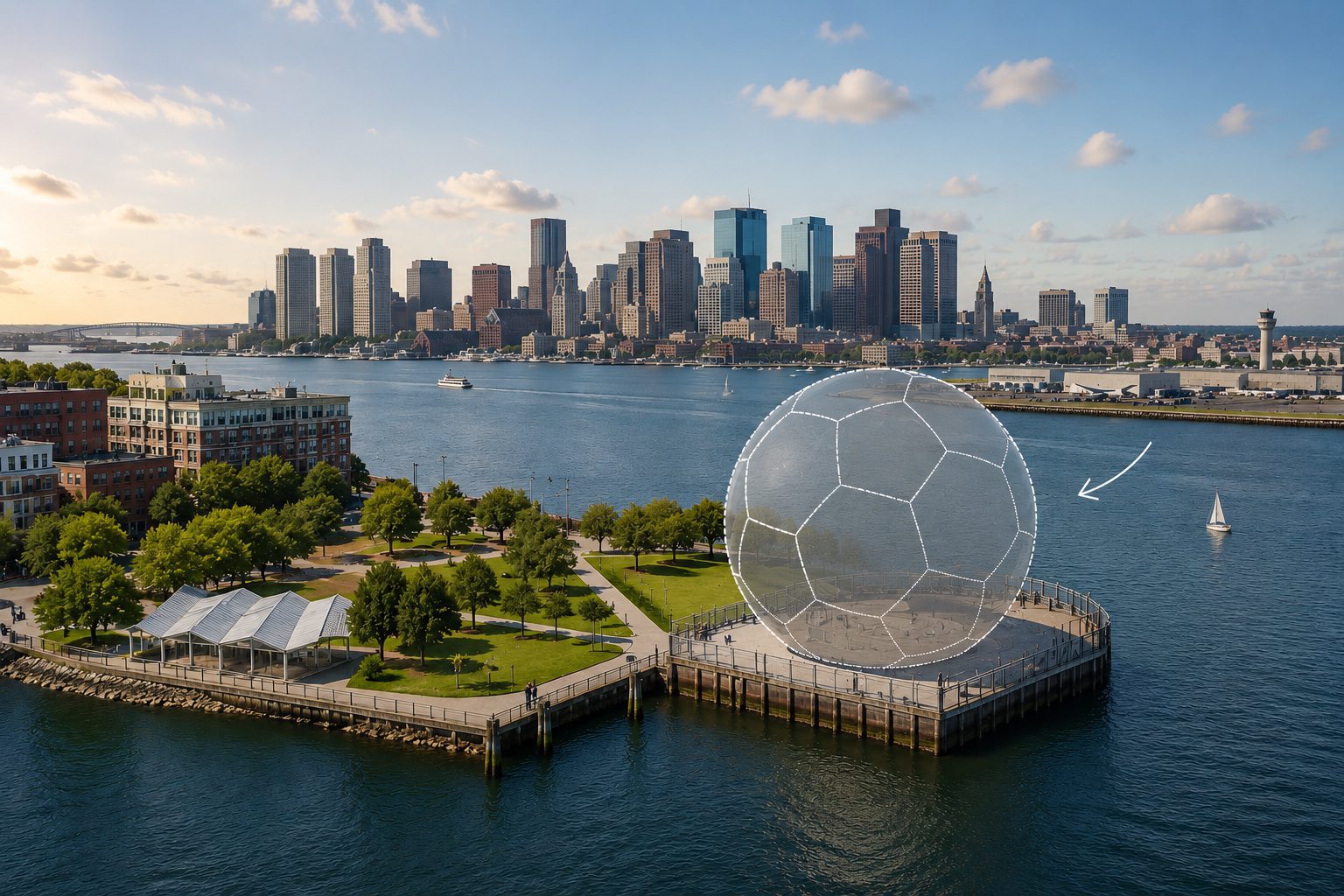
A giant soccer ball rising over Boston Harbor may soon become one of the defining visual images of the 2026 FIFA World Cup in New England.
Plans are now underway for what organizers hope will become the world’s largest soccer ball — a massive 45-foot-wide structure expected to be installed around June 10 at Piers Park, just days before the first World Cup activity begins in the Boston region.
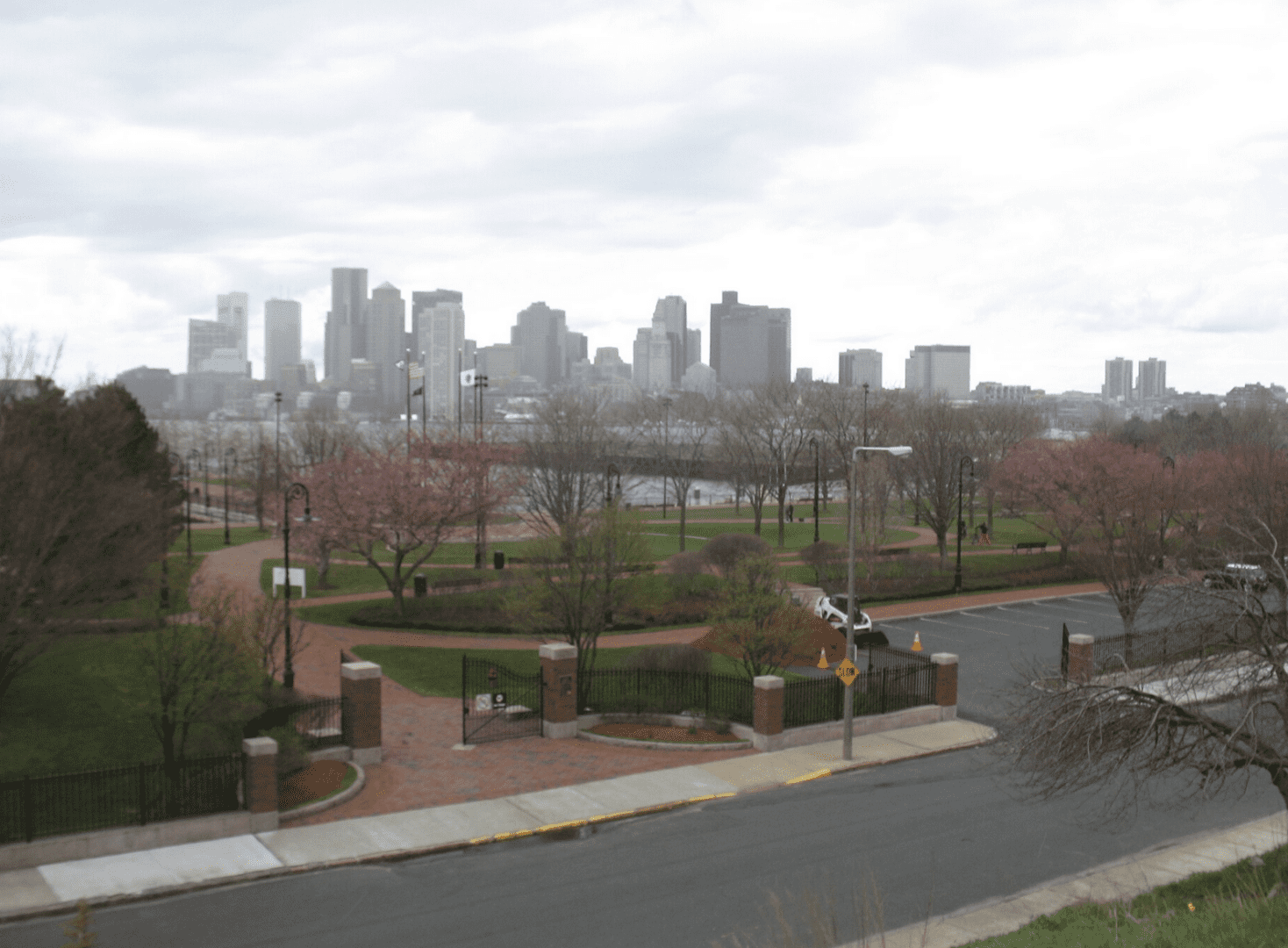
Wikicommons – CC BY-SA 3.0
The giant ball, currently under construction in northeast Ohio, is expected to travel by tractor trailer roughly 660 miles before arriving in Boston, where it will be assembled and inflated along the waterfront with the city skyline behind it. Guinness World Records officials are expected to inspect and measure the structure as organizers attempt to surpass the current record-holder — a giant handcrafted soccer ball unveiled in Qatar in 2013.
At approximately 45 feet in diameter, the Boston ball would stand taller than many four-story buildings.
But beyond the sheer size, the installation appears designed to solve a unique FIFA problem.
Although the Boston region is hosting multiple World Cup matches, the games themselves will take place at Gillette Stadium — located roughly 30 miles from downtown Boston. During tournament play, FIFA rules also require strict branding controls. Gillette Stadium is expected to temporarily lose its familiar corporate identity and instead be referred to internationally as “Boston Stadium,” with Gillette signage and branding covered by white sheeting or removed from public view.
That leaves organizers with a challenge:
How do you visually establish “Boston” to billions of international viewers when the matches are played in Foxborough and the stadium itself becomes visually genericized?
The answer may be floating above the East Boston waterfront.
With sweeping skyline views, harbor visibility, and proximity to Logan Airport flight paths, Piers Park offers the type of dramatic establishing shot television broadcasters prize during global sporting events. The location places the giant ball directly across the harbor from downtown Boston, where it could become visible in helicopter footage, drone coverage, harbor traffic imagery, and international television broadcasts tied to the tournament.
In many ways, the structure appears less like a simple public art piece and more like a carefully engineered media symbol — a globally recognizable visual shorthand for “Boston” during the World Cup.
Add to that that Foxborough has denied “partying” licenses out of concern of safety and crowds, and the tiny community with one lane in and one lane out reorients before and after events right on up to Boston – the soccer ball will welcome all.
The timing of the installation reinforces that idea.
Reports indicate the giant soccer ball will be installed 3 days before the tournament begins – so that looks like June 10th. That compressed timeline may help minimize weather exposure while maximizing its impact as international media crews, visitors, and FIFA-related broadcasts descend on the region.
The project also carries an intriguing international connection.
The current Guinness world-record soccer ball was unveiled in Qatar in 2013 as part of that nation’s growing association with global soccer ahead of the 2022 FIFA World Cup. While giant soccer-ball displays have appeared around the world for years, Qatar’s Guinness-certified handcrafted ball in 2013 helped elevate the concept into a global World Cup branding symbol — something Boston now appears poised to emulate ahead of the 2026 tournament. According to World Record Academy, the Qatar ball was handcrafted in Sialkot, Pakistan — one of the world’s most famous soccer-ball manufacturing centers — by approximately 15 workers over four weeks using materials similar to those found in regulation soccer balls.
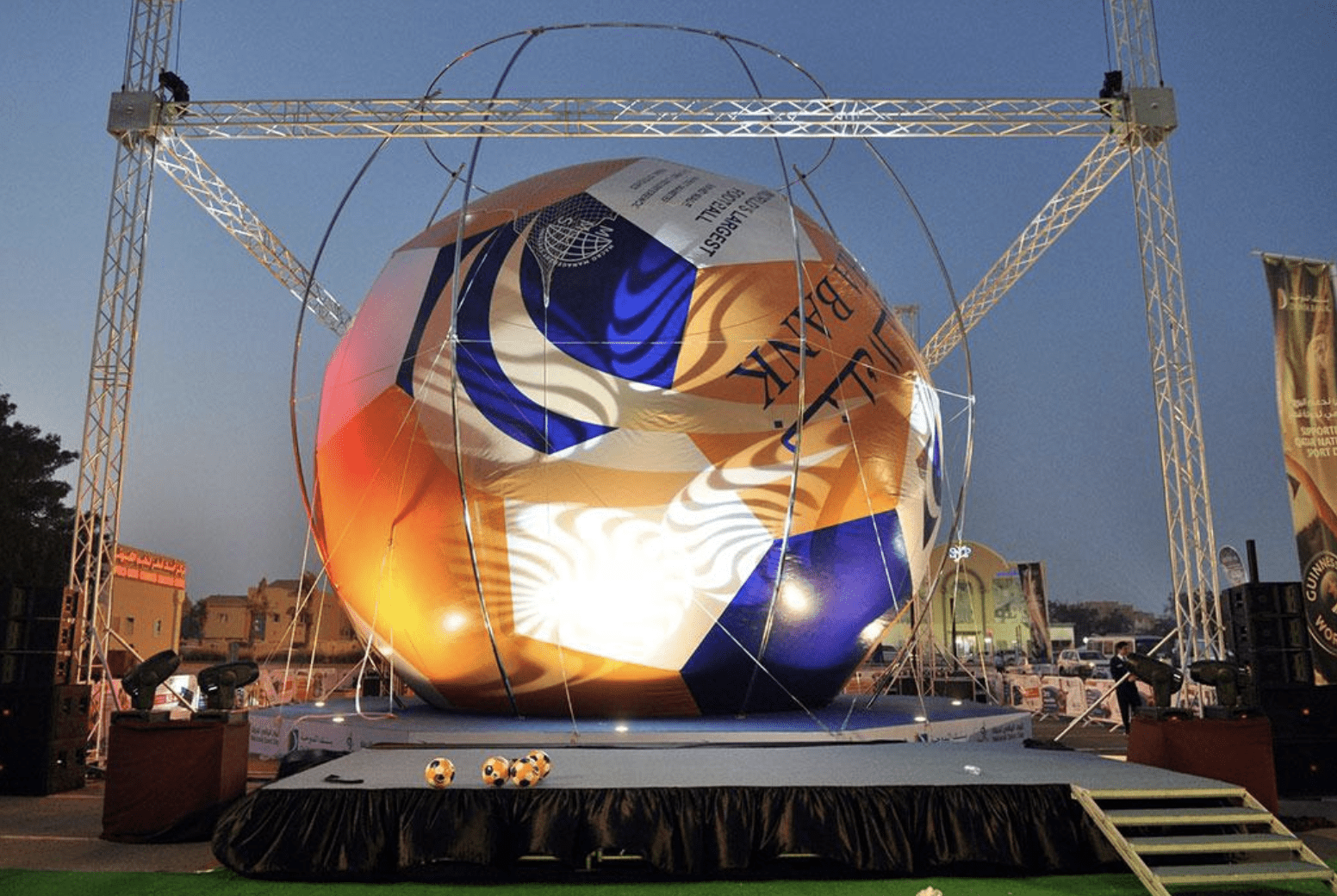
Current Guinness-record soccer ball unveiled in Qatar in 2013. The handcrafted structure, built in Pakistan, helped popularize giant soccer-ball installations tied to World Cup branding efforts. (Image: Doha Bank/Guinness World Records)
Boston’s version appears to be an entirely new build rather than a modification of the Qatar structure. Reports indicate the New England installation is being fabricated in Ohio using polyurethane materials and modern inflatable engineering techniques before being transported to Boston for assembly and inflation.
Guinness World Records officially recognized Doha Bank as the record holder for the world’s largest soccer ball in 2013, though the handcrafted structure itself was built in Pakistan’s renowned soccer-manufacturing city of Sialkot.
In Boston’s case, the official Guinness applicant appears to be the Massachusetts Port Authority, or Massport — the quasi-public agency overseeing Logan Airport, maritime facilities, and several of the region’s major transportation gateways.
That connection may help explain why organizers selected a highly visible harborfront location intended to greet international visitors arriving by air and sea during the 2026 World Cup.
The contrast is notable:
Qatar’s record-holder emphasized traditional handcrafted soccer-ball construction, while Boston’s version appears aimed squarely at large-scale visual impact and modern event broadcasting.
Questions still remain about the project, including:
- who specifically designed and fabricated the ball,
- how it will be anchored safely on the harborfront,
- whether it will be internally illuminated,
- whether visitors will be able to interact with it,
- and whether Guinness officials will certify the record before or after the structure reaches Boston.
Some reports suggest the official measurement process may actually occur in Ohio prior to transport.
For Southern New England, however, the symbolism may matter as much as the record itself.
As Rhode Island and southeastern Massachusetts prepare for the enormous economic and tourism impacts associated with the 2026 World Cup, regional leaders continue positioning the area as part of a broader “Boston World Cup” footprint. Providence, in particular, is expected to see increased hotel activity, transportation demands, and international visitor traffic tied to the tournament and team-related events.
The giant soccer ball may ultimately become the first truly iconic public image of that regional effort.
Because for millions watching around the world, the visual memory of New England’s World Cup may not begin inside a stadium at all.
It may begin beside Boston Harbor.
On a Clear Day, Rhode Islanders May Spot Boston’s New World Cup Symbol
For many Rhode Islanders driving north toward Boston, the approach to the city has long included one unmistakable visual landmark: the colorful “Rainbow Swash” gas tanks painted by artist Corita Kent near the Southeast Expressway.
The giant World Cup soccer ball planned for Boston Harbor could soon join that visual tradition.
While the 45-foot structure is not expected to dominate views from Interstate 95 itself, travelers approaching Boston from the south on Interstate 93 and nearby harbor approaches may catch glimpses of the giant ball rising across the waterfront near Piers Park — particularly on clear days and from elevated stretches approaching downtown Boston.
The comparison may not be accidental.
Like the iconic Rainbow Swash tanks, the giant soccer ball appears designed less as a neighborhood attraction and more as a symbolic visual marker tied to Boston’s identity and global visibility. With the downtown skyline behind it and Logan Airport nearby, the installation is expected to become highly visible in aerial television shots, harbor views, and international World Cup coverage.
For Rhode Islanders making the familiar drive north into Boston during the tournament, the massive ball may become one more sign that the 2026 FIFA World Cup has arrived in Southern New England.