by Master Chef Walter Potenza
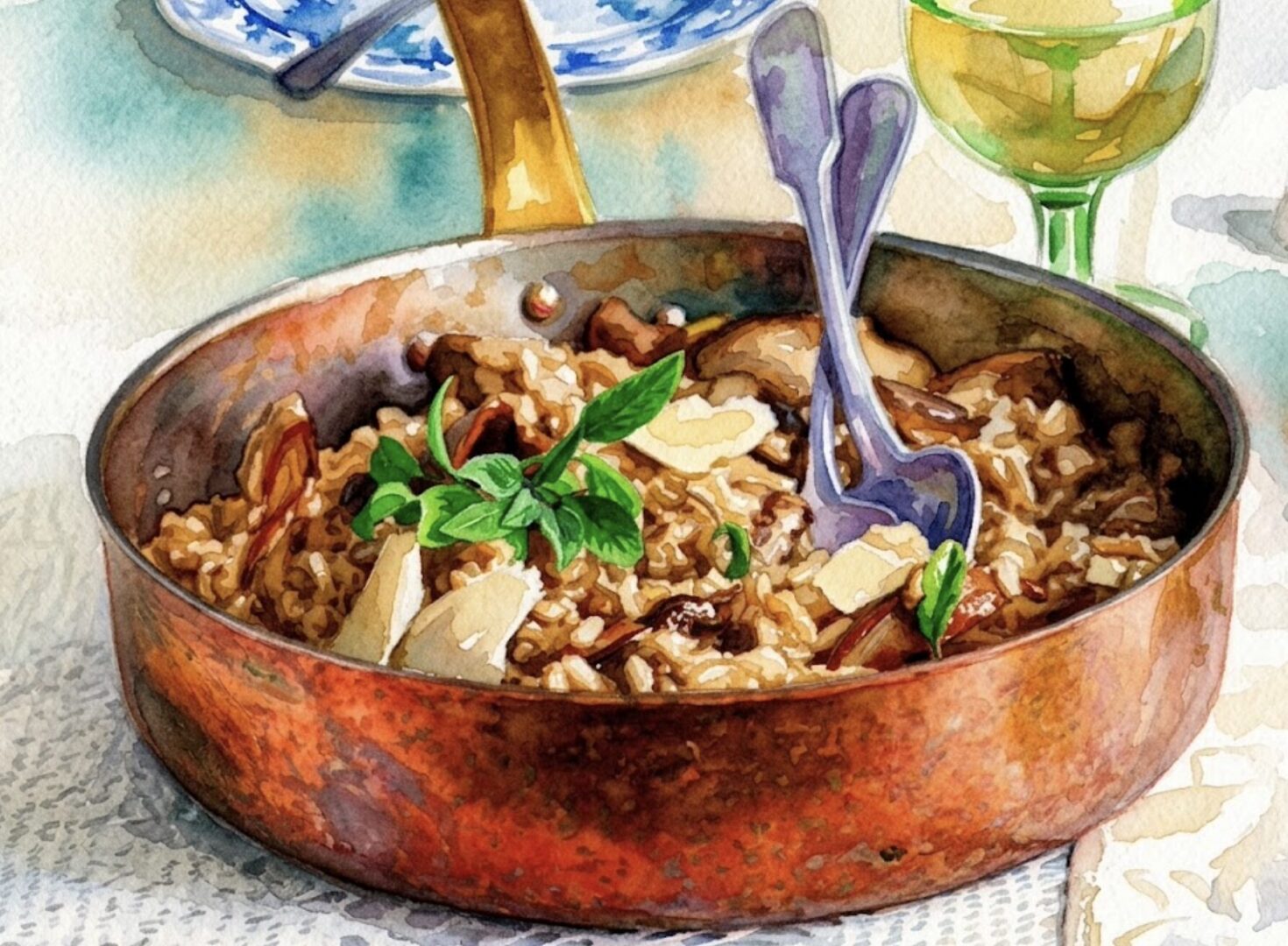
September is here. Let’s take a look at some of the gifts from this month, as we return to the oven as our main source of cooking. I am including a nice recipe for an easy to make Risotto with mushrooms.
.
Friends:
.
This summer has practically vanished, and September arrives quietly, without fanfare. One morning, the light looks different—not dimmer, but lower and more golden, as if moving more slowly. The early air feels cooler than last week, a chill that disappears by noon but leaves behind a sense that things are changing. Tomatoes still hang on the vine, and peppers keep ripening. Even so, something shifts in the kitchen, and soup suddenly sounds appealing.
.
September gently nudges cooks along, never making a big show of summer ending. It brings in new ingredients while summer produce still lingers, like a thoughtful host offering the next course before you’ve finished the last. At the market, you’ll see this change: the last tomatoes and the first winter squash, the final flat peaches and the first wild mushrooms; summer herbs getting woody while autumn herbs like sage, rosemary, and thyme smell their best. You can fill your basket with foods that belong to both July and October, and cooks who notice this mix get the most out of the season. September smells like two seasons at once. At the market, you can pick up the scent of summer’s ripeness and autumn’s earthiness just a few steps apart.
.
This shift marks the move from what lingers to what arrives.
.
Vegetables – Wild mushrooms
Porcini, chanterelles, hen of the woods. Cook them well.
Winter squash – Delicata, acorn, early butternut—Roast whole. Eat the skin.
Late tomatoes – Last of them. Use imperfect ones for sauce. Now or never.
Radicchio – Bitter, beautiful. Grill it, braise it, or eat raw with anchovy.
Leeks – First of the season. Sweeter and more tender than winter leeks.
Fennel – Autumn bulbs arriving. Braise or slice raw with citrus and oil.
Swiss chard stems are at their best now. They wilt quickly when cooked with butter and garlic.
Corn (final) – Last ears of the season. Sweeter for the cooler nights.
.
Wild mushrooms define September, rewarding cooks who embrace simplicity. A porcini, firm and dense with an aroma reminiscent of the forest floor and a meaty quality, needs only butter, heat, and patience.
.
The pan must be hot enough to sear rather than steam the mushroom, and it should remain undisturbed for 2 minutes. Resist the urge to stir. Turn once, season, and serve over quality toast, soft polenta, or a fried egg, letting the yolk mingle with the mushroom’s cooking juices. This becomes a complete September meal. If porcini are unavailable, cremini, shiitake, or other robust mushrooms are suitable alternatives; select the finest available, season lightly, and allow the mushroom’s flavor to predominate.
.
Winter squash appears discreetly among the final summer vegetables at the farm stand, as if uncertain of its reception. Its arrival is, in fact, anticipated. Delicata squash, small, striped, and thin-skinned enough to eat unpeeled, offers an accessible introduction: halve, remove the seeds, brush with olive oil and a touch of brown sugar or maple syrup, and roast cut-side down until the flesh collapses and caramelizes, with the edges darkened and crisp. The softened skin integrates into the dish. Serve as prepared, or fill the cavity with grains, herbs, and cheese for a complete meal. Both methods require minimal skill and evoke autumn.
.
Fruits
.
Wine grapes – Harvest season. Small, intense, seed-bearing. Cook with them.
Table grapes – Concord, Muscat, Red Globe. Eat cold. No improvement needed.
Pears – Bartlett first, then Bosc. Poach, roast, or eat barely ripe.
Apples – Early varieties like Gala and Honeycrisp are crisp, tart, and bright.
Late figs – Second season finale. Eat them, or you will regret it in January.
Quince – Inedible raw. Roasted or poached into something magnificent.
Plums – Italian prunes at peak. Dry, jammy, extraordinary in tarts.
Pomegranate – First of the season. Seeds bright and tart. Use them as garnish and as seasoning.
.
September grapes are very different from the pale, mild table grapes you find in summer. These are harvest grapes: Concord, with deep, musky sweetness, seeds, and a skin that peels away to show translucent flesh; Muscat, with a strong, almost overwhelming scent that settles into a classic flavor.
.
These grapes deserve your full attention because they reflect where they’re grown and the season itself. They’re perfect for focaccia with rosemary and coarse salt, where their juices caramelize in the oven, and their flesh turns jammy and sweet against the savory bread. This dish, called schiacciata all’uva, is a Tuscan grape harvest bread that’s special to September.
.
From there, pears offer a quieter but equally welcome turn toward autumn. Pears show up quietly in September and can be easy to miss next to flashier fruits, but that would be a mistake. A ripe Bartlett pear, soft at the neck and fragrant at the stem, is one of the finest fruits you’ll find. It goes surprisingly well with blue cheese—a pairing that makes sense as soon as you try it—and it also roasts beautifully with butter and white wine, making a tender, flavorful side for pork or aged Pecorino. If you poach pears in red wine with cinnamon and orange peel, then chill and serve them with crème fraiche, you get a dessert that’s easy to make but full of flavor.
.
Seared whole porcini in brown butter, laid over thick-cut sourdough toast, topped with a fried egg and a scattering of fresh thyme. This is September on a plate. It leads naturally into delicata squash, which carries the season further. Halved and seed-scraped, brushed with oil and maple, roasted cut-side down until caramelized. Finish with sage brown butter and toasted pine nuts. This brings autumn forward with ease.
.
Grape and rosemary focaccia
.
Tuscan schiacciata all’uva — harvest grapes pressed into oiled dough with rosemary, coarse salt, and a drizzle of honey. Bread for the season. Next, radicchio brings a bitter note that deepens the month’s flavors.
.
Braised radicchio with anchovy and capers – Halved heads of radicchio wilted slowly in olive oil with anchovies and capers until bitter edges mellow into something complex and deeply savory. This turns bitterness into balance.
.
Red wine poached pears – Bartlett pears simmered whole in red wine, sugar, cinnamon, and orange peel until garnet and tender. Served cold with crème fraîche. An autumn dessert that needs no oven. After this, wild mushrooms return the focus to the savory side of September.
.
Wild mushroom and leek soup
.
First leeks of the season softened in butter, joined by mixed wild mushrooms and a splash of dry sherry, finished with cream and fresh thyme. The soup signals the return of slow cooking. From here, the recipe section follows with a fuller treatment of porcini risotto.
.
.
Risotto with Porcini Mushrooms. A Classic Recipe to try at home
This classic northern Italian rice dish is best when made slowly, with plenty of good butter, and focused entirely on the mushroom. You may use any mushrooms available to you as a substitute for porcini.
.
Ingredients — Serves 4
10.5 oz fresh porcini (or 1 oz dried, rehydrated)
1½ cups Carnaroli or Arborio rice
5 cups of fresh warm mushroom or chicken stock
1 small onion, finely diced
2 garlic cloves, minced (optional)
⅔ cup dry white wine
6 tbsp of high-Quality unsalted butter, divided
3 tbsp extra virgin olive oil
½ cup finely grated Parmigiano Reggiano (about 2 oz)
Small handful of flat-leaf parsley, chopped.
Flaky salt and white pepper to taste
.
Procedures
If using dried porcini, soak them in a cup of warm water for 20 minutes. Lift them out carefully (do not pour and keep possible sand on the bottom) and strain the soaking liquid through a fine sieve lined with kitchen paper. Add this strained liquid to your warm stock. It is deeply flavored, and you will not waste a drop. If using fresh porcini or other wild mushrooms, always buy from reputable sources or trusted foragers, as some mushrooms can be toxic. To clean, use a damp cloth or soft brush to gently remove any dirt without soaking the mushrooms, as they readily absorb water. Trim any tough stems, then slice thickly.
.
In a wide, heavy pan, melt half the butter with the olive oil over medium-high heat. When it foams, add the porcini in a single layer — do this in batches if needed — and cook without stirring for two minutes until deeply golden. Turn them once. Season with salt. Remove to a plate and set aside. This restraint — the refusal to stir — gives you color and flavor that stirring destroys.
.
In the same pan, reduce the heat to medium and add the remaining butter. Cook the onion gently for eight minutes until completely soft and translucent, not colored. Add the garlic and cook for one more minute. The kitchen should smell of something slow and good.
.
Add the rice and stir it through the butter and onion for two minutes, until the grains are coated and beginning to turn slightly translucent at the edges. Pour in the wine. Stir continuously until it has been absorbed entirely — this takes about ninety seconds and removes the raw alcohol while leaving behind the wine’s acidity, which keeps the risotto from becoming cloying.
.
Begin adding the warm stock, one ladleful at a time, stirring almost continuously and waiting until each addition is absorbed before adding the next. This is the work of risotto, and it cannot be hurried or delegated. After about sixteen minutes, taste the rice. It should be creamy but with a very slight resistance at the center, al dente. If the risotto seems too dry as you go, add a splash of extra warm stock; if it is too soupy when the rice is done, let it sit off the heat for a minute or two to thicken. Fold in the reserved porcini and remove the pan from the heat entirely. The dish should now be creamy, earthy, and complete.
.
Add the remaining cold butter in one piece, along with all the Parmigiano. Stir hard for a full minute. This step, called the Mantecatura, is what makes risotto silky. Then cover the pan and let it rest for two minutes. (”Risotto: The Mantecatura as Definitive Step”) Taste and adjust the seasoning, sprinkle parsley on top, and serve right away in warm bowls. Risotto is best eaten immediately.
.
Porcini risotto is the perfect dish for September. It’s less about technical skill and more about taking your time and paying attention. Stirring becomes almost meditative, and the ingredients do most of the work. This dish feels so connected to September and porcini mushrooms that making it at another time or with different mushrooms just isn’t quite the same. Still, risotto is flexible: you can use hearty mushrooms like cremini or shiitake, or even seasonal vegetables, so each version matches the time of year. The Mantecatura—the last minute of stirring in cold butter—is key. It’s what separates real risotto from just rice with mushrooms, and it only takes a moment of focus.
.
Reminder: Wooden spoon for stirring, High-Grade Butter, 12 months Parmigiano Reggiano, and a flavorful stock of choice. The rest is fun stuff.
.
Fresh vs. Dried Porcini: A Tale of Two Treasures
.
Porcini mushrooms (Boletus edulis) are among the most prized ingredients in Italian and French cuisine, cherished for their rich, earthy flavor and meaty texture. Yet, the choice between fresh and dried porcini can significantly alter a dish, as each form offers distinct qualities that cater to different culinary needs.
Fresh porcini is a seasonal luxury, available in late summer and autumn. They boast a delicate, woodsy aroma and a firm, spongy texture that absorbs sauces beautifully. When fresh, they are best enjoyed ssimply sautéed with garlic, olive oil, and parsley, or sliced thinly and added to salads. However, their short season and fragility make them a fleeting treasure.
.
Dried porcini, on the other hand, are a year-round pantry staple, offering a concentrated flavor even more intense than that of their fresh counterparts. The drying process amplifies their earthy, nutty essence, making them an ideal addition to hearty stews, risottos, and pasta sauces. To use them, rehydrate them in warm water; the resulting liquid is deeply flavorful and can be strained and added to dishes. Their robust flavor and extended shelf life ensure that the taste of the forest is never far away. In Italian kitchens, both forms are essential, each valued for its unique ability to elevate a dish to something truly memorable.
___
READ “Ask Chef Walter” every Sunday in RINewsToday
Master Chef Walter Potenza
There is a constant, recognizable thread in the career of Walter Potenza to elevate the level of Italian culinary culture in the United States. Besides his unquestionable culinary talent and winning business perspective, Chef Walter has been a relentless educator with passion and knowledge who defeats stereotypes. His life, career, and values are a model, an example to follow by any chef of Italian gastronomy working outside Italy.
Chef Walter appears regularly on National and International Networks such as Food Network, ABC, CBS, NBC, RAI, FOX, and Publications such as NY. Times, Washington Post, Wall Street Journal, Food & Wine, Saveur, Gourmet, and several Italian media outlets.