
Subscribe!
ART! Cultural Survival’s Indigenous Arts Bazaar
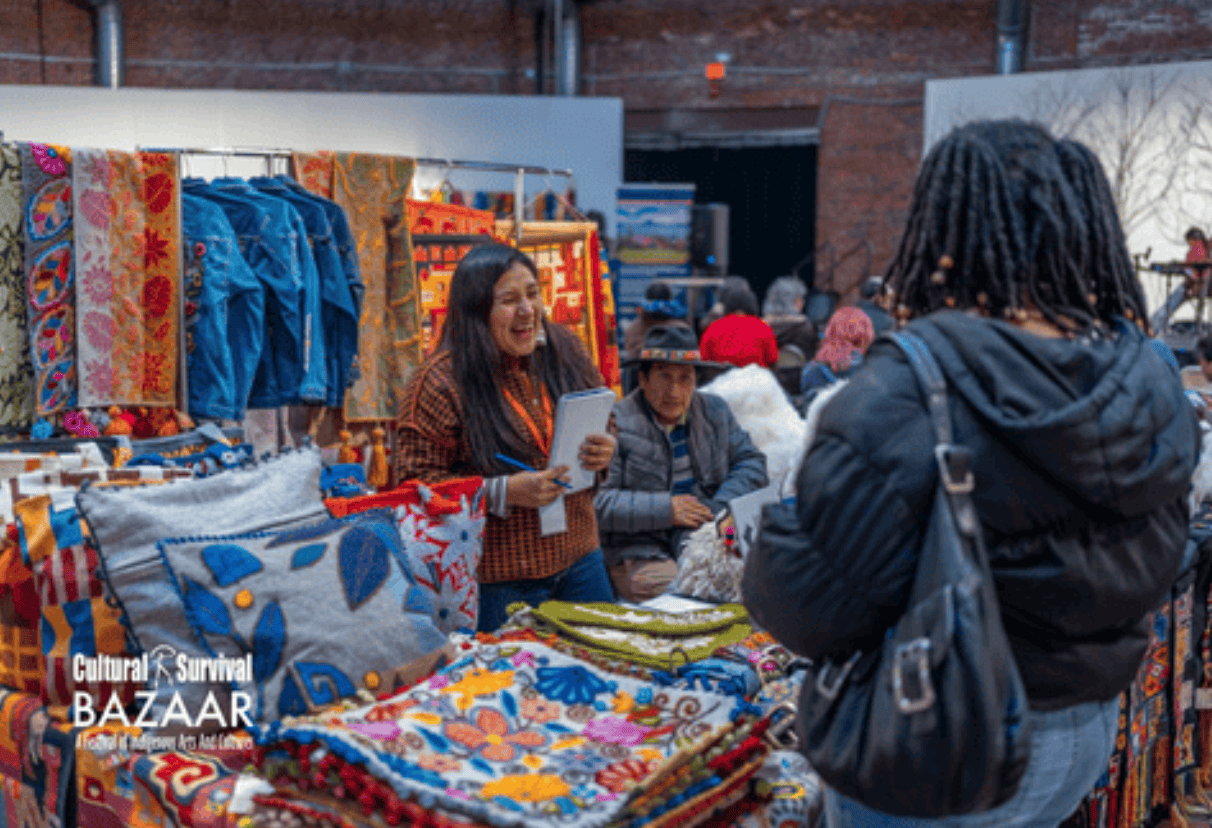
Cultural Survival’s annual Indigenous Arts Bazaars, a flowing river of connection for Indigenous artists, activists, friends, and allies since 1975, have returned to Tiverton and Providence, Rhode Island, this July and August. These festivals celebrate Indigenous cultures, featuring one-of-a-kind handmade arts, music, and food from over 20 countries spanning 6 continents. The events offer a unique opportunity for the public to meet and learn from the makers, celebrating creativity and the enduring values of reciprocity and relationship-building.
The Bazaars are in two locations – and the first already took place – that was in Tiverton, RI at the Tiverton Four Corners Art Center, and it marked the 25th anniversary of local support for Cultural Survival’s work.
If you missed Tiverton – get ready for Providence, RI: August 1-2, 2026, expanding into a new location at Farm Fresh Rhode Island, 10 Sims Avenue. The move aligns with Cultural Survival’s food sovereignty support and advocacy work. Admission: $10 | $5 for Students | $0 for kids under 18 | Pay what you can.
Supporting Livelihoods and Traditions
The Cultural Survival Bazaars are festivals of arts and cultures that directly support Indigenous livelihoods and cultural sustainability. When purchasing arts and crafts directly from Indigenous artists and cooperatives, shoppers support millennia-old traditions and the lifeways of Indigenous communities worldwide. By supporting businesses that sustain community, tradition, and sustainable practices, Cultural Survival Bazaars can generate nearly $500,000 annually for Indigenous artists, performers, and projects that benefit Indigenous communities worldwide.
Featured Artists, Performances, and Workshops
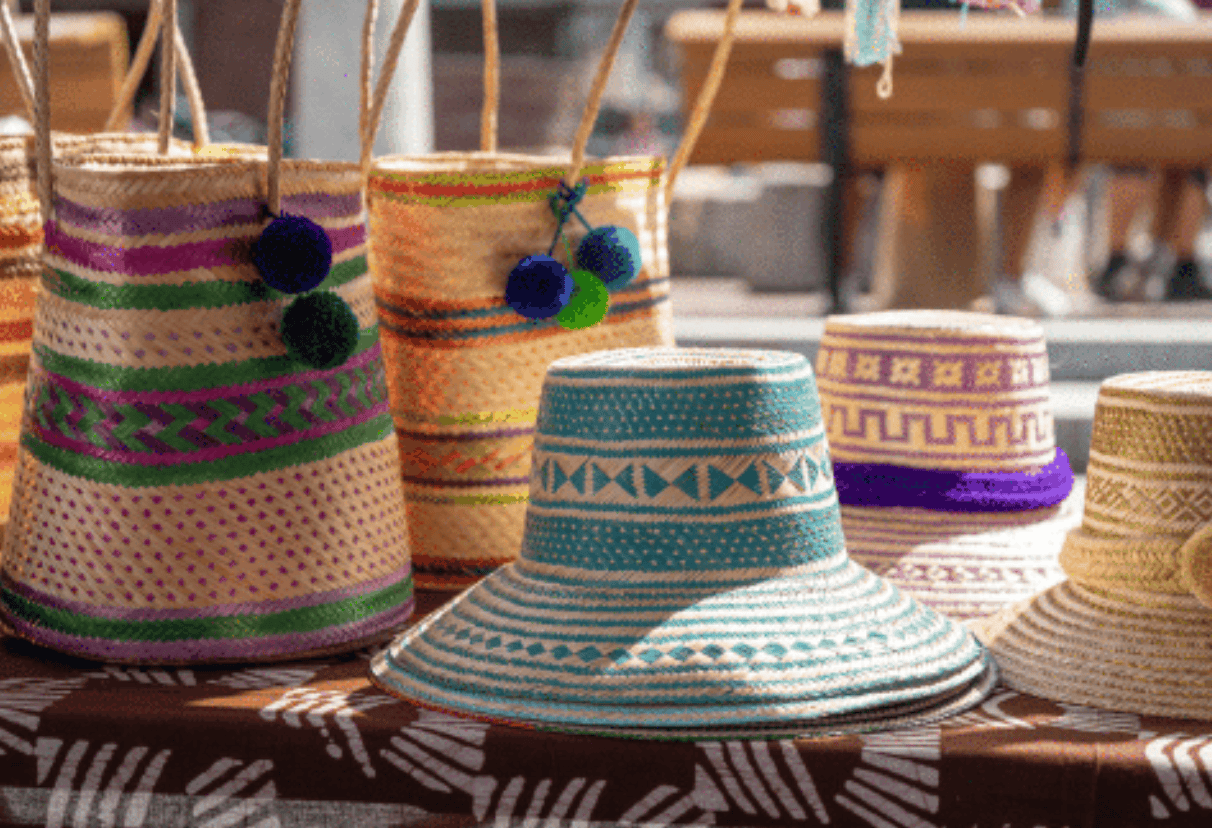
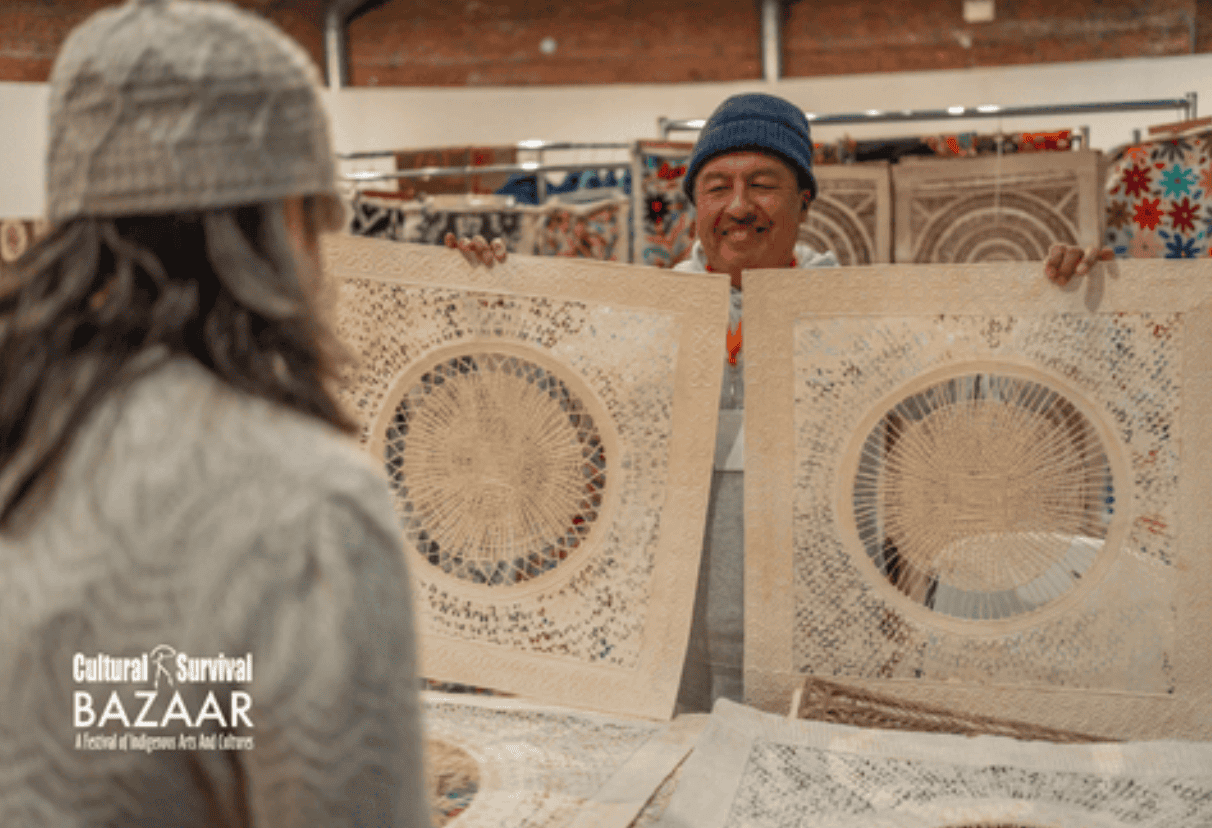
The event features approximately 50 artists and community representatives, showcasing jewelry, clothing, housewares, paintings, and sculptures.
Featured Artists:
Pat I Kayapó (Kayapó) representing the Associação Indígena Pykore from Brazil with beaded and woven jewelry; Philbert Begay (Diné/Navajo) with traditional silver jewelry; Fine Kenyan Crafts; andEverest Wings, showcasing products from Nepal.
Featured Food Vendors:
For Indigenous Peoples, food is not only a source of nourishment, but it is also a source of strength. Planting, harvesting, seeds, community, advocacy, protection, resistance…we find there the force to resist the many and ongoing colonialist efforts to eliminate our Peoples, our territories, and our knowledge. As Chef Leo Cordier (Lakota) says, “We are alive and still here, ready to share a great food experience for the modern palate.”
Added are the following food vendors to our events: James Beard Award winner Chef Sherry Pockett (Mashpee Wampanoag) from Sly Fox Den; Leo Cordier (Lakota) and his culinary project, Buffalo Jump NYC; Latinx flavors represented by Tapatía Mexican Food, Casa Azul Taqueria, Don Quintin Asado, and Aguas Frescas Tlaxcalita; and Afghan Women Catering, who create collaborative dishes from family recipes.
Performances:
Event-goers can experience eclectic sounds, including Yarina (Kichwa), an internationally renowned musical group; Annawon Weeden (Wampanoag, Narragansett, Pequot), a storyteller, performer, and artist, will run the children’s tent; and Juan Lazzaro (Quechua), a Quenista flute player from Bolivia. Pat-i and Jojoti Kayapó (Kayapó) will also share traditional songs and dances that tell the story of Kayapo resistance in Brazil.
Workshops & Demonstrations:
Activities include a mixed media workshop with artist Adina Farinango (Kichwa) and a portraiture session with Deborah Spears Moorehead (Seaconke Pokanoket Wampanoag). Demonstrations include traditional metal artistry from Serzhan (Kazakhstan) and the holistic use of Palo Santo essential oil by Sumak Essentials.
Voices from the Artists
The Bazaars serve as a vital link for artists to showcase and pass down their heritage:
- For Victor Deniss Sánchez Aparicio, a ceramic artisan, the Cultural Survival Bazaars are a way to safeguard tradition and involve the next generation.“The youth start observing the practice when they are little, then they start helping out and practicing making ceramics. It’s important to pass down the tradition.”
- For Ockway Bay Wampum, wampum-making is more than an art—it’s a sacred tradition used for treaties, storytelling, and honoring Indigenous rights. “We’ve created wampum for the UN Declaration on the Rights of Indigenous Peoples,” they shared, expressing a deep commitment to continuing this legacy. The younger generation is stepping up, too. “One young man taught himself how to do it,” they noted proudly.
- For the team behind US Sherpa, empowering youth means creating opportunities through meaningful craftsmanship. “We work with many young artisans in Nepal. Some come from rural communities where jobs are scarce, and traditional skills are passed down through generations.” Their network of weavers and makers includes young people learning to blend heritage with innovation. “A few have even started their own workshops after working with us. It’s about giving them a chance not just to survive, but to build something of their own.”
More, HERE: Indigenous Arts Bazaars