
Subscribe!
Turbine Maker, Maintenance Provider, GE Vernova, to Exit Vineyard Wind, Exposes Sole-Source Risk
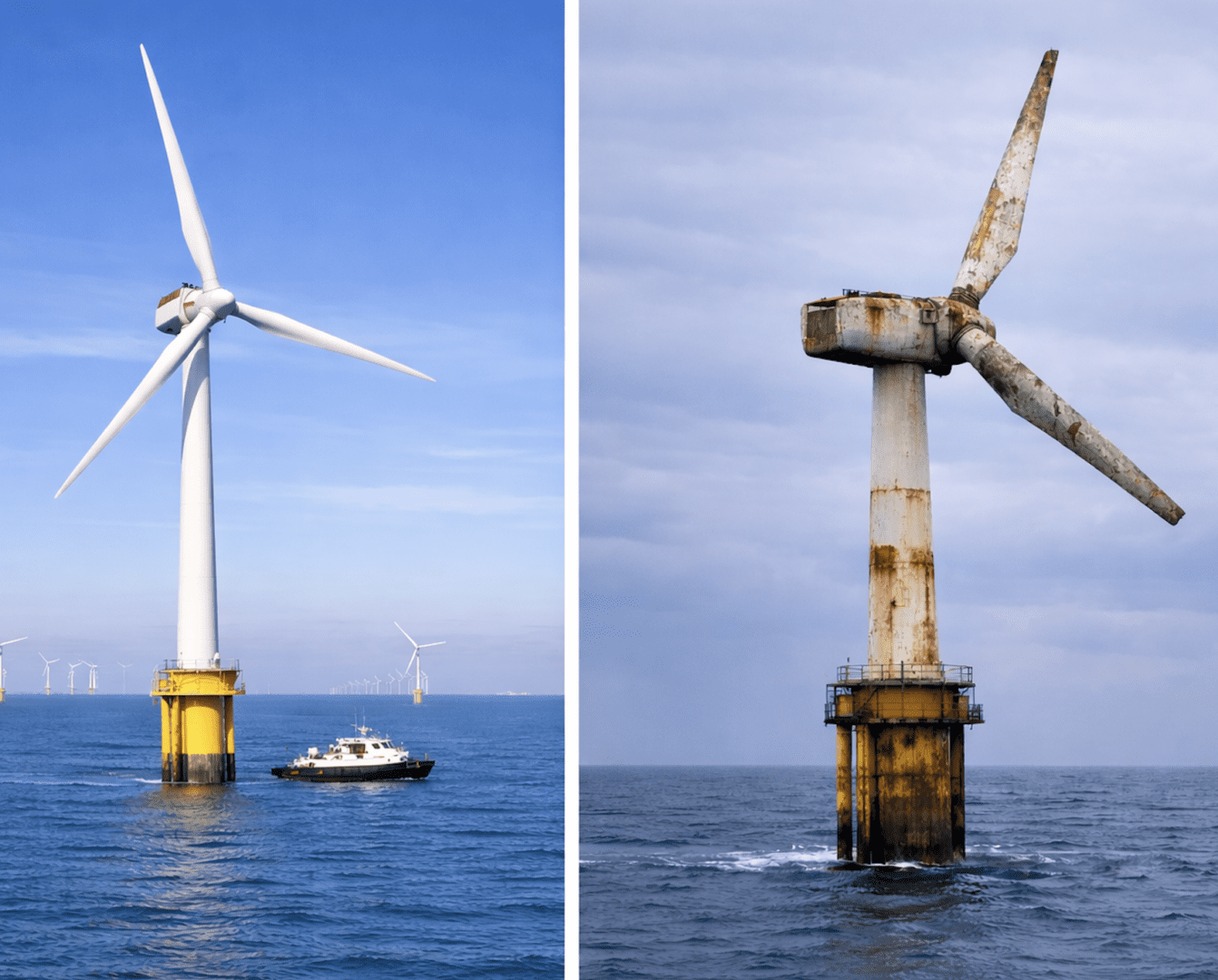
Photo: Potential Future of Wind Turbines? 60 Blades that must be replaced now have no company to do the work –
“This project supplies power to New England—including Rhode Island. Should we be concerned?”
GE Vernova has moved to exit its role in the $4.5 billion Vineyard Wind project, raising the possibility that the nearly completed offshore wind farm could be left without the support needed to operate.
One of the nation’s most closely watched offshore wind projects is facing a critical test—and one that could ripple far beyond Massachusetts and into Rhode Island’s own energy future.
The $4.5 billion Vineyard Wind project, located southwest of Nantucket, is now at the center of a high-stakes dispute with turbine manufacturer GE Vernova.
At issue: defective turbine blades, hundreds of millions of dollars in disputed payments, and whether the company responsible for building and maintaining the turbines will walk away before the project is fully operational.
If that happens, Vineyard Wind warns, the consequences could include loan defaults, foreclosure—and a wind farm that cannot function as intended.
UPDATE: On April 15th, Windpower Monthly reports under this headline: Vineyard Wind sues GE Vernova as US offshore wind dispute flares – Vineyard Wind has sued its partner GE Vernova to try and block it from abandoning the developer’s 806MW project off Massachusetts. Meanwhile, the turbine maker has claimed it is owed hundreds of millions of dollars.
Built Offshore—But Not Fully Working
On the surface, the project appears nearly complete with 62 turbines installed and electricity already flowing to the New England grid.
But the project remains in the commissioning phase, where turbines must demonstrate consistent performance before being formally accepted into operation.
According to Vineyard Wind, that hasn’t happened.
None of the turbines have yet met the contractual standards required to transition from construction to full operation—an important threshold for both performance and financing.
The Blade Problem: 60 Still Await Replacement
The most visible sign of trouble traces back to a single event.
In July 2024, a turbine blade failed, scattering debris into the ocean and onto Nantucket’s beaches. The incident forced closures, disrupted local businesses, and prompted a federal shutdown of the project.
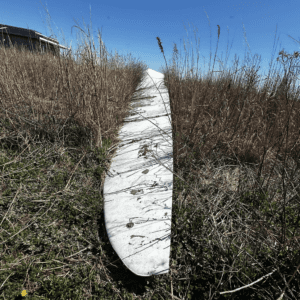
More blade debris found every day on Nantucket – this from April 11.
What followed raised deeper concerns as investigation into the blade’s failure showed that more than 60 installed blades were found to be defective and are required to be replaced. That work, however, has not been done. If GE continues on its announced path, they won’t be replaced. This is a sole sourced contract – and there is no other supplier.
The question early thought that the blade failure was an isolated incident was answered after investigation showed that 60 other blades might meet the same fate.
A Partnership in Dispute
At the center of the crisis is the breakdown between Vineyard Wind and GE Vernova. Vineyard Wind claims it is owed more than $545 million tied to defective equipment and delays. GE Vernova counters that Vineyard Wind has withheld more than $300 million in payments for completed work and says it has exercised its contractual right to terminate its agreements.
The company has stated it “remains committed to the safety of the wind farm” and will “vigorously defend” its position. And the dispute is especially consequential because the turbines rely on proprietary GE systems—meaning Vineyard Wind argues there is no practical replacement if the manufacturer exits. The turbines use unique software, diagnostic tools, and internal mechanics that only GE technicians are trained and authorized to handle.
The $1.3 billion Turbine Supply Agreement (TSA) specifically binds the developer to GE for the design, installation, and long-term maintenance of these 62 turbines.
A Financial Cliff Edge
Behind the technical and legal issues lies a growing financial risk. The project depends on reaching full, reliable output to support billions in financing. If it cannot: Lenders could declare a default – Loans could be accelerated – and Foreclosure could follow.
Vineyard Wind has warned in court filings that without GE Vernova’s continued involvement, the project may not meet the operational thresholds required to sustain its financing.
No Clear Plan if the Project Fails
One of the least-discussed aspects of the project may also be one of the most important.
In 2021, the Bureau of Ocean Energy Management allowed Vineyard Wind to delay posting a decommissioning bond—the funds set aside to remove the turbines at the end of their life. These costs are an estimated $191 million, with Payment deferred until year 15 of operations.
That decision helped make the project financially viable at the outset. But it also raises a new question today:
If the project fails before reaching stable operations, who pays to remove the turbines?
A Project Surrounded by Setbacks
The current dispute comes after a series of challenges:
- A major blade failure and federal shutdown in 2024
- Ongoing repair and replacement work
- Legal challenges from multiple parties
- A temporary federal suspension of offshore wind projects, later overturned
Despite progress in construction, the project has yet to fully transition into stable, long-term operation.
Why This Matters for Rhode Island – GE Vernova supplies Revolution Wind, too
The issues unfolding at Vineyard Wind are not confined to Massachusetts.
GE Vernova is also the turbine supplier for Revolution Wind, the offshore project being developed to serve Rhode Island and Connecticut.
There are no indications of similar problems with that project. But the connection highlights a broader reality:
Offshore wind developments are heavily dependent on a single manufacturer—not just to build turbines, but to operate and maintain them over time.
If that relationship breaks down, replacing a supplier mid-project is extremely difficult.
A Broader Question for Offshore Wind
Vineyard Wind was expected to demonstrate that offshore wind could be built and operated at scale in the United States. Instead, it is becoming a test of something more complex:
- How projects handle technical failure
- How financing holds up under stress
- And what happens when key partnerships break down
For Rhode Island and the broader region, the outcome may shape not just this project—but confidence in offshore wind as a whole.
An Uncertain Ending
For now, Vineyard Wind continues to generate some electricity while working toward full operation. But the path forward is unclear. If the dispute is resolved, the project may still reach its intended role in the region’s energy mix. If it is not, the outcome could be something far less expected:
A fully built offshore wind farm—partially operational, financially unstable, and with no clear path to repair, sustain, or remove it.
This is a developing story