
Subscribe!
Tidewater Landing Phase II Moves Forward With Hundreds of Housing Units, Riverwalk Expansion
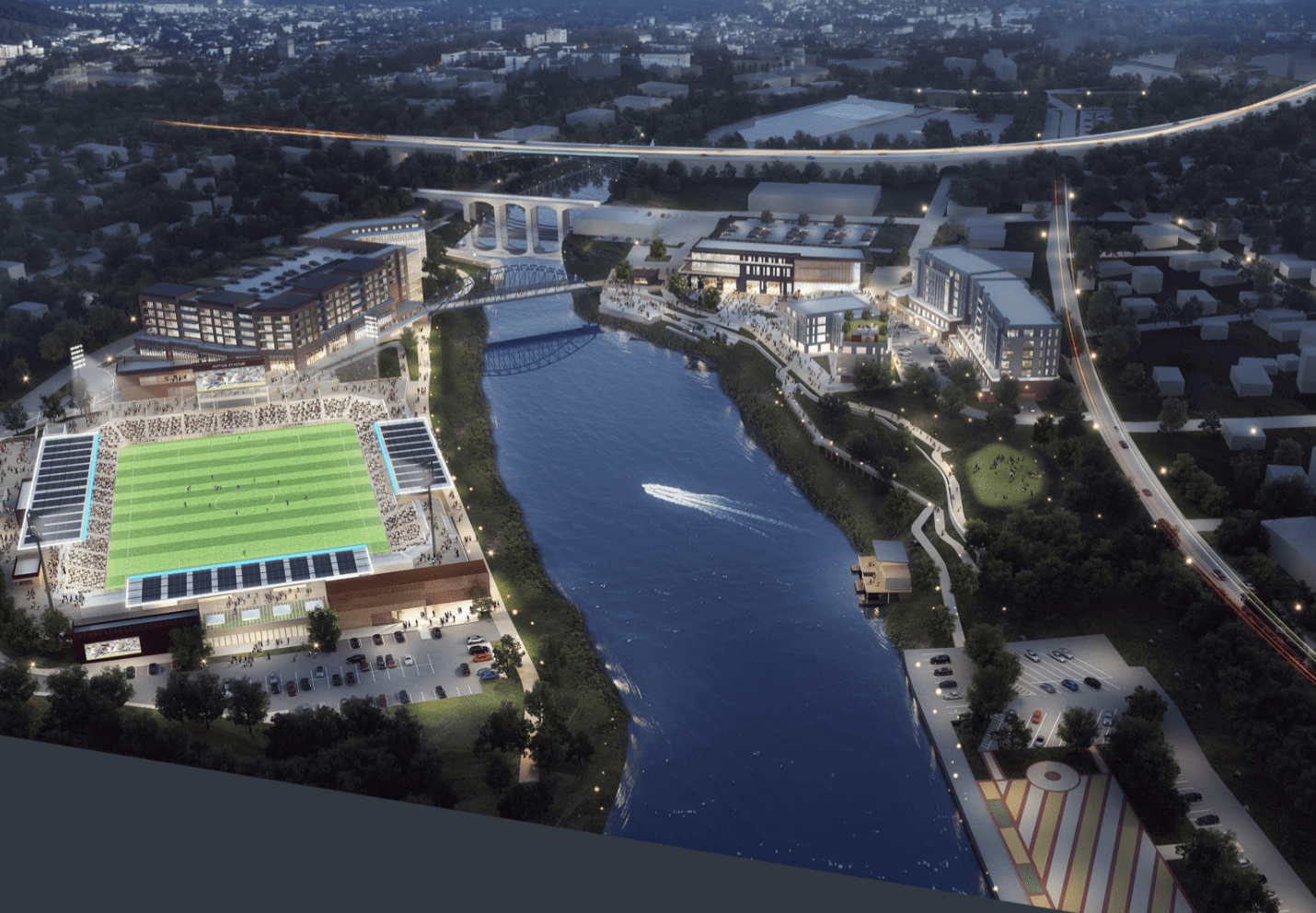
A major new phase of the Tidewater Landing development in Pawtucket is moving ahead, bringing hundreds of new housing units, commercial space, and expanded public amenities to the riverfront surrounding Centreville Bank Stadium along the Seekonk River.
City officials and project developers say Tidewater Landing Phase II represents another major step in transforming long-underutilized industrial waterfront property into a mixed-use district designed to attract residents, businesses, and visitors year-round.
The project is being led by Wood Partners in collaboration with Fortuitous Partners. Plans call for approximately 575 market-rate apartments split across both sides of the river, including about 325 units on the east side and another 250 units on the west side of the development area. Commercial space is also planned as part of the project, aimed at activating the waterfront with retail, dining, and neighborhood-oriented businesses.
The housing planned for Phase II is expected to be market-rate, reflecting broader demand for new apartment development near transit, entertainment venues, and waterfront districts across the region.
Fortuitous Partners, which has focused heavily on sports-anchored redevelopment projects and public-private partnerships, has been one of the principal private-sector drivers behind the broader Tidewater Landing vision. Wood Partners, headquartered in Atlanta, is one of the nation’s largest multifamily housing developers and has developed more than 115,000 apartment units across the country.
City leaders say the development will return currently underutilized property to the tax rolls while helping to create a new residential and entertainment corridor anchored by the stadium. The City of Pawtucket is utilizing financing tools including a Tax Stabilization Agreement to help advance the project.
“The opening and success of Centreville Bank Stadium got the ball rolling on the transformation of our riverfront, and now Tidewater Phase II is ready to deliver the housing, commercial spaces, and public amenities to turn this area into a vibrant new neighborhood,” said Donald Grebien. Grebien said the city plans to continue encouraging development in the district through public-private partnerships and strategic redevelopment efforts.
Terrence Mercer said the redevelopment effort has been decades in the making.
“We have been trying to redevelop the Tidewater property for over 30 years, so it is very rewarding to see this area of our city coming to life and generating new economic activity,” Mercer said. He added that the housing development and related commercial growth are expected to help expand the city’s tax base while adding new public amenities to the area.
The broader redevelopment effort now stretches well beyond the stadium site itself. City officials increasingly describe Tidewater Landing, the Downtown Gateway project, former Apex property redevelopment, riverwalk expansion, and planned pedestrian bridge connections as part of a larger strategy to reconnect Pawtucket’s riverfront with downtown and surrounding neighborhoods.
Plans tied to the district include expanded pedestrian and bicycle access, landscaped public gathering spaces, improved riverwalk connections, and new links along the Seekonk and Blackstone river corridors. Much of the land involved in the redevelopment effort consists of former industrial or long-vacant parcels that city leaders have spent years attempting to reposition for economic development.
Renderings released by the city show plans for new residential buildings lining the waterfront alongside pedestrian-friendly public spaces, plazas, and expanded public access to the riverfront. Officials have repeatedly emphasized the importance of creating a walkable district that remains active well beyond stadium events.
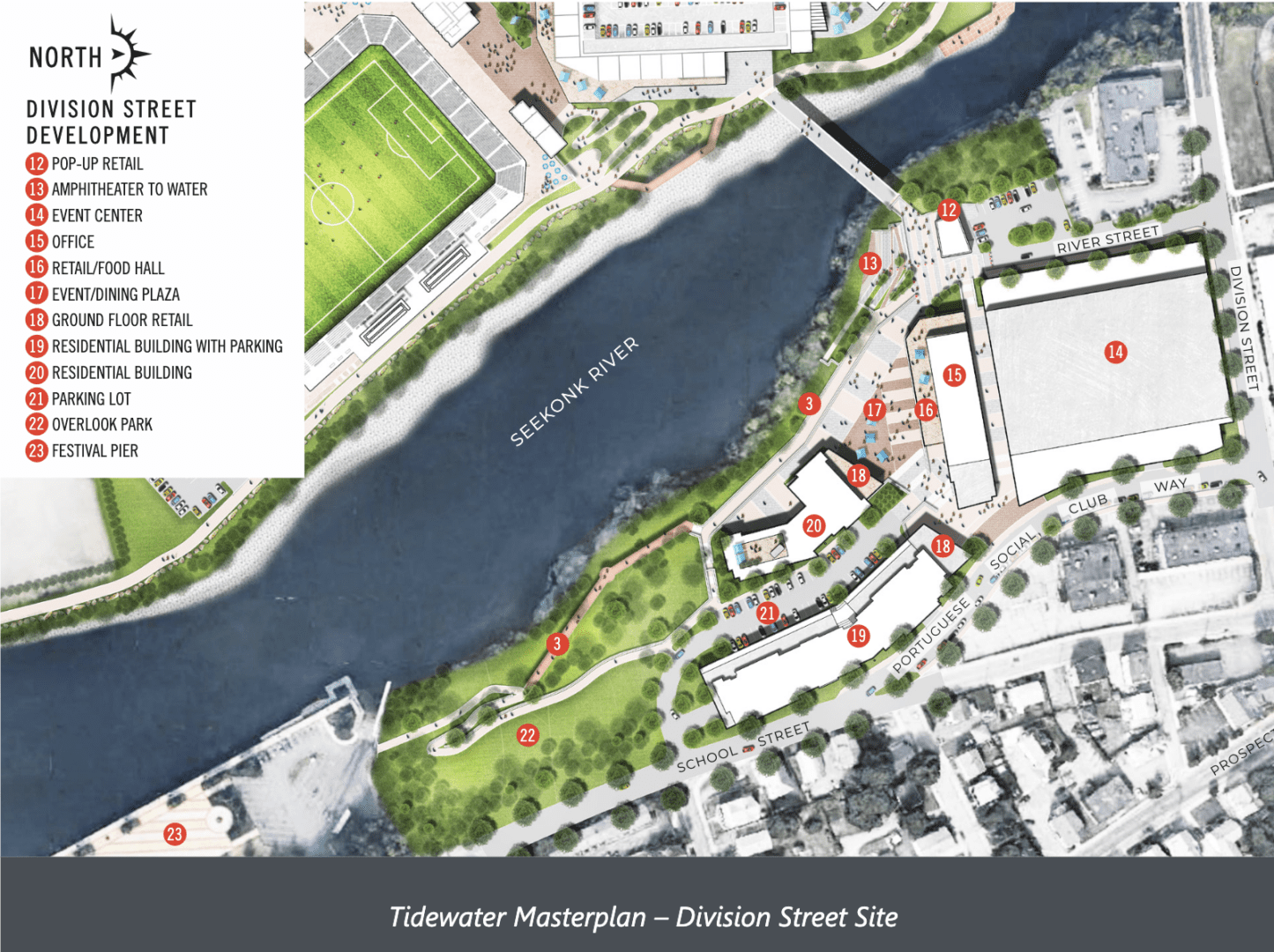
Developers say the residential component is considered a key piece of creating a year-round destination district rather than an area active only during soccer matches or entertainment events.
“This milestone reinforces the long-term vision for Tidewater Landing as a thoughtfully planned, mixed-use district,” said Jim Lambert, managing director and partner at Wood Partners. “The multifamily component plays a pivotal role in creating a true 24/7 destination.”
Fortuitous Partners Managing Partner Dan Kroeber described the approvals as another meaningful step in the broader redevelopment effort taking shape along the riverfront.
The latest announcement comes as Centreville Bank Stadium recently marked its first anniversary. City and project officials say the venue has already drawn thousands of visitors for sports, entertainment, and community events, helping generate increased activity for nearby businesses and restaurants.
Additional public infrastructure improvements are also planned as part of the next phase of development. An expanded riverwalk, open space areas, public plazas, and new pedestrian connections are expected to move into construction or advanced permitting stages in the coming months.
Officials said construction on the next grant-funded section of the riverwalk is expected to begin in early summer. Additional pedestrian improvements, including stairs, a pedestrian bridge, and new east-side riverwalk connections, are expected to follow later in the year.
The broader Tidewater Landing district has been promoted as one of the most ambitious redevelopment efforts in Pawtucket in decades, combining housing, entertainment, waterfront access, and commercial activity into a new neighborhood centered around the city’s riverfront corridor.
Are they starting a wait list, is it just tax credit.
Thanking you in advance
[email protected]
No details yet – there are 4 proposals being presented. Stay tuned!