Categories

Subscribe!

Fire and Police

RIPEC Report: Strong Public Safety Comes at a Price—RI Leads Nation in Fire Spending, Top 10 for Police

RIPEC finds fire spending ranks first nationally, police spending ranks in the top ten, costs vary widely across cities and towns

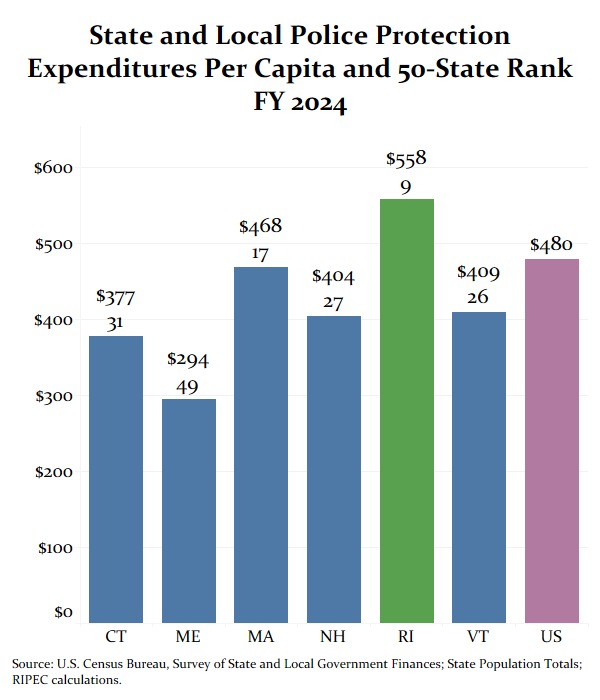
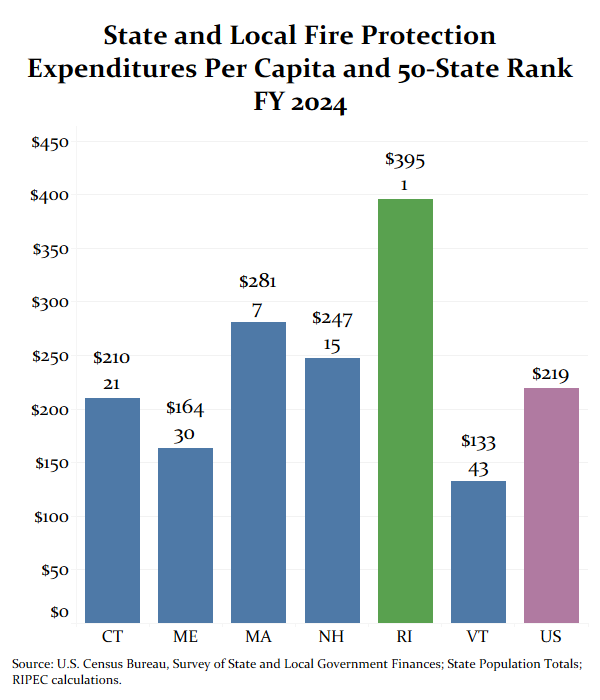
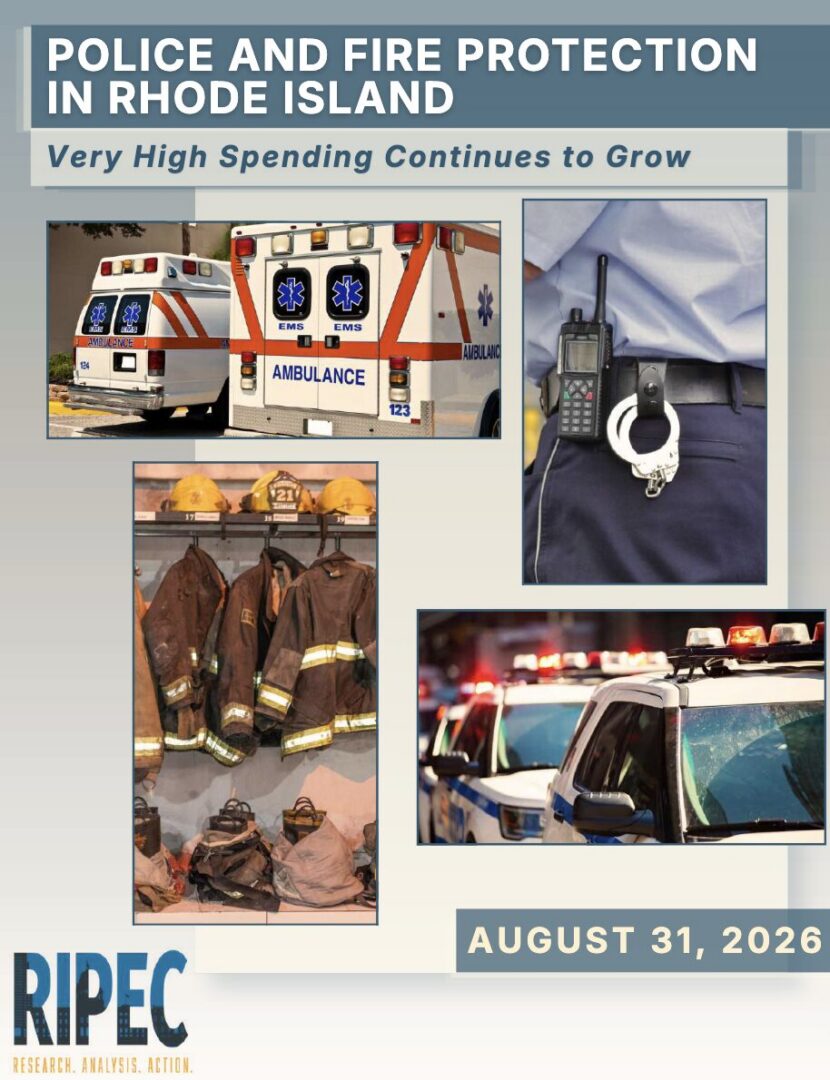
Rhode Island spends substantially more on police and fire protection than most of the nation, while the amount communities spend on these essential services varies considerably across the state, according to a new report from the Rhode Island Public Expenditure Council (RIPEC).

“Affordability has become a critical issue for Rhode Islanders and the most direct way state and local governments can help with affordability is to hold the line on taxes and scrutinize spending,” said Michael DiBiase, President and CEO of RIPEC.

Rhode Island spends considerably more on police and fire protection than most of the country, particularly on fire protection. Yet, there is little evidence that the state has a greater need for these services. Rhode Island has among the five lowest crime rates in the nation, and while data on fire incidents are limited, there is no evidence that Rhode Island experiences high levels of fire activity relative to other states.”

RIPEC’s report—the fourth in a series of reports analyzing government spending—focuses on police and fire protection, which together account for about a quarter of all municipal spending. As RIPEC previously found, property taxes have jumped recently, growing by $98.3 million (3.7%) in FY 2026. Police and fire expenditures have been a key driver of the growth in property taxes, according to RIPEC’s report, which examines police and fire spending in national and regional context, across Rhode Island’s cities and towns, and over the past five years.

“Statewide spending levels only tell part of the story. There are very large differences in what communities spend on police and fire protection,” said DiBiase. “For fire protection in particular, those differences may reflect how services are delivered, including whether communities rely primarily on professional or volunteer firefighters. But they also reflect substantial variation in staffing, compensation, overtime, and pension costs, resulting in wide differences in the tax burden associated with police and fire protection across communities.”

Key Findings

  • Fire protection spending ranked first nationally per capita and relative to personal income in FY 2024.
  • Police protection spending ranked in the top ten—ninth per capita and sixth relative to personal income.
  • Police and fire protection accounted for 25.8% of municipal spending in FY 2024, with police and fire spending growing at roughly the same rate as overall municipal expenditures since FY 2019.
  • High spending does not appear to reflect higher levels of crime or fire activity. Rhode Island had the fourth-lowest violent crime rate and third-lowest property crime rate among U.S. states in 2024. Fire-related calls accounted for only about 2% of fire department calls in 2023, while emergency medical services (EMS) calls were over 70%.
  • Rhode Island ranked first nationally in professional firefighters per capita in 2025, with nearly twice as many as the U.S. overall, which relies more heavily on volunteer firefighters, while its median firefighter salary ranked 12th highest. Police staffing levels were closer to national benchmarks, and median police officer salary ranked 20th among states.
  • The burden of police and fire protection varies widely across communities. Combined spending exceeded $1,000 per capita in eight communities—Newport, Johnston, Narragansett, Warwick, Cranston, Smithfield, Providence, and East Greenwich—but was below $500 in six: West Greenwich, South Kingstown, Richmond, Bristol, Foster, and Exeter.
  • Twenty municipalities have exclusively professional fire departments. Fire spending exceeded police spending in 14 of these communities.
  • Pension costs accounted for 28.6% of fire spending and 22.9% of police spending in FY 2024. Pension expenditures exceeded $50,000 per active member in ten communities, eight of which had a pension plan in critical status (<60% funded).
Based on its findings, RIPEC makes the following recommendations:

  • Slow the growth of expenditures on fire protection.
  • Slow the growth of police expenditures.
  • Require greater transparency and reporting related to police and fire protection
  • Avoid state mandates that limit municipalities’ financial flexibility without careful consideration of their costs.
  • Explore options to constrain or reduce police and fire pension costs

RIPEC’s full analysis is available here.

An executive summary is available here

About RIPEC:

The Rhode Island Public Expenditure Council is a nonpartisan and nonprofit public policy research organization dedicated to advancing fiscally responsible government, competitive tax policies, and economic opportunities for all in Rhode Island.

Since its founding in 1932, RIPEC has worked to develop solutions to critical challenges facing the Ocean State by providing objective research and analysis. Focusing on the most pressing topics of the day, RIPEC has been at the forefront of major issues facing state and local government for 90 years.

Posted in ,

Leave a Comment