
Subscribe!

Rhode Island Storm Preparedness: 3-Part RINewsToday series. TODAY: Know Your Risk. Make Your Plan.
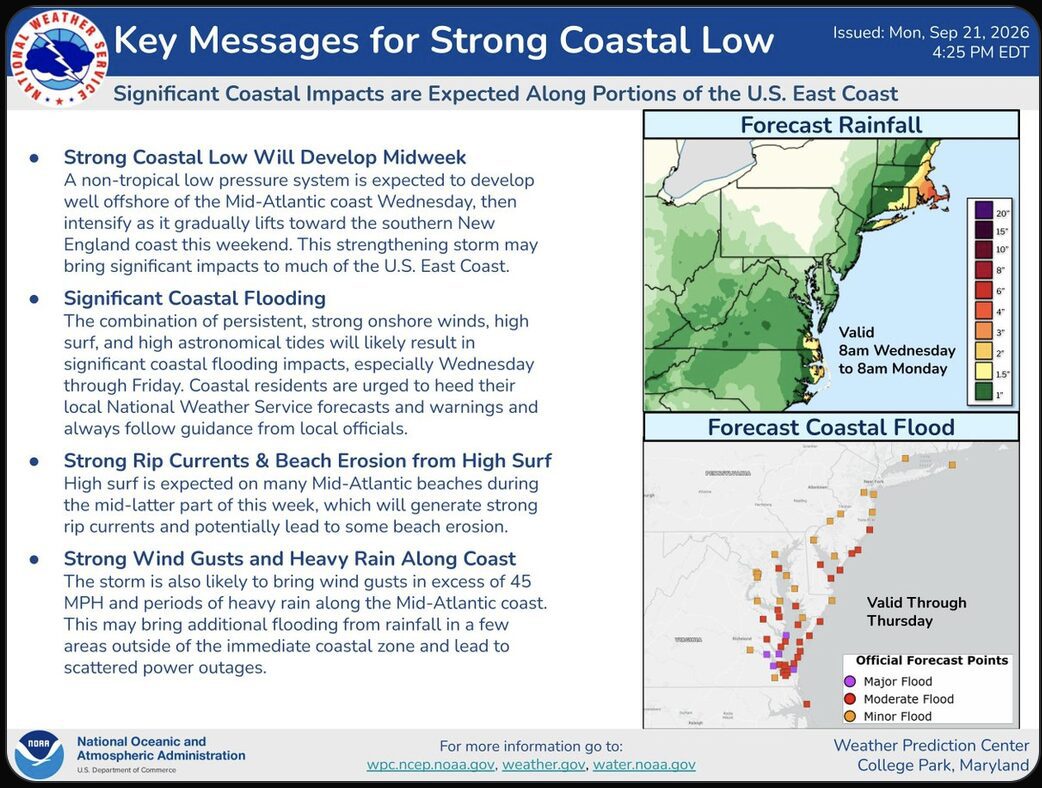
With forecasters monitoring a possible coastal storm later this week, Rhode Islanders have an opportunity to prepare before conditions deteriorate. Check the latest local forecast for changes in timing and expected impacts.
Part 1 — Rhode Island Storm Preparedness: Know Your Risk, Make Your Plan
September is National Preparedness Month, and FEMA’s 2026 theme is “Americans Stand Ready.” The national campaign encourages households to make an emergency plan, have several ways to receive warnings, and gather supplies suited to their needs and budget.
RINewsToday is bringing that national message home to Rhode Island with three days of practical preparations. The best time to decide what your family will do in an emergency is before one arrives.
For Rhode Islanders, that means thinking about heavy rain, flooded streets, strong winds and a home without electricity. A storm does not need a hurricane name to disrupt daily life.
RINewsToday first published a five-part hurricane preparedness series in July 2023. This updated three-part series brings those basics together with current resources, starting with the decisions every household should make before the weather turns.
Start with where you live—and where you need to go. Is your home near the coast, a river or a low-lying road? Has your basement taken on water before? Could flooding block your usual route to work, school or a relative’s home?
The Rhode Island Emergency Management Agency provides hurricane evacuation maps for 21 coastal communities, including Cranston, Providence, Pawtucket and Warwick. Look up your community before an evacuation notice is issued. These maps address hurricane surge risk; they do not identify every place where heavy rainfall can cause trouble. Follow local officials’ instructions for the actual event.
For many households, preparation will center on staying safely at home through heavy rain, wind and a power outage. Still, anyone in a low-lying area—or spending time at a beach house—should know where to go if conditions become unsafe or officials order an evacuation. Past experience is no guarantee: a road you have always been able to use could become impassable during a different storm.
Find your community’s evacuation map.
Choose a destination and a way to get there. A relative or friend outside the most affected areas may be an option. Discuss transportation now, especially for someone who no longer drives or cannot easily use stairs. Confirm that a destination can meet mobility and care needs.
Write down an out-of-area contact everyone can reach, and keep a paper copy of essential telephone numbers. Decide who will check on a relative living alone and what happens if that person does not answer. Make the agreement specific: a named person, a check-in time and a backup contact.
People with disabilities, chronic conditions or other needs may benefit from enrolling in Rhode Island’s Special Needs Emergency Registry. It helps responders plan for residents who may need additional assistance. Enrollment does not guarantee assistance, so a household still needs its own transportation, communication and care arrangements.
Learn about or enroll in the registry.
Include pets in the plan. Confirm arrangements at your home or where you will be going; do not assume every place – even the house next door – can accommodate every animal. Gather carriers or leashes, food, water, medications, identification and veterinary records. Identify a pet-friendly place to go to before you need it.
Use current information from the National Weather Service, RIEMA and your city or town. Check your community’s emergency-alert signup options and keep a battery-powered radio available.
If you encounter a flooded road, turn around. Do not drive around a barricade or walk into moving floodwater. A familiar street can conceal washed-out pavement and other hazards.
Today’s task: Talk through how your household would manage a power outage and where you would go if you needed to leave. Decide who will check on relatives or neighbors living alone. Save important contacts in your phone—with names attached to the numbers—and keep a paper copy.
Tomorrow: What to buy, what to store, and what to have ready—our practical household checklist for storms and power outages.
Next: What your household needs when the power goes out.
Sources and reader resources: FEMA National Preparedness Month bulletin; RIEMA Preparedness 101; NWS flood safety; NWS Boston/Norton updates as new discussions are issued.
What are plans for the unhoused ?