
Subscribe!
Rhode Island said “No Thanks” to The Great American State Fair. Why? (Updated)
(UPDATE – see bottom of article as volunteers from states with empty booths have been showing up in DC to man the booths themselves… any goers, Rhode Island?)
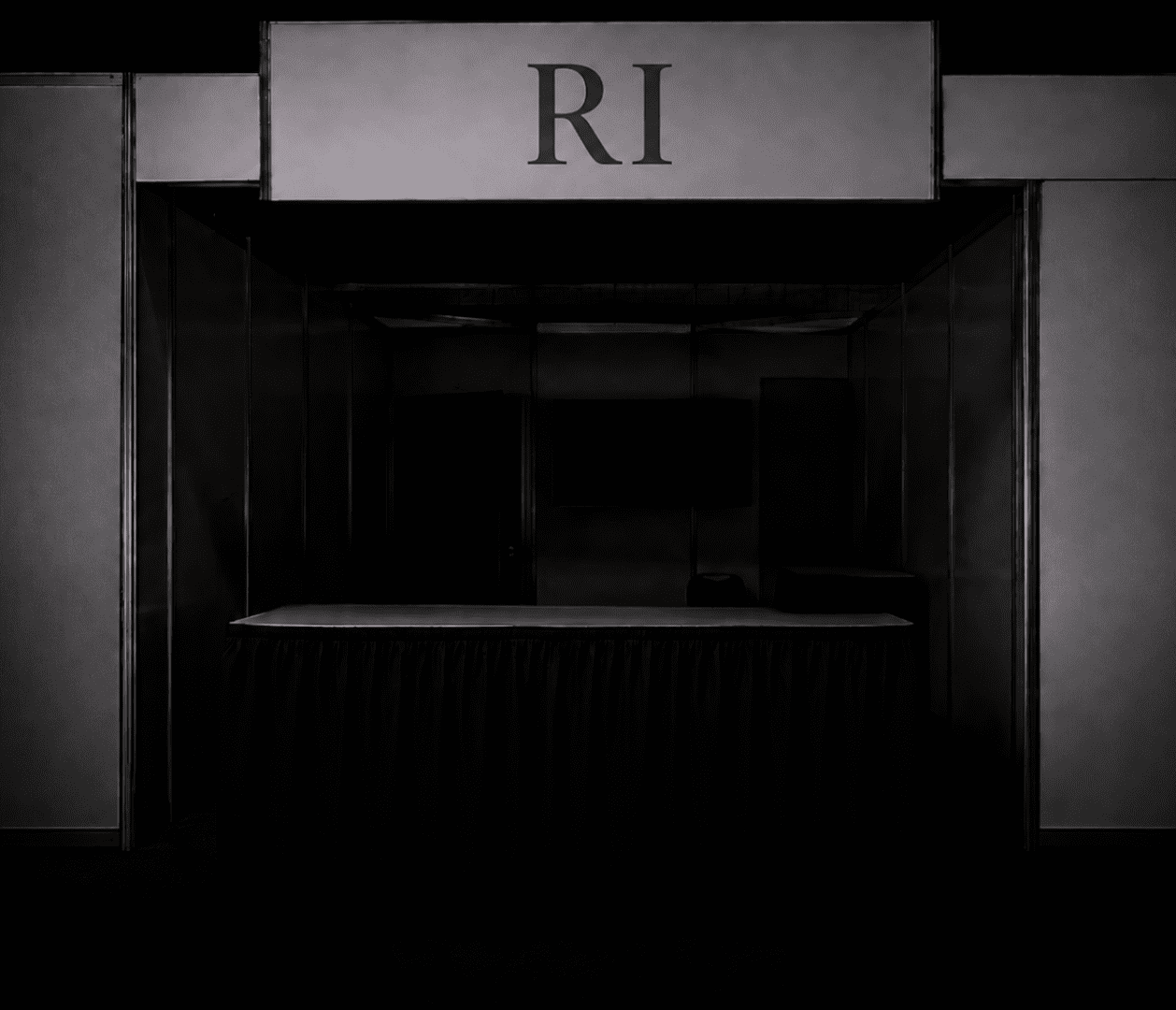
All 50 states and six U.S. territories were offered exhibit space at the national 250th birthday exposition. Rhode Island’s booth was built, marked “RI” — and left dark, locked and unstaffed.
All 50 states and six U.S. territories were invited to the Great American State Fair in Washington, D.C., to showcase their culture, history and industries.
At the national exposition tied to America’s 250th birthday, state booths of 600 square feet of exhibit space at were built and identified by banners provided to identify the state. Rhode Island chose not to participate.
Rhode Island officials have cited “financial and staffing limitations” as the reason for declining the state’ participation. That explanation may account for why the state did not send a large delegation or create an elaborate exhibit. It does not answer the larger question of why Rhode Island’s assigned space was left empty — or whether anyone in state government tried to find a smaller, privately supported or partner-led way for Rhode Island to be represented.
From a TV interview on Saturday, a visitor at the Great American State Fair in Washington, D.C., reacts to Rhode Island’s decision not to participate in the national 250th birthday exposition.
The Great American State Fair is not being described by organizers as a minor ceremonial event. It is billed as a “world-class exposition” and modern-day World’s Fair, featuring more than 150 exhibits from all 56 states and territories, businesses, innovators and civic organizations. The fair runs from June 25 through July 10 on the National Mall and includes state pavilions, industry displays, cultural programming, military events, flyovers and a Ferris wheel in the heart of Washington, D.C.
For Rhode Island, a state with one of the strongest claims to America’s founding story, the decision not to fill its booth is not a small scheduling matter. It is a public decision, and it should have public answers.
When did Rhode Island know?
It is not yet publicly clear when Rhode Island received its invitation or when state officials made the final decision not to participate. But other states were weighing the decision months before the fair opened.
That timeline matters. If Rhode Island knew months ago that it had been offered exhibit space at a national 250th birthday exposition, what steps were taken before the state walked away? Who reviewed the cost? Who was asked to help? Was the governor’s office involved? Was Commerce RI asked? Was GoProvidence asked? Was the Greater Providence Chamber of Commerce asked? Was Rhode Island’s congressional delegation asked? Were museums, universities, historical societies, veterans’ groups, tourism partners, business organizations or private sponsors asked to step in?
If those groups were asked and could not help, the public should know that. If they were never asked, the public should know that, too.
A national story, with a Rhode Island question
The controversy around the Great American State Fair is now drawing national attention. Rhode Island’s question is especially direct as we build so much of our economy on tourism, and look at every opportunity to tout who we are and why tourists and businesses should come here. To have our booth dark, locked and one of the “not participating” flies in the face of a fairly aggressive tourism platform Rhode Island always has.
The Rhode Island issue is about public decision-making: who decided the state would not use the space it had been offered?
For a state that regularly promotes its founding-era history, its coastline, its food, its arts, its military institutions and its tourism assets, that decision was a missed opportunity, one strategically made.
Rhode Island had a story to tell
Rhode Island is not just another state when it comes to America’s founding story.
The Gaspee Affair, Roger Williams, religious liberty, Newport, the Old State House, Bristol’s Fourth of July tradition and Rhode Island’s Revolutionary War history are all part of the story the state tells about itself. The state also has a deep military story, from Naval Station Newport and the Naval War College to the Rhode Island National Guard, veterans’ organizations and generations of Rhode Islanders who served.
Each day has a theme – and TODAY, Sunday, June 28, the Great American State Fair is marking Military & Veterans Appreciation Day, a day set aside to honor active-duty service members, veterans and their families. Rhode Island had military and veterans history to share on a national stage. We had – and have – a story to tell.
A modest Rhode Island presence could have included historical materials, tourism information, a video display, QR codes, local products, veteran organization materials, Naval War College or National Guard content, college partnerships, museum displays, or even a rotating group of Rhode Island volunteers – certainly veterans, themselves would have stood up.
The state did not have to build out an expensive exhibit on the National Mall. It had to make a serious effort to show up.
New Hampshire went. Pennsylvania found a way.
New Hampshire provides the closest New England comparison. It is the only New England state sending an official presence to the Great American State Fair.
New Hampshire’s Secretary of State framed the decision as nonpartisan, saying the state was going to Washington to showcase New Hampshire and celebrate 250 years as a free nation. Its booth includes historic documents, a presentation and a video featuring state political figures reading the Declaration of Independence.
Rhode Island could have done something similar.
Pennsylvania provides another comparison. Pennsylvania initially appeared to be out after state officials struggled to find a company willing to sponsor the state’s booth. But the story did not end there. U.S. Sen. Dave McCormick, a Republican, and U.S. Sen. John Fetterman, a Democrat, stepped in together to help assemble a Pennsylvania partnership so the Commonwealth would be represented.
That matters because it answers the “money and staffing” argument with a practical question: if state government could not or would not pay for a booth, who tried to find another way?
Did Rhode Island ask its congressional delegation? Did it ask chambers of commerce? Did it ask universities, museums, veterans’ groups, tourism partners, business organizations or private sponsors?
It’s widely talked about that Rhode Island is experiencing a state budget surplus – what a better way to allocate some of those funds.
Pennsylvania found another way.
New Hampshire treated the event as nonpartisan.
Rhode Island didn’t even try.
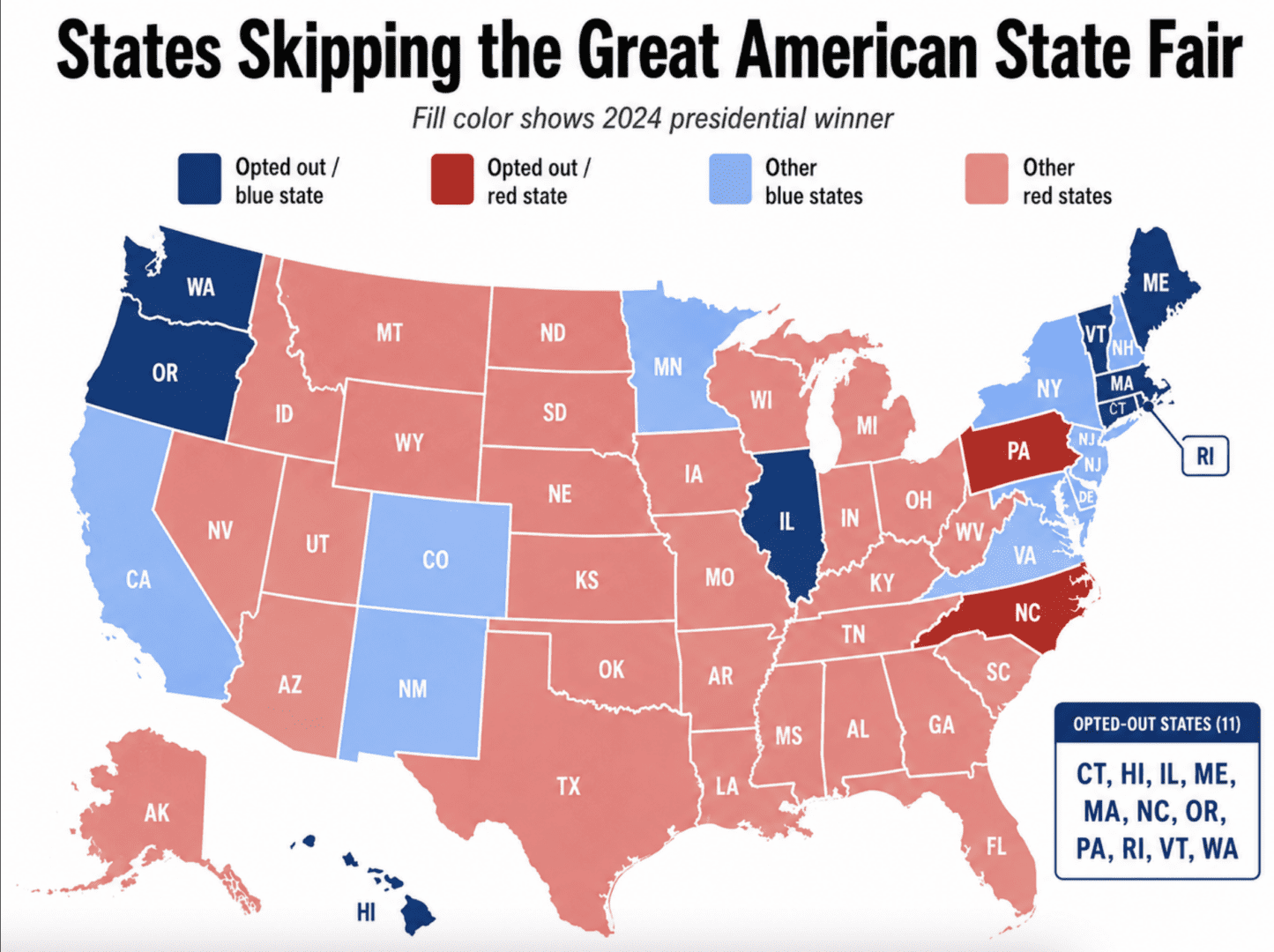
States reported as declining official state participation in the Great American State Fair. Fill color reflects the 2024 presidential vote by state.
The political pattern is hard to ignore
The Great American State Fair has become political because of its association with President Donald Trump’s Freedom 250 effort. Some states have said openly that politics was part of their concern.
Oregon was direct. A spokesperson for Oregon Gov. Tina Kotek, a Democrat, said Oregon would not participate because of both the cost and concerns that the event was “shaping up to be a more partisan affair than originally presented.”
Rhode Island has not said that. Rhode Island has said money and staffing.
But the map of states declining official participation shows a visible political pattern. Most are blue presidential states or states led by Democratic governors. That does not prove politics drove Rhode Island’s decision, but it makes the public explanation incomplete without more detail.
Was Rhode Island’s decision financial? Was it logistical? Was it political? Was it some combination?
If politics did play a role, Rhode Islanders deserve to know why that calculation outweighed the opportunity to tell Rhode Island’s story at a national 250th birthday event.
Rhode Island knows how to promote itself elsewhere
The money-and-staffing explanation also needs context.
Rhode Island already spends money and energy to promote itself outside Rhode Island. The state maintains a Rhode Island Building at The Big E in Springfield, Massachusetts, a permanent out-of-state showcase for Rhode Island food, vendors, attractions and tourism. State budget documents include public money for renovations and maintenance of that building.
That is not a criticism of The Big E. It is proof that Rhode Island understands the value of showing itself to people beyond its borders.
GoProvidence markets the destination to meeting planners, convention delegates, sports-event audiences, travel writers and leisure visitors. Commerce RI supports out-of-state tourism marketing. Rhode Island officials have spent months promoting the World Cup’s regional spillover and the value of welcoming international visitors to Providence.
Rhode Island is hardly shy about celebrating national exposure when it fits the moment. When a film or television production comes here, state and tourism officials point to the value of outside attention — hotel rooms, restaurants, local workers, small businesses, scenery, image-building and future visitors.
When sports events, entertainment coverage or The Real Housewives of Rhode Island put Rhode Island in front of new audiences, the state is quick to talk about tourism impact and economic spillover, delighting at its showcase opportunity.
That same logic should have applied here.
The Great American State Fair offered Rhode Island a national audience in the nation’s capital during America’s 250th birthday celebration. It was a chance to talk outside the circle, not just to Rhode Islanders who already know Rhode Island.
That is the work of tourism and public relations: do not spend all your time talking to people who already know you. Talk outside your circle.
The Great American State Fair offered exactly that kind of audience — visitors from across the country, families on the National Mall, national media attention and a patriotic event tied to the country’s 250th birthday.
This is about public decision-making
Rhode Island’s absence from the Great American State Fair is not only about patriotism, politics or tourism. It is about public decision-making. The state was offered exhibit space at a national event tied to America’s 250th birthday. Booths were built. Rhode Island’s space was identified. The state chose not to participate, and the public explanation has been limited to money and staffing.
Rhode Islanders should know who made the decision, when it was made, what cost estimates were reviewed, what alternatives were considered and whether any serious effort was made to find partners outside state government.
The public should also know whether the decision was made purely on financial and staffing grounds, or whether the politics surrounding the event played any role.
A state can decide not to participate in a national event. But when that state is Rhode Island — with its founding-era history, Revolutionary War legacy, military institutions, tourism industry and public investment in out-of-state promotion — that decision should not be made behind closed door meetings, and left unexplained.
Developing story
This is a developing story. RINewsToday is seeking answers from the RI250 Commission, the Secretary of State’s office, the governor’s office, Commerce RI, GoProvidence, the Rhode Island Sports Commission, the Greater Providence Chamber of Commerce, Rhode Island’s congressional delegation and other tourism and business leaders.
Questions include who made the decision not to send an official Rhode Island presence to the Great American State Fair, when that decision was made, what cost estimates were reviewed, whether public or private partners were asked to help, and whether political concerns played any role.
For now, the fact remains: Rhode Island had space at the national fair. It chose not to use it.
For a state that helped shape America’s beginning, one that punches about its weight in tourism, that choice deserves an explanation.
UPDATED:
Some other states have gotten ingenious in opening up their closed booths. In Pennsylvania, Sen. Fetterman and Sen. Dave McCormick in a bipartisan fashion – took control – see what they created (no $100K needed)
.@SenFettermanPA’s and my team worked around the clock to make sure the Keystone State is well represented at the Great American State Fair.
Check out this tour and make sure to visit us! pic.twitter.com/lZO9bpb4uB
— Senator Dave McCormick (@SenMcCormickPA) June 30, 2026
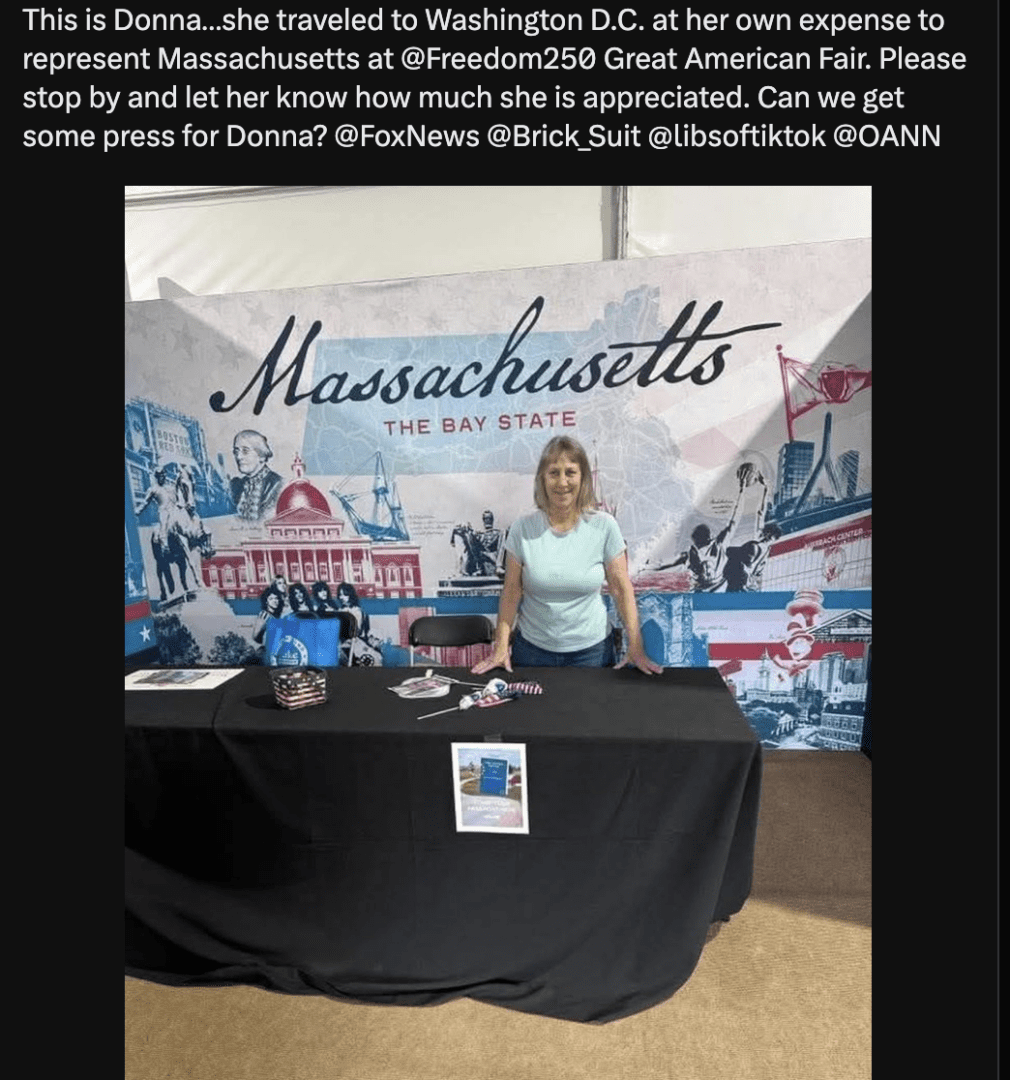
Here’s Massachusetts!
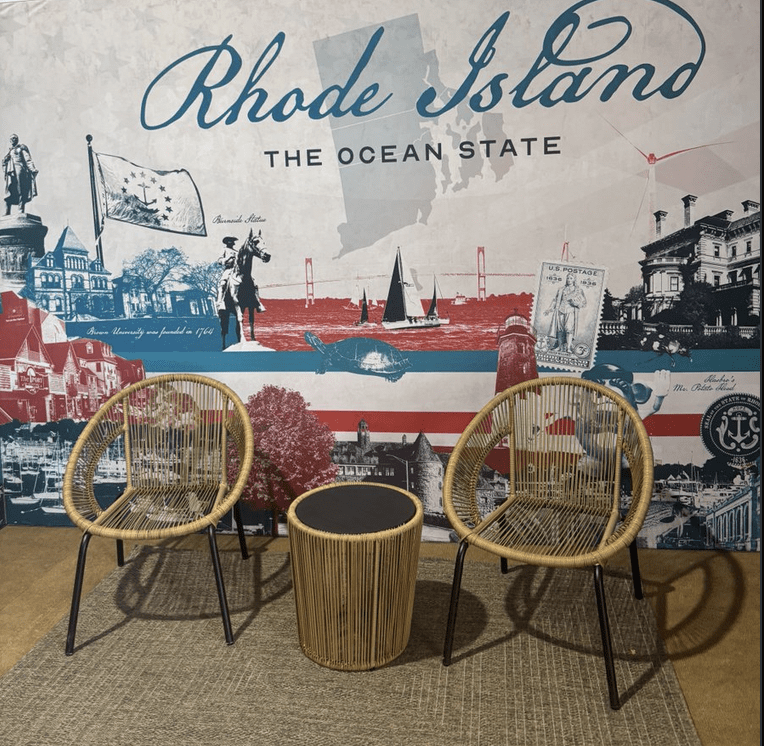
Other states are rushing to open their booths, too – meanwhile, here is Rhode Island’s (chairs were provided to all booth as well as backdrop)
RINewsToday AI-generated illustration, top
A house divided against it self cannot stand. Disappointed that RI decision makers forget that I’m not simply Blue or Red, I’m an American. And I’m a Rhode Islander. I’m disappointed that decision makers forget that they are public servants. I don’t choose to pay taxes. And they shouldn’t choose which tax payers they represent and which ones they don’t. Hoping that service, unity and hard work can unite us once again. The America we love today won’t be the America of tomorrow if we don’t come together. So blessed with opportunity here.
Well said!
Wow I’ve traveled 33 states 14 national parks in 3 months. I’ve also traveled though all of Europe, Caribbean and Northern Africa and always wanted to be a good representative Anbassor of USA and Ri. When people ask where I was from they mostly would say oh yeah Long Island( that goes for US citizens) and I would tell them about RI. How beautiful RI is and they had to visit. To find out RI is not represented in DC on our 250 BD is AWFUL!! Is it TDS? It can’t be money because RI waste so much of it!! The Gov could have done something about too!! The Ocean State!! Just put a quahaug there although RI has so much more to offer!! Again, this is terrible there is nothing in DC about RI!!! I really want to leave RI for better operated states but will always visit!! DISGRACEFUL!!!!!
Some of you need to read up on the actual America 250 committee versus Trump’s Freedom 250 grift.
This Great American State Fair not a US official celebration event but a contrived exhibition by the Trump organization. It is very political in nature. RI did the right thing in not participating.
Shame on RI for not participating in the Great American State Fair. To say that it is political is your opinion, I look at it as the celebration of our country’s 250th birthday. I am sure that getting volunteers is BS, I volunteered and managed a 1694 homestead for 10 years (25 years if you count the years that only opened this historic gem at Christmas), I would of volunteered and could of gotten others to also donate their time at this once in a life time event.
Rhode Islanders got screwed again!TDS definitely played a part These dumocrat politicians did it again,politics first the taxpayer last!.All because they hate Trump!..All lies why the taxayer wasn’t represented!..VOTE RED,save RI.Hopefully its not too late!.
It’s a disgrace to bow out this is america the left preaches tolerance fbut where’s the tolerance on this one I’m ashamed of my RI GOVERMENT they should all be voted out of office thank God I live in bristol but who knows maybe someday they will cancel the 4th of july parade and also use the financial excuse I heard a few places are canceling parades our for fathers are turning in there graves all you left liberals should be ashamed of yourself.
Good on RI for not participating in that garbage.
Let the boomers be upset, they’ll get over it.
I am no longer a resident of R.I but was born and brought up there 45 years. Visit often have family and great friends there. Ashamed that R.I was not at Great American Fair. Money was only excuse for not attending. R.I has Great history which should have been shown there. If you are proud of your state then show it.
We Are All Americans …
Yes we are! I’m appauled that we don’t know the whole story. It sounds very political where it should not be!
This is supposed to be a celebration of 250 years of freedom and independence.
Instead some political figures have decided to, unwisely, to make this about the sitting President .
I am ashamed that any state would choose not to be represented in the celebration of our independence for nothing other than a political stance . Shame on you .
It’s amazing that two of the four comments reflect bias against the Current Administration rather than pride in the US on the occasion of our 250th Anniversary! What happened to PRIDE in being an American! As was pointed out, we played a key role in the Revolution! How many know of the importance of the RI Regiment in the final Battle at Yorktown? Yet our State Government and Congressional chose to act like petulant children instead of promoting our History and Heritage. Sad and Pathetic…
I’m thrilled Rhode Island didn’t waste a dime on trumps clown show “state fair”. The exhibits from states that bothered, have been to be kind, stunningly underwhelming, attendance has been non existent. The concept and execution right up there with trumps ludicrous failed repainting of the Reflecting Pool. Thank god for common sense.
I read a lot of articles. This so-called “fair” was like everything coming from Washington. It was never clear. Who knew that each day marked something “special”? There was little information coming from any source as to what this Fair was. A musical group & a Ferris Wheel don’t indicate a fair. Don’t blame local media – the Great American Fair was the name but there was no story behind it. RI, like other states, has been penny-pinching to make up for the loss of Federal funds that Trump is using to redecorate D.C. in gold trinkets. This fair is partisan. Trump designed it to be that way. Any surplus we have has to stay in RI. We don’t know what brainstorm the Leader will think up next. RI has focused on the Summer of Soccer. People from all over the world now know what RI is, what we offer, our hospitality and yes, Ranch dressing. They will come back, will spend money here. A bunch of handouts doesn’t sell. Offering them something they like sells. They saw our country first-hand. This was an experience, not a side show. And no politics were involved, for a change.
I would love answers!!! This is unacceptable!!! Rhode Island should be there! Heck I would have gone and represented!!
I’m thinking Jack Reed, Sheldon Whitehouse, Greg Amo, and Seth Magaziner. Such great representation! I shake my head in shame!