
Subscribe!
Gerontological Society of America names URI professor among its newest fellows
Nekehia Quashie will be formally recognized at the organization’s annual meeting
Nekehia Quashie, assistant professor of public health in the University of Rhode Island’s College of Health Sciences, has been named a fellow by the Gerontological Society of America for her outstanding contributions to the field of gerontology.
Fellow status is the highest category of the organization’s membership. Only about 50 professionals nationwide are selected for the distinction annually. Quashie was chosen in the category of Behavior and Social Sciences.
“This is the ultimate recognition of my scholarly contributions to research on aging and more broadly, my professional service to the field of gerontology,” said Quashie.
The new fellows will be recognized at the Gerontological Society of America’s annual meeting in National Harbor, Maryland from Nov. 4-7.
Quashie has been a member of the Society since 2015, after completing her Ph.D. in sociology from the University of Utah in 2014.
“In addition to presenting at the annual conference, I have gladly served the organization in multiple ways, from reviewing abstracts submitted for the conference to organizing and leading writing groups that support early scholars—from doctoral students to junior faculty—to advance our research agendas,” said Quashie.
Quashie is currently an associate editor for the Journal of Gerontology: Social Sciences, one of the flagship journals of the organization.
Rebecca Utz, professor of sociology and associate dean of research at the University of Utah, submitted a letter of recommendation for the Gerontological Society of America to consider Quashie for fellow status.
“Dr. Quashie’s research focuses on understanding the dynamics of family and health in later life, with a particular focus on global and cross-national perspectives,” wrote Utz. “What is most promising about her as a scholar is the number of manuscripts in progress, showing that she has a well-developed pipeline of research. As well, she has disseminated much of her research on international communities through white papers and policy reports that are sponsored by specific international contexts that might benefit from this research.”
The letter was co-written by Deborah Carr, arts and sciences distinguished professor of sociology and director of the Center of Innovation in Social Science at Boston University; and Jessica Kelley, professor and department chair of sociology at Case Western Reserve University.
Quashie’s interest in gerontology derived from personal experience while she was completing her master’s degree and beginning her Ph.D. studies.
“I observed my mother and her siblings negotiating support and care for my grandmother while many of my family members lived in different countries,” recalled Quashie. “I knew this was not a unique experience to my family, as I had international friends who had similar challenges. As such, these personal experiences inspired my dissertation research on the intersection of migration and intergenerational support across multiple countries in Latin America and the Caribbean within a comparative perspective.”
Quashie joined the faculty of URI’s Department of Public Health in 2022.
“I saw that there was an opportunity to contribute to the growth of one of the department’s focal areas of global and environmental health,” said Quashie. “As my research agenda centers on the health of older adults in a comparative international perspective, combined with my international work experience and collaborations, the faculty opening was perfectly timed.”
As societies age rapidly, families become smaller and/or more geographically dispersed, and governments are challenged to increase investments in support of care services for older adults, the issues raised by Quashie’s research become increasingly relevant.
Quashie’s proudest accomplishment at URI has been securing external pilot grant funding from the National Institutes of Health through the Michigan Center for Urban African American Aging Research (MCUAAAR) to support a study that examines expectations for family support of older adults, and the links between family support and psychological well-being among Caribbean Black adults in the United States and the Caribbean region.
The MCUAAAR is one of the national Resource Centers for Minority Aging Research that are funded by the National Institute on Aging.
“As a MCUAAAR scientist, I have gained a wealth of mentorship to navigate the academic journey and expand my research agenda on aging to include Caribbean adults in the diaspora, starting with those living in the United States,” said Quashie.
Quashie intends to expand her research agenda on family ties and health of older adults in Latin America and the Caribbean to a greater focus on the Caribbean sub-region. She noted that Caribbean populations are gravely understudied in social gerontology and that Latin American and Caribbean countries are ageing at a faster rate than more economically developed countries
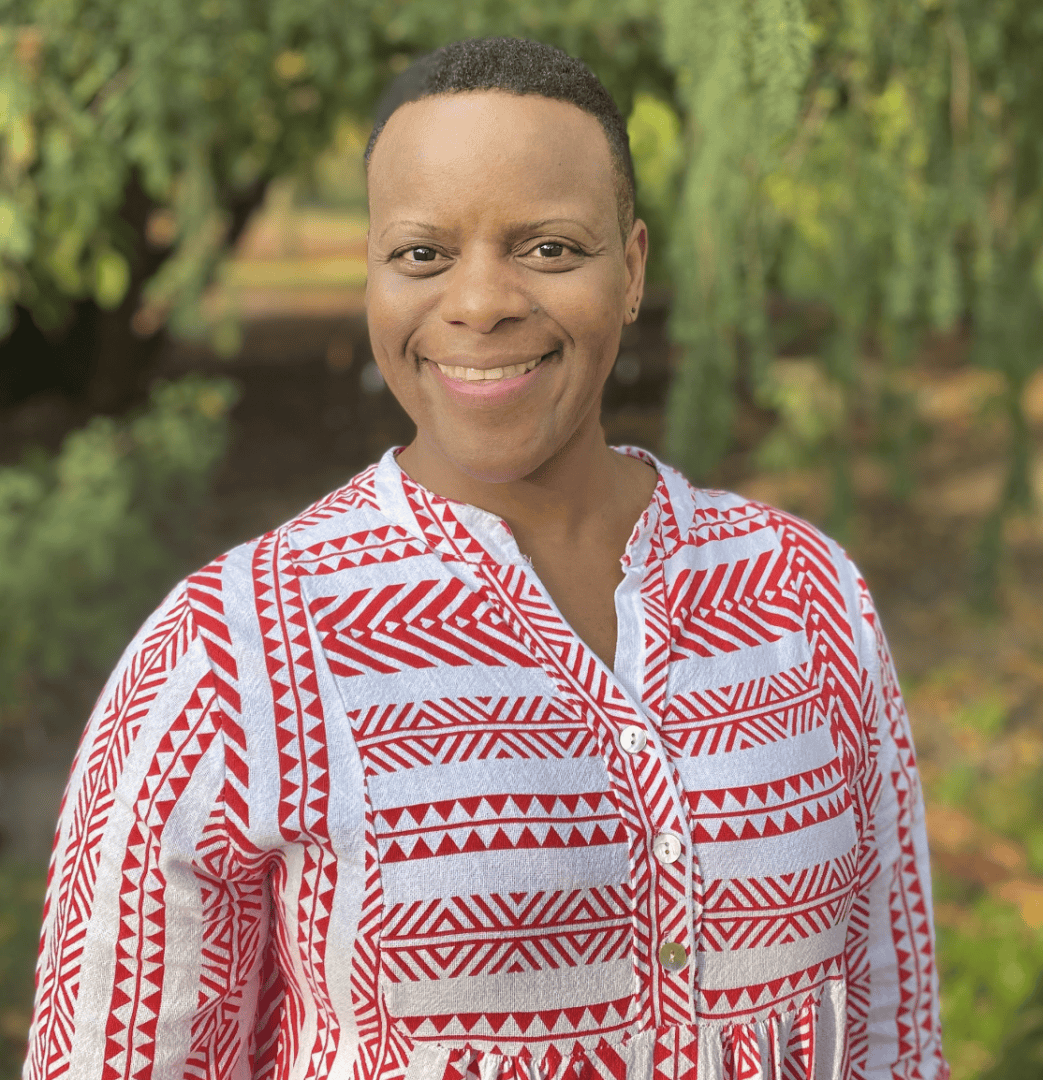
Photo, top: URI Assistant Professor Nekehia Quashie has been named a fellow by the Gerontological Society of America, the oldest and largest interdisciplinary organization focused on aging. (Photos courtesy Nekehia Quashie)