
Subscribe!

COVID: It’s Not Your 2020 Virus anymore… New Vaccines, even a “Morning-After” Pill – Nick Landekic
COVID Infections Are Surging Again – Updated vaccines plus a new prevention pill give more options to stay healthy
By Nick Landekic, contributing writer
Yes, COVID is still a thing. As expected we are experiencing the now predictable summer wave, the 13th surge since the start of the pandemic. Right now it’s estimated 3.4 million people are becoming infected every week and 800 to 1,500 are dying of COVID every week, and infections are climbing fast. The National Wastewater Scan shows high and growing levels of COVID in every participating state.
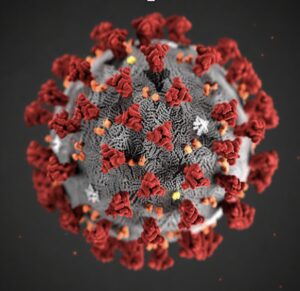
What’s been happening with COVID?
COVID has fallen into a now more-or-less predictable pattern of surging twice a year, in the summer and winter.
Most respiratory infections like the flu spike in the winter. COVID is different and has been surging twice a year including the summer, for a few reasons.
Immunity waning. Most people who got vaccinated did it in the fall, and most people who got infected did it during the winter wave. By August any protection from either vaccination or infection has waned and you’re susceptible to becoming infected again.
Climate and where we spend our time. Summer means people spend more time indoors in air conditioning, where infection is more likely to spread.
Travel and mixing. Peak travel season, weddings, camps, and family reunions all stack up in the same few weeks, and now schools are reopening as well.
Variant mutations. The SARS-CoV-2 COVID virus mutates very quickly and keeps generating new variants that can evade existing antibodies.
A higher year-round baseline. Flu drops to very low levels between waves so there’s little virus left to work with even when conditions are right for spread. Unfortunately COVID keeps circulating all year so there’s already more virus around when immunity wanes, behavior shifts, or a fitter variant shows up.
All this means COVID infections are rising again with the surge likely to last for the next couple of months. It’s not possible to accurately predict how much but we may see 1 million new infections daily and perhaps 2,000 COVID deaths per week.

Is COVID still something to be worried about?
One of the most damaging myths spread on social media is that COVID has somehow magically become ‘milder.’ COVID has not become ‘mild.’ If anything some studies have shown it has become worse. It most definitely is not like a cold or the flu. It’s much more serious.
Fortunately fewer people are dying of COVID than did in the dark, terrible days at the beginning of the pandemic, when refrigeration trucks were parked on the streets of New York to hold the bodies of all those who died of COVID, because the morgues were overflowing.
But that doesn’t mean the virus is less severe.
Fewer people are dying now for a few reasons:
- Many (but not enough) people are getting vaccinated
- we know more about how to treat the infected
and a simple, sad rule of biology: you can only die once.
- Those most vulnerable to COVID, those with the riskiest underlying conditions, have already been killed by the virus.
___
Scientific research continues to uncover a great deal of new and worrying information about the virus. Among any other things having COVID can cause an increased risk of having –
- Life-threatening blood clots and damage to blood vessels throughout the body,
- Strokes and heart attacks for years after infection,
- A 60% increase in diabetes, breast and other cancers, and
- Parkinson’s Disease.
Long COVID has been shown to cause many other health problems including –
- Greatly increased risk of heart arrhythmias,
- Asthma,
- Damage to the immune system resulting in increased risk of other infections, and
- Decreased I.Q. and cognitive functioning.
Tens of millions of people have persistent Long COVID problems for months and years after infection. Overall, having COVID ages the brain by about 20 years, and can double the risk of developing Alzheimer’s Disease-like dementia.
You can read about one person’s experience with Long COVID here.
Most people would probably prefer to avoid these things, and there are things you can do to increase your chances of staying healthy.
Who is at the most risk from COVID?
Age has consistently been shown to be the single biggest risk factor for a poor outcome from COVID infection. Anyone can get infected but older people are generally at higher risk than the younger. If you are over 50 and especially over 65, you should probably take additional precautions.
93% of COVID deaths are in those over age 50. If you are over 60, you are 225 times more likely to die of COVID than someone under 30. For those over 70, risk of death is 640 times greater than someone under 20. If you are older and want to stay healthy you will need to take more precautions than younger people.
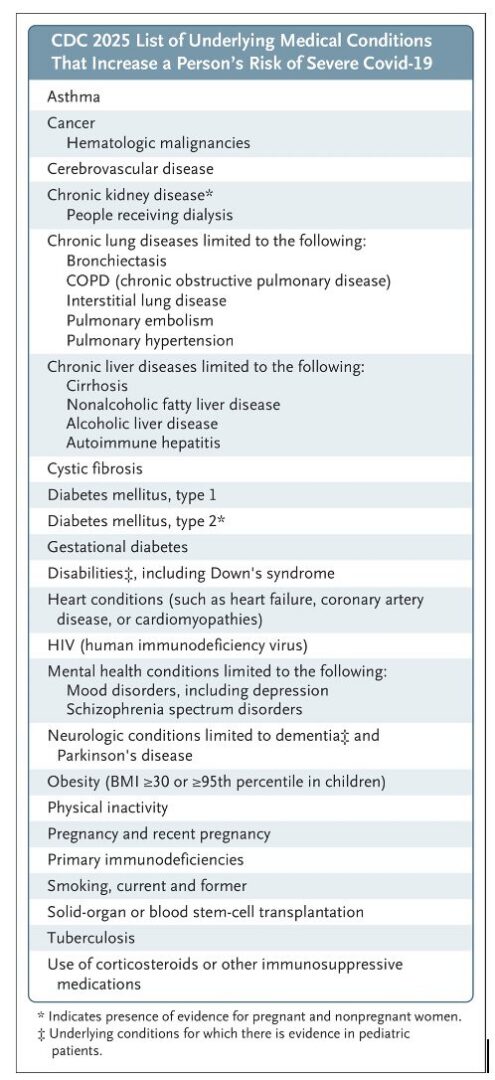
Additionally, people with some medical conditions such as diabetes, high blood pressure, asthma, or obesity are at greater risk of getting infected and a poor outcome if they do. There is a list of conditions that have been shown to increase the odds of having a bad outcome from COVID:
What about children?
COVID infections are generally milder in children, but they are not immune from being harmed by COVID and can also suffer from Long COVID. Children can also bring infections home to their parents and grandparents who are at greater risk of a bad outcome.
I’ve had COVID and it didn’t seem so bad?
Studies have shown repeat infections have 2 to 3 times the risk of a worse outcome, organ, tissue, and system damage, than the previous infection.
Even if you are lucky enough to have had a relatively mild acute course of infection you can still develop Long COVID. Studies have shown that most Long COVID cases started with initially mild infections.
COVID really isn’t something you want to get over and over again. Your body doesn’t get ‘used to it,’ and repeat infections do not ‘toughen you up.’ It just hurts you more each time.
What can I do to stay healthy?
The good news is there are several things you can do to stay healthy and decrease your chances of getting infected.
First, last week three updated COVID vaccines were approved by the Food and Drug Administration. All three vaccines are designed to prevent severe disease caused by the currently circulating dominant strain called the XFG variant.
- Pfizer’s mRNA vaccine, Comirnity XFG, is approved for adults 65 years and older, and people ages 5 to 64 years old with an underlying condition.
- Moderna’s mRNA vaccine, Spikevax, is approved for people age 65 and older, and those 6 months to 64 years old with an underlying condition. Moderna’s new, lower-dose vaccine, mNEXSPIKE, is approved for people age 65 and older, as well as people 12 to 64 years old with an underlying condition.
- Sanofi’s COVID-19 vaccine, Nuvaxovid, does not use mRNA technology. Nuvaxovid is approved for adults ages 65 years and older, and people ages 12 years to 64 years who are at high risk for severe COVID-19.
There is a long list of underlying conditions (above) that can put you at higher risk from COVID. 30-60% of people have at least one of them.
Remember: vaccines are not a magic force field against catching the virus. Ignore any nonsensical “I got vaccinated and still got COVID” stories. Very few vaccines provide what is called ‘sterilizing immunity’ that completely blocks infection. The goal of vaccination is not to absolutely stop all infections but to make what could otherwise be a serious – or fatal – infection much less severe.
Monitoring of the effectiveness of last year’s COVID vaccines showed them to be 58% effective in reducing the risk of hospitalization and 49% effective in reducing risk of emergency room visits. This is comparable to the effectiveness of annual flu vaccines that generally are about 40%-60% effective.
Talk with your physician and pharmacist about COVID vaccines for you and your loved ones.
Second, a new drug was recently approved to reduce the risk of COVID infection after exposure – Xocova (ensitrelvir). This is the first drug approved to lower your chances of getting infected after you have been exposed to someone who has the virus. Studies have shown it can reduce your risk of getting infected by 67%.
If you are in close contact with someone who you then find out was infected with COVID, taking Xocova within 3 days can significantly reduce your risk of becoming infected.
If you get infected, the drug Paxlovid continues to be available. It is prescribed to be started within 5 days of the beginning of your symptoms, to reduce the severity of the infection.
Third, masks work, and work very well! A great many studies have repeatedly shown that a N95 (or equivalent KN95, KF94, or FFP2 mask) worn properly can significantly reduce your risk of becoming infected, and even reduce the severity of illness if you do become infected (by reducing the number of viral particles inhaled).
Consider wearing a mask in crowded indoor spaces, and especially when traveling by plane or other public transportation. The risk of encountering an infected person increases the more people that are present in an enclosed space:
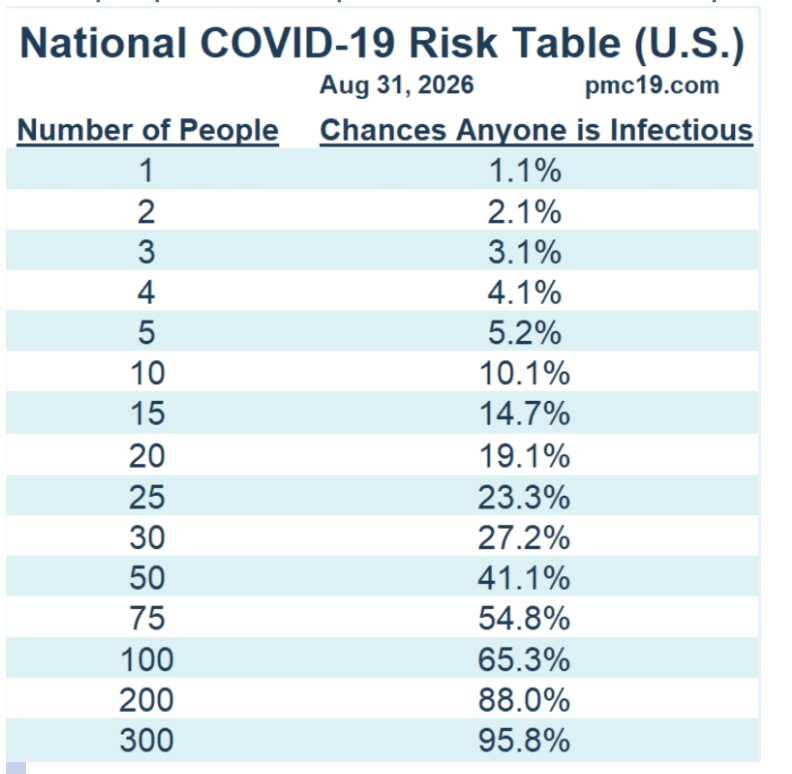
Masks can be one of the most effective protective measures you can take and are not susceptible to variant evolution.
Wearing a mask is easy. Having COVID is very hard.
For anyone wanting more information additional resources are available. The People’s CDC is an independent group of public health practitioners, scientists, healthcare workers, and others working to reduce the armful impacts of COVID. The Pandemic Mitigation Collaborative, coordinated out of Tulane University, compiles and analyzes the available data to come up with infection levels and risks. Unbiased Science, by public health scientist Dr. Jess Steier, compiles a variety of news updates and informational resources. Mass General Brigham Hospital has a renowned COVID Recovery Center. If you have had COVID and are struggling with ongoing Long COVID problems they may be able to help you.

COVID is very much still a thing. It isn’t 2020, and the tools we have now are better than the ones we had then. But it’s circulating, it’s climbing, and a little effort right now costs almost nothing.
—————-
Nick Landekic of Bristol is a retired C.E.O. and biotechnology entrepreneur who spent more than 35 years working in the pharmaceutical industry.