by Chef Walter Potenza, contributing writer
Friends:
Wandering through the charming cobblestone streets of
Treviso, Italy, you can’t help but be enveloped by the delightful scents of history and freshly brewed espresso. Along the way, you might stumble upon the show’s star: tiramisu! This fantastic dessert is a treat for your palate and a feast for the imagination.
Its name comes from the local dialect “Tireme su,â€Â which means “lift meâ€Â or “strengthen my body.†This makes it perfect for a dessert that feels like a cozy hug. This popular simple concoction is also recognized as the fifth most popular Italian word globally. It is celebrated as rich and worth the indulgence. It’s easy to see why it has captured hearts everywhere!
The journey into tiramisu’s origins begins in the mid-19th century, within the rustic kitchens of Treviso’s peasant families. The “Sbatudin” was, at its core, a frothy cream crafted from egg yolks whipped with sugar until light and airy. Each household added its flair—strong coffee, a splash of white wine, a drizzle of liqueur, butter, ricotta, crumbly biscuits, or a dusting of cocoa—making tiramisu a collective creation infused with personal and local flavors. One can imagine families gathered around wooden tables, sharing laughter and perfecting their unique versions, weaving a sense of community into the dessert’s history. Like everything else, eventually, it entered the kitchens of restaurants such as
Le Beccherie, the custodians of the original procedures.
Delving into culinary records, one encounters Pellegrino Artusi’s 1891 masterpiece, Science in the Kitchen and the Art of Eating Well. In its 1902 sixth edition, Artusi describes a dessert from Conegliano, near Treviso, known as “biscotti puerperal.” Unlike traditional biscuits, these were spooned, much like tiramisu, and featured three key ingredients: egg yolk, sugar, and cocoa. Artusi noted that butter and cocoa were blended into the Sbatudin cream, forming an early version of tiramisu that spread among Treviso’s citizens.
Over time, this rustic treat evolved into the classic recipe cherished today. It is built on six essential components: delicate ladyfingers, velvety mascarpone, bold coffee, rich cocoa, egg yolk, and sugar. The simplicity of these ingredients belies the indulgent result.
Tiramisu’s story takes a fascinating turn during Italy’s 19th-century Risorgimento, the movement to unify the nation. In Treviso, under the Habsburg Empire’s sway, the dessert became a subtle act of rebellion. Giuseppina Tiretta, a noblewoman born in the city in 1829, was renowned for her “tirame-sospiro-sù,” a cocoa-laden delight with perfectly soaked ladyfingers that retained their shape.
A fervent supporter of Italian unification, Giuseppina introduced Savoiardi ladyfingers from Piedmont, rejecting the Austrian-style sponge cakes favored by the
Habsburgs. This culinary choice was a bold statement of Italian identity, a way to savor freedom with every bite, transforming her dessert into a symbol of patriotic pride.
Mascarpone, the creamy heart of tiramisu, has an intriguing history. Its name may come from the Lombard word “mascherpa,” which means ricotta, or it could be linked to a 13th-century Spanish nobleman’s exclamation, “Mas che bueno” (meaning “more than good”).
This cheese, made from acidified cream, originates from regions like Lodi, Como, and Lecco. During the 19th-century independence wars, it became a symbol of resistance. Its incorporation into tiramisu, alongside Savoiardi ladyfingers, helped establish the dessert as a culinary emblem of the emerging Kingdom of Italy. During World War I, soldiers along the Montello-Piave defense line enjoyed tiramisu, further cementing its status as a patriotic dessert that provided a taste of home in times of hardship.
The tale takes a playful twist with a local legend that adds a mischievous charm. In Treviso’s historic center, a clever “Siora,” the madam of a high-end brothel, reportedly created an early tiramisu as an aphrodisiac for her clients. As gentlemen descended the stairs, weary from their visit, she’d serve this invigorating treat, saying, “I’ll pick you up now,†with a knowing smile. Dubbed a 19th-century “natural Viagra,†this “Tiremesù,†enriched with egg Marsala, drew from Treviso’s culinary traditions.
Patrons at places like El Toula restaurant shared these “spicy confessions,†recounted by figures like Alfredo Beltrame and pastry chef Loris Casellato. Casellato’s unpublished book claims Treviso’s first pastry-made tiramisu emerged in 1947, crafted by a vibrant character known as “Ragazzon Danilo el Rosso†at a chic Via Marzolo establishment, adding a colorful chapter to the dessert’s lore.
Conversations with Treviso’s elders, particularly grandmothers in their eighties, reveal that tiramisu was a beloved staple long before the 1950s. In an era without electricity or refrigerators, its short shelf life made it a regional secret, cherished in the Veneto center and nearby villages. Before factory-made ladyfingers, families used homemade spongy biscuits, while poorer households soaked focaccia or stale bread in coffee.
Treviso’s traditions flourish with the gift of soft, light, and easily digestible ladyfingers, often offered to new mothers, children, and those in need of comfort. These ladyfingers highlight the nurturing essence of the dessert.
As you savor a slice of tiramisu in several of the cozy cafés in Treviso, the layers of mascarpone, coffee-soaked ladyfingers, and cocoa unfold a narrative of resilience, creativity, and defiance. From humble peasant kitchens to elegant noble dining rooms, tiramisu embodies a rich history of patriotic rebellions and playful legends.
Lastly, if you’re staying in Venice for several days and looking for a less touristy diversion, Treviso is only a thirty-minute train ride away. Its narrow, cobblestone alleyways and pedestrian-only streets beckon visitors to explore this picturesque town. Like me, you will love its ancient historic center and tranquil ambience.

Tiramisu’ Cake-Style version. Attribution via Serghei Savchiuc, Moldova
Traditional Tiramisù Recipe
Ingredients for 10:
2 cups mascarpone cheese (Choose an imported brand)
5 farm-fresh whole eggs
5 tablespoons sugar
2 cups heavy cream, whipped into stiff peaks
4 espresso shots of hot espresso
1 (8.8-ounce) package Ladyfinger SAVOIARDI cookies
A sprinkling of cocoa powder
Procedure
Separate the egg yolks from the whites into two different bowls.
Stir the yolks with the sugar until combined. Add the mascarpone until the mixture is pale and the sugar dissolved.
Separately, whip the egg whites until stiff peaks form. Using a wooden spoon, gently fold the egg whites into the mascarpone mixture and the whipped heavy cream.
Pour the coffee into a wide bowl, and quickly dunk each cookie into it. Arrange about half of the cookies to completely cover the base of a shallow (1½-inch deep) rectangular (11-by-7-inch) dish. Cover the cookies with half of the mascarpone mixture.
Arrange another layer of soaked cookies and top with the remaining mascarpone mixture.
Sprinkle with cocoa powder.
Cover the dish with plastic wrap, and refrigerate for 4 hours before serving the sweet Italian pick-me-up.
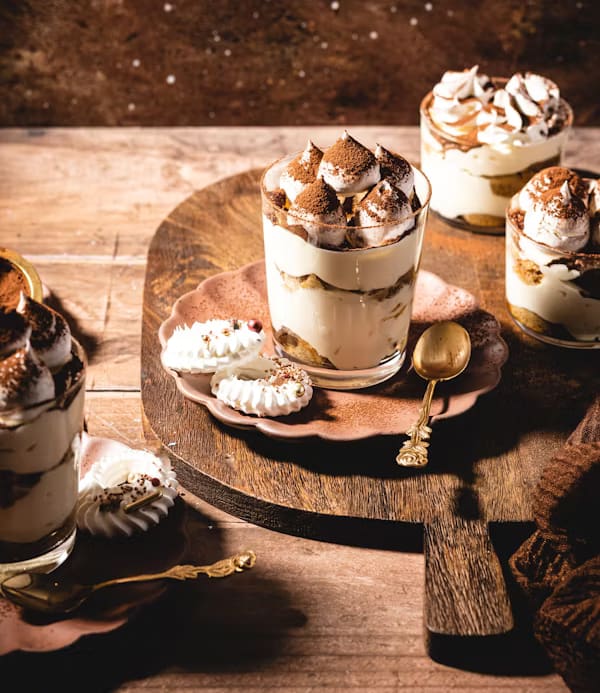 Tiramisu’ Servings
My suggestions
Making the perfect tiramisu is an art, and avoiding common mistakes ensures a creamy, dreamy dessert that lives up to its Italian roots. One of the biggest pitfalls is using weak or flavored coffee—espresso is essential for that deep, rich flavor, and a quick splash of coffee liqueur can enhance it without overpowering. But be careful not to drown the ladyfingers; a swift dip of just a second or two per side keeps them from turning mushy or staying too hard.
The heart of tiramisu lies in its velvety mascarpone filling; cutting corners here can ruin the texture. Always use high-quality, full-fat mascarpone, and fold it gently into whipped egg yolks to avoid graininess. If you’re worried about raw eggs, a quick sabayon—whisking yolks and sugar over a double boiler—adds safety and fluffiness. Some recipes swap in whipped cream or yogurt, but the classic mascarpone-and-eggs combo gives tiramisu its signature richness.
Another key is patience: skipping the chill time means a sloppy mess, so let it sit in the fridge for at least six hours, ideally overnight. A dusting of cocoa powder right before serving is the final touch, adding a bittersweet contrast to the sweet cream. And remember, tiramisu is delicate—keep it refrigerated and enjoy it within a few days for the best taste and texture. With these tips, your tiramisu will always be a flawless, gratifying treat. (WP)

–
Chef Walter is featured HERE every Sunday with his regular Ask Chef Walter column!
Meet Chef Walter! There is a constant, recognizable thread in the career of Walter Potenza to elevate the level of Italian culinary culture in the United States. Besides his unquestionable culinary talent and winning business perspective, Chef Walter has been a relentless educator with passion and knowledge who defeats stereotypes. His life, career, and values are a model, an example to follow by any chef of Italian gastronomy working outside Italy.
Chef Walter appears regularly on National and International Networks such as Food Network, ABC, CBS, NBC, RAI, FOX, and Publications such as NY. Times, Washington Post, Wall Street Journal, Food & Wine, Saveur, Gourmet, and several Italian media outlets. And every Sunday in RINewsToday.com!v


