by Executive Chef Walter Potenza, contributing writer
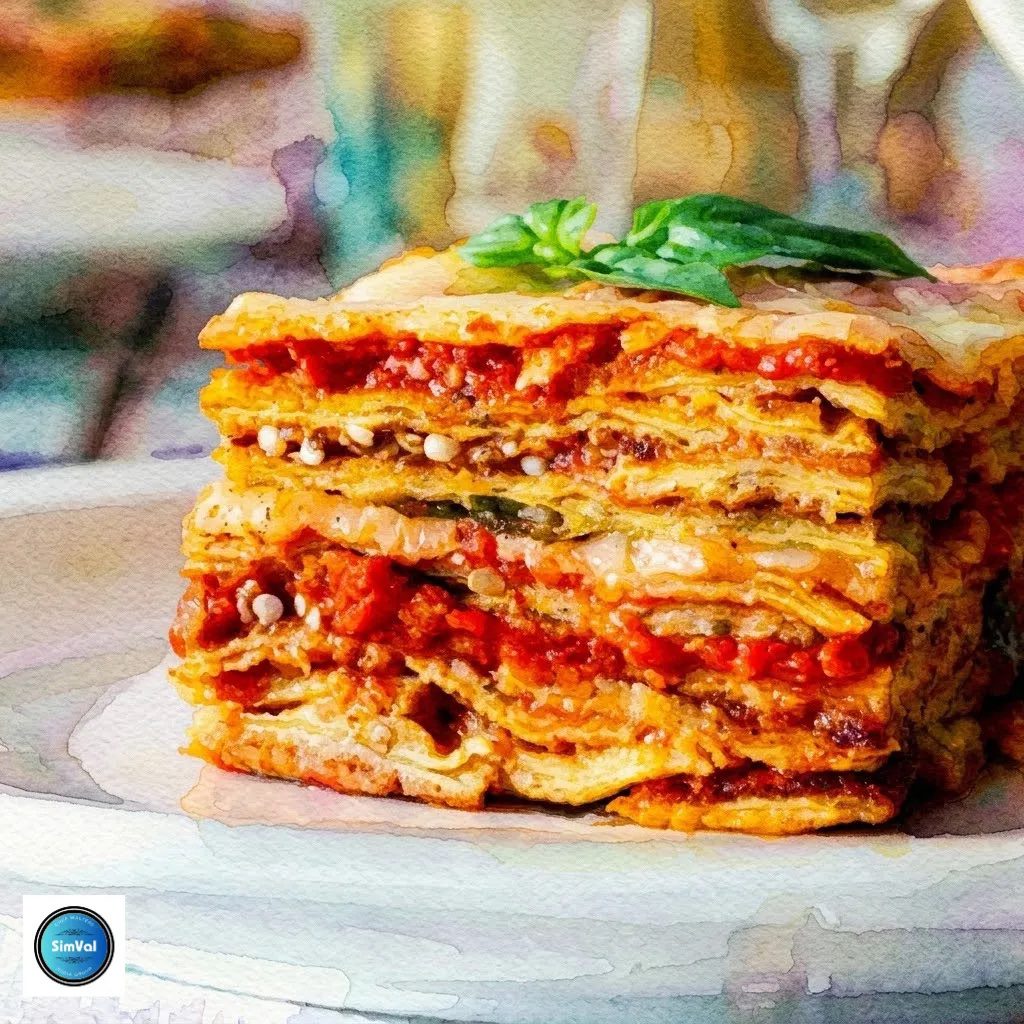
Proper eggplant preparation requires respecting its spongy nature and the ability to transform it, through warmth and patience, into a soft, flavorful, and profoundly Mediterranean food. This weekend try my Eggplant Parmigiana recipe.
.
Friends:
.
Between late summer and early September, when the days still hold their heat and the evenings begin to soften, markets fill with a vegetable of striking presence: the eggplant. Deep purple, almost black in some varieties, or pale and ghostly in others; it arrives with glossy skin and a spongy, yielding flesh that has found a place in kitchens across the world. Known botanically as Solanum melongena, it belongs to the Solanaceae family, the same lineage that gave us tomatoes, potatoes, and peppers. Though we treat it as a vegetable, it is, in botanical truth, a fruit—one whose history stretches back to the earliest days of plant domestication.
.
Its origins lie in Asia, most likely in the region spanning India and Southeast Asia. There it descended from wild, thorny, and distinctly bitter relatives such as Solanum insanum. Genetic evidence shows that humans began shaping the plant long ago. Through patient selection, they reduced the spines, tempered the bitterness, and encouraged a remarkable diversity of forms and colors. Today the eggplant appears long and slender or round and plump, dark purple, white, striped, or green. Each type carries its own character. The classic long, dark-purple varieties—among them the traditional Neapolitan—offer firm flesh and a delicate flavor that stands up beautifully to the grill or to the layered richness of a parmigiana. Rounder, violet types soften into a creamier texture, ideal for sauces and stuffings. White eggplants tend to be milder and more tender, while green and striped sorts often surprise with an especially sweet taste and thin skins that need little preparation.
.
The plant itself thrives in warmth and sunlight. In temperate climates it is grown as an annual; in milder regions it can persist longer. From its Asian homeland it gradually traveled outward. Ancient Chinese and Indian texts already mention it. Centuries later, Arab traders and cultivators carried it into the Mediterranean during the Middle Ages. The Italian name melanzana itself traces a linguistic path through Persian and Arabic (bāḏinjān), a reminder of that long cultural transmission. Europe, however, received the newcomer suspicion.
.
As a member of the nightshade family—home to many toxic plants—it was eyed warily. Some called it mala insana, the “mad apple,” fearing it might cloud the mind. Only with time, and with the rising influence of Mediterranean and southern European cooking, did the eggplant shed its dubious reputation and settle firmly into everyday tradition.
.
In Italy it became indispensable. Parmigiana, caponata, pasta alla Norma, melanzane a funghetto, stuffed eggplants—these dishes are not merely recipes but markers of summer itself. Elsewhere, the fruit found equally devoted roles, from Middle Eastern purees to Asian stir-fries. Choosing well is the first step toward success. Look for firm specimens with smooth, glossy skin free of bruises and a fresh green stem. Overripe fruit grows seedy and bitter. Older cookbooks often prescribed salting: slices were sprinkled with coarse salt and left to drain, drawing out moisture and bitterness. Modern varieties are milder, so the step is no longer obligatory, yet it can still reduce oil absorption and firm the texture when desired.
.
Once in the kitchen, the eggplant proves remarkably adaptable. Grilled or griddled, thin slices develop a smoky perfume and tender bite after only a few minutes per side; a drizzle of oil, garlic, mint, or parsley finishes them. Roasted whole—pricked and left until the skin collapses—the flesh turns silky and is perfect for purees or fillings. Cubed or sliced and baked, it needs far less oil than frying yet retains deep flavor. In a pan, it can be sautéed funghetto-style with tomato and basil, or simply with garlic and oil. Frying, the classic route for parmigiana, produces a golden crust, though the spongy flesh drinks oil greedily; very hot oil used sparingly, or a light dusting of flour, helps keep the result lighter.
.
One particularly appealing preparation captures the season’s ease: halved lengthwise, scored, brushed with extra-virgin olive oil, salt, and oregano, then roasted at 200 °C for about thirty-five minutes until the flesh is soft. Served warm with a simple sauce of Greek yogurt, lemon juice, parsley, and black pepper, it makes a fine appetizer or side dish, its flavors unmistakably Mediterranean. Eggplants can also be stuffed into boats, braised, gratinéed, shaped into meatballs, or turned into one-pot meals. They lend themselves to quieter innovations as well—roasted and blended with tahini, garlic, lemon, and oil into a rich cream reminiscent of baba ganoush, or diced into grain salads, or sautéed with miso or soy for a fusion note over noodles or rice. In nearly every case, thorough cooking is essential; it sweetens the flesh and rounds out the flavor. A touch of vinegar, lemon, or tomato, together with aromatic herbs, brightens without overpowering.
.
Beyond its culinary generosity, the eggplant offers modest nutritional virtues. Low in calories, high in water and fiber, it supplies potassium and, in the purple varieties, anthocyanins—the same pigments that give the fruit its characteristic color and antioxidant character.
.
From a thorny wild plant of Asian origins to a fixture of summer tables, the eggplant has crossed continents and outlasted old prejudices. When the knife cuts through its glossy skin and meets the soft flesh beneath, or when it emerges from the oven fragrant and golden, what rests in the hand is more than an ingredient. It is a small piece of botanical and cultural history—transformed through heat and patience into something soft, flavorful, and profoundly Mediterranean.
Eggplant Parmigiana (Parmigiana di Melanzane)
.
A classic southern Italian dish of layered fried eggplant, tomato sauce, mozzarella, and Parmigiano-Reggiano, baked until bubbling and golden. This version follows the traditional method while offering a lighter baked-eggplant option.
.
Ingredients (serves 4–6)
3–4 medium firm eggplants (about 1.2–1.5 kg / 2½–3 lb total), preferably long dark-purple varieties
Coarse salt, for drawing out moisture
Olive oil, for frying (or brushing if baking)
800 g (28 oz) good-quality canned peeled tomatoes or passata
2–3 garlic cloves, lightly crushed
A handful of fresh basil leaves
250–300 g (9–10 oz) fresh mozzarella, drained and sliced or torn
100–120 g (1–1¼ cups) finely grated Parmigiano-Reggiano
Salt and black pepper
Optional: a pinch of dried oregano or a small onion for the sauce
.
Method
1. Prepare the eggplant. Trim the ends and slice the eggplants lengthwise or crosswise into ½–1 cm (¼–½ inch) thick slices. Sprinkle both sides with coarse salt and place in a colander. Weight them lightly and leave for 30–60 minutes to draw out excess moisture and any residual bitterness. Rinse briefly under cold water, then pat thoroughly dry with a clean kitchen towel or paper towels.
.
2. Cook the eggplant. Traditional method: Heat a generous amount of olive oil in a large frying pan over medium-high heat. Fry the slices in batches until golden on both sides (about 2–3 minutes per side). Drain on paper towels.
Lighter method: Brush the slices lightly with olive oil, arrange on baking sheets, and roast at 200 °C (400 °F) for 15–20 minutes, flipping once, until tender and lightly colored.
.
3. Make the tomato sauce. In a saucepan, warm a little olive oil with the crushed garlic (and onion if using) until fragrant. Add the tomatoes, a pinch of salt, and a few basil leaves. Simmer gently for 20–25 minutes until slightly thickened. Taste and adjust seasoning. Remove the garlic (and onion). Tear in more fresh basil just before using.
.
4. Assemble. Preheat the oven to 180–190 °C (350–375 °F).
Spread a thin layer of tomato sauce in the bottom of a baking dish (approximately 20 × 30 cm / 8 × 12 inches). Arrange a layer of eggplant slices, slightly overlapping. Spoon over more sauce, scatter pieces of mozzarella, and sprinkle with grated Parmigiano. Repeat the layers, finishing with sauce, a good covering of mozzarella, and a final generous dusting of Parmigiano. Tuck a few basil leaves between the layers if you like.
.
5. Bake. Bake for 30–40 minutes, until the top is bubbling and golden-brown in spots. If the surface browns too quickly, cover loosely with foil for the first part of baking. Let the dish rest for 10–15 minutes before serving—this helps the layers set and makes slicing cleaner.
.
Serving suggestions
Serve warm as a main course with crusty bread, or as a substantial side. It pairs beautifully with a simple green salad. Leftovers reheat well and are often even better the next day.
.
Suggestions
Firm, glossy eggplants with fresh green stems give the best texture. Salting is less critical with modern, milder varieties, but it still improves the final result by reducing oil absorption and excess water. For a richer version, some cooks add a thin layer of béchamel; the classic southern style relies only on tomato, cheese, and eggplant. The dish can be assembled several hours ahead and baked just before serving.
___
READ “Ask Chef Walter” every Sunday in RINewsToday
Master Chef Walter Potenza
There is a constant, recognizable thread in the career of Walter Potenza to elevate the level of Italian culinary culture in the United States. Besides his unquestionable culinary talent and winning business perspective, Chef Walter has been a relentless educator with passion and knowledge who defeats stereotypes. His life, career, and values are a model, an example to follow by any chef of Italian gastronomy working outside Italy.
Chef Walter appears regularly on National and International Networks such as Food Network, ABC, CBS, NBC, RAI, FOX, and Publications such as NY. Times, Washington Post, Wall Street Journal, Food & Wine, Saveur, Gourmet, and several Italian media outlets.