
Subscribe!
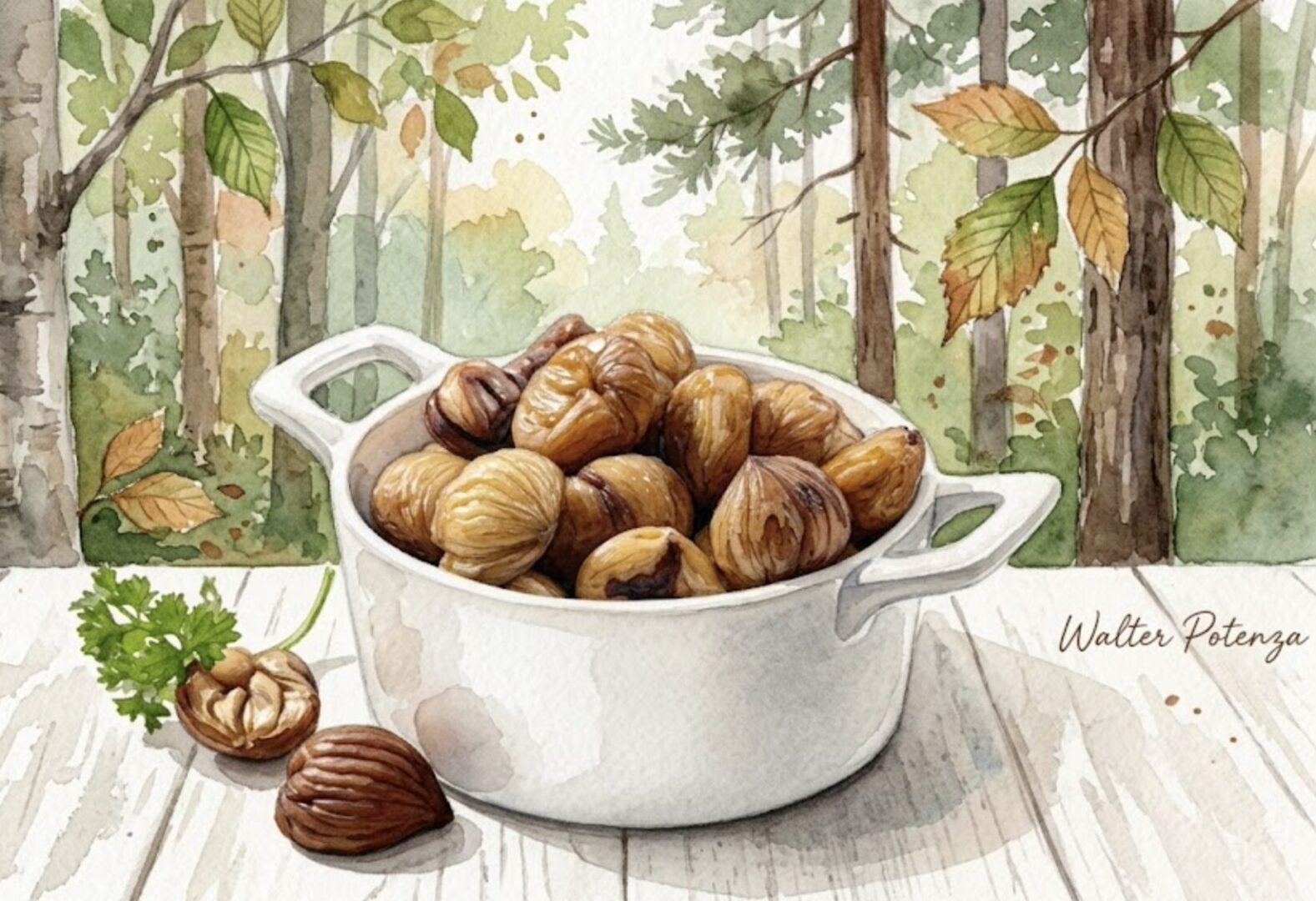
Ask Chef Walter: Chestnut Cooking Class – Walter Potenza
by Chef Walter Pontenza, contributing writer
Fresh chestnuts are in season from fall through early winter. They are typically harvested from late September through November and remain widely available through the December holidays. Moreover, a wonderful recipe for Mont Blanc!
Friends:
We are entering one of my favorite seasons, the one that includes chestnuts. One of our supporters, Nicholas K. from Hood River, Oregon, asked about chestnuts. Here’s a complete tutorial with a Mont Blanc Recipe. Have fun!
Chestnuts offer several health benefits (vitamin C, antioxidants, digestive support, heart health) and, of course, are a classic autumn/winter food and a satisfying comfort food. Here’s how you can use them in the kitchen. Let me start with the difference between chestnuts and marroni.
People often confuse them, but they come from different plants. The chestnut tree is a wild plant in many of Italy’s mountain areas and has been part of peasant life for centuries. Some of the chestnuts are Chinese and Japanese in origin (quality is questionable in those cases), so always check the country of origin when you’re buying.
Marroni are the fruit of the brown chestnut (a grafted variety that produces fruit sweeter than the wild variety and therefore more desirable) and are more expensive than the normal chestnut. Roasting the chestnuts (Marroni) in the oven gives you a result very much like the roasted chestnuts you’ll find being sold on the streets of Italy at this time of year.
Oven Option
Start by soaking the chestnuts in cold water for about 30 minutes, and remove any that float to the top (they’re bad or badly bruised). Dry the rest with a cloth, then use a sharp knife to cut through each chestnut at least 1/2 inch deep. Dip the chestnuts in a pot of boiling water for 4-5 minutes (this will help open the cut). Drain and spread evenly on a baking tray. Bake in the preheated oven at 325F for 20-25 minutes. Place in a paper bag or wrap in a kitchen towel for 5-10 minutes before eating (the heat makes peeling a lot easier). Many people skip boiling entirely, but the heat still has to go through when you’re baking them.
Roasted Chestnuts
You can roast chestnuts on the stove in a perforated pan instead of in the oven (a cast iron pan works just as well if you don’t have a proper chestnut pan). Soak the whole chestnuts in cold water for about 30 minutes, remove the ones that float, and dry the rest with a cloth. Make an incision in each and drop them into boiling water for 4-5 minutes. Drain them and place them in your perforated pan or cast-iron pan. Cook over medium heat, shaking the pan occasionally to ensure even roasting. It will take approximately 15 minutes on your gas (the larger the chestnuts, the longer they will take). A fitted lid will, of course, speed things up but may also cause the dry fruit to lose too much of its moisture. Once roasted, let them rest in a paper bag or wrapped in a cloth for 5-10 minutes before eating.
Microwave Option
Immerse all the chestnuts in cold water for around 30 minutes, remove the ones that float, and dry the rest with a cloth. Cut them as you would with any other method, and then soak for 10 minutes. Drain and spread on a microwave-safe dish (cut side up), microwave for 5 minutes, let sit for 5 minutes, then place in a paper bag for about 10 minutes before eating. The microwave method doesn’t give you the roasting ‘bite’ and flavor of the roasting versions. Cycle time will of course vary.
The Boiling Version
Immerse the whole chestnuts in cold water again for about 30 minutes; remove those that rise to the top, and dry the rest with a cloth. Place the chestnuts in a pan with just enough cold water to cover them, 1 or 2 bay leaves, and a pinch of salt. Bring to a boil, then reduce the heat and cook for about 50 minutes. They’re done when the pulp is soft (a knife tip will go right through it). Drain the chestnuts. You can also make a very good chestnut cream from the boiled chestnuts by adding unsweetened cocoa and eating it straight away.
Here’s how:
Put 8 oz of cooked chestnut pulp in a medium bowl and remove the skin. Dissolve 2-3 tbsp brown sugar in a cup of hot water, then add it to the chestnut pulp along with 2 tbsp unsweetened cocoa powder. Blend until smooth and rich. Put the creamed chestnuts in an airtight glass jar and refrigerate for 2-3 days. Use it on ice cream, savory pumpkin tartlets, plum cakes, or walnut galette. For a savory purée, use good vegetable broth and omit the sugar (you’ll get a great chestnut soup, especially if you mix it with butternut squash or other solid vegetables).
Storing Chestnuts Safely.
You can store fresh chestnuts in the fridge for at least a month (again, provided you’ve separated the good ones from the ones with insects or mould). Soak the chestnuts in cold water for 1-2 days (change the water daily) and discard any that float. Dry the chestnuts with a towel, put them in a paper or cloth bag, and seal it tightly. Put the bag in the fridge vegetable drawer. Alternatively, you can store fresh chestnuts in the freezer for about 6 months. Before freezing, cut the skin with a small knife. When you’re ready to use them, cook them frozen (don’t thaw them first).
An old, natural way to preserve fresh chestnuts is to store them in sand (not really practical, but it works). Just cover your chestnuts in sand. It’s a natural method and saves you a lot of time. Preserving in sand is an old (though by no means totally dead) method for preserving a wide range of vegetables (potatoes, carrots, turnips, beets, onions, celeriac, melons, and watermelons) for a long time. The sand provides the right moisture and air exchange. For chestnuts, put them in a container with clean, moist sand (1 liter of water per 10kg of sand) and store them in a cool place. Once they’ve fully cooled, you can store them in the fridge or freezer for a long time. If you’re storing roasted chestnuts in the freezer, peel them first. You can store cooked chestnuts in a few ways: in the fridge for up to a month or in the freezer for up to 6 months in airtight containers (frozen food bags or other food-contact containers). I’ve actually got a better idea. Eat them all at once!
Note: Cook without waste and save time in the kitchen by reusing the chestnut-boiling water for your potatoes or other starchy vegetables (tubers).
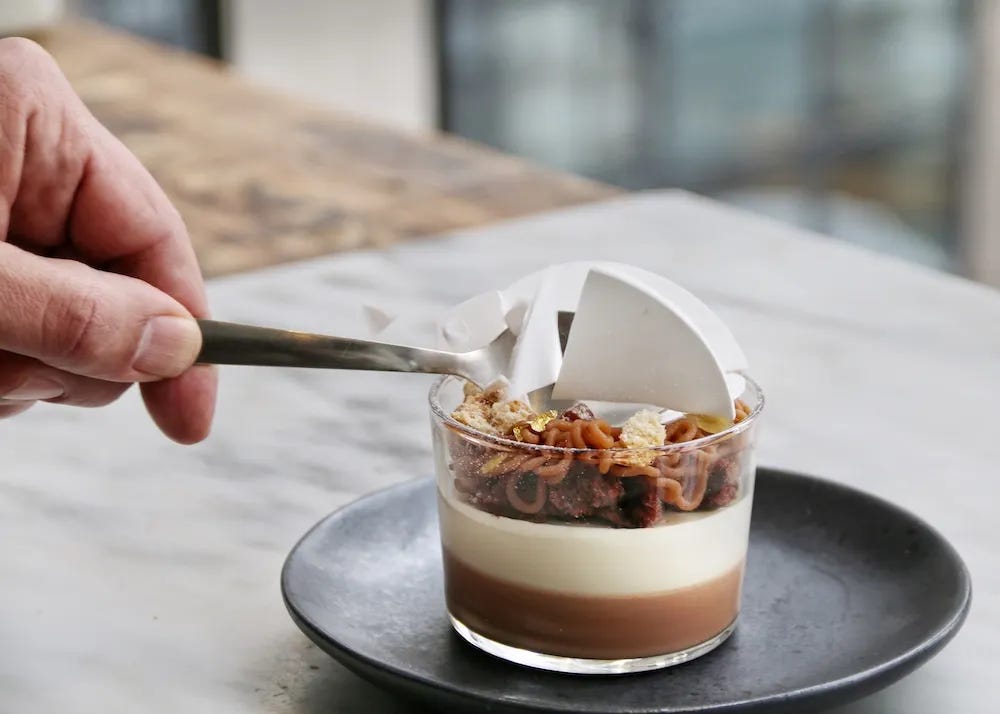 Mont Blanc: The Dessert That Looks Like a Mountain
One dessert doesn’t ask to be eaten so much as admired first—a pale, snow-capped peak of whipped cream rising above a tangle of chestnut threads, all resting on a crisp meringue base. The French call it Mont Blanc, after the highest mountain in the Alps, and the resemblance is entirely intentional. The chestnut purée, piped into thin vermicelli, becomes the rocky slopes; the whipped cream, piled irregularly, becomes the snow. It is a dessert with a sense of humor and a sense of place, and it has charmed Parisian tearooms and pastry cases for well over a century.
Making one at home isn’t difficult, but it does take a little patience and a piping bag. Let’s walk through it together, slowly, the way you’d want it if you’d never made one before.
A Classic Mont Blanc
Makes about 4 individual desserts
What You’ll Need
For the meringue base:
2 large egg whites, at room temperature
130 grams granulated sugar
A small pinch of salt
½ teaspoon vanilla extract
For the chestnut vermicelli:
300 grams chestnut paste (unsweetened)
400 grams sweetened chestnut cream
80 grams softened unsalted butter
5 centiliters dark rum (optional, but traditional)
For the whipped cream:
50 centiliters heavy cream, very cold
30 grams powdered sugar
1 packet vanilla sugar (about 14 grams)
To finish:
A few pieces of candied chestnut (marrons glacés), chopped, if you have them
A dusting of powdered sugar
Equipment:
A piping bag fitted with a small, round tip—or better yet, a special chestnut vermicelli tip with several tiny holes. If you don’t have one, a regular small round tip will work; the strands will be a little thicker, and that’s perfectly fine.
Parchment paper and a baking sheet
Now, Let’s Make It
First, the meringue—and this is the part that asks for patience.
Heat your oven to 120°C. Line a baking sheet with parchment paper. For neat, uniform bases, trace four circles about 8 centimeters across on the paper, then flip it over so the pencil marks are underneath. If you’d rather make them freehand, don’t worry—a rustic, slightly irregular base is entirely in the spirit of a mountain.
In a clean, dry bowl, whisk the egg whites and salt until frothy. Then, with the mixer running, add the sugar a spoonful at a time. Keep whisking. This will take several minutes—don’t rush it. Wait for stiff, glossy peaks that hold their shape when you lift the whisk and don’t feel gritty when you rub a little between your fingers. Add the vanilla at the end and whisk one last time.
Spoon or pipe the meringue onto your prepared circles, building them up slightly at the edges to create a shallow well in the center—a nest, essentially, to hold the cream later. Slide the sheet into the oven and bake for 45 minutes at 120°C, then lower the heat to 100°C and bake for another 2 hours. When they’re done, they should feel dry and crisp to the touch. Turn the oven off and let them cool inside with the door cracked open. This slow drying is what gives you a meringue that shatters cleanly rather than one that’s chewy in the middle.
While the meringues dry, make the chestnut mixture.
This part is almost embarrassingly easy. In a bowl, beat the softened butter until it’s smooth and creamy. Add the chestnut paste and mix until fully combined, then fold in the sweetened chestnut cream and the rum, if using. You’re after a mixture smooth enough to pass through a piping tip without clogging—thick but pipeable. If it feels too stiff, a splash of cream or milk will loosen it. Scrape it into your piping bag fitted with the small round tip (or the vermicelli tip, if you have one), and set it aside.
Now, whip the cream just before you assemble.
Pour the very cold cream into a chilled bowl and whip it—by hand with a whisk, or with an electric mixer on medium—until it just begins to thicken. Add the powdered sugar and vanilla sugar, and continue whipping until you have soft, billowy peaks. Stop before it turns stiff and grainy. The cream should look like fresh snow, not like butter. Transfer it to a piping bag fitted with a plain round tip, or have a spoon ready.
And now, the assembly—the part that feels like building a tiny landscape.
Set a meringue base on a plate. Pipe or spoon a generous mound of whipped cream into the center well, letting it rise above the rim. Now pipe your chestnut mixture in thin strands over the cream, working your way around and up, letting the threads fall in overlapping loops and coils until the cream is mostly covered and the whole thing resembles a shaggy, chestnut-colored mountain peak. Don’t aim for perfection. The charm of a Mont Blanc is in its irregularity—the way the vermicelli catches the light, the way the white cream peeks through the chestnut strands like snow through bare branches.
Scatter a few candied chestnuts on top if you have them, then finish with a light dusting of powdered sugar. Serve it immediately, while the meringue is still crisp and the cream is still cold.
A Few Variations I Am Suggesting
The classic version above is the one you’ll find in most French pastry shops and home kitchens. But the Mont Blanc is a forgiving canvas.
For a lighter, more modern version, some contemporary pastry chefs replace the whipped cream with a lightly set vanilla crème anglaise, which adds more flavor to balance the sweetness of the meringue and the chestnuts. Others fold mascarpone into the whipped cream for a richer, more structured cream that holds its shape beautifully.
If you want to go maximalist: The New York Times version builds a towering construction of layered meringues, whipped cream with mascarpone, and a hidden layer of mocha crémeux—a pudding-like chocolate-coffee custard—nestled inside, before the chestnut vermicelli cascades down the sides. It’s a project, but it’s a showstopper.
If you want it in a glass: For a quick, no-fuss version, crumble a baked meringue into the bottom of a glass, spoon over some chestnut cream, and top with unsweetened whipped cream. It loses the mountain silhouette, but none of the flavor, and it comes together in fifteen minutes.
However you make it, the Mont Blanc rewards a little care and a little whimsy. It’s a dessert that doesn’t take itself too seriously—a mountain made of chestnuts and cream, meant to be demolished with a spoon.
___
https://chefwaltersfoodtours.com/
https://flavorsandknowledge.substack.com/
READ “Ask Chef Walter” every Sunday in RINewsToday

Master Chef Walter Potenza
There is a constant, recognizable thread in the career of Walter Potenza to elevate the level of Italian culinary culture in the United States. Besides his unquestionable culinary talent and winning business perspective, Chef Walter has been a relentless educator with passion and knowledge who defeats stereotypes. His life, career, and values are a model, an example to follow by any chef of Italian gastronomy working outside Italy.
Chef Walter appears regularly on National and International Networks such as Food Network, ABC, CBS, NBC, RAI, FOX, and Publications such as NY. Times, Washington Post, Wall Street Journal, Food & Wine, Saveur, Gourmet, and several Italian media outlets.