
Subscribe!
Ask Chef Walter: Autumn in New England – Walter Potenza
by Chef Walter Potenza, contributing chef
My taste of the season is through cider donuts, and other stuff
I only came to understand what autumn is like in New England after I found myself in a flooded bog in Plymouth County, watching ten thousand cranberries rise to the surface like small, tart jewels. I believe it was around 1977. Andy, the farmer next to me, wearing waders that reached his chest, explained that the berries have tiny air pockets inside, which is why they float and why the harvest looks like a red carpet unrolling over the water. In that moment, I understood that New England autumn is not just a season to taste but one to experience. I went for the flavor, but I stayed for the story.
Autumn in this area isn’t one taste; it unfolds as a series of tastes, one after another, like the courses at a slow, leisurely dinner.
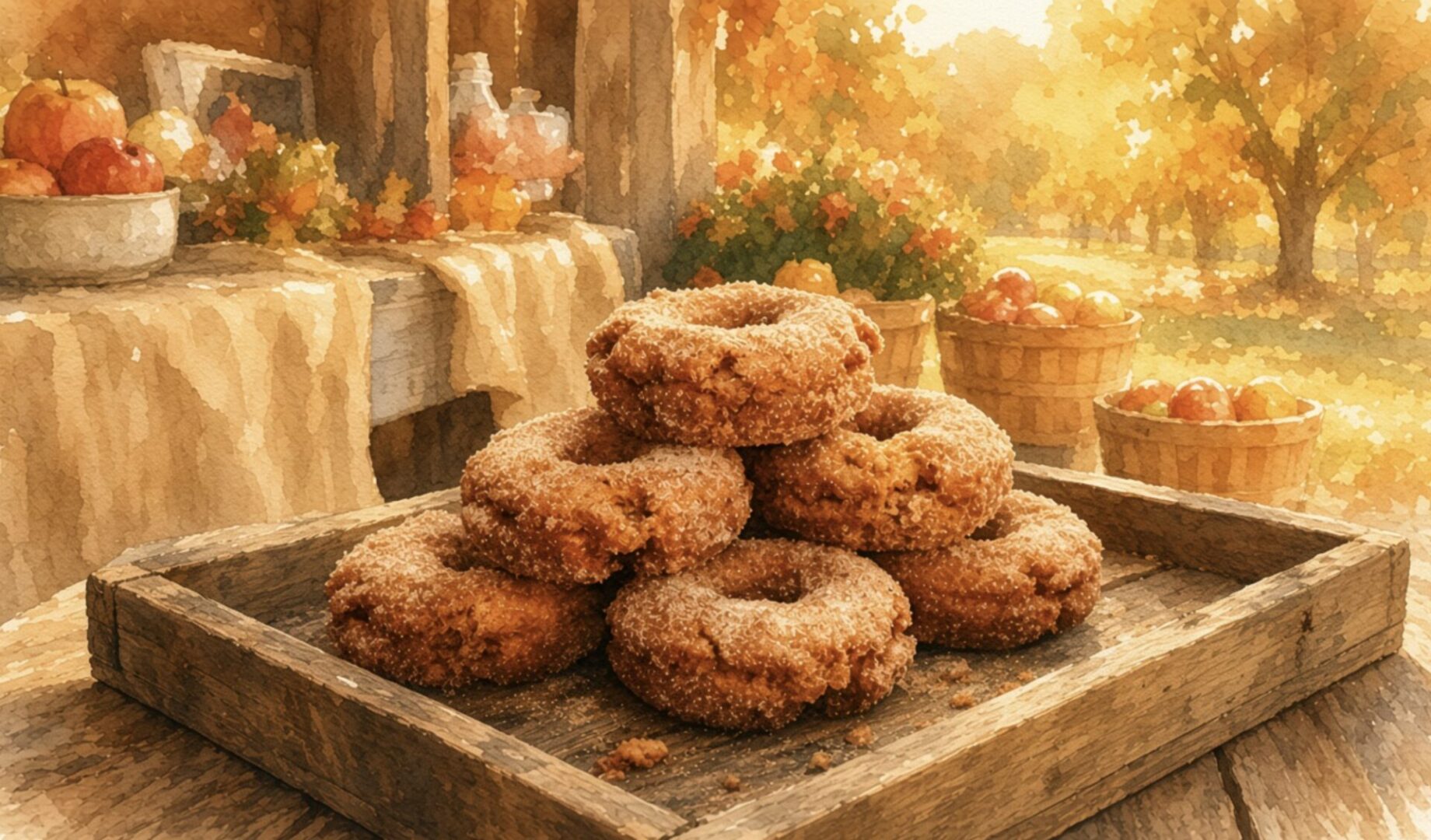
The first is apple cider doughnuts, and I can say that I ate no fewer than four in one go. At Jaswell’s Farm in Smithfield, Rhode Island’s one of the oldest running orchards, established in circa1899, the doughnut machines run continuously on fall weekends. You can smell them before you even see them: cinnamon, nutmeg, and a warm, apple-sweet aroma that cuts through the cool air. They come out of the fryer with a crisp outer shell and a soft, cake-like inside, coated in cinnamon sugar that ends up all over your fingers and, as always, on your jacket. I ate mine standing beside a heap of pumpkins, watching families drive wagons full of apples back to their cars. It felt like the most genuine thing I had done all year.
The cider deserves its own paragraph. It is fresh-pressed, cloudy, and at times sour enough to make your jaw hurt in a good way. Jaswell’s has run its own cider mill since 1970. I bought a half-gallon and drank most of it in the car before reaching the highway.
Next is the cranberry. I must admit that I used to see cranberries as a necessary part of Thanksgiving, that gelatinous cylinder which wobbles when you cut it. I was mistaken. October is Cranberry Month in Massachusetts, and the bogs in Plymouth County and Cape Cod is all active. Many farms offer guided bog tours with wader rentals, so you can step straight into the water during the harvest. The water is cold, the berries bump against your legs, and for a moment you feel rather ridiculous yet completely alive. A fresh cranberry, eaten straight from the bush, is invigorating, sour, and clean; it rouses you. Chefs throughout the region use them in sweet and savory dishes: compotes for French toast, tart sauces for pork, crisps with crunchy toppings that let you appreciate the berry’s sharpness. Farm stands near Carver sell homemade cranberry pies and jams. I took home a jar of cranberry pepper jelly and a bag of dark chocolate-dipped berries. I ate both within a week.
The flavor I look forward to all year isn’t available in October; it appears in March, which may sound like a contradiction. Maple syrup season lasts from late winter through early spring, when nights freeze days thaw, and the sap begins to run. When I visited a sugarhouse in Maine one March, the steam inside was so dense I could smell the sweetness in the air before tasting the syrup. The farmer poured some hot syrup into a small paper cup and handed it to me. It was buttery and rich; with a nutty aftertaste I can only describe as “brown.” It wasn’t burnt, just deep. He told me it takes forty gallons of sap to produce one gallon of syrup. I thought about that for a long time.
Autumn is the season everybody here talks about the leaves, the pumpkins, and the sweaters. But the maple syrup I put on my pancakes in October was made months earlier and kept in jars. New England flavors aren’t only about the moment you taste them; they also depend on the effort that went into them.
Last autumn, I had a clambake at home, not on the beach but in my backyard, using a large pot that held lobsters, clams, corn, potatoes, and pieces of linguica sausage. A genuine New England clambake steams everything over hot stones and seaweed, which gives it a salty, smoky taste you can’t get on the stove. My version was a stove-based compromise, but the smell of seafood, corn, sausage, and salt filling my kitchen made me feel as though all the coastal summers I had ever loved had been packed into one evening. Visitors who want the real thing can find public clambakes on beaches and at seafood shacks in Cape Cod, Narragansett, and coastal Maine during the warmer months. I ate my own version on the porch in a sweatshirt and watched the leaves fall. I believe that was the most exciting New England experience I have ever had.
In the end, autumn here tastes like change: the end of something pleasant and the start of something more comfortable. The doughnuts are warm because the air is cold. The cranberries are sour because the season requires a bit of sharpness. Maple syrup is sweet because people made it in the darkness of winter, knowing spring was coming.
I shall be back at the orchard next October, buying an excessive number of doughnuts and drinking cider until I am a bit unwell. If they allow me, I will stand in a bog and consider how strange and wonderful it is that a place can taste so specifically like a season. Autumn in New England doesn’t merely feed you; it tells you where you are.
How to make the Autumn Orchard Doughnut
To make these doughnuts, you must first understand the recipe’s soul: the cider. In New England, the cider is not merely an ingredient; it is the very essence of the fall harvest. The process begins by reducing a generous amount of fresh apple cider over a gentle flame until it becomes a dark, syrupy concentrate. This step, which fills the kitchen with the scent of simmering orchards, is crucial—it intensifies the apple flavor and provides the subtle tang that distinguishes a true cider doughnut from a common cake doughnut.
While the cider cools, prepare the dry ingredients. In a large bowl, whisk together the flour, baking powder, baking soda, salt, and a warm chorus of spices—typically cinnamon, nutmeg, and perhaps a touch of allspice or cardamom. In a separate bowl, or the bowl of a standing mixer, beat the butter and sugar until pale and fluffy. Add eggs one by one, then the buttermilk, cooled cider syrup, and a splash of vanilla. The mixture may look curdled at this stage; don’t worry, it will smooth out once you fold in the dry ingredients.
The resulting dough is soft and sticky—a characteristic that demands patience. Turn it out onto a floured surface, pat it gently into a disk, and wrap it well. It must rest in the refrigerator for at least an hour, or preferably overnight, to firm up and allow the flavors to meld. Once chilled, roll the dough to about half an inch thick. Cut out the doughnuts using a floured cutter—a three-inch round with a one-inch hole is traditional—and set them aside on a floured tray. Gently gather any scraps and re-roll them, but use a light touch to keep the doughnuts tender.
Now comes the frying. Heat a few inches of neutral oil in a heavy pot to 350°F (175°C). Use a thermometer; the temperature is paramount: too hot, and the exterior will darken before the interior cooks; too cool, and they will drink the oil. Slide the doughnuts in, a few at a time, taking care not to crowd them. They will turn golden in a minute or two on each side. Lift them out with a slotted spoon and drain briefly on paper towels.
While they are still warm—this is the crucial moment—toss each doughnut in a bowl of cinnamon sugar until well coated. The sugar clings to the hot surface, creating that familiar, crackly crust. Eat these immediately, perhaps with a glass of cold cider, standing in the kitchen, as is the custom in the orchards of Vermont and Massachusetts.
Ingredients
For the doughnuts:
2 cups (about 500 ml) fresh apple cider (to be reduced to roughly ½ cup)
3½ cups (about 440 g) all-purpose flour
1½ teaspoons baking powder
1 teaspoon baking soda
1 teaspoon ground cinnamon
½ teaspoon ground nutmeg
¼ teaspoon ground cloves
½ teaspoon salt
2 large eggs
1 cup (200 g) granulated sugar
½ cup (100 g) packed brown sugar
6 tablespoons (85 g) unsalted butter, melted
½ cup (120 ml) buttermilk
Vegetable oil, for frying
For the coating: optional
1 cup (200 g) granulated sugar
1 tablespoon ground cinnamon
A Note on the Cider: To deepen the flavor further, you may reduce a larger volume of cider (such as 3 cups down to ⅓ cup) and use it in place of the ½ cup of reduced cider called for above. The result will be a doughnut with a more pronounced, almost caramelized apple tang.
https://flavorsandknowledge.substack.com/publish/home
___
EAD “Ask Chef Walter” every Sunday in RINewsToday

Master Chef Walter Potenza
There is a constant, recognizable thread in the career of Walter Potenza to elevate the level of Italian culinary culture in the United States. Besides his unquestionable culinary talent and winning business perspective, Chef Walter has been a relentless educator with passion and knowledge who defeats stereotypes. His life, career, and values are a model, an example to follow by any chef of Italian gastronomy working outside Italy.
Chef Walter appears regularly on National and International Networks such as Food Network, ABC, CBS, NBC, RAI, FOX, and Publications such as NY. Times, Washington Post, Wall Street Journal, Food & Wine, Saveur, Gourmet, and several Italian media outlets.