
Subscribe!
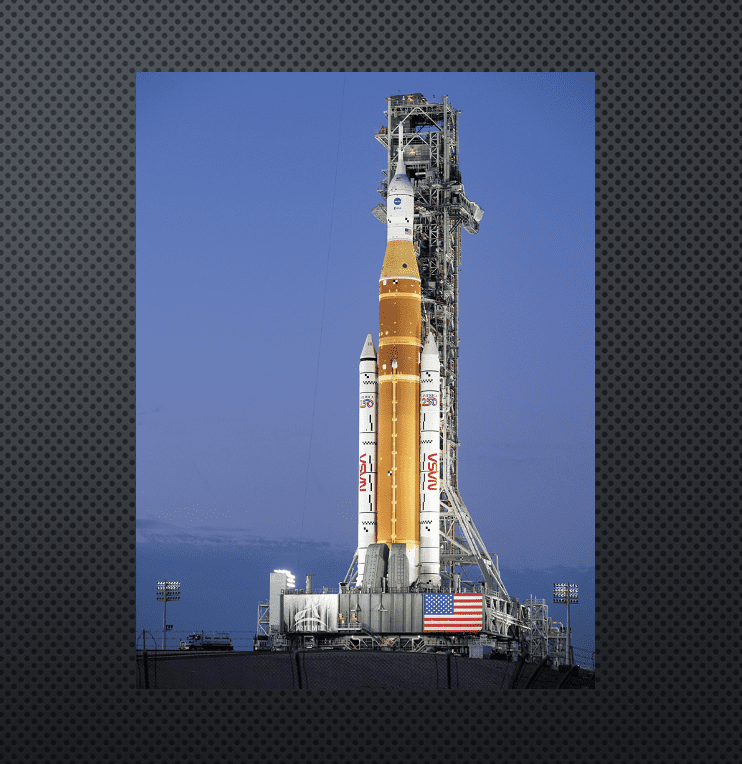
Artemis II and the Return to the Moon – Set for Launch 6:24pm TODAY
Think of Artemis as America’s return-to-the-Moon mission—but bigger, more modern, and meant to last.
Artemis is set to launch, weather permitting, around 6:40pm TODAY.
The Artemis Program is the United States’ effort to return humans to the Moon for the first time since Apollo 17, but with a very different goal than the missions of the 1960s and 70s. Led by NASA, Artemis aims not just to land astronauts briefly, but to establish a sustained human presence on the Moon, including landing the first woman and first person of color. The program is designed as a stepping stone to future missions to Mars, using the Moon as a nearby testing ground for new technologies, living systems, and exploration strategies.
Unlike the Apollo era, which focused on short visits and Cold War competition, Artemis is built around long-term exploration and international collaboration. It includes powerful new hardware such as the Space Launch System rocket, the Orion spacecraft capsule that carries astronauts, and plans for a small lunar-orbiting space station known as the Lunar Gateway. A key focus is the Moon’s south pole, where scientists believe water ice may exist—an important resource that could support human life and be converted into fuel for deeper space missions.
While Artemis is a space mission, its impact reaches Earth—driving jobs, new technology, and scientific discoveries that often find their way into everyday life. It also marks a new chapter in exploration, with the goal of sending humans deeper into space than ever before.
Haven’t astronauts already gone “farther”?
Astronauts have technically already traveled farther from Earth than Artemis crews will at first—during the Apollo Program, especially on Apollo 13, humans reached the greatest distance ever achieved. So when people say Artemis will send astronauts “farther,” they don’t mean in simple miles from Earth. Instead, they mean farther in what humans are able to do in space. The Artemis Program is designed for longer stays, repeated missions, and building infrastructure like the Lunar Gateway, rather than brief visits like Apollo.
- This will be the new human distance record from Earth.
- The crew will also lose radio contact with Earth for ~40–50 minutes while behind the Moon (deeper blackout than Apollo).
- They’ll see views of the Moon and Earth that no one has seen before.
It also means going farther into the unknown. Apollo missions landed near the Moon’s equator, while Artemis aims for the south pole, a region never explored by humans and believed to contain water ice. Just as important, Artemis missions will operate more consistently in deep space, beyond Earth’s protective environment, helping scientists and engineers understand how humans can live and work farther from home for longer periods. In that sense, “farther” is really about capability, endurance, and preparation—because the ultimate goal is not just the Moon, but future missions to places like Mars, which are vastly more distant and demanding than anything attempted before.
The program has already taken its first major step with an uncrewed test flight in 2022, and upcoming missions will send astronauts around the Moon and eventually land them on its surface again. Beyond exploration, Artemis is expected to drive technological innovation, create jobs, and inspire a new generation of scientists and engineers.
In simple terms, if the Apollo missions proved that humans could reach the Moon, Artemis is about learning how to live and work there—and using that knowledge to push farther into space than ever before.
Who’s Flying?
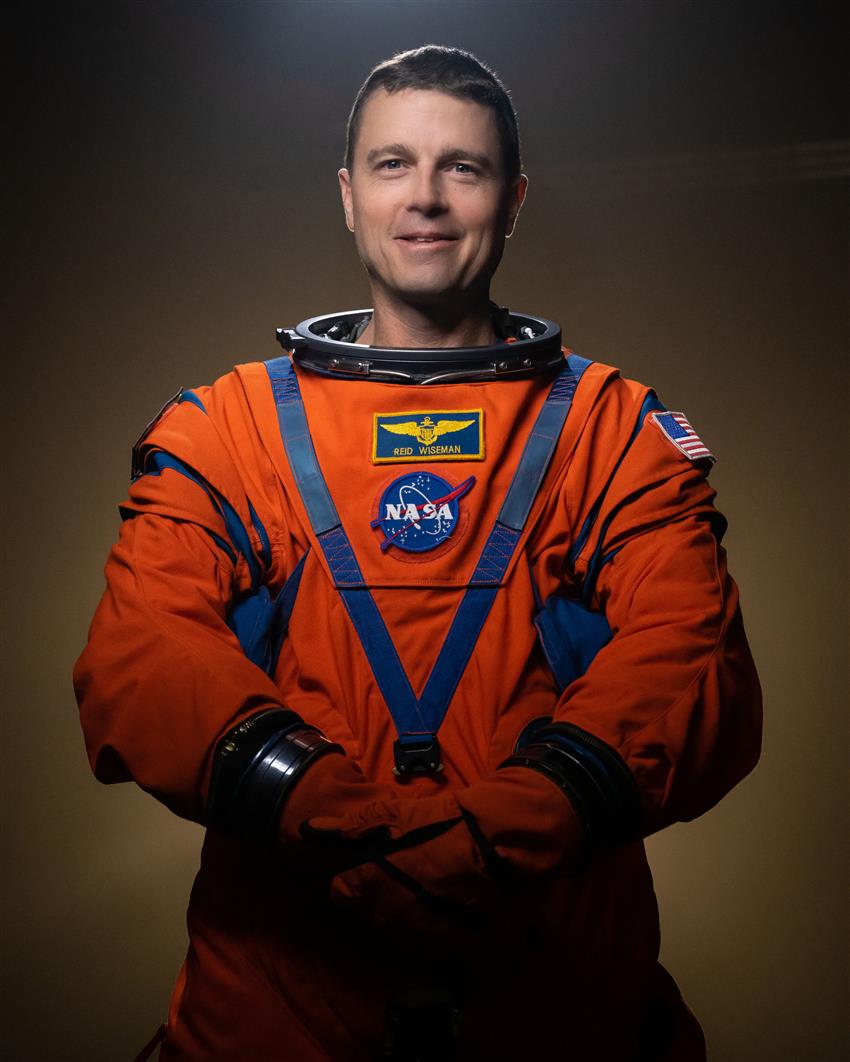
Reid Wiseman
Commander of Artemis II and a former International Space Station astronaut, Reid Wiseman brings leadership experience from both spaceflight and naval aviation.
Wiseman is 50, from Baltimore, Maryland, with degree in systems engineering from Rensselaer Polytechnic Institute
–
Victor Glover
Pilot of the mission and a U.S. Navy aviator, Glover became the first Black astronaut to live aboard the ISS for a long-duration mission.
Glover, 49, is from Pomona, California with a Bachelor’s degree from California Polytechnic State University; master’s degrees from Air University and the Naval Postgraduate School.
–
Christine Koch
Mission specialist and record-holder for the longest single spaceflight by a woman, Koch will be the first woman to travel to the Moon.
Koch, 47, is from Grand Rapids, Michigan (raised in Jacksonville, North Carolina), educated with Degrees in electrical engineering and physics from North Carolina State University.
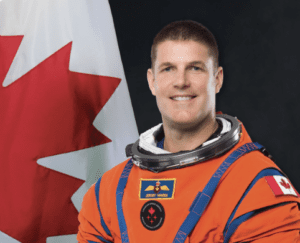
Jeremy Hansen
A Canadian Space Agency astronaut, Hansen, 50, will become the first Canadian to journey to the Moon, highlighting Artemis’ international partnership. From London, Ontario, Canada, with Degree in space science from the Royal Military College of Canada.
.
For Kiddos
NASA also offers a range of free, family-friendly resources tied to the Artemis mission. Through its STEM website and NASA Kids’ Club, children can play interactive games, watch videos, and explore space topics designed for different age levels. The agency also provides downloadable activity books with puzzles, mazes, and hands-on projects—like building model rockets or designing lunar landers—along with classroom-style lessons and challenges connected directly to the Artemis missions.
Artemis II at a glance:
- Mission: First crewed trip around the Moon since 1972
- Duration: About 10 days
- Distance: ~240,000 miles from Earth
- Goal: Test systems before landing mission (Artemis III)
If Artemis II is successful, the next mission—Artemis III—will attempt to land astronauts on the Moon for the first time in more than 50 years.
The Artemis II mission will be widely available to watch live. NASA will stream full coverage on its free platform, NASA+, as well as on its website, YouTube channel, and social media accounts. Coverage is expected to begin hours before liftoff, with the launch currently targeted for early evening on April 1. Viewers can also follow real-time updates, onboard views, and mission tracking throughout the flight online.