
Subscribe!
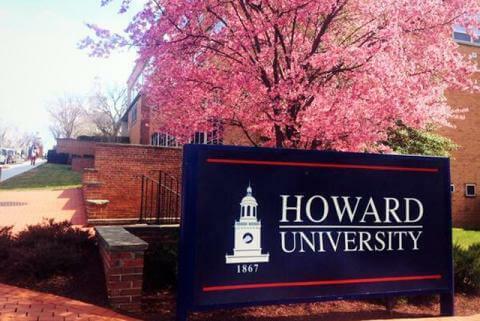
Howard University Cuts Costs, Draws Criticism over Student Disenrollment
Howard University has offered voluntary separation packages to approximately 600 eligible faculty and staff members as the institution confronts financial pressures involving tuition revenue, student borrowing and research funding.
The offer comes during a turbulent summer for the university. Howard recently moved to disenroll 502 incoming students who had not met a July deadline to establish a tuition-payment plan. Approximately 200 of those students were later reinstated.
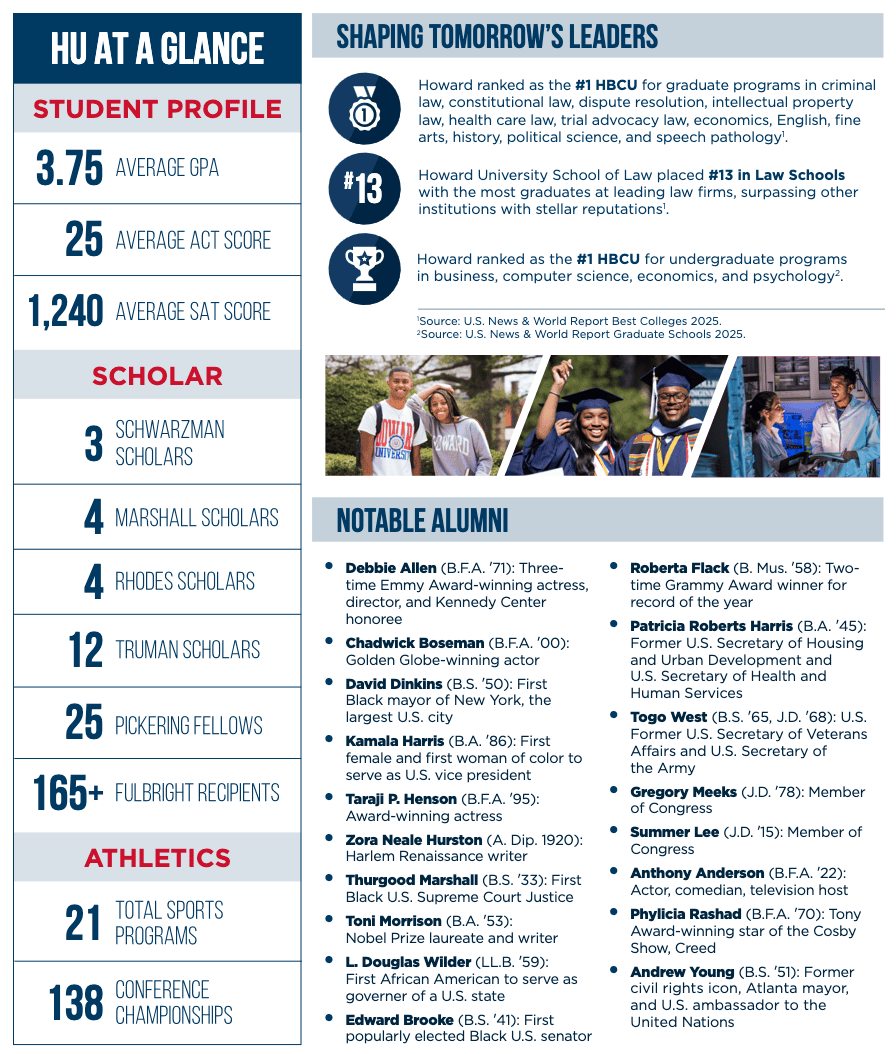
Founded in Washington, D.C., in 1867, Howard is one of the nation’s most historically and culturally significant historically Black universities—widely known as “The Mecca.” Its alumni include Supreme Court Justice Thurgood Marshall, Nobel Prize-winning author Toni Morrison, former Vice President Kamala Harris and actor Chadwick Boseman. For generations, Howard has been a major center of Black scholarship, professional advancement, political leadership and cultural influence.
Interim President Wayne A. I. Frederick told The Chronicle of Higher Education that the voluntary buyout program is intended to help Howard “refresh” its workforce as it enters a new chapter as a Research 1 university. He also acknowledged several pressures complicating the university’s long-term financial planning, including new limits on Parent PLUS borrowing and a shortage of research grants.
The voluntary retirement incentive was announced to employees in June. It is available to full-time tenured faculty members and benefits-eligible staff who have worked continuously at Howard for at least 10 years and whose combined age and years of service total at least 70.
About 16 percent of Howard’s workforce qualifies for the offer. Eligible employees will have until sometime this fall to apply, although the university has not publicly provided a specific deadline.
Frederick said the proposal began taking shape last fall after he returned to Howard as interim president and reviewed the university’s finances, available cash, endowment and workforce data. The Board of Trustees approved the separation package in June.
Howard has not established a target for how many employees it hopes will participate. Frederick said the program will also give administrators an opportunity to evaluate the composition of the faculty and determine which academic fields should receive greater attention in the years ahead.
The buyouts and the tuition controversy are closely connected to Howard’s broader financial concerns. Frederick has defended requiring incoming students to demonstrate how they will pay their bills, arguing that students who begin without a workable financial plan are less likely to graduate and may leave college carrying substantial debt. Lower retention and graduation rates, in turn, place additional pressure on Howard’s heavily tuition-dependent budget.
Frederick said Howard must avoid relying on increasingly large incoming classes simply to generate more revenue. Instead, he said, the university is examining its academic priorities, staffing and spending as it determines how best to position itself for long-term stability.
___
Reaction to Disenrollment as a Strategy
Outside criticism has focused primarily on Howard’s handling of the students rather than its employee-retirement program. Marybeth Gasman, a Rutgers University expert on higher education and minority-serving institutions, called the mass disenrollment a “bad look for the school.” She said Howard should have reviewed the circumstances of each student before removing more than 500 freshmen at once—not afterward.
Questions were also raised about the deadlines communicated to students. Disenrollment notices reportedly cited a July 10 deadline, while Howard’s public financial-services page listed an August 3 fall-payment deadline and said enrollment in the university’s payment plan began July 15. A senior Howard administrator later acknowledged that some students had submitted documentation or attempted to satisfy the requirements before receiving their notices and said the university needed to commit additional resources to reviewing the cases.
New York responded by offering affected students access to participating SUNY and CUNY campuses, including expedited or guaranteed admission and an $800 credit. The University of the District of Columbia also extended its application deadline to assist displaced students.
The voluntary employee buyouts, meanwhile, are not unique within higher education. Universities including Duke, Syracuse and Temple have recently used similar programs to reduce long-term payroll expenses and redirect positions toward changing academic priorities. Howard has also used retirement incentives previously. What distinguishes the present situation is the timing and combination of the two actions: Howard is simultaneously seeking to reduce personnel costs and declining to carry hundreds of incoming students whose tuition funding was not firmly established. It represents an unusually forceful decision to prioritize long-term financial discipline over maximizing enrollment.
Founded in Washington, D.C., in 1867, Howard is one of the nation’s most historically and culturally significant historically Black universities—widely known as “The Mecca.” Its celebrated graduates include former Vice President Kamala Harris; Thurgood Marshall, the first Black justice of the U.S. Supreme Court; Nobel Prize-winning novelist Toni Morrison; “Black Panther” star Chadwick Boseman; and actress Taraji P. Henson. Howard does not publicly report how many of its alumni currently live in Rhode Island, which is included in Region I of the Howard University Alumni Association.
Rhode Island connections
Providence’s Ethel Robinson, the first Black woman to graduate from Brown University in 1905, later taught English at Howard and helped mentor the students who founded Alpha Kappa Alpha. Brown and Howard also participate in the Brown-founded Leadership Alliance, and two graduates of Brown’s Rhode to Medicine program are now attending Howard’s medical school.
About Howard University
How Howard describes itself:
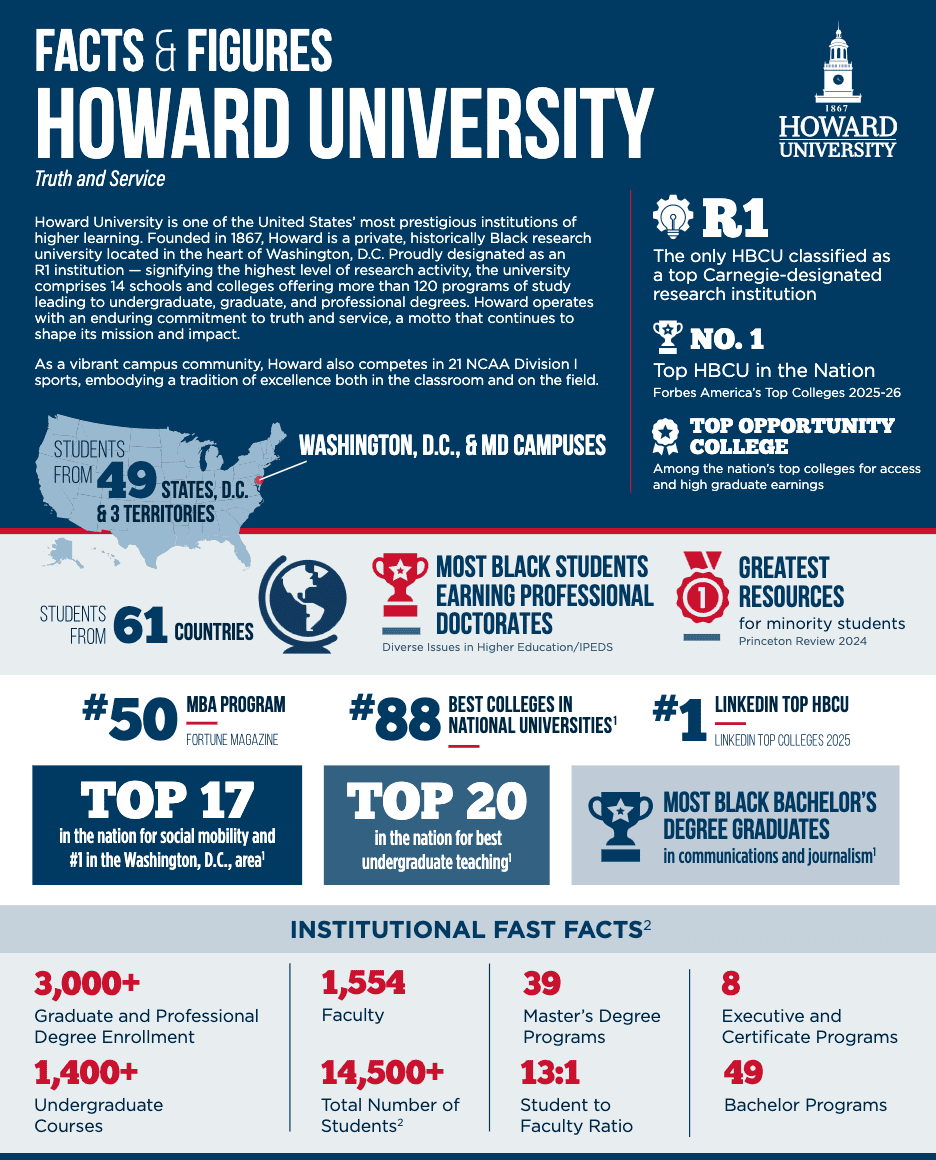
Students pursue 143 programs of study leading to undergraduate, graduate and professional degrees. The University operates with a commitment to Excellence in Truth and Service and has produced one Schwarzman Scholar, three Marshall Scholars, four Rhodes Scholars, 12 Truman Scholars, 25 Pickering Fellows and more than 165 Fulbright recipients. Howard also produces more on-campus African American Ph.D. recipients than any other university in the United States.
Howard is a leader in STEM fields. The National Science Foundation has ranked Howard as the top producer of African-American undergraduates who later earn science and engineering doctoral degrees. The University also boasts nationally ranked programs in social work, business and communications. To date, we have produced three Schwarzman Scholars, four Marshall Scholars, four Rhodes Scholars, 12 Truman Scholars, 25 Pickering Fellows and more than 165 Fulbright recipients.
The College of Medicine is internationally regarded for its illustrious legacy of training students to become competent and compassionate physicians who provide health care in medically underserved communities at home and abroad. The College is a national leader in studying health disparities among people of color and is one of America’s top institutions for training women surgeons. The Howard University Health Sciences division includes the Howard University Hospital and the Colleges of Dentistry, Pharmacy, and Nursing and Allied Health Sciences.
For more than 150 years, the Howard University School of Law has served as an advocate for social justice and as an architect of social change. It has produced more than 4,000 social engineers including the first African-American Supreme Court Justice, noted legislators, civil rights attorneys, mayors and public officials across the United States. It is the No. 1 law school for African Americans ranked by preLaw magazine.
The University’s motto Veritas et Utilitas, Truth and Service, represents a key part of our identity. The more than 14,000 undergraduate and graduate students dedicate hundreds of hours each year to service in nearby LeDroit Park, around the nation and throughout the world. Over the U.S. Peace Corps’ 50-year history, more than 200 Howard graduates have served as volunteers around the globe, the highest number among historically-Black colleges.
The University remains committed to further enhancing its strategic positioning as one of the top research universities in the nation. As we celebrate 154 years, we are uniquely positioned to have the next 150 years as glorious as the past.