by Master Chef Walter Potenza, contributing writer
On the beautiful excess of high summer, eating before it ends, and one dish that holds the whole season in a pan.
Friends:
August has a secret you might not want to face. It is still summer—hot, heavy, and full of fruit—but the evening light has changed since July. Now, the sun sits lower and casts a golden glow for an hour before night. Tomatoes, peppers, and corn are still ripening, but you start to feel something between urgency and sadness, a sense that you should savor these foods more carefully. August asks for your full attention in a way July never did. July felt easy to enjoy without thinking. August does not.
This is the month when cooks learn what abundance really means, and it is not always what you expect. Abundance does not mean things are easy. It can feel like a kind of pressure. In August, market stalls are packed with eggplant, peppers, late-season zucchini, and tomatoes in every color and shape, piled high and sometimes bruised at the bottom, smelling of sun and earth and sweetness. The risk is buying or cooking too much and crowding your plate. The real skill in August is holding back—choosing just a few ingredients and letting them shine, instead of hiding them with too many flavors or techniques.
The fig in August is the surest sign that summer is making its slow exit. It offers itself completely — nothing harder, nothing left to ripen — and it asks only that you pay attention. The fig in August is the clearest sign that summer is slowly ending. It is fully ripe, with nothing left to mature, and asks you to notice it before it disappears. Purple, large, meaty. The grill’s best friend this month.
Hot peppers. Hot peppers are fully ripe now. They are sweeter than those from July, but still have heat.
Corn. This is the last corn of the season. Grill it in the husk and skip the butter.
Okra. This is okra’s peak month. Grill it whole or fry it until crisp, but never stew it without care.
Shishito peppers. Blister shishito peppers in a dry pan and salt them right away. About one in ten will be spicy.
Basil. This is the last big basil harvest before the weather cools. Make pesto now and freeze it for later.
Eggplant is at its best in August. All summer it has grown larger and denser, ready to soak up fat, heat, and smoke more than the smaller ones from June. Take a large eggplant, cut it in half lengthwise, score the flesh in a crosshatch, rub it with olive oil, cumin, and smoked paprika, and place it cut-side down on the hottest part of the grill. Leave it alone for eight minutes. Do not touch or check it. When you lift it, the cut side will be charred and caramelized, almost like jam, and the inside will be silky. Eat it with yogurt and herbs, with bread, and make it the main part of your meal, not just a side or garnish.
The sweet pepper: char whole directly over a gas flame or under a grill until its skin blisters and blackens completely, then seal in a bowl covered with plastic film for twenty minutes so the steam loosens the skin, then peel, open, seed, and lay flat. This pepper, dressed with nothing but good olive oil and a little salt and perhaps a torn anchovy or two, is one of the great simple things in Mediterranean cooking. It is the foundation of a dozen dishes and perfect on its own, and August is when the pepper is fat enough and sweet enough to make the effort entirely worthwhile.
Fruits to Consider for August
Figs. Peak of second season: Mission, Kadota, Brown Turkey. Eat immediately.
Late peaches. Now, slower-ripening peach varieties are in season. They have deeper flavor and more sugar.
Plums. It is the height of the plum season. Italian prunes that split at the stem are perfectly ripe.
Blackberries. Wild blackberries are at their best now. They are bittersweet and will stain your hands.
Melons. Both cantaloupe and honeydew are fully sweet now. Serve them very coldly.
Grapes. Early wine and table grapes are arriving now. They are sweet, thin-skinned, and dense.
Nectarines. Nectarines are better than peaches for cooking because they hold their shape and their flavor becomes more intense.
Watermelon. Watermelon is at its sweetest now. Eat it outside and don’t worry about the mess.
August figs are not like the firm, careful figs from late July. They are soft at the stem, heavy in your hand, and if truly ripe, they may drip a bead of honey from the base. When you press them gently, they collapse, and their skin is so thin you barely notice it. A Black Mission fig, when torn open, shows deep burgundy flesh, while a Kadota is pale gold like late afternoon light. Neither needs anything added. Both should be eaten within a day of buying, which is why they rarely travel well and why the farmers market is the best place to find them. Cut them in half, put them on fresh ricotta toast, drizzle with honey, and ask yourself if you’ve ever had a better breakfast. You probably haven’t.
Blackberries capture the feeling of August: sweet with a hint of bitterness, fragrant with something wild. They stain your fingers, lips, and clothes without apology. Fold them into a crumble with the last plums of the season. The filling should be tart enough to need a little sugar, and the oat topping should be buttery in the middle and crisp at the edges. Eat it warm with cold cream. This dessert tastes like the end of something, which is exactly what August feels like.
Suggested Dishes of the Month
Grilled eggplant with yogurt and herbs. Charred eggplant halves with silky flesh inside, spread onto cold yogurt, finished with za’atar and a drizzle of olive oil. Serve with bread.
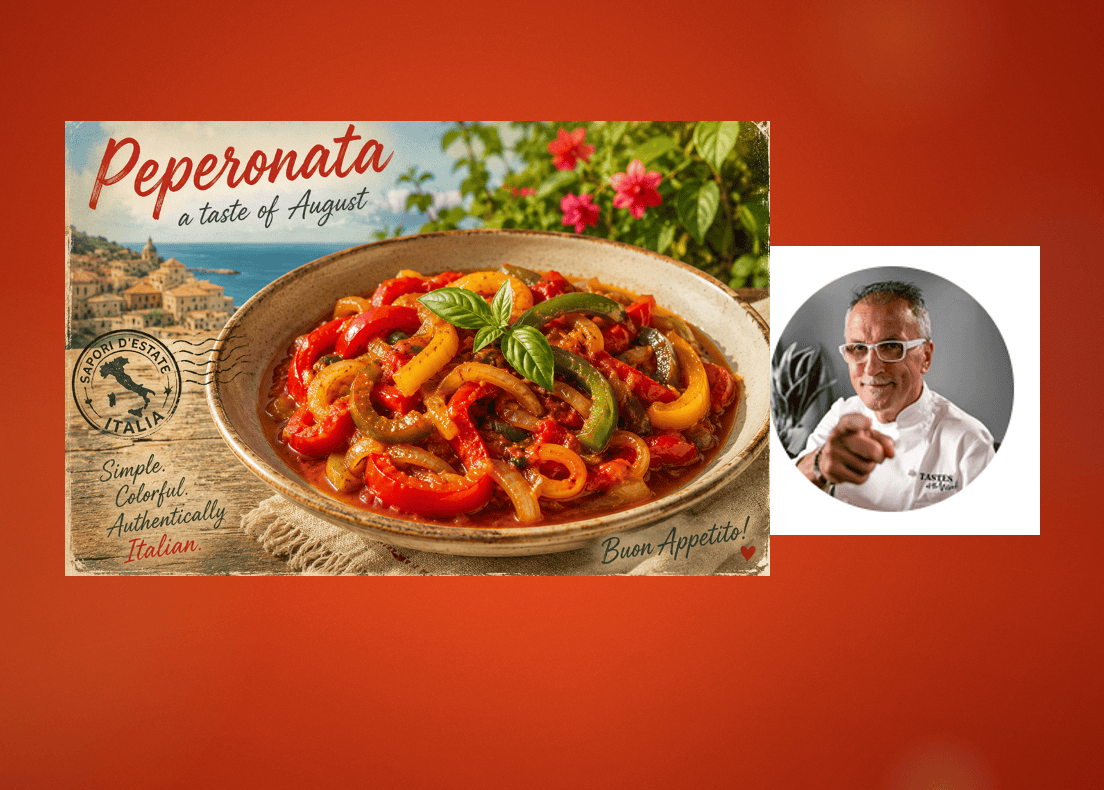
Peperonata. Sweet peppers, onions, and tomatoes are braised slowly in olive oil until everything melts together. Serves as a side, a sauce, or the main event on bread.
Figs with ricotta and honey on toast. Place torn ripe figs over a thick layer of fresh ricotta. Add dark honey, black pepper, and a few thyme leaves. This is the best way to enjoy an August morning.
Grilled corn with chili and lime butter. Grill husked corn until it is dark and spotted. Roll it in butter mixed with lime, chili, and a little garlic. Eat it right away, preferably outside.
Tomato and roasted pepper salad. Layer thick tomato slices with charred and peeled peppers, torn basil, capers, olives, and good olive oil. This is the perfect late-summer antipasto.
Blackberry and plum crumble. Use tart fruit with just a little sugar, topped with a thick oat-and-butter crust. Bake until the filling bubbles and the top is golden. Eat it warmly with cold cream.
August Recipe to Try
Summer Peperonata
This southern Italian sweet pepper braise gets better the longer it sits and is very easy to make.
Ingredients (serves 4)
6 large, sweet peppers, mixed colors
5 tbsp extra virgin olive oil
2 medium onions, thinly sliced
3 garlic cloves, sliced
14 oz. (400 g)) ripe tomatoes, roughly chopped
2 tbsp red wine vinegar
1 tsp sugar
Small handful of basil, torn.
Kosher salt and black pepper
Crusty bread or grilled polenta, to serve
Method
Halve and seed the peppers, then cut them into wide strips, not too thin. They will shrink a lot as they cook. Try not to cut them too small; large pieces give you something to bite into, and texture is just as important as flavor in this dish.
Warm the olive oil in the widest, heaviest pan you own over medium heat. Add the onions with a generous pinch of salt and cook them slowly, stirring occasionally, for a full fifteen minutes. They should become deeply golden and sweet-smelling, almost jammy. Do not rush this. The onion is the foundation, and it cannot be hurried.
Add the garlic and cook for two minutes more, until fragrant. Then add the peppers, stir everything together, and let them cook over medium-low heat for twenty minutes, turning them every few minutes. The peppers will soften, collapse slightly, and begin to take color at the edges.
Add the tomatoes, vinegar, and sugar. Stir well and cook uncovered for another twenty to twenty-five minutes, until the tomatoes break down, and the mixture thickens into a glossy braise. Season with salt and black pepper. Taste it. The agrodolce balance, with sweetness from the peppers and onion and acidity from the tomatoes and vinegar, should taste lively, not dull.
Remove from the heat and tear the basil over the top. Let it rest for at least ten minutes before serving. You can serve it warm, at room temperature, or cold the next day straight from the fridge, when it will taste even better. Enjoy it over grilled bread, with grilled meat or fish, or spooned over soft polenta as the main dish. It works well in all three ways.
Peperonata is the perfect recipe for August because it captures the month in a pan: sweet peppers at their best, ripe tomatoes melting into them, and that southern Italian balance of sweet and sour that the Mediterranean has perfected over centuries. It also keeps very well, which is important in August when cooking in the heat can be tiring. Make it on Sunday evening and enjoy it all week.
How to choose the best peppers:
The Summer Pepper Primer: How to Pick the Perfect Pod
Summer is the best time to enjoy peppers. Whether you like the sweet crunch of bell peppers or the heat of chilies, they are tastiest and most affordable now. Still, seeing piles of colorful peppers at the farmers’ market can feel overwhelming. This quick guide will help you pick the best ones all season.
1. Judge by Weight, Not Size
When choosing a pepper, pick it up and see how it feels. A good pepper should feel heavy for its size. This means it has plenty of water and thick flesh so that it will be crisp and juicy. If it feels light or hollow, it is probably old or dried out inside.
2. The Skin Test
Check that the skin is tight, shiny, and smooth. If you see dullness, wrinkles, or soft spots, the pepper may be old or stored badly. A few creases are normal, especially on long chilies, but the skin should feel firm and bounce back when you press it gently.
3. Check the Stem and Calyx
Look at the green cap and stem. They should be fresh, green, and bend easily. If the stem is brown, dry, or shriveled, the pepper is old. A bright, fresh stem means the pepper was picked recently and will stay fresh longer at home.
4. Color is Flavor (Not Just Ripeness)
This is where many people get confused. Some green peppers are just unripe red, yellow, or orange peppers, and they get sweeter as they ripen and change color. But some types stay green even when fully ripe. Check the signs or ask about the variety if you want a certain flavor or sweetness.
Green Peppers: Picked early, they have a grassy, slightly bitter, and vegetal flavor. They are excellent for stuffing or sautéing.
Red, orange, and yellow peppers stay on the plant longer, so they are sweeter, fruitier, and have more vitamin C. As a rule, the deeper the color, the sweeter the pepper. Choose ones with even color and no big green spots. Red peppers are great for salads, snacking, or roasting. Orange and yellow peppers taste good grilled, in stir-fries, or in salsas, where their mild flavor and bright color stand out.
5. The “Four-Lobed” Myth
Some people say bell peppers with four lobes are sweeter and better for eating raw, while three-lobed ones are better for cooking. There is some truth to this, since four-lobed peppers often have more seeds and thicker walls, but it is not a reliable rule. Choose peppers that feel firm and heavy for their size. This is a much better sign of freshness and flavor than counting lobes.
6. For Hot Peppers (Chilies)
If you are buying jalapeños, serranos, or habaneros, look for tiny white stretch marks, called corking, on the skin. These thin, web-like lines show the pepper grew quickly and often mean it is hotter. For most hot peppers, smaller ones are usually spicier. Thick or shiny skin can mean a milder pepper, while thin, dull, or slightly wrinkled skin can mean more heat. If you are not sure how hot a pepper is, gently smell it. The hottest ones often have a strong, sharp smell. You can also ask the vendor for advice or a heat comparison to help you pick the right spice level for your recipes.
Storage Tip for Home
When you bring your peppers home, wait to wash them until you are ready to eat them. Moisture can cause mold. Keep them dry in a perforated plastic bag in your fridge’s crisper drawer, and they will stay crisp for up to a week. If you do not have a perforated bag, use a paper bag or leave a plastic bag slightly open so extra moisture can escape. This will help your peppers stay fresh and crunchy.
This summer, take time to touch, look at, and smell your peppers. The best ones have a fresh, grassy, sweet smell near the stem. Trust your senses, and you will always pick flavorful peppers.
___
READ “Ask Chef Walter” every Sunday in RINewsToday
Master Chef Walter Potenza
There is a constant, recognizable thread in the career of Walter Potenza to elevate the level of Italian culinary culture in the United States. Besides his unquestionable culinary talent and winning business perspective, Chef Walter has been a relentless educator with passion and knowledge who defeats stereotypes. His life, career, and values are a model, an example to follow by any chef of Italian gastronomy working outside Italy.
Chef Walter appears regularly on National and International Networks such as Food Network, ABC, CBS, NBC, RAI, FOX, and Publications such as NY. Times, Washington Post, Wall Street Journal, Food & Wine, Saveur, Gourmet, and several Italian media outlets.