
Subscribe!
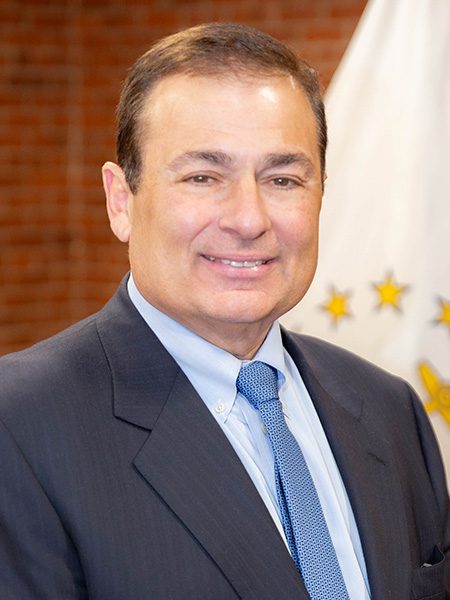
Court Rules Shekarchi can Seek—and Serve on—RI Supreme Court
Superior Court judge rejects Ethics Commission’s revolving-door interpretation; Judicial Nominating Commission interview moves forward Tuesday
Summary story
Rhode Island Superior Court Judge Richard A. Licht ruled Monday that former House Speaker K. Joseph Shekarchi was legally permitted to apply for an open seat on the Rhode Island Supreme Court.
The ruling goes beyond pausing or dismissing the Ethics Commission’s investigation on a procedural issue. It directly decides the underlying legal question in Shekarchi’s favor: If he is nominated and confirmed, he may serve on the state’s highest court without violating Rhode Island’s revolving-door ethics rules.
The ruling does not guarantee Shekarchi the position. He is one of five candidates scheduled to be interviewed TODAY – Tuesday – by the Rhode Island Judicial Nominating Commission.
The Ethics Commission could appeal Licht’s decision—potentially placing the question before the Rhode Island Supreme Court itself.
The Judicial Nominating Committee set to meet today at 4pm to begin interviewing 5 candidates, including Rep. Shekarchi – they will select 3-5 names to present to the Governor.
Expanded story
Former Rhode Island House Speaker K. Joseph Shekarchi may continue seeking—and, if ultimately selected, may serve in—a lifetime position on the Rhode Island Supreme Court, following a decisive Superior Court ruling issued Monday.
Judge Richard A. Licht rejected the Rhode Island Ethics Commission’s interpretation of state revolving-door restrictions and declared that Shekarchi’s candidacy falls within an exception allowing elected state officials to seek another constitutional office.
In the concluding paragraph of his decision, Licht wrote:
“Based on the foregoing analysis, this Court declares that Mr. Shekarchi, as an elected member of the House of Representatives, was permitted to apply to the JNC for the position of Associate Justice of the Supreme Court pursuant to Article 10, Section 4 of the Rhode Island Constitution and, if nominated and confirmed, he may serve in that position and cannot be deemed to have violated Regulations 1.5.1 and 1.5.2. Counsel shall confer and prepare the appropriate order and judgment.”
The decision is listed by the Rhode Island Judiciary as K. Joseph Shekarchi v. Rhode Island Ethics Commission, PC-2026-3423.
The state’s ethics code generally prohibits an elected state official from seeking or accepting employment with another state agency while in office and for one year after leaving office.
However, the same law contains an exception stating:
“Nothing contained herein shall prohibit a state elected official from seeking or being elected for any other constitutional office.”
The Ethics Commission argued that the exception applied only to officials seeking election to constitutional offices such as governor, attorney general or secretary of state—not to someone seeking an appointment to the Supreme Court.
Shekarchi’s attorneys argued that the law deliberately uses the words “seeking or being elected,” creating separate pathways. Under their interpretation, a person may seek a constitutional office even when that office is filled through appointment rather than a public election.
Licht agreed with Shekarchi.
The ruling therefore does not merely end—or at least suspend—the ethics proceeding. It answers the central question that triggered the complaint: A sitting state legislator may apply for the Rhode Island Supreme Court and, if nominated and confirmed, may accept the position without violating the revolving-door provisions cited against Shekarchi.
What happens Today
Shekarchi stepped down as House speaker on May 7 but remains the state representative for House District 23 in Warwick.
He is one of five candidates scheduled to be publicly interviewed today for the vacancy created by the March 27 retirement of Supreme Court Associate Justice Maureen McKenna Goldberg.
The other candidates are Christopher Bush, Judge Laureen D’Ambra, Judge Luis Matos and John Roberts.
Following the interviews, the Judicial Nominating Commission is expected to send three to five names to Gov. Dan McKee. The governor will select a nominee, who must receive the separate advice and consent of both the Rhode Island Senate and House of Representatives.
“The clear and unambiguous rule of law won today,” Shekarchi said following the decision. He said the ruling reaffirmed that elected officials may be considered for appointment to the Rhode Island Supreme Court and that he now looks forward to continuing through the selection process.
The complaint and the precedent
Michael J. Yelnosky, a professor and former dean at Roger Williams University School of Law, filed the ethics complaint on May 7—reportedly at 4:13 p.m., while Shekarchi was still delivering his farewell address as House speaker.
Yelnosky argued that Shekarchi should be required to leave the General Assembly and wait one year before applying for any state court vacancy.
The complaint came despite the Ethics Commission’s handling of a nearly identical situation in 2020, when then-Senate Judiciary Committee Chairwoman Erin Lynch Prata moved directly from the General Assembly to the Rhode Island Supreme Court.
Although Ethics Commission staff opposed Lynch Prata’s move, the commission itself voted 5-2 against that position, allowing her candidacy to proceed. She was subsequently nominated by then-Gov. Gina Raimondo and confirmed to the court.
Yelnosky maintained that the 2020 vote did not formally settle the broader legal question because the commission never issued a written advisory opinion establishing a precedent.
“Whether the revolving door prohibition applies to appointments to the Supreme Court remains an open question, and that question should be resolved,” Yelnosky said when he filed his complaint.
It now has been resolved—at least at the Superior Court level—and the answer was a categorical rejection of Yelnosky’s legal interpretation.
The Ethics Commission voted 6-1 on June 2 to begin an investigation and later voted 5-1 against Shekarchi’s attempt to have the complaint dismissed. Shekarchi then went to Superior Court, where the investigation was placed on hold pending Licht’s decision.
A question for Roger Williams University School of Law
Yelnosky had the right, as an individual citizen and attorney, to file an ethics complaint. There is no public indication that Roger Williams University or its law school formally authorized or endorsed it.
That distinction, however, was rarely made clear.
Yelnosky was consistently identified as a Roger Williams University School of Law professor and former dean. That affiliation gave his complaint the added authority of Rhode Island’s only law school—even though this was his personal legal challenge, filed after he had already publicly opposed Shekarchi’s candidacy.
This was not simply a detached academic request for clarification. It was an action by an individual who had already taken a public position against Shekarchi’s candidacy to use the ethics process to prevent that candidacy from moving forward.
Roger Williams University School of Law, the state’s only law school, did not unmistakably clarify that Yelnosky was acting only for himself, and not have those actions so closely blended with the school’s institutional credibility.
RWU Law reports more than 3,500 alumni. Official employment reports show that nearly 47 percent of employed graduates just in the classes of 2021 through 2024 took jobs in Rhode Island—suggesting that the school’s alumni footprint in the state likely numbers more than 1,500.
Yelnosky spoke to a local television station saying that he wasn’t surprised and that he felt the judge was skeptical of the Ethics Commission’s arguments.
Yelnosky said he wanted the legal question resolved. His complaint accomplished that—but the court’s answer was not the one he sought.
Is the issue settled permanently?
For Shekarchi, the ruling is clear and decisive unless it is stayed or overturned on appeal.
For future candidates, it establishes an important judicial interpretation: Sitting state elected officials may seek appointment to the Rhode Island Supreme Court under the constitutional-office exception.
Because this is a Superior Court decision rather than a Rhode Island Supreme Court opinion, it does not yet create final, binding appellate precedent for every future case. The Ethics Commission may appeal, and Licht himself previously predicted that the dispute would probably reach the state’s highest court regardless of his decision.
“We will carefully review the Superior Court’s decision and then, within all applicable filing periods, make a decision as to next steps,” Ethics Commission Executive Director and Chief Prosecutor Jason Gramitt said in a statement.
Unless the ruling is reversed—or the General Assembly changes the law—it provides a clear legal pathway for Shekarchi and future state legislators seeking appointment to the Rhode Island Supreme Court.
The full decision is available through the Rhode Island Judiciary’s Opinions, Decisions and Orders page
___
About Representative K. Joseph Shekarchi
The bio maintained by the State of Rhode Island on the House of Representatives website:
K. Joseph Shekarchi (D) served for more than five years as Speaker of the Rhode Island House of Representatives, first being elected to the role by his colleagues in January 2021 and then re-elected in January 2023 and January 2025. He stepped down from the role in May 2026.
From November 2016 through 2020, he served as House Majority Leader; previously, he was Chairman of the House Labor Committee. He has served the residents of District 23 in Warwick since first being elected in November 2012.
Shekarchi pledged to make housing issues the cornerstone of his legislative initiatives; after becoming Speaker in 2021, he shepherded more than 60 bills into law as part of his efforts to address the state’s housing crisis. Under his leadership, Rhode Island created its first-ever dedicated funding stream for affordable housing; banned housing discrimination against individuals who receive government assistance to pay their rent; created the state’s first Department of Housing, headed by a cabinet level secretary; and invested historic amounts of state funding to address housing and homelessness, including a $120 million bond referendum, authorized by the General Assembly and approved by voters in 2024, to support the creation of affordable housing.
In the 2025 session, health care was a major focus of his agenda. The state budget enacted into law included more than $40 million toward Medicaid rate increases for primary care providers, $38 million in additional funding for hospital reimbursement rates and direct support payments, and $12 million to increase reimbursement rates at nursing homes as part of the revision to safe staffing laws.
He has also been a champion for healthcare equity and privacy, advocating for passage of the 2024 Health Care Provider Shield Act, which protects medical providers who provide transgender and reproductive health care services in Rhode Island from civil or criminal suits from other states or their residents; the 2023 Equality in Abortion Coverage Act, which ensures insurance coverage for abortion care to individuals on Medicaid as well as state employees; and the Reproductive Privacy Act, which codifies in state law the privacy rights and reproductive freedoms guaranteed by the United States Supreme Court in the case Roe v. Wade and its progeny.
In the 2023 session, Shekarchi championed a state budget for FY24 that included the elimination of tangible taxes for 75 percent of the state’s small businesses. He also led efforts to create a hub for the life science sector in Rhode Island, successfully proposing a $45 million investment for the development of wet lab incubator spaces and support grants, loans, business development and incentives to grow the industry.
In 2022, Shekarchi successfully advocated for the permanent phase-out of the car tax, eliminating it one year ahead of schedule; a one-time child tax rebate of $250 per child, for up to three children per family, for eligible Rhode Island families; an increase of the “circuit breaker” tax credit available to qualifying elderly and disabled residents; and to raise the amount of annual pension income exempt from state taxation.
Shekarchi enacted legislation in 2022 to substantially increase renewable energy production and supply, as well as a bill to increase new offshore wind capacity. This followed up on the achievements of a year earlier contained within the Act on Climate, one of the most influential environmental bills approved by the General Assembly in decades.
Shekarchi has also been a strong proponent of economic development. In 2024, he spearheaded a new law that was based on feedback from Citizens Bank, one of the state’s largest employers, and other banks that Rhode Island’s corporate income tax methodology was not aligned with neighboring states. Shekarchi moved quickly to enact changes to the state’s banking tax structure . During the 2021 legislative session, he played a key role in negotiating the agreement between the State of Rhode Island, IGT and Bally’s Corporation, which resulted in a $250 million economic development plan, secured 1,100 well-paying Rhode Island jobs, and proactively protected Rhode Island’s third-largest source of revenue. Previously, he sponsored the Qualified Jobs Incentive Act, which created more than 3,000 new well-paying private sector jobs with no fiscal impact to the state.
In 2021, Shekarchi championed the passage of landmark pay equity legislation, the passage of which had been sought by the bill’s sponsors and supporters for years. The legislation comprehensively addresses wage discrimination based on gender, race, religion, or sexual orientation.
Under Shekarchi’s leadership, legislation was enacted into law in 2021 which set safe minimum staffing levels for Rhode Island nursing homes while providing funding to raise wages for direct care staff to help recruit and retain a stable and qualified workforce; and made the Rhode Island Promise program permanent, which provides up to two years of free tuition at Community College of Rhode Island for eligible graduating high school seniors. He also championed the passage of the Hope Scholarship Pilot Program Act, which provides the cost of two years of tuition and mandatory fees for eligible students during their junior and senior years at Rhode Island College.
He is a graduate of Mount St. Charles Academy, Class of 1980, and graduated from Suffolk University in 1984. He returned to Suffolk to earn his law degree in 1990. In addition to his duties as a legislator, Shekarchi is a successful attorney in private practice for over 30 years. He has been the legal counsel to the Warwick Housing Authority for over 25 years and is a former Warwick solicitor. Shekarchi is a lifelong Warwick resident.
ANYONE who thinks this is justice is as corrupt as this whole State!! All Democrats deserve what you will NEVER get!
Licht should have recused himself. He was selected despite R.I. law. Two wrongs don’t make a right.
Licht was chosen despite the law.
I don’t have a dog in this fight. This isn’t about being qualified. The law is the law.
Now it will be ” well, we’ve already set a precedent”.
This isn’t a Rhode Island thing nor is it a political party thing. All you have to do is read any news source.
When we have a “leader” who flouts every law ever written, this is what happens. If one can do it, all can do it.
Politics has always had a degree of corruption. If someone can find a way around a law, they will use it. It used to be done on the sly. Now it’s out in the open, thrown in our faces, and there’s not a thing we can do about it. We can shout, scream, protest but we are being ignored and laughed at.
People are pissed off. Read the comments on articles. Well written & on point but put the comment in an email and send it to their elected official. I doubt that most people do.
The squeaky wheel sometimes gets greased.
The legal system is in full function on this – people may not like the result but legal considerations are moving along. The final decision should spell this out for other situations with candidates that come in the future.