
Subscribe!
Ask Chef Walter: Summer Pasta Salads – 10 Suggestions to Make – Walter Potenza
by Master Chef Walter Potenza, contributing writer
Ten suggestions for making great pasta salads this summer. These tips, rooted in Italian and Mediterranean tradition will set your pasta salads apart.
Readers,
Summer in Rhode Island arrives with urgency: farmers’ markets fill rapidly, basil grows quickly in the garden, and each June my students ask, “Chef, how do I make a pasta salad that actually tastes good?” Pasta salad is, in fact, one of the most misunderstood dishes in the American summer kitchen. Through the years of professional experience, I have encountered every variation of pasta salad, from the inspired to the regrettable.
To help you create a truly delicious summer pasta salad, I have gathered 10 essential principles to guide you from start to finish. You will learn how to select the right pasta shape, cook and rinse it for perfect texture, layer flavors with quality olive oil and fresh acids, build color and contrast, and finish with herbs and seasoning for the most vibrant results. These tips, rooted in Italian and Mediterranean tradition and refined through decades of cooking, teaching, and thoughtful eating, will set your pasta salads apart.
Start with the Right Pasta Shape
The choice of pasta shape is significant. The shape determines how the dressing adheres, how vegetables are incorporated, and the overall texture of each bite. I recommend fusilli, farfalle, rotini, or cavatappi—shapes with ridges, curves, or spirals that effectively capture dressing. Avoid smooth, long pastas such as spaghetti or linguine, as they tend to tangle, clump, and do not integrate well with other ingredients. If you are preparing a gluten-free pasta salad, these principles still apply: choose gluten-free shapes with similar ridges or spirals for best results, and be aware that gluten-free pasta can be more fragile and should be watched carefully during cooking to avoid overcooking.
Cook Your Pasta Properly — and That Means Al Dente
Many pasta salads served at summer gatherings suffer from overcooked pasta with an undesirable, spongy texture. When exposed to acidic vinaigrettes, overcooked pasta becomes mushy and loses its structure. Cook the pasta al dente, ensuring it retains a firm texture, as it will soften further when absorbing the dressing. Salt the cooking water generously so that it tastes like the sea; this is the only opportunity to season the pasta itself.
Rinse the Pasta — But Do It the Right Way
Rinsing the pasta is an exception to the traditional Italian rule, but it is necessary for pasta salad. This process halts the cooking and rapidly cools the pasta. Rinse the drained pasta under cold water until it reaches just above room temperature; avoid making it ice cold, as this diminishes flavor. Immediately toss the pasta with about 1 to 2 teaspoons of olive oil to prevent sticking. This step is essential.
Dress It Twice
A key distinction between a memorable and a forgettable pasta salad is dressing the pasta while it is still warm. Warm pasta is more porous and absorbs olive oil, vinegar, or lemon juice more effectively than cold pasta. Apply half of the dressing at this stage, toss thoroughly, and allow the mixture to rest. Before serving, taste and add the remaining dressing as needed. Since cold temperatures can mute the flavors of salt and acid, adjustments may be necessary after refrigeration.
Use Good Olive Oil — Not Just Any Oil
The choice of olive oil is critical, as it forms the foundation of the dressing and carries the other flavors. Select a high-quality extra-virgin olive oil, such as a fruity Ligurian or a grassy Sicilian variety, each imparting a unique character to the dish. Vegetable oil is not recommended for this preparation.
Build With Color and Contrast
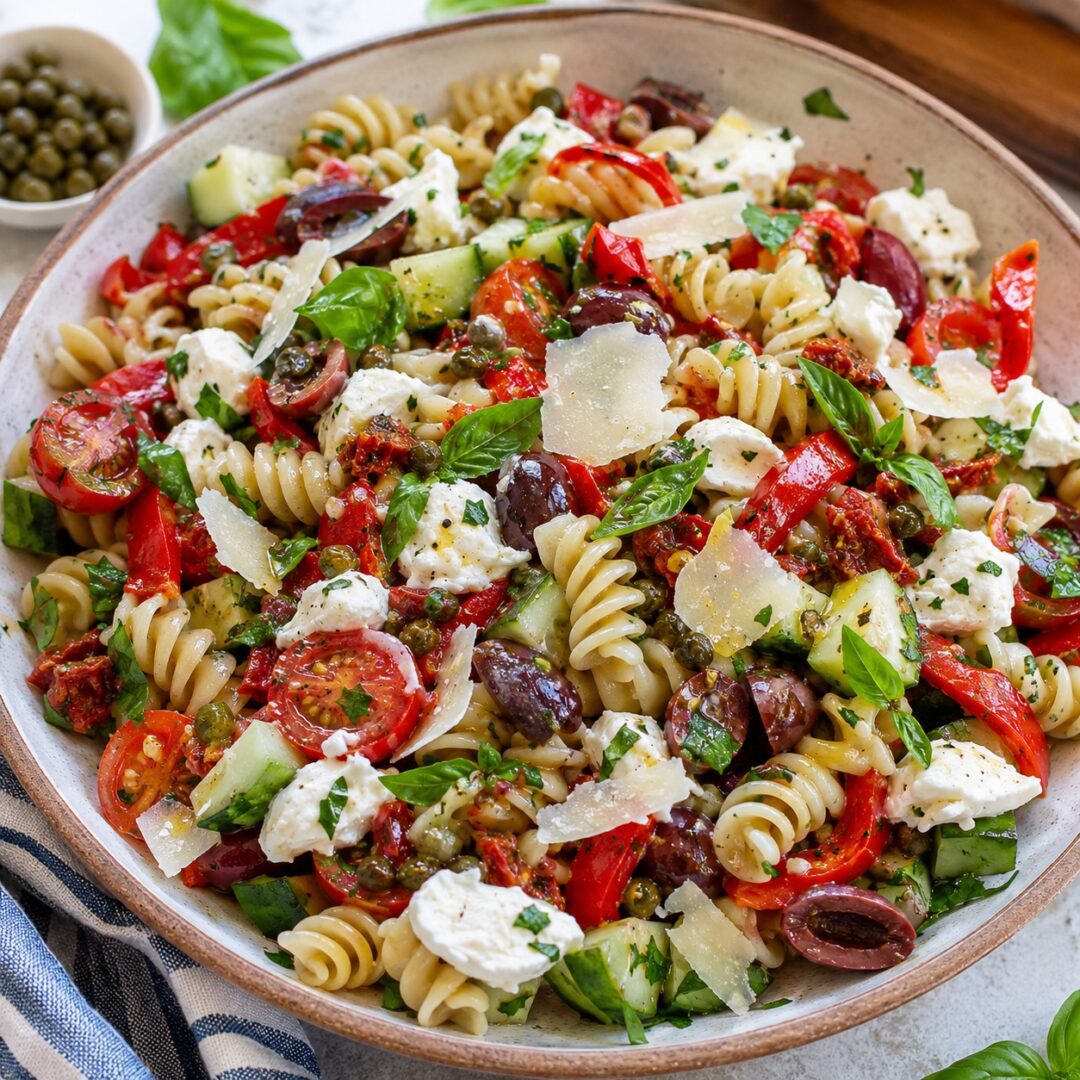
A well-composed pasta salad should not serve merely as a means to use leftovers. Approach its construction as one would a canvas, seeking contrasts in color, texture, and flavor in each bite. Combine sweet elements (such as roasted red peppers, sun-dried tomatoes, or fresh corn) with briny components (such as olives, capers, or marinated artichokes), crunchy ingredients (such as blanched green beans, cucumber, or toasted pine nuts), and herbaceous notes (such as fresh basil, flat-leaf parsley, or mint). Strive for balance so that no single element dominates.
Do Not Neglect the Acid
Acidity provides the essential brightness that enlivens a pasta salad, particularly in warm weather. A combination of red wine vinegar and fresh lemon juice is recommended for most summer dressings, with vinegar contributing depth and lemon adding brightness. A small amount of white balsamic vinegar can introduce gentle sweetness, complementing ingredients such as stone fruit or roasted vegetables. Taste the salad as you prepare it, keeping in mind that ingredients like olives, capers, feta, and cured meats contribute their own salt and acidity. Adjust seasoning only after evaluating these components.
Add Protein Thoughtfully
A thoughtfully constructed pasta salad can serve as a complete meal. Recommended protein options include high-quality canned Italian tuna in olive oil, hand-torn rotisserie chicken, sliced fresh mozzarella, cubed provolone, or thinly sliced soppressata. For a plant-based alternative, consider chickpeas, cannellini beans, or marinated tofu, all of which add satisfying texture and nutrition without overpowering the other flavors. Add the chosen protein gently, folding it in to maintain its integrity. If incorporating cheese, add it at the end, as it is delicate and does not benefit from vigorous mixing.
Finish with Fresh Herbs at the Last Moment
Fresh herbs deteriorate quickly in a dressed salad, with basil especially prone to discoloration and loss of fragrance within an hour. Add fresh herbs, such as torn basil leaves, snipped chives, or whole flat-leaf parsley, immediately before serving. Hardier herbs like oregano or thyme may be added earlier. A final garnish of herbs not only enhances the dish’s appearance but also signals its aromatic quality.
Serve It at the Right Temperature
It is important not to serve pasta salad directly from the refrigerator, as cold temperatures suppress flavors and solidify fats. Remove the salad at least 30 minutes before serving to allow it to reach room temperature. Taste and adjust the seasoning as needed. A final drizzle of fresh olive oil and a sprinkle of black pepper will revitalize the dish. This attentiveness, known in Italian as cura, distinguishes a thoughtfully prepared dish from one that is assembled.
A Simple Recipe: Summer Pasta Salad
Serves 6–8 as a side | Ready in 30 minutes
Ingredients
1 lb fusilli, rotini or farfalle
⅓ cup extra-virgin olive oil, plus more to finish
3 tablespoons red wine vinegar
1 tablespoon fresh lemon juice
1 teaspoon Dijon mustard
1 clove garlic, minced fine
1 cup of cherry tomatoes, halved
½ cup Kalamata olives, pitted and halved
½ cup roasted red peppers, sliced
¼ cup capers, drained
4 oz fresh mozzarella, torn into bite-sized pieces
¼ cup sun-dried tomatoes in oil, drained and roughly chopped
1 small cucumber, seeded and diced
½ cup fresh basil leaves, torn
¼ cup flat-leaf parsley, roughly chopped
Salt and freshly cracked black pepper to taste
Parmigiano-Reggiano, shaved, for finishing (optional)
Procedure
Bring a large pot of heavily salted water to a rolling boil. Cook the pasta al dente according to package directions, then drain and rinse briefly under cold running water until just cooled. While the pasta is still warm, transfer it to a large bowl. Whisk together the olive oil, red wine vinegar, lemon juice, Dijon mustard, and garlic. Pour half the dressing over the warm pasta and toss well. Let it rest for 10 minutes.
Add the cherry tomatoes, olives, roasted red peppers, capers, sun-dried tomatoes, and cucumber. Toss gently to combine. Fold in the fresh mozzarella. Taste and add remaining dressing as needed, adjusting salt and pepper.
Cover and refrigerate until ready to serve. Remove from the refrigerator 30 minutes before serving. Just before bringing to the table, scatter the torn basil and parsley over the top, finish with a drizzle of olive oil, and shave Parmigiano-Reggiano over the surface if desired. Serve at cool room temperature.
This recipe offers considerable adaptability. Substitute mozzarella with crumbled feta or a vegan cheese alternative, use gluten-free pasta in place of traditional wheat-based shapes, or incorporate grilled zucchini, charred corn, or roasted asparagus for added vegetables.
For a plant-based protein option, try chickpeas or marinated tofu in place of tuna or chicken.
By adhering to these principles and trusting your palate, the dish will develop its own character.
(Image Attribution via Patrick Tomasso @impatrickt)
https://flavorsandknowledge.substack.com/
___
READ “Ask Chef Walter” every Sunday in RINewsToday

Master Chef Walter Potenza
There is a constant, recognizable thread in the career of Walter Potenza to elevate the level of Italian culinary culture in the United States. Besides his unquestionable culinary talent and winning business perspective, Chef Walter has been a relentless educator with passion and knowledge who defeats stereotypes. His life, career, and values are a model, an example to follow by any chef of Italian gastronomy working outside Italy.
Chef Walter appears regularly on National and International Networks such as Food Network, ABC, CBS, NBC, RAI, FOX, and Publications such as NY. Times, Washington Post, Wall Street Journal, Food & Wine, Saveur, Gourmet, and several Italian media outlets.