
Subscribe!
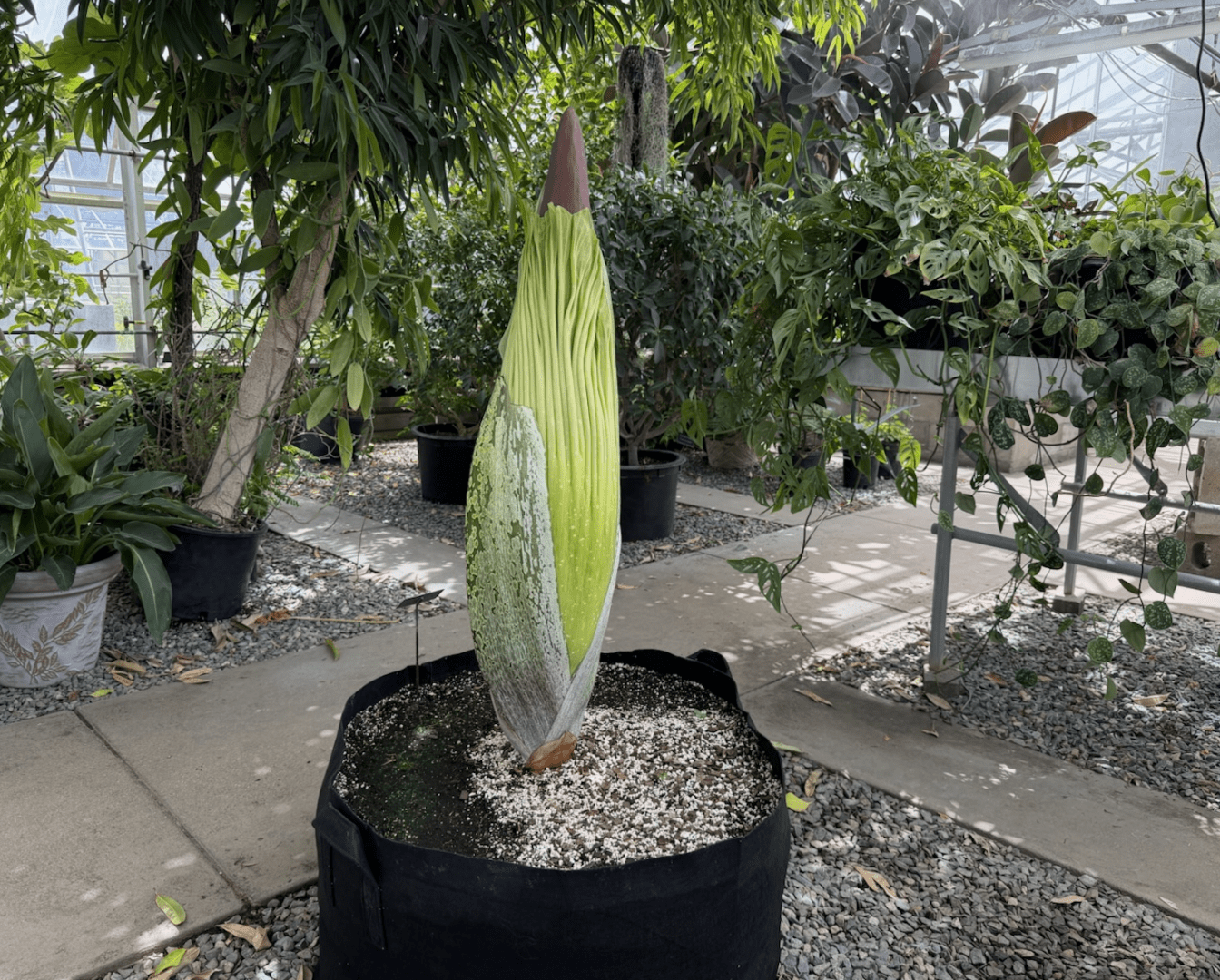
Something Stinky coming our way as URI’s Corpse Flower nears rare bloom
Photo – top: URI Photo / Anna Gray
RI is about to get its own Big Stinky as the countdown is on for the blooming of the URI corpse flower.
Greenhouse Manager Ben Robbins keeping an eye on unique specimen
The University of Rhode Island botanical greenhouses are the site of scientific research and student-focused science, and also school-year foot traffic as students step into the Horridge Conservatory for a little green escape on busy school days.
The greenhouse is expected to see added traffic this summer, as one of its resident corpse flowers (Titan Arum, Amorphophallus titanum) has decided to bloom. (See livestream here.)
Benjamin Robbins, URI’s greenhouse manager, has been waiting patiently to see when it will happen.
A corpse plant blooms every five to seven years. Once it blooms, the corpse flower smells like rotting flesh to attract pollinators, with its flowering structure around for just one to two days before dying back. The corpse flower represents the largest inflorescence (group of flowers) in the world and is native to the Sumatran rainforests.
The last corpse flower bloomed at URI over a decade ago.
-

- Ben Robbins is URI’s greenhouse manager
-
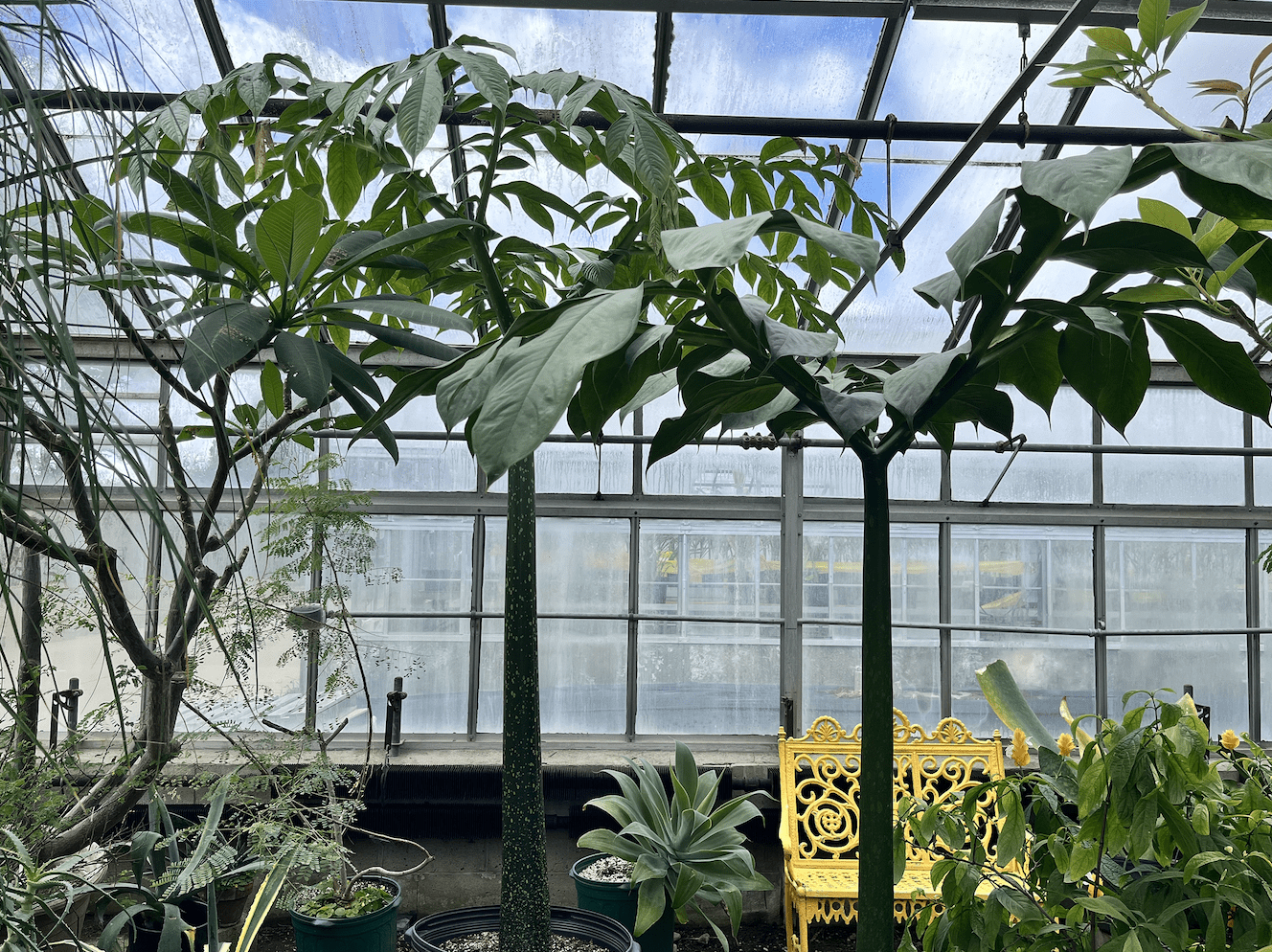
- URI has three corpse flowers of different ages; these are in what’s called the leaf form. (URI Photos / K. Curry)
-
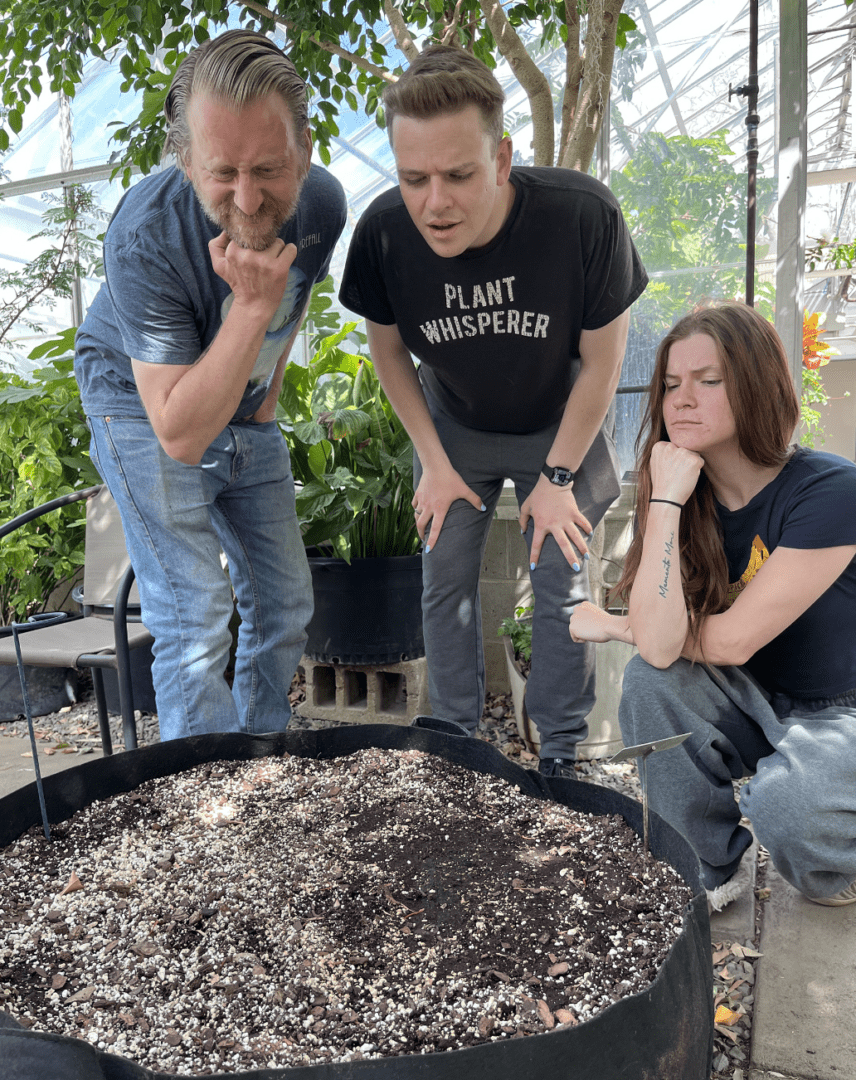
- Plant sciences majors Kaylyn Wood and Justin Levesque joined the waiting game watching the unique specimen this spring.
Robbins has been tracking URI’s largest corpse plant since last year, as well as two other corpse flowers in the University collection. Definitively predicting when they will bloom can be tricky, he says.
“These things are hard to predict,” Robbins commented recently. The plant can remain in a dormant stage for six months to a year in leaf form, before going dormant for another period of months.
Now that Robbins can see the flower stage beginning, there will be about a week before it fully opens. He predicts that this one still has about 7 to 12 days before blooming, then just 1-2 days in full bloom.
Robbins says the corpse flower grows like an upright cucumber, with its spadix reaching up to five feet tall. The corpse flower is related to the peace lily and grows in a similar manner. When the plant finally blooms, he’ll save the pollen to share for propagation with other institutions.
Though it grows easily, the corpse flower is not your typical house plant, requiring humidity to approximate its native rainforest setting. Robbins’ care routine for the plant involves keeping the soil wet.
Plants evolve for different reasons, Robbins said, noting, “Not all flowers smell good. It’s definitely one of the more interesting plants in the conservatory.”
“We have a number of unusual plants,” added Robbins, who frequently hosts high school students and other visiting groups. “We’re open to the public and enjoy sharing our specimens.”
Robbins welcomes visitors interested in the resident plant life as well as anyone who wants to brave the corpse flower’s scent for a peek.
“This is what makes the job interesting, all the kinds of things we see,” he said. “It’s a great vehicle for stories about plants and talking about botany.”