
Subscribe!
Ebola update: Moderna moves on rare-strain vaccine as Rhode Island monitors select travelers
– Nancy Thomas, publisher
Massachusetts-based Moderna is moving quickly to develop a potential vaccine for a rare Ebola virus strain now involved in a growing outbreak in Africa — a strain for which there is currently no licensed vaccine.
The Cambridge biotechnology company announced an expanded collaboration with the Coalition for Epidemic Preparedness Innovations, known as CEPI, to advance a potential vaccine against Bundibugyo ebolavirus. CEPI has committed up to $50 million to support preclinical development, Phase 1 clinical testing, and manufacturing work for Moderna’s investigational vaccine candidate.
For New England, Moderna’s role brings the global outbreak closer to home. The company is headquartered in Cambridge, Massachusetts, and is best known to many Americans for its COVID-19 vaccine. But Moderna describes itself more broadly as a pioneer in mRNA medicine, using messenger RNA technology to help the body make specific proteins that may prevent or treat disease.
Moderna’s research pipeline extends beyond COVID and includes infectious diseases, cancer, rare diseases and other areas. The Ebola vaccine candidate uses Moderna’s mRNA platform, the same type of technology that became widely known during the COVID-19 pandemic.
The company said the program also builds on its existing research and development work involving filoviruses, the virus family that includes Ebola-related viruses.
The funding from CEPI will also support manufacturing activities while clinical evaluation is underway. That means doses could be produced in parallel with early testing, allowing the program to move more quickly into larger Phase 2/3 trials if the first safety and immune-response results are encouraging.
“At Moderna, we believe our mRNA platform can play an important role in responding rapidly to emerging infectious disease threats,” said Stéphane Bancel, Moderna’s chief executive officer, in the company’s announcement. Bancel said the company is expanding its work with CEPI to advance a potential vaccine against Bundibugyo ebolavirus and to support communities affected by the outbreak.
Dr. Richard Hatchett, CEO of CEPI, said the urgency is driven by the fact that Bundibugyo virus is spreading and there are no licensed vaccines for this strain.
The key point: this is not a vaccine rollout. Moderna’s vaccine candidate is still investigational. The CEPI funding is intended to help move it through early development and safety testing quickly, with the possibility of larger trials if early results support moving forward.
CEPI is also supporting other Bundibugyo vaccine candidates, including work involving the University of Oxford, the Serum Institute of India, and IAVI. The strategy is to advance several vaccine approaches at the same time because no licensed vaccine currently exists for this Ebola strain.
What is CEPI?
CEPI, the Coalition for Epidemic Preparedness Innovations, is a global vaccine-preparedness partnership created to help speed the development of vaccines and other countermeasures against epidemic and pandemic threats.
In plain terms, CEPI helps fund vaccine work before an outbreak becomes a wider crisis.
CEPI is not a drug company. It is supported by more than 30 national governments, the European Commission, and major global health philanthropies, including the Bill & Melinda Gates Foundation and Wellcome.
The U.S. government has also contributed to CEPI. The U.S. made its first financial contribution in 2020 and has invested more than $200 million in the organization, though current and future U.S. support has been uncertain amid federal foreign-aid reviews and budget changes.
The Gates Foundation is one of the world’s largest private philanthropies and has long funded global health work, including vaccine access, infectious disease control, and child health programs.
Wellcome is a large charitable foundation based in the United Kingdom. It funds medical research, science, infectious disease work, mental health research, climate-and-health work, and global health preparedness.
In the Moderna Ebola project, CEPI’s role is to provide up to $50 million to help move Moderna’s investigational Bundibugyo Ebola vaccine candidate through preclinical development and Phase 1 safety testing, while also supporting early manufacturing work so doses could be ready more quickly if the vaccine shows promise.
What is Ebola?
Ebola disease is a rare but serious illness caused by viruses in the orthoebolavirus family. It can cause fever, severe weakness, headache, vomiting, diarrhea, abdominal pain, unexplained bleeding, and, in some cases, death.
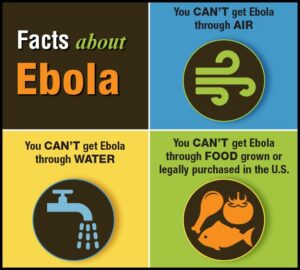
Ebola does not spread through the air, water, or casual contact. It spreads through direct contact with the blood or body fluids of a person who is sick with Ebola or has died from Ebola, or through contaminated items such as needles, medical equipment, bedding, or clothing. A person with Ebola is only contagious after symptoms begin.
Because early symptoms can resemble other illnesses, public health officials focus on travel history, exposure history, isolation of suspected cases, and careful monitoring of people who may have been exposed.
Why this Ebola strain matters
The current outbreak involves Bundibugyo virus, one of the types of orthoebolaviruses that can cause Ebola disease in people. Unlike the better-known Zaire Ebola strain, Bundibugyo ebolavirus does not currently have a licensed vaccine. Treatment consists of supportive care.
The outbreak numbers have shifted quickly as suspected cases are tested and reclassified. As of the latest public updates, the Democratic Republic of Congo has reported 282 confirmed cases and 42 confirmed deaths, with another 220 suspected cases under investigation. Uganda has reported nine confirmed cases and one death. Public health officials caution that numbers may continue to change as testing, case investigation, and contact tracing continue.
WHO has acknowledged the response began after the virus had already gained ground, with the first alert coming May 5 and confirmation of Bundibugyo Ebola not coming until May 15.
There have also been some encouraging signs. The World Health Organization recently honored five medical workers in the DRC who recovered from Ebola. Health officials say early hospital care, isolation, and careful infection-control measures remain critical to saving lives and slowing the outbreak.
Rhode Island activates traveler monitoring
The Rhode Island Department of Health has implemented a symptom-monitoring system for travelers who were in the Democratic Republic of the Congo, Uganda, or South Sudan during the 21 days before arriving in the United States.
EBOLA graphic – RI Dept of Health
“This system is being set up as part of the Centers for Disease Control and Prevention’s ongoing partnership with states to prevent Ebola transmission in the United States,” said Director of Health Jerry Larkin, MD. “To date, no cases of Ebola disease have been confirmed in the United States due to this outbreak. At this time, the risk to the general public in Rhode Island remains very low.”
RIDOH emphasized that Ebola does not spread through the air. A person cannot get Ebola simply by being near someone or passing them in a public space. Ebola spreads through contact with the body fluids of a person who is actively symptomatic with Ebola, or who has died from Ebola. A person is only contagious once symptoms begin.
WHO Director-General Tedros Adhanom Ghebreyesus traveled to the DRC in the last few days and was photographed meeting officials without a mask or visible protective gear — an image that also underscores a key public health point: Ebola is not airborne and does not spread by simply being near someone in public settings.
Travelers from the DRC, Uganda, or South Sudan are being routed to four airports in the United States: Washington-Dulles International Airport in Virginia, Hartsfield-Jackson Atlanta International Airport in Atlanta, George Bush Intercontinental Airport in Houston, and John F. Kennedy International Airport in New York.
At those airports, passengers receive a public health entry screening. If a traveler’s assessment suggests possible Ebola illness, that person would be transferred to a hospital for medical evaluation and isolation. Other travelers are allowed to continue to their final destination, but public health authorities in that state are notified so monitoring can continue.
In Rhode Island, any such travelers will self-monitor for symptoms and report to RIDOH for 21 days. RIDOH clinical staff will also assess travelers once a week during the three-week monitoring period.
Symptoms of Ebola can include fever, headache, vomiting, severe weakness, abdominal pain, nosebleeds, and vomiting blood.
RIDOH said it is also taking additional preparedness steps “out of an abundance of caution,” including sending information to local healthcare professionals, preparing patient assessment protocols if Ebola is suspected in a patient with a concerning clinical and epidemiologic history, and coordinating with healthcare system partners for the potential management of suspected cases.
American doctor treated in Germany
There is also a hopeful update involving an American doctor being treated overseas. Dr. Peter Stafford, an American missionary surgeon who contracted Bundibugyo Ebola while working at Nyankunde Hospital in the Democratic Republic of the Congo, is being treated at Charité University Hospital in Berlin, Germany.
Recent reports say Stafford is stable and recovering. His wife, Dr. Rebekah Stafford, and their four children were also evacuated to Germany as close contacts. They have reportedly tested negative, remain asymptomatic, and are being monitored in isolation.
Separately, another American physician exposed to Ebola, Dr. Patrick LaRochelle, has been in isolation in Prague and has remained asymptomatic.
World Cup logistics affected
The Ebola outbreak is also affecting World Cup logistics for the Democratic Republic of Congo’s national soccer team. DR Congo canceled a planned pre-tournament training camp and fan sendoff in Kinshasa because of the outbreak and shifted its preparations to Europe.
The team has been training in Belgium and is expected to continue with scheduled warm-up matches before traveling to the United States. Staff members traveling from the DRC are completing 21 days in Europe to comply with U.S. health guidelines before entering the United States.
The team’s official World Cup base camp will be in Houston, Texas, at the Houston Training Center, formerly SaberCats Stadium, for the group stage.
At this point, DR Congo appears to be the only World Cup team whose own training plans have been publicly changed because of the Ebola outbreak. Uganda and South Sudan are included in U.S. Ebola-related travel monitoring and restrictions, but neither country qualified for the World Cup. DR Congo’s group-stage opponents have not been reported as changing their preparations because of Ebola.
Ebola in the U.S.: a short history
The United States has had Ebola cases before, but very few. During the 2014 West Africa outbreak, several infected Americans were medically evacuated to specialized U.S. hospitals for treatment. Two early patients, Dr. Kent Brantly and Nancy Writebol, were treated at Emory University Hospital in Atlanta after contracting Ebola while doing humanitarian work in Liberia. Both recovered.
The first person diagnosed with Ebola in the United States was Thomas Eric Duncan, a Liberian man who traveled to Dallas in 2014 and later died. Two nurses who cared for him in Dallas contracted Ebola — the only known Ebola transmissions inside the United States — and both recovered.
Since then, the U.S. public health approach has focused on airport screening, rapid isolation of suspected cases, monitoring of exposed travelers, and specialized hospital preparedness.
For Rhode Islanders, the immediate message is twofold: a Massachusetts-based company is working on a vaccine for an Ebola strain that currently has no licensed vaccine, and Rhode Island health officials have activated monitoring and healthcare coordination systems as a precaution. RIDOH says there are no U.S. cases connected to this outbreak and the risk to the general public in Rhode Island remains very low.
This is a developing story.
Past article on Ebola by RINewsToday:
CDC Imposes Ebola Restrictions as WHO and Canada Expand Response Measures