by Chef Walter Potenza, contributing writer
Environmental Factors in the United States Facilitate Weight Gain
Readers:
Over the past few decades, gaining weight has become increasingly common in the United States. Evidence of this trend is visible in larger clothing sizes and expanded seating in public spaces. (Banas et al., 2024) These changes are significant, and statistical data corroborate this shift. While this analysis focuses on environmental and societal factors that facilitate weight gain, it is important to acknowledge that other factors, such as genetics, certain medical conditions, and individual lifestyle choices, can also influence body weight. However, the widespread and rapid nature of these trends suggests that environmental influences are a key driver at the population level.
According to data from the Centers for Disease Control and Prevention, the average American man is currently approximately 5 feet 9 inches tall. He weighs about 196 pounds, which is 15 pounds heavier than he did two decades ago. The average American woman is about 5 feet 4 inches tall and weighs around 169 pounds, compared to approximately 152 pounds in the mid-1990s.
By 2016, approximately 40 percent of American adults and 19 percent of children and adolescents were classified as obese. Much of the information regarding these trends is derived from the National Health and Nutrition Examination Survey (NHANES), which combines interviews with physical examinations and is widely regarded as the most reliable national dataset on Americans’ health. Since the 1980s, NHANES has documented a consistent increase in both obesity and extreme obesity. (A. et al., 2010, pp. 235-241)
As average body weight has increased, the prevalence of chronic diseases associated with excess weight, including Type 2 diabetes, heart disease, and metabolic syndrome, has also risen. (Koyama et al., 2024) These parallel trends indicate that environmental and societal conditions increasingly promote weight gain and hinder maintaining a healthy weight. (Banas et al., 2024)
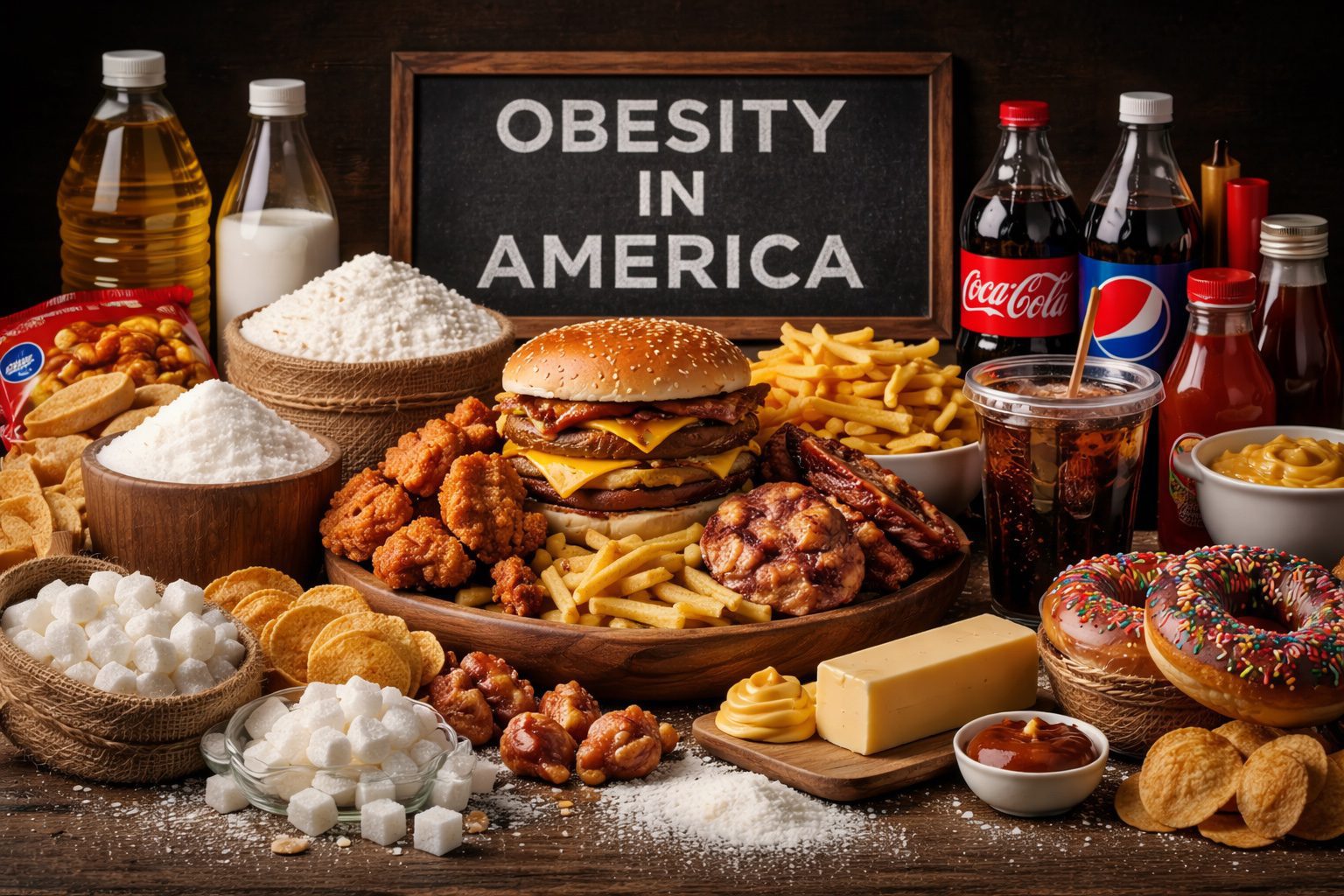
Fundamentally, weight gain occurs when caloric intake exceeds caloric expenditure. However, public health researchers increasingly contend that this phenomenon is not solely a matter of individual choice. The food environment exerts a significant influence on dietary behaviors. (al., 2024) In the United States, the most affordable, convenient, and widely available foods are often those highest in sugar, fat, and refined carbohydrates. (Obesity and the food environment: Dietary energy density and diet costs, 2004, pp. 154-162)
A significant contributing factor is the frequency with which Americans eat out. Over time, home cooking has declined, while expenditures on restaurant meals and convenience foods have increased. (Social and Economic Effects of the US Food System – A Framework for Assessing Effects of the Food System, 2014) Since the mid-2010s, Americans have spent more on dining out than on groceries, a notable shift. (Shah, 2015) Although eating outside the home does not inherently lead to poor dietary choices, research consistently shows that individuals consume approximately 20 to 40 percent more calories when dining at restaurants than when eating at home. (Todd & Mancino, 2010) Restaurant portions are typically large and calorie-dense, which facilitates unintentional overeating.
Portion sizes have increased substantially over time. Compared to meals from the 1950s, the average restaurant portion today is several times larger. (Prevention, 2006) As portion sizes expanded, daily caloric intake also increased. (Young & Nestle, 2002, pp. 246-249) In 1970, the average American consumed approximately 2,100 calories per day; by 2010, this figure had risen to about 2,568 calories, representing a significant increase in daily energy intake.
Sugar-sweetened beverages represent another significant contributor to increased caloric intake. Drinks such as soda, sweetened juices, energy drinks, and sports drinks contain substantial amounts of sugar but do not provide the satiety associated with solid foods. Although soda sales from major companies have declined in recent years due to increased awareness of health risks, other sugary beverages have become more popular. As a result, overall sugar consumption from beverages remains high despite reduced soda intake. (Marriott et al., 2019)
Economic factors also influence dietary choices. Nutrient-dense foods, such as fresh fruits and vegetables, are often more expensive per calorie than highly processed foods containing refined grains, sugar, and vegetable oils. For families with limited food budgets, it is often more feasible to purchase foods that provide greater caloric content at a lower cost. According to a report from AP News, ultra-processed foods, which tend to be more affordable but less nutritious, make up a significant part of the American diet.
The report notes that these foods account for nearly 62% of the calories children and teens consume. A significant portion of the United States’ vegetable supply consists of potatoes and tomatoes. (Bentley, 2015) While these foods can contribute to a healthy diet, they are often consumed in highly processed forms such as French fries, chips, ketchup, or pizza sauce, which are typically high in fat, salt, and sugar.
Frequent sugar consumption throughout the day further exacerbates the issue. Many foods marketed as breakfast items or snacks are more like desserts than traditional meals. Products such as sugary cereals, pastries, flavored yogurts, sweetened coffees, and snack foods can rapidly increase daily sugar intake beyond recommended levels. In the late 1970s, the average adult consumed approximately 228 calories per day from sugar; by 2010, this figure had risen to about 300 calories daily. Although sugar intake has declined somewhat in the past decade, it remains above recommended thresholds. (Consumption of Added Sugars by States and Factors Associated with Added Sugars Intake among US Adults in 50 States and the District of Columbia—2010 and 2015, 2023)
Advertising exerts a significant influence on dietary choices. Food companies allocate substantial budgets to promote snack foods, candy, and sugar-sweetened beverages across television, online platforms, and mobile devices. Research from the Rudd Center for Food Policy and Obesity at the University of Connecticut indicates that a large proportion of food marketing budgets are directed toward sweet and savory snacks. At the same time, only a small fraction of people promotes healthier options such as fruit or nuts. Children are particularly exposed to these marketing messages, which can shape eating habits from an early age.
Given that the drivers of obesity are deeply embedded in the environment, many public health experts argue that solutions must extend beyond individual behavior. Several cities and countries have implemented taxes on sugar-sweetened beverages and energy-dense foods, drawing on policy approaches that previously reduced cigarette smoking. (Cawley et al., 2020, pp. 1289-1306) For example, Berkeley, California, and Seattle, Washington, have enacted soda taxes, while countries such as Mexico, the United Kingdom, and Chile have adopted comparable measures. Evidence suggests that these policies can reduce the purchase and consumption of sugary drinks.
For instance, research on Berkeley’s soda tax has found significant decreases in sugary beverage consumption and increases in water consumption among residents. Studies in Mexico reported reductions of 6 to 12 percent in purchases of sugary drinks in the years following the tax. However, the overall impact on obesity rates appears to be modest so far, as sustained benefits depend on broader dietary changes over time. Some critics also note that consumers may substitute other unhealthy options, suggesting that a combination of policies may be necessary to achieve lasting improvements in public health.
Additional strategies include implementing clearer warning labels on unhealthy foods, providing subsidies to make fruits and vegetables more affordable, and establishing programs that offer produce vouchers or prescriptions for individuals who face barriers to accessing healthy food.
There is increasing pressure on major food manufacturers to reformulate products, reduce portion sizes, and develop healthier alternatives. (Clapp et al., 2018) Although some companies have made incremental progress, critics contend that these changes are often limited to minor reductions in sugar or salt content rather than substantial improvements in overall nutritional quality.
Ultimately, reversing decades of increasing obesity rates will likely require comprehensive changes to the broader food environment, including pricing, marketing, availability, and cultural norms. Facilitating healthier choices may necessitate years of coordinated efforts among public health institutions, policymakers, and the food industry. However, implementing these systemic changes presents considerable challenges. For example, there is an ongoing debate about the effectiveness and fairness of policies such as food taxes or marketing restrictions, and concerns about potential unintended effects on low-income populations or small businesses.
Additionally, opposition from influential food industry stakeholders and shifting political priorities can delay or dilute public health initiatives. Finally, achieving consensus among diverse groups with varying interests and priorities often complicates the policy-making process. Without such changes, the factors contributing to widespread weight gain in the United States are likely to persist.
___
Sign up HERE for RINewsToday daily newsletter – and look for my column this SUNDAY!
Meet Chef Walter!
There is a constant, recognizable thread in the career of Walter Potenza to elevate the level of Italian culinary culture in the United States. Besides his unquestionable culinary talent and winning business perspective, Chef Walter has been a relentless educator with passion and knowledge who defeats stereotypes. His life, career, and values are a model, an example to follow by any chef of Italian gastronomy working outside Italy.
Chef Walter appears regularly on National and International Networks such as Food Network, ABC, CBS, NBC, RAI, FOX, and Publications such as NY. Times, Washington Post, Wall Street Journal, Food & Wine, Saveur, Gourmet, and several Italian media outlets. And now – RINewsToday!