
Subscribe!
Outdoors in RI: Pest Season – Silvopasture at URI’s Peckham Farm – RI DEM Jobs
Community support comes together to seed new silvopasture at URI’s Peckham Farm
Tree Pro donation supports New England tree research in new public-private partnership
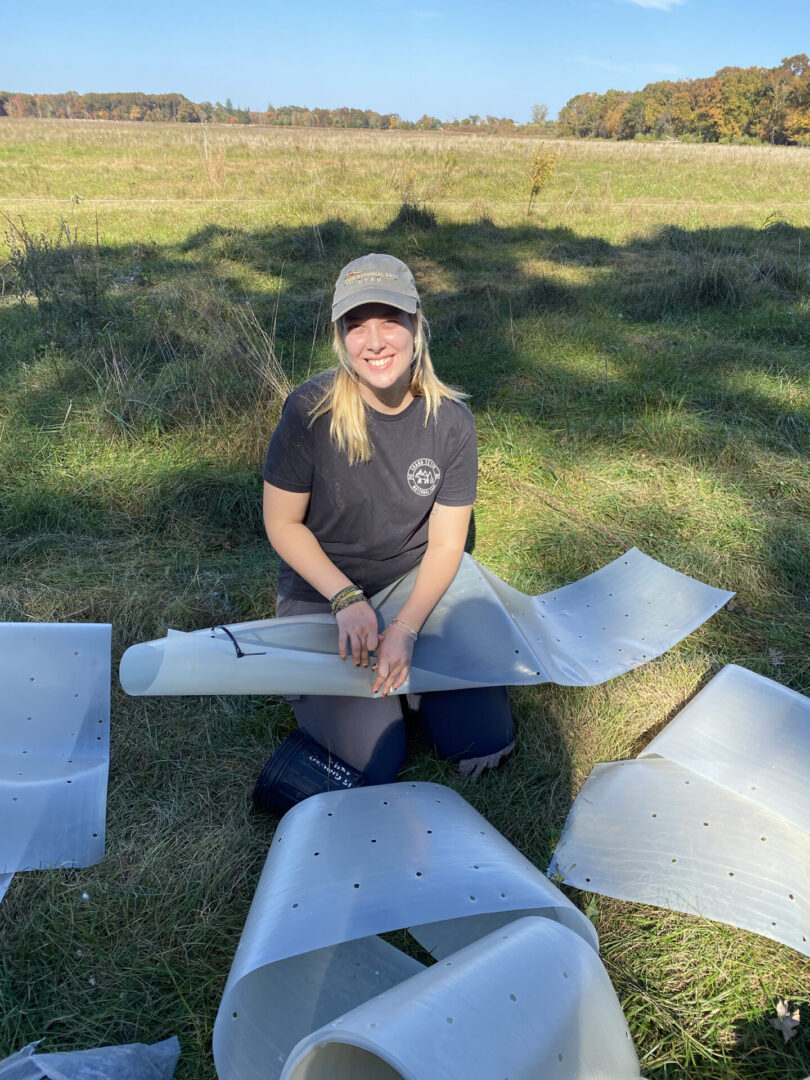
A team of faculty and staff at the University of Rhode Island is looking forward to growing its tree research capacity, while nourishing the animals who live on campus, with a recent donation from the Indiana company Tree Pro of 1,500 tree protectors and the same number of wooden stakes. What’s at stake? A better way to build the tree canopy and support the livestock grazing underneath.
The donation, worth about $30,000, will go a long way toward developing the new silvopasture, now taking shape at Peckham Farm in South Kingstown. The new silvopasture being installed at the 90-year-old research farm will help URI faculty and staff conduct research and support graduate students, making URI a center for agroforestry and integrating study of the method into University classes.
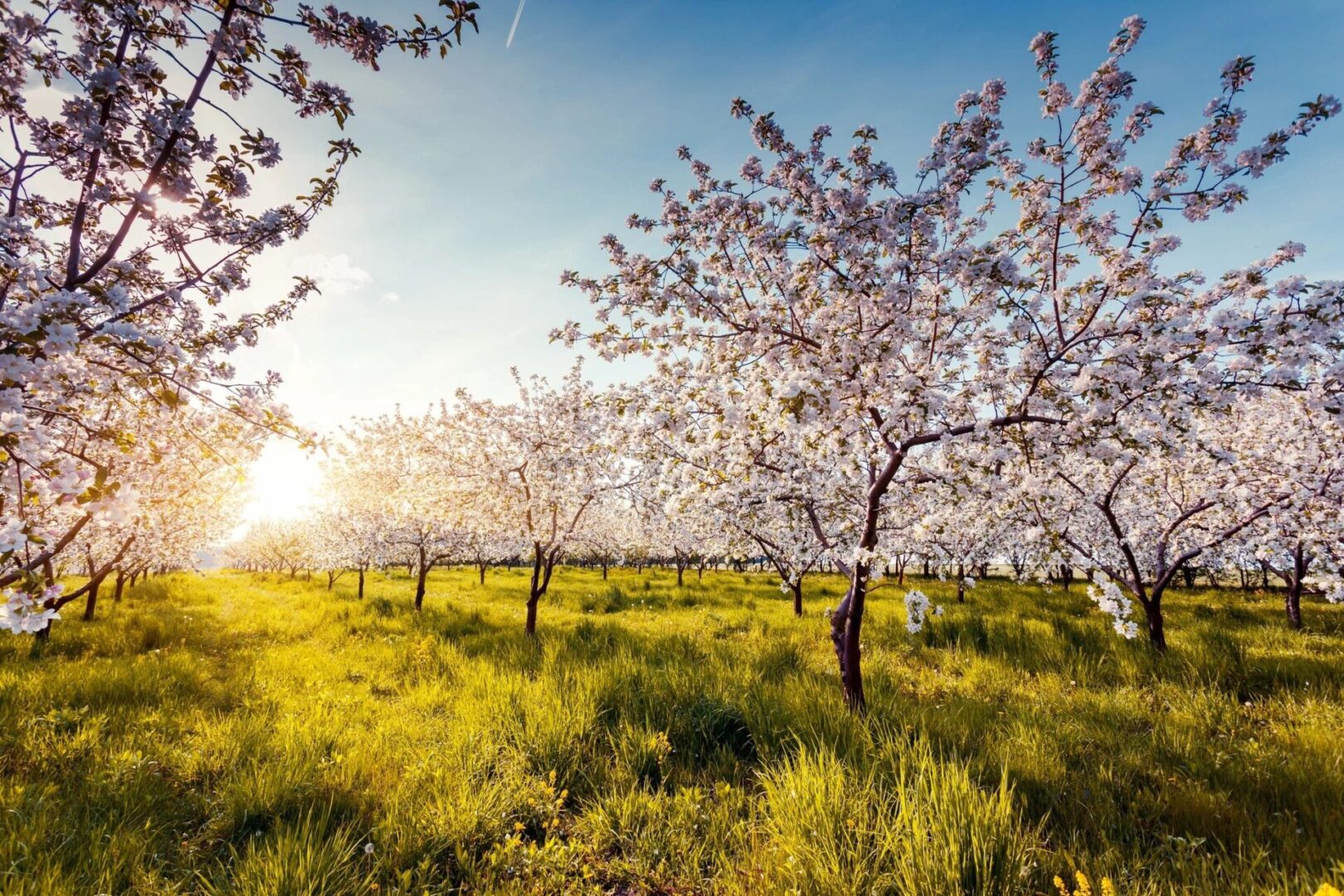
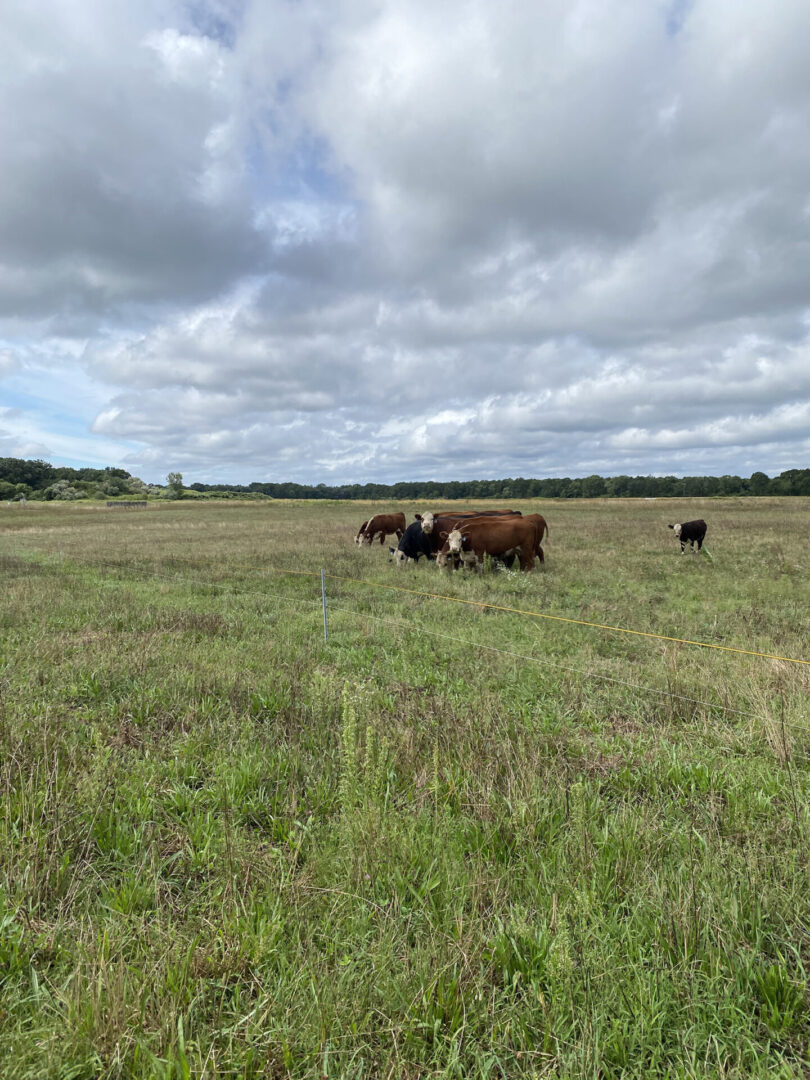
Silvopasture is an agroforestry practice that integrates trees, forage, and livestock into a single system; it offers shade for animals and can restore soils and ecosystems, provide wildlife habitat and support sustainable food production.
That bucolic image calls to mind a picture-perfect scene but the prior site was not.
When a long-term sod lease at Peckham expired in 2022, URI gained access to 52 acres of farmland. However, what was left behind was not a clean slate: a compacted, bare field, stripped of vegetation and topsoil. Unfortunately, before remediative planting could take place, rains flooded the area and yards of neighbors as the field rapidly eroded during an unusually wet spring.
Farm Manager Coleman Replogle, just two weeks into his new job overseeing the farm, had a quick trial by fire, or perhaps, water, literally — jumping into the nearby brook to help mitigate the situation.
Now he is a key part of efforts to not only fix the field but help build something even better in its place: a site for innovation and research, for URI and beyond.
Restoring land and legacy
Seeding grasses was a first step, but the restoration required more, according to URI Natural Resources Science professor Laura Meyerson, leading the project.
Replogle, Meyerson and colleagues developed a vision to restore the degraded field using a technique that turns erosion-prone ground into a regenerative, biodiverse landscape.
The trees are a large part of it, but the project is seeding more than trees.
URI will also be able to introduce the silvopasture concept to New England farmers unfamiliar with the concept. With the new silvopasture at Peckham, they’ll be able to see one up close.
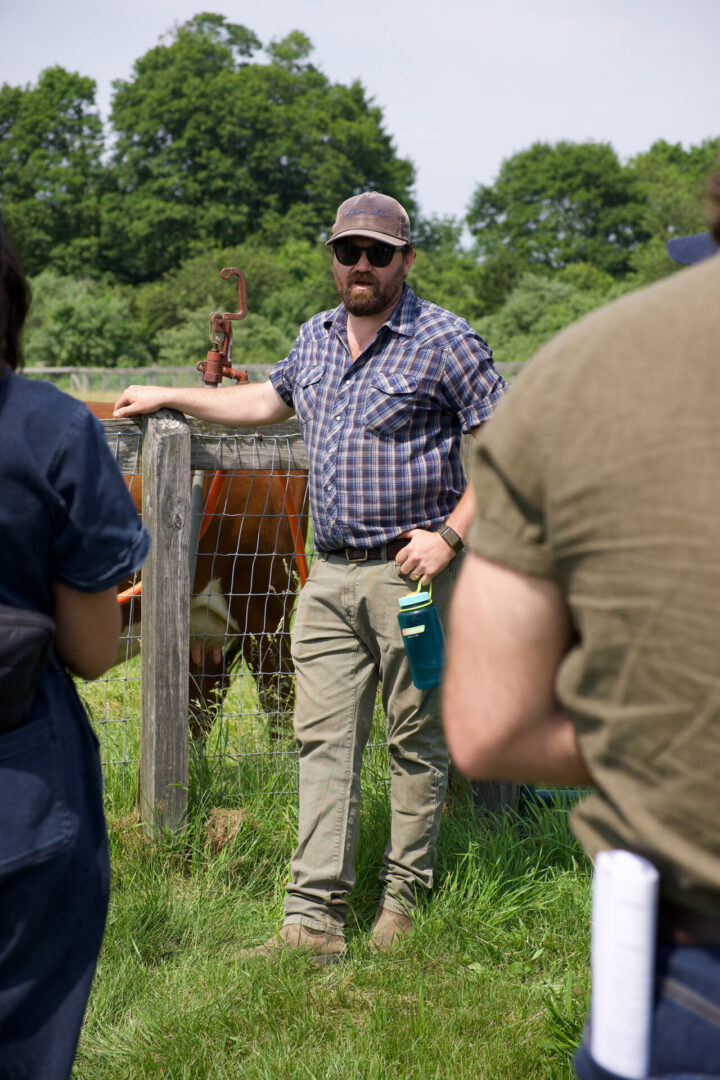
Replogle understands that many farmers might be apprehensive about adopting a new approach. “It’s a lot to put your money toward a new way when the margin for farmers or ag producers is already thin,” he said. “The University can document and share data that helps show how it works. We could be the blueprint in this area.”
“They’ll see it’s good for the animals and the soil — and can also be profitable,” he added.
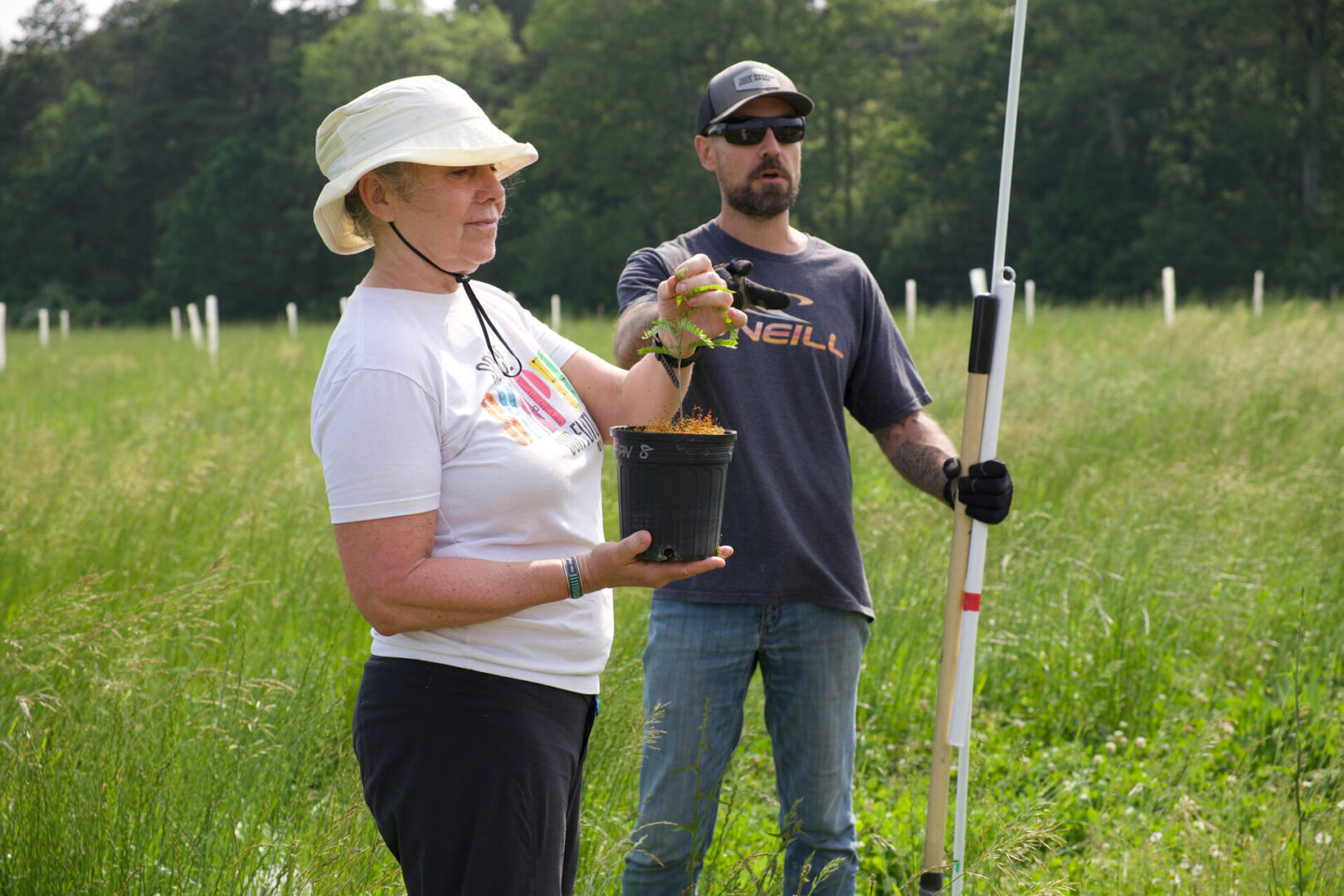
Right now, they are planting oaks, chestnuts and honey locust, a tree species Replogle is particularly interested in for its benefits to livestock and soil. That locust is nitrogen-fixing, and has a leaf pattern that offers 50% shade, helpful in the summer heat, offering cool relief but also promoting grass growth. Come winter, the tree produces plentiful seed pods that are high in nutritional quality for the livestock grazing underneath.
Replogle hopes to bring the livestock over to the silvopasture this spring.
Meyerson also says the public-private partnership with Tree Pro highlights important ways URI is connecting with industry to bring research and industry together for community good.
The company donated 300 tree shelters in 2024 for the team to try out at the farm to help get the silvopasture started.
“We were really starting from the ground up,” she laughed. “I was literally gathering acorns on the president’s lawn to get us started.”
The project appealed to the company’s focus on connecting University research to industry.
Tom Mills of Tree Pro commented, “Silvopasture is a very quickly growing topic in the agriculture industry. When we heard what was going on at URI, I wanted Tree Pro to be a part of it. This felt like the right project to be involved with.”
“Tree Pro’s initial donation worked out so well. We are now looking forward to building on that success with these new tree shelters and stakes,” said Meyerson. Meyerson hosted one community day with URI and local k-12 schools to help launch the planting; the rest of planting will be done with students in her restoration ecology class. “It takes a long time to plant 1,500 trees!” she notes.
URI community members and the public are also invited to see the silvopasture in action at URI’s Rhode to Regenerative conference in May.
“We couldn’t do this without Tree Pro,” she said. “They have played such an important role in the restoration of this pasture. Together, we have this chance to do something far reaching and important for URI and beyond.”
To learn more or get updates on the upcoming Rhode to Regenerative conference at URI in May, visit https://whyregenerative.com/rhodetoregenerative or email [email protected].
___
Don’t Let Pests Crash Your Spring Break
NPMA’s entomologists warn travelers to watch for bed bugs, ticks and mosquitoes during and after their trips.
Spring break is here, and millions of Americans are heading to warmer destinations to soak up some sun. But before you zip up that suitcase, the board-certified entomologists at the National Pest Management Association (NPMA) have a heads-up: some unwanted travel companions may be waiting for you at your destination, and one of them might even try to hitch a ride home.
Bed bugs are the ultimate stowaways. These tiny, flat insects hide in luggage, clothing and seat cushions, making them incredibly easy to pick up without ever knowing it.
Simple steps to prevent a bed bug infestation:
- At check-in, inspect the mattress seams and box spring for dark stains, shed skins or live bugs.
- Keep luggage on a hard surface like the bathroom floor or a luggage rack and away from the bed.
- When you get home, wash and dry all clothing on high heat.
- If you suspect bed bugs, call a qualified pest control professional right away.
Travelers might also encounter ticks and mosquitoes, which can pose real health risks. Mosquitoes can carry West Nile virus, Zika, and dengue, while ticks can transmit Lyme disease and other serious illnesses. Both thrive in warm, humid environments.
Tips for staying safe outdoors:
- Apply an EPA-registered insect repellent containing DEET before heading outside.
- Wear long sleeves and pants in wooded or grassy areas and tuck pants into socks.
- After outdoor activities, do a full-body tick check, especially the scalp, underarms and behind the knees.
- Eliminate standing water around your campsite because mosquitoes breed in as little as a half-inch of water.
“Spring break is all about making memories, not dealing with pest problems when you get home,” said Dr. Jim Fredericks, senior vice president of public affairs at NPMA. “Taking a few simple precautions can go a long way. But if pests do follow you back, don’t wait. The sooner you call a professional, the easier it is to control the problem.”
For more information on pests and prevention tips, and to find a local pest control professional, visit PestWorld.org.
About the National Pest Management Association
The NPMA, a non-profit organization with more than 4,000 members, was established in 1933 to support the pest management industry’s commitment to the protection of public health, food and property from the diseases and dangers of pests. For more information, visit PestWorld.org or follow @PestWorld on Facebook, TikTok and YouTube and @PestWorldOfficial on Instagram.
___
RI DEM JOBS

The Department of Environmental Management (DEM) is the state’s chief steward of Narragansett Bay and many other natural resources that are at the heart of Rhode Island’s economy, culture, and environment. Seasonal positions provide hands-on experience and are a great introduction to our work. Being active outdoors, building lifelong friendships with workmates, and serving our communities are also among the big benefits of working with us.
From administrative and clerical roles to technical work in environmental sciences, engineering, program/policy analysis, and business administration, DEM offers a wide range of interest areas to help you build new skills and make an impact. Choose the position that interests you, submit an application at apply.ri.gov, and make a positive impact on visitor experiences while protecting our state’s precious natural resources.
View the full list of seasonal opportunities
___