
Subscribe!
Beginner’s Guide to Starting a Backyard Garden from Seed: Part 2, Transplanting Seedlings – Jenn Zina
A beginner’s guide to starting a backyard garden from seed in New England: Part 2, transplanting seedlings into your backyard
By Jenn Zina, Rocky’s Ace Hardware Senior Category Manager, Garden Center
By the time your seedlings are filling out their seed trays, gardening starts to feel real. You can see true leaves, stronger stems and the promise of a summer harvest. This is also the point where many beginners in Rhode Island and across New England run into trouble, because moving plants from a protected indoor environment to unpredictable spring conditions is a big transition.
Part 1 of this series focused on planning: choosing crops, selecting the right location, ordering seeds, starting indoors and timing around frost. Now it’s time for the next step: transplanting seedlings from trays into your backyard garden. With the right timing and a few simple techniques, transplanting can be straightforward and your plants will take off faster once they’re settled in the ground.
Know when your seedlings are ready to move
A seedling is ready to transplant when it has several sets of true leaves and a well-developed root system. True leaves look like the adult version of the plant (unlike the first rounded seed leaves). Many warm season crops like tomatoes, peppers, eggplant and basil, should be sturdy, not stretched and spindly, before they go outside.
A quick way to check readiness is to gently lift the seedling from its cell. If roots are holding the soil together and you see healthy white roots along the edges, it’s likely ready. If roots are barely formed and the soil falls apart, give it more time. If roots are circling tightly at the bottom, it’s becoming root-bound and needs transplanting soon.
Time transplanting around weather
In Rhode Island, the average last frost date typically falls in early- to mid-May, with some variation between coastal and inland areas. That matters because warm-season crops cannot tolerate frost, and cold soil can stall growth even if nights stay above freezing.
A good rule is:
- Cool-season seedlings (like lettuce, kale, broccoli, cabbage) can often go out earlier if nights are not too cold and you can protect them during chilly snaps.
- Warm-season seedlings (tomatoes, peppers, basil, cucumbers, squash) should wait until after the last frost and after the soil begins to warm.
Even after the last frost date, keep an eye on the forecast. A stretch of cold rain and 40-degree nights can set plants back. If your plants look ready but the weather doesn’t cooperate, it’s better to wait a few more days than to rush.
Harden off seedlings before planting
Hardening off is the process of gradually introducing seedlings to outdoor sun, wind and temperature swings. Indoors, plants have consistent light, warmth and no wind. Outdoors, even a mild spring day can be harsh. Bright sun can scorch leaves and wind can snap tender stems.
Plan for 7–10 days of hardening off:
- Day 1–2: Place seedlings outside in a sheltered spot (shade or dappled light) for 1–2 hours, then bring them back in.
- Day 3–5: Increase outdoor time and introduce gentle morning sun.
- Day 6–8: Gradually increase sun exposure and time outside.
- Day 9–10: Leave plants out most of the day, and if nights are mild, let them stay out overnight.
If it’s windy, cold or rainy, slow the process down. The goal is sturdy, adaptable plants, not stressed plants.
Prepare your garden bed for strong root growth
Transplant success starts with soil. Before planting day, take time to prep your garden bed or raised bed so roots can spread easily and moisture stays consistent.
A beginner-friendly approach:
- Clear the area: Remove weeds and old plant debris.
- Loosen the soil: Work the top 6–10 inches. In raised beds, loosen gently without turning too deep.
- Add organic matter: Mix in compost to improve soil structure, drainage and nutrients.
- Level and water lightly: Slightly moist soil is easier to work with and less stressful for transplants.
If your soil is heavy clay (common in parts of New England), compost is especially helpful. If your soil is sandy (more common near coastal areas), compost improves water-holding capacity.
Plant on a calm day and water well
Transplanting is less stressful when conditions are mild. If possible, plant on an overcast day or in late afternoon so seedlings aren’t immediately hit with intense sun.
Basic transplant steps:
- Water seedlings in their trays an hour or two before planting. Moist root balls slide out more easily and reduce shock.
- Dig the hole slightly wider than the seedling’s root ball.
- Remove gently by squeezing the cell and lifting from the base. Avoid pulling by the stem.
- Set at the right depth:
- Most seedlings should be planted at the same depth they were in the tray.
- Tomatoes are the exception: they can be planted deeper (even with some stem buried) to encourage stronger root development.
- Backfill and press lightly to remove air pockets.
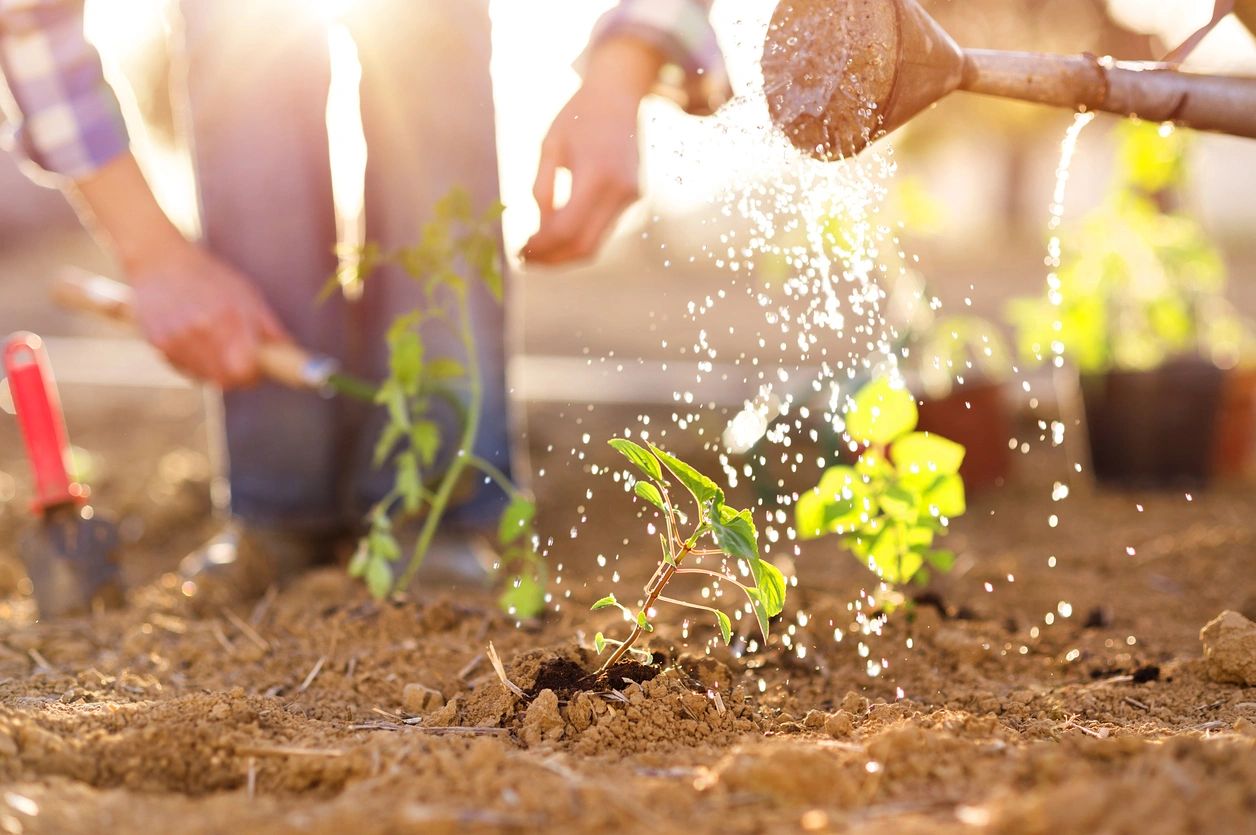
- Water thoroughly right after planting to settle soil around roots.
A deep watering at planting time is one of the best things you can do. It helps seedlings establish faster and reduces wilting.
Space plants for airflow, health and harvest
Crowding is a common beginner mistake. Small seedlings can make a garden look empty at first, but most vegetables need room to grow, and airflow helps prevent disease during humid New England summers.
General spacing reminders:
- Leafy greens can be planted closer together.
- Tomatoes, peppers, cucumbers, squash need more space, especially if not trellised.
- Follow seed packet spacing whenever possible, since each variety can be different.
Also think about how you will access the garden for watering, weeding and harvesting. Leaving a small path or reachable spacing makes the garden easier to maintain all season.
Protect young plants from cold nights and pests
Even after transplanting, spring in Rhode Island can surprise you. A cold night, strong wind or hungry pest can undo a lot of effort.
Simple protections that help:
- Row cover or frost cloth: Great for cool nights and pest protection.
- Mulch: Helps regulate soil temperature and moisture once the soil warms.
- Physical barriers: Collar guards or lightweight netting can deter some early pests.
If a late cold snap is predicted, cover warm-season plants overnight and remove the cover during the day so they don’t overheat in the sun.
Watch for transplant shock and support recovery
Some drooping after transplanting is normal, especially the first day. Most plants bounce back quickly if they’re watered well and protected from harsh conditions.
Support seedlings as they settle:
- Water consistently for the first week, keeping soil evenly moist (not waterlogged).
- Avoid heavy fertilizing immediately. Let roots establish first. Compost and healthy soil often provide enough early support.
- Stake or support early for tomatoes and other tall plants so roots aren’t disturbed later.
Within a week or two, you should see new growth. That’s your sign that roots are establishing and the plant is ready to move into its active growing phase.
Look ahead to the next step
Transplanting is one of the most rewarding moments in gardening. You’ve taken a seed from a packet to a living plant in your backyard, and that’s a huge win.
In Part 3 of this series, we’ll focus on early-season care after planting: watering routines, mulching, feeding, weeding and simple ways to keep your garden productive all summer. With transplants in the ground, you’re officially in the growing season and your garden will start changing fast.
Jenn Zina, Rocky’s Ace Hardware Senior Category Manager, Garden Center
___
Part 1:
https://2×8.ea2.myftpupload.com/beginners-guide-to-starting-a-backyard-garden-from-seed-part-1-planning-jenn-zina/