
Subscribe!
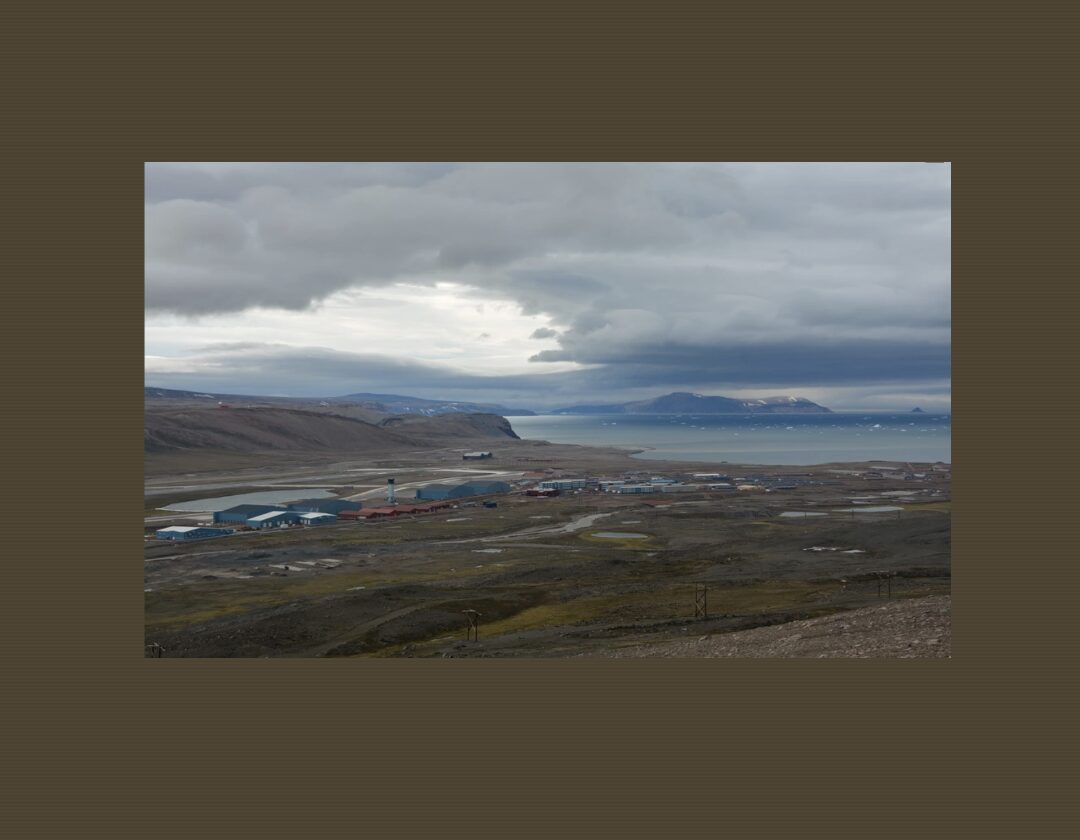
Greenland: From a Loud “We’re Not for Sale” to a Quiet Deal. What America Gets—What Lies Beneath
Greenland: How a Loud Dispute Became a Security Deal—and Why It Matters to America
What was announced—and what has now been signed
The United States, Denmark and Greenland have signed an agreement to expand America’s military presence in Greenland while preserving the Kingdom of Denmark’s sovereignty and Greenlanders’ right to determine their future.
President Donald Trump announced the agreement September 18, describing it as giving the United States “permanent control over security, and all other needs, in Greenland.” Danish Prime Minister Mette Frederiksen and Greenland’s Prime Minister Jens-Frederik Nielsen emphasized sovereignty, shared security and Greenland’s participation.
The three leaders signed September 22 during the United Nations General Assembly in New York. Parliamentary approval in Denmark and Greenland is still required before it takes effect, but the announcement and signing were done in an almost effervescent mode:

President Donald Trump joins Danish Prime Minister Mette Frederiksen and Greenlandic Prime Minister Jens-Frederik Nielsen at the Greenland security agreement signing ceremony at UN headquarters, September 22, 2026. (Official White House Photo by Daniel Torok)
At the ceremony, Trump described the effort as “long in the making.” Nielsen called it a “win-win-win agreement,” emphasizing Greenland’s participation at the table. Frederiksen connected stronger security with protections for sovereignty. The agreement was signed at the UN at the NATO summit.
How the agreement developed
The public confrontation which erupted over American ownership was followed by months of negotiations, most of which were done on silent mode.
In January, Denmark’s and Greenland’s foreign ministers agreed to a working group after meeting Vice President JD Vance and Secretary of State Marco Rubio in Washington. Rubio confirmed later that month that technical talks had begun.
On September 14, Frederiksen publicly expressed optimism about finding a peaceful way forward and said she was seeing positive signals. Trump announced the agreement four days later.
That sequence helps answer how an intensely public dispute could lead to a deal whose negotiations received less attention. The working-group process was publicly known, but the bargaining was not accompanied by a running account of each compromise.
“Some play checkers, some play chess” was on display in this development. Also, asking for much more than what you want, and in a rather demanding way, and then “settling” amicably for what the US really wanted.
Why Greenland matters geographically
Greenland lies between North America, Europe and the Arctic, placing it along the northern approaches to the continent and the North Atlantic.
At Pituffik Space Base, formerly Thule, the United States operates radar supporting missile warning, missile defense and space surveillance. That location helps American and allied forces detect threats beyond their own shores. U.S. Space Force
The American presence predates the current dispute. The 1951 U.S.–Denmark defense agreement established a framework for American military operations in Greenland. September’s pact builds on an existing relationship.
The new agreement permits bases at Narsarsuaq and Mestersvig, expansion at Pituffik, and broader access for American aircraft and vessels to whereever the US feels it needs it. It restricts outside military activity and sensitive investment, while addressing continuity if Greenland becomes independent. It specifies neither troop numbers nor implementation timelines.
Who lives there—and who governs
Greenland had 56,740 residents on January 1, 2026, according to Statistics Greenland. More than one-third lived in Nuuk, the capital.
Its relationship with Denmark developed through colonial rule; formal colonial status ended in 1953. Home rule began in 1979, followed by expanded self-government in 2009. Greenland now has its own elected parliament and government, while Denmark retains responsibilities for defense and security policy.
The Self-Government Act recognizes Greenlanders’ right to self-determination. Independence would involve negotiations, approval by the Greenlandic and Danish parliaments, and a referendum in Greenland. Greenland assumed authority over its mineral resources in 2010.
That history gives context to Greenland’s seat at the table: the agreement concerns the future of a population with its own elected institutions and political choices.
For additional background, see RINewsToday’s “How to Talk About Greenland Like You Know What You’re Talking About.”
The wealth underground
The terms used to describe Greenland’s minerals refer to different, sometimes overlapping categories.
“Rare earths” are a family of 17 elements. Some, including neodymium and praseodymium, help make powerful magnets used in electric motors, wind turbines and defense equipment. The difficulty is often finding economical deposits and separating the elements into usable materials. U.S. Geological Survey
“Critical minerals” is a broader designation for materials important to economic or national security whose supplies are vulnerable to disruption. “Precious metals” generally refers to high-value metals such as gold, silver, platinum and palladium, used in jewelry, investment and industry. A mineral can belong to more than one category. USGS on critical minerals
Sarfartoq, in southwest Greenland, offers a concrete example of the development underway. Greenland Mines says it completed its acquisition of the rare-earth project September 1 after Greenlandic government approval. The project targets neodymium and praseodymium, among other rare earths. Company update
Neo Performance Materials confirmed the transaction and retained rights to buy up to 60% of future ore or mineral concentrate. Such purchasing rights are called “offtake” rights. Neo also retained an investment in the project through shares in Greenland Mines. Neo’s announcement
Sarfartoq is still a development project. The company describes further drilling, processing tests, engineering and environmental studies ahead. Its separate Skaergaard project concerns palladium, gold and platinum. These projects illustrate mineral potential and the former ambassador to Greenland said if the items were to be “clean extracted, Greenland would become one of the wealthiest countries in the world.
What Greenlanders gain
Successful projects will create employment, training, contracts for local businesses and infrastructure. Taxes and royalties—payments associated with extracting resources—could strengthen public revenue.
Greenland’s system includes social-impact assessments and negotiated Impact Benefit Agreements addressing local benefits. Those arrangements provide a mechanism for translating investment into commitments to communities. Greenland Mineral Resources Authority
The benefits depend on commercially viable projects, enforceable terms and environmental protection. Local participation matters both in deciding whether development proceeds and in determining who receives employment and business opportunities.
Mining revenue can also affect Denmark’s financial contribution to Greenland: the self-government framework provides for reductions in the Danish subsidy as qualifying mineral revenue rises. Gross mining receipts therefore should not be presented as entirely additional public spending money.
What America could gain economically
For American manufacturers, a potential benefit is a more dependable supply of materials used in vehicles, electronics, energy systems and defense equipment.
Mining is only one stage. Ore must be processed and its elements separated before manufacturers can use them. USGS research shows that China’s concentration of production is greater at the processing stage for many materials than at the mining stage. USGS supply-chain mapping
Sarfartoq’s connection to Neo, which operates a rare-earth separation facility in Estonia, illustrates a possible route into an allied supply chain for American deliveries, that would depend on production and commercial agreements.
Venezuela offers a brief comparison. American interest there concerns oil, while Greenland’s mineral prospects concern industrial inputs. Both illustrate the strategic value of reliable resource access—and the distance between deposits and usable supply. The U.S. Energy Information Administration reported that Venezuela held about 17% of global proved crude reserves in 2023 but produced only 0.8% of global crude that year. Infrastructure, investment and processing capacity matter alongside geology.
Beyond existing military operations, a larger U.S. presence could provide:
-
Expanded search-and-rescue and emergency response capacity
-
Infrastructure investment in ports, airports, communications, and energy
-
Increased Arctic and climate research capability
-
Technical support for mineral supply chains, subject to Greenlandic approval
-
Education and workforce development partnerships
Value of Greenland to the world as a peaceful route
The United States and its allies increasingly view the need for alternative global shipping routes as a strategic priority because several Middle East waterways have become more vulnerable to disruption. Key chokepoints such as the Suez Canal, the Strait of Hormuz, and the Bab el-Mandeb carry a large share of global trade and energy shipments, yet are exposed to regional conflict, state and non-state attacks, and political leverage.
Recent disruptions in the Red Sea have underscored how quickly shipping costs, insurance rates, and delivery times can rise when these routes are threatened. As a result, U.S. strategic planning increasingly emphasizes redundancy and resilience in global trade — including interest in emerging Arctic routes that could, over time, provide seasonal alternatives connecting North America, Europe, and Asia without passing through Middle East chokepoints.
What remains unresolved
Several questions now concern implementation rather than whether an agreement will be signed.
Trump’s initial “NO COST to the United States” claim does not explain who pays for construction, transportation, personnel and continuing operations. Those costs must be distinguished from any payment for obtaining access.
The published agreement identifies additional military locations, but the size, schedule and financing of the buildup still require clarification. Reuters reports that the pact has no end date and can be amended by mutual consent; that is more specific than the announcement’s broad description of “permanent” rights.
Resource authority also remains a separate issue from military access. Greenland’s mineral responsibilities, project approvals, purchasing contracts and public-revenue arrangements determine how resource development proceeds. Defense cooperation alone does not confer ownership of Greenland’s minerals on Washington.
For the United States, implementation will determine the additional security and supply-chain benefits. For Denmark, it will test how expanded cooperation operates within the Kingdom’s sovereignty. For Greenland, it will show how commitments to self-determination and participation translate into decisions about facilities, investment, jobs and the environment.
Photo, top: Pituffik Space Base, Greenland, 2019, JoAnne Castagna/U.S. Army Corps of Engineers, via DVIDS. “The appearance of U.S. Department of War (DoW) visual information does not imply or constitute DoW endorsement.”