
Subscribe!
Ask Chef Walter: The Longevity Legume – Walter Potenza
by Chef Walter Potenza, contributing writer
LA CICERCHIA – The story and the use of an ancient legume that survived drought, famine, and its own dark side, and a satisfying recipe for you to try.
There’s solid evidence that Italians tend to live longer than many other populations, and the usual explanations point to lifestyle and diet. The Mediterranean pattern of eating—plenty of vegetables, olive oil, modest portions of meat and fish, and regular legumes—gets most of the credit. What’s less often mentioned is that Italians also smoke more than Americans on average, which makes the longevity gap even more interesting. Clearly something in the everyday food culture is working in their favor.
One ingredient that rarely appears outside Italy, yet has been part of regional cooking for centuries, is cicerchia. This small, irregularly shaped legume (sometimes called grass pea) shows up in traditional dishes across central and southern Italy, from Umbria and Marche down through Lazio and Puglia. It has a mild, slightly earthy flavor and a frm texture that holds up well in soups, stews, and simple purees. In the United States it’s virtually unknown, which is a pity—because it’s inexpensive, nutritious, and easy to cook once you know what to do with it.
In the pages that follow I’ll share a bit about what it is, how Italians actually use cicerchia and a few straightforward ways to bring it into an American kitchen.
Cicerchia (Lathyrus Sativus), also called grass pea, chickling vetch, or Indian pea, is a hardy, ancient legume whose simple, angular seed supported civilizations during severe droughts and famines, even though it has a hidden neurotoxic property. After being almost forgotten in much of Europe, this drought-tolerant crop is now experiencing a considerable resurgence. Taken together, its history tells a story of human survival, warns against overreliance on a single food source, and highlights the enduring value of traditional knowledge and biodiversity.
Cicerchia is one of the oldest plants cultivated in human history; archaeological evidence shows it was first domesticated in the Balkan Peninsula around 6000 BCE, making it among the first crops domesticated in Europe. Remains have also been found earlier at sites in the Near East, for example at Ali Kosh in Iran (from 9500 to 7600 BCE) and elsewhere in the Fertile Crescent and Iraq, where the evidence goes back more than 8,000 years. It then spread widely and reached India by about 2000 to 1500 BCE.
The ancient Greeks and Romans knew it; the Romans called it cicercula. Over centuries, it remained a staple in the diets of peasants in southern and central Italy, Spain, parts of the Mediterranean, India, Ethiopia, and elsewhere. Its real strength lies in its hardiness: it grows well in poor soils, survives severe droughts, and can even tolerate moderate waterlogging or salinity, giving a steady harvest when other crops fail. As a result, when food was scarce, it served as an essential “famine food” or “insurance crop,” providing food for both people and animals. In Italy, its cultivation was widespread throughout the 19th century as a main source of protein for country families.
Although cicerchia has life-saving properties, it also has a harmful aspect, since the seeds contain the non-protein amino acid β-ODAP (β-N-oxalyl-L-α,β-diaminopropionic acid). If it is eaten in large amounts every day for months and is the main or only food consumed—particularly in cases of malnutrition—it can cause neurolathyrism, a neurodegenerative disease characterized by muscle weakness, spastic paralysis of the lower limbs, and, in serious instances, permanent disability. Outbreaks have occurred after famines in Europe, North Africa, South Asia, Ethiopia, and other places.
The link between this food and poverty and risk led to its rapid decrease during the 20th century. In Italy, it had almost vanished from official agricultural statistics by the 1970s as people’s standard of living improved and their diets became more varied. Even so, the hazard is almost completely preventable with appropriate precautions—precautions that traditional communities have long known. This involves soaking the dried seeds in water (typically salted) for 12 to 24 hours or even longer, replacing the water several times, and then boiling them thoroughly (throwing away the water used for cooking), a process that removes most of the water-soluble toxin. Studies have found that soaking and boiling may reduce ODAP levels by 70 to 90 percent or more. Moderate consumption as part of a varied diet carries no significant risk. Researchers are still breeding varieties with lower toxin levels to further improve safety.
When properly prepared, cicerchia is a nutritional powerhouse. Dried seeds generally contain about 25 to 30% protein (in some cases even more), a considerable amount of complex carbohydrates, a high level of dietary fiber, and only small amounts of fat. They contain B vitamins such as thiamine (B1), riboflavin (B2), niacin (PP), and folate, along with minerals including iron, phosphorus, potassium, calcium, magnesium, and zinc. The food is also a source of the amino acid L-homoarginine, which has attracted scientific interest for its possible cardiovascular and other benefits, as well as its antioxidant content.
Because of its high protein content, it is an excellent plant-based option for vegetarians and vegans. The mixture of protein and fiber, along with its low glycemic index, helps keep energy levels steady, promotes digestive health, and aids blood sugar control. It has long been regarded as a food that provides energy and is sometimes recommended for mental fatigue.
As living standards improved and the stigma associated with poverty persisted, European cultivation had almost led to extinction. Later, the Slow Food movement recognized how important these foods were, both culturally and nutritionally. Varieties such as the added toea cicerchia, known locally as ciciruocculo, and the Serra d’Conti cicerchia were included in the Ark of Taste, Slow Food’s catalog of endangered heritage foods. This recognition, along with growing interest in biodiversity, sustainable agriculture, and climate-adaptive crops, sparked a renaissanc
Cicerchia is now available in Italian supermarkets and on restaurant menus. Cooks praise its unique earthy taste, often described as somewhere between chickpeas and lentils, sometimes with notes of fava or pea. Some small-scale producers make gluten-free pastas and flours from it. Because it can fix nitrogen and requires little input, it suits regenerative and climate-adaptive farming methods. Seed banks, such as the Millennium Seed Bank at Kew Gardens, include it among the crops they prioritize in response to climate threats.
Celebrating Tradition: The Festival of Cicerchia
The prime example of the revival is the annual Cicerchia Fest, or Festival of Cicerchia, in Licodia Eubea, Sicily. The festival, which usually takes place in winter or early summer, depending on the edition, includes tastings, cooking demonstrations, markets, guided tours, cultural performances, and workshops. At its core is patacò, a traditional dish or preparation made from local cicerchia flour. Various organizers, including local associations and Slow Food Sicily, bring together producers, researchers, and visitors to preserve this agricultural and culinary tradition. The Licodia Eubea variety is indeed included in the Ark of Taste, underscoring the community’s role in its recovery.
The story of cicerchia has moved from a drought-resistant food for times of famine to a highly regarded gourmet item and a sustainable ingredient. It reminds us that food history is full of examples of fortitude and adaptation, and that the difference between survival and danger often comes down to knowledge and balance. If we understand its past, cook it with care, and support a variety of heritage crops, we can enjoy this ancient legume safely and help write the next chapter in its history for future generations.
Cicerchie is available in the USA through mail order. In Rhode Island you can find them at Tony’s Colonial on Federal Hill.
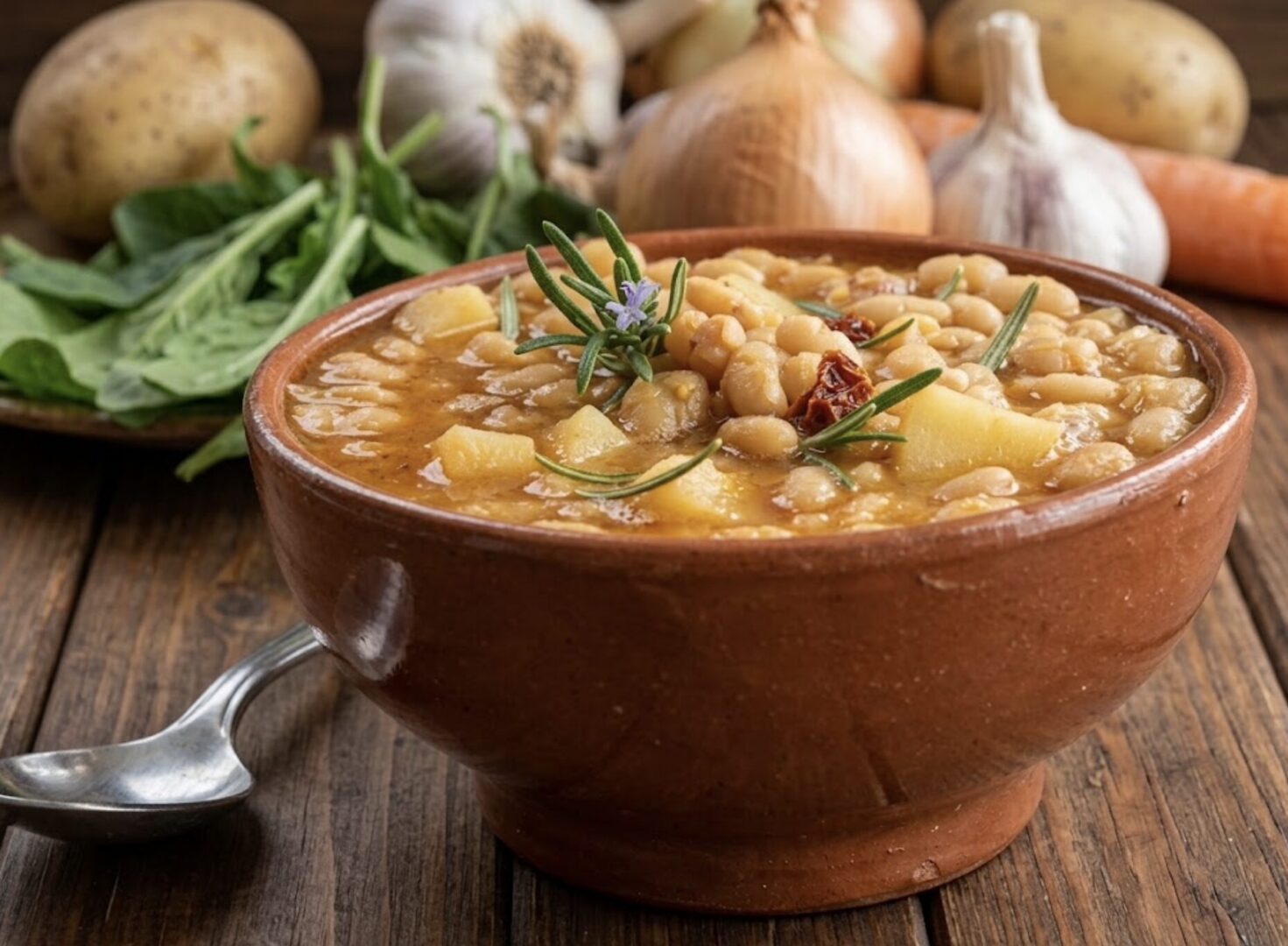
Zuppa di Cicerchie (Italian Grass Pea Soup) is the classic way to cook this ancient legume (also called cicerchia or Lathyrus sativus). It has an earthy flavor somewhere between chickpeas and peas, with a slightly firm, floury texture when cooked.
Important Notes Before Cooking
Soak thoroughly: Soak dried cicerchia in salted water for 24 hours (up to 48 hours), changing the water a few times. This reduces any natural toxins (ODAP) that can cause issues with very high, prolonged consumption, and helps them cook more evenly. Discard the soaking water.
Cooking time is long (1.5–2+ hours on the stovetop) because of the thick skins; a pressure cooker shortens it significantly.
Varieties differ—some (e.g., from Serra de’ Conti in the Marche) cook faster and are milder.
Classic Umbrian-Style Zuppa di Cicerchie
(If you cannot find cicerchie, substitute with dry chickpeas)
Ingredients for 4
300–400 g (about 1½–2 cups) dried cicerchia
1 medium onion (or 2–3 spring onions/spunzali in the Puglian style)
1–2 garlic cloves, remove the root
1 carrot
1 celery stalk
150–200 g tomatoes (fresh chopped, passata, or canned tomatoes)
Fresh herbs: rosemary, sage, parsley (and optional mint or mentuccia)
Extra-virgin olive oil
Salt and black pepper to taste
Optional additions: potato cubes, a little pancetta, guanciale, or lardo (traditional in the Marche), chili flakes, bay leaf. To serve: toasted bread or crostini, more olive oil, grated Parmigiano if desired
Method
Soak the cicerchia as described above. Drain and rinse well.
Place the drained cicerchia in a pot, cover with fresh water by several centimeters, and bring to a boil. Skim any foam. Optionally add a bay leaf, garlic clove, or herb sprig. Simmer gently until tender (1½–2 hours on the stovetop or ~30–45 minutes in a pressure cooker after it reaches pressure). Do not salt heavily until near the end if you want softer results. Reserve some cooking liquid.
Meanwhile, finely chop the onion, carrot, and celery. Sauté them gently in a few tablespoons of olive oil with the garlic (and pancetta if using) until soft and fragrant. Add the tomato and cook for a few minutes to form a light sauce. Season with salt, pepper, and chopped herbs (rosemary/sage especially).
Add the cooked, drained cicerchia to the sauce along with enough reserved cooking liquid (or vegetable broth) to reach a soupy consistency. Simmer for 20–40 minutes to meld the flavors. For a creamier soup, mash or blend a portion of the legumes and stir them back in.
Taste and adjust seasoning. Finish with a generous drizzle of raw extra-virgin olive oil and fresh parsley or mint.
Serve hot over toasted bread or with crostini on the side.
Simple Variations
Very plain (minimalist): Cook the soaked cicerchia with aromatics (onion, carrot, celery, garlic, herbs), drain, and dress with excellent olive oil and salt. Great on toast.
With grains: Add cooked farro or barley for a heartier Umbrian-style soup.
Cream/purée: Cook until very soft, then blend with olive oil, garlic, lemon, and a little chili for a spread or side (similar to Greek fava).
Pasta e cicerchie: Cook with short pasta or lagane (like a pasta e ceci).
Cicerchia is nutritious (high in protein and fiber) and traditional in central and southern Italy (Umbria, Marche, Lazio, Puglia, Abruzzo). Enjoy it in moderation as part of a varied diet. If you can’t find dried cicerchia, chickpeas make a reasonable substitute in these recipes, though the flavor won’t be identical.
https://flavorsandknowledge.substack.com/
Sources
- Italian life expectancy according to ISTAT and United Nations data.
- Research into Blue Zones conducted in Sardinia.
- A study into adherence to the Mediterranean diet and mortality.
- A study on the relationship between olive oil and longevity.
- Reports on social cohesion, purpose, and living across generations.
___
EAD “Ask Chef Walter” every Sunday in RINewsToday

Master Chef Walter Potenza
There is a constant, recognizable thread in the career of Walter Potenza to elevate the level of Italian culinary culture in the United States. Besides his unquestionable culinary talent and winning business perspective, Chef Walter has been a relentless educator with passion and knowledge who defeats stereotypes. His life, career, and values are a model, an example to follow by any chef of Italian gastronomy working outside Italy.
Chef Walter appears regularly on National and International Networks such as Food Network, ABC, CBS, NBC, RAI, FOX, and Publications such as NY. Times, Washington Post, Wall Street Journal, Food & Wine, Saveur, Gourmet, and several Italian media outlets.