
Subscribe!
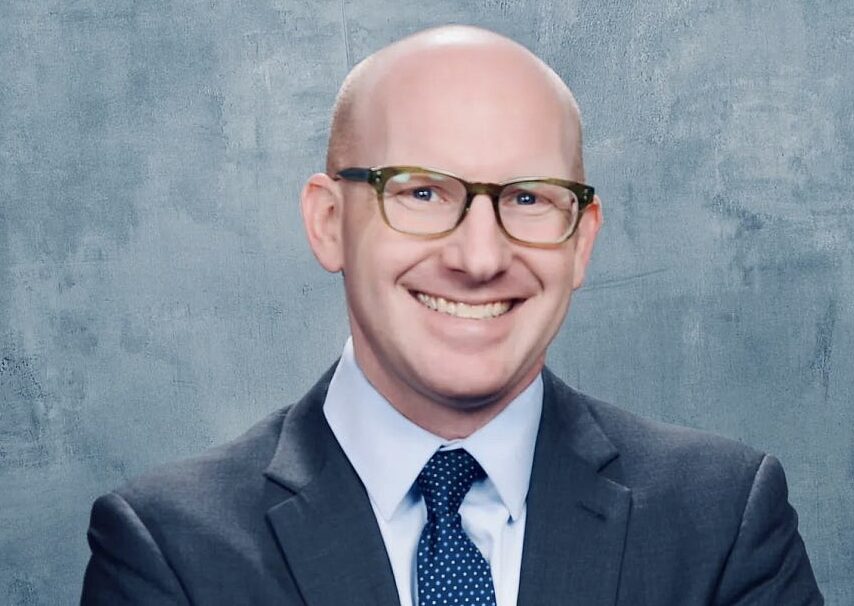
Sitting down with Adam Greenman, the next Mayor of Pawtucket – Steve Ahlquist
by Steve Ahlquist, SteveAhlquist.news – Reprinted under agreement with the RI News Collaborative
I sat down with Adam Greenman, who, in a major upset, defeated 16-year incumbent Donald Grebien in the Democratic Primary with 54.6% of the vote¹, all but ensuring he’ll be the next Mayor of Pawtucket. Greenman is a former middle school social studies teacher with Teach For America, and has held executive leadership roles at several large nonprofit organizations in Rhode Island, including nine years as President and CEO of the Jewish Alliance of Greater Rhode Island.
I spoke with Greenman in Pawtucket’s beautiful Slater Memorial Park, near the ice cream stand, on Wednesday morning. I edited the interview for clarity.
Adam Greenman: We had data the whole time showing we were doing pretty well, but you never believe it when everybody else says you can’t beat a 16-year incumbent with their political machine, so you have to wait until election day to find out. Election night was when we realized, “Wow, okay, we have a lot of work to do now.”
Steve Ahlquist: Hard work means more hard work. You’ve got some extra time, too, because you don’t have a general election opponent; you can start your transition now.
Adam Greenman: Yeah, I don’t have an opponent, but I don’t want to take the November election for granted, so we’ll still be out there and hopefully use the next couple of months as an opportunity to do some listening sessions. We have so many priorities. There are so many things that we could work on. We want to work with the people of Pawtucket to understand where they want us to start, since there are so many places we could begin.
Steve Ahlquist: I would love to be at those public listening sessions. It would be interesting to hear what people are thinking.
Adam Greenman: We’re still setting the foundation for the transition. I’d hope to have something in the next week or so. The mayor and I are meeting next Wednesday, and after that, I imagine I’ll have a lot more to say.
Steve Ahlquist: I think he’ll be decent about the transition. I don’t think of him as that kind of guy.
Adam Greenman: I think so too. He’s been incredibly gracious so far. He called me pretty much right after the mail ballots dropped, and it was really nice of him to do it that quickly. It was very cordial, so I’m looking forward to continuing that conversation. We both love this city. We had different visions for how we wanted to move it forward, but ultimately, that love of the city will help ensure this transition is as smooth as possible.
Steve Ahlquist: The other half of democracy is losing. Most candidates lose.
Adam Greenman: Someone always comes out on top, and someone doesn’t.
Steve Ahlquist: And you’ll be running again in four years…
Adam Greenman: Two years from now.
Steve Ahlquist: Oh right! I’m thinking Providence.
Adam Greenman: That’s an important piece. I think about it all the time: You win an election and immediately start thinking about how to keep yourself accountable so you’re doing the best job you possibly can for the voters.
Steve Ahlquist: I’m watching New York’s Mayor Zohran Mamdani do city services. He does it in a way people are really happy with: garbage pickup, parks being repaired, potholes filled, and things like that. Excellent constituent service grabs people’s attention right away. A good, balanced budget and no gigantic tax increases make everybody happy, but what really hits them is that mattress off their lawn, or that axle-busting pothole being filled.
Adam Greenman: At the end of the day, what resonated so much with people when I talked with them was the feeling that our taxes were going up and up, but the quality of services seemed to be going down. That’s one of the things that motivated me to run in the first place, because I felt that. You talk to your friends and neighbors, and you hear them say the same thing. I’m so looking forward to focusing on those sort of bread-and-butter municipal issues, all the things that came up when we had the forum: the rat problem, bulk trash pickup, and all the little things. I believe that if you take care of the small stuff, the big stuff starts to take care of itself. [See: Pawtucket Mayoral Candidate takes the stage, alone, to answer the public’s questions]
Steve Ahlquist: People start to feel a certain amount of pride. If you walk down the street and there’s trash everywhere, that’s just the way it is. But if your street is relatively clean and you see a piece of trash, you pick it up.
Adam Greenman: Exactly right. One thing the mayor and I completely agree on is the incredible workers in this city. Incredible folks who do the best job they can. I’m excited to work with them and ask them, “How do you do this? How do we plow our streets better? What’s your idea for it? How do we pick up bulk trash in a better, more timely way?”
They’re the folks who do this day in and day out. I’m sure they recognize patterns. We want to give them not only a voice, but also loosen the reins a bit so they can bring their ideas to the table.
Steve Ahlquist: Ahead of the listening sessions, what subjects are grabbing your attention right away? Where are you thinking you need to look?
Adam Greenman: Affordability. That’s obviously a huge bucket that includes housing, childcare, energy, and more. There are so many elements to that. We’re going to break that apart, tackle each piece, and figure out what role we can play at the municipal level. I talked about community choice aggregation, for instance. I want to use this transition period to do the kind of research that will let us, on day one, move forward on some of the things we care about. [Community choice aggregation (CCA) lets local governments buy or generate electricity for residents and businesses.]
Public safety is another one. I commented at the forum that we need change at the top of the police department, so we’ll be moving forward with that. I want to talk with the mayor next week, and obviously we have one mayor at a time, so I’m not looking to do anything before January 4th, but I certainly want to hit the ground running.
I talked a lot about community policing during the campaign, and I want to see us do more of it here in Pawtucket.
And education. You and I have talked a lot about education: that’s where the bulk of my experience and background is.
Steve Ahlquist: I have two grandkids going into Pawtucket Public Schools.
Adam Greenman: Oh, that’s excellent. My kids are on the other end of the school system. One’s a senior this year. The other one is a freshman at Tolman High School. The schools have been good for my kids. I want them to be great for all kids, and we still have a lot of work to do. I fully recognize that the mayor doesn’t run the school system; the school committee and the superintendent do, but because of my background and my experience, there’s a lot that the mayor’s office can do to wrap around the school system and also a lot that I can do to support the superintendent and be a thought partner with him in a way that, even in other cities where you don’t have that level of expertise, that can be a real value here in Pawtucket. I want to be a resource.
Then there’s economic development, the big bucket projects. I want to get my hands on Tidewater Landing and know what’s real and what’s not. A lot of things were announced over the last two months of the campaign, not just on the Tidewater project, but with Memorial Hospital and the Apex building. We saw a lot of renderings, and I want to understand how much meat is on the bones underneath that, because we have a lot of work to do there. I want to engage with the owners of the buildings downtown – Leslie Moore and some of the other folks on Main Street. Leslie Moore owns a lot of downtown property.
She and others have a vision for downtown. I’ve spoken with her and the group working with her, and I want to see how the city can help. We also need to connect the Pawtucket/Central Falls MBTA Station to the Apex, and we need to focus on the whole downtown. So many elements revolve not only around economic development, but around public safety and public works. Many projects connect all these things.
Steve Ahlquist: How much of connecting downtown involves talking to the Rhode Island Public Transit Authority (RIPTA) and getting buses to go directly between these different points?
Adam Greenman: That’s definitely going to be a conversation. During the campaign, I ran into the Deputy Director of Planning for RIPTA at Wildflower and said, “If I’m successful, I definitely want to have a conversation because I think that right now RIPTA is set up to deliver everybody to Providence, and we need to do a better job of delivering people around Pawtucket, getting people from one part of the city to the other.” We’re a big city. We could be a city that’s much more dependent on public transportation if we had the systems in place. I want to have those conversations about what that can look like.
Steve Ahlquist: Previous efforts to reclaim downtown have started with a splash, then dwindle over the next few years. How do you make downtown projects work so people stick around and feel safe?
Adam Greenman: There are a couple of pieces to it. There’s the safety piece. I’m going to nerd out on education stuff: Maslow’s Hierarchy of Needs. Safety is the bottom rung. Before you can do the other stuff, you need to ensure people feel safe. I think we need an anchor downtown; that’s why I’ve talked about bringing in a Community College of Rhode Island (CCRI) campus. That’s not only economic development; our kids need an opportunity for post-secondary education here.
The distance to CCRI in Providence is a lot for our kids. We just talked about public transportation. My oldest, Alex, has taken classes at CCRI Providence in their senior year. It’s an hour each way by bus, which is crazy. It would be an hour and a half to the Warwick or Lincoln campuses.
Steve Ahlquist: You could bike to downtown Providence faster.
Adam Greenman: Right. Creating post-secondary opportunities for Pawtucket kids who don’t necessarily have two hours round trip that they can dedicate to being on the bus because they’ve got younger siblings to take care of, jobs that they need to go to, or any number of things. We should be opening that up. Creating that anchor downtown. My plan from the beginning has been to work with the small businesses that are already in Pawtucket, and ask, “How can we help you grow? What would it take to open up a second location downtown? What do you need?” And then, “How do we connect you with the folks who own those buildings to be able to create that space?”
Then, we need programming downtown. During the campaign, I talked to Leslie and others who own buildings on Main Street, and they said the Empanada Fest and other festivals happen across from City Hall and don’t engage the businesses trying to make a go of it on Main Street. How do we program downtown in a way that attracts people to other parts of the city? If they want to walk around by the river, great. But we want them to see all the other businesses there and think, “This is a cool downtown. I want to be a part of it.”
Steve Ahlquist: Maybe closing off the street for a festival…
Adam Greenman: This is a very Rhode Island thing: My brother-in-law is the executive director of the Blackstone Valley Tourism Council. They’re obviously a key partner to the city. At family barbecues we’ve talked about what it would look like on a Saturday morning to close down Main Street to vehicle traffic and have it be a pedestrian walkway.
And obviously there’s the Hope Street Farmer’s Market, but are there other things we can be doing in downtown?
Steve Ahlquist: There’s no reason not to have a second farmer’s market. Farmer’s markets are all over the state every day. You could also do something really different
Adam Greenman: Exactly. Those are options we want to explore. I’ve said this throughout my career: Let’s put ideas on the table. Not all of them will work. Not all of them will be feasible. Let’s start with yes, and then figure it out. Let’s not start immediately by saying, “No, that’s not going to work, and here are the 100 reasons why it won’t.”
I was talking to a different reporter this morning about the CCRI piece, and he asked, “Do you want to put that in the Apex?” And I said, “I’d love to put it in the Apex, but there’s another partner in this conversation. If I can get CCRI to open up something downtown, that’s the important thing, but it shouldn’t just be my vision for this. We need to keep a little flexibility so we can do right by the kids in Pawtucket, but also make it feasible from a project perspective.
In my career, I think about coloring books. My job is to paint the outlines and create the space for other people to color in the picture.
Steve Ahlquist: As far as public safety goes, what are you looking for in a new public safety leader?
Adam Greenman: Community policing is paramount to me. It is a proven model that works in cities just like Pawtucket. My wife and I met doing Teach for America. We taught in Camden, New Jersey. Camden has similarities to Pawtucket, but also many differences. But the similarities are pretty stark: It’s about 75,000 people, eight square miles. Almost exactly the same size as Pawtucket. Where it differs is that Camden, while we were from there from 2004 to 2009, had the highest crime rate in the country and was the most impoverished city in the country.
The year after we left, I think Camden hit a record of 54 murders in one year. Imagine a city the size of Pawtucket with that many murders. They had huge issues with the drug trade, being right in the center of the Mid-Atlantic. Right after we left, they disbanded their police department, reconstituted it, and appointed a new chief whose sole focus was community policing and rebuilding trust. Instead of putting on a big show of force, they brought pizzas and ice cream trucks, building trust in every neighborhood.
Last year, Camden had 14 murders, which is still too many, but to go from 54 to 14 in a 10-year period is incredibly significant. And other violent crime is down significantly as well. That’s an extreme example, but there are less extreme examples of community policing working across the country, so I believe in that model. I want to see our police out in the community more than they are. I want to see them out of their squad cars. I want to see them building relationships with business owners, residents, and others.
We also need much more transparency and openness across Pawtucket city government.
Steve Ahlquist: I think that would be helpful.
Adam Greenman: I’ve heard that quite a bit from reporters.
Steve Ahlquist: When I talk to people in the community, they would love to have more openness, and they don’t get it. People are clamoring for tidbits of information.
Adam Greenman: I understand that there are times when you can’t release everything to the public. If you’re in negotiations with a developer to come here, you can’t necessarily put everything out publicly. But our default should be to make things public. Again, start from yes, and then work your way to no. That should be the default. That’s especially true in the police department. I forget who released the report I read yesterday, but Pawtucket is one of the cities that doesn’t disclose who it shares Flock Safety information with or who it gets Flock information from.
Steve Ahlquist: That was the ACLU of Rhode Island. [See: ACLU of RI: Claims of surveillance camera transparency by police and Flock Safety are less than meets the eye]
Adam Greenman: So, when we talk about why folks are so up in arms about Flock cameras, a big piece of it is the lack of transparency. That’s why, day one, we’re going to order that review. We’re going to talk about these things and make them more public. And if, for some contractual reason, we’re not able to, that tells me everything I need to know about whether we should be engaging with a company like Flock. We’re going to bring a lot more transparency and openness.
That will help restore trust and belief in our public safety apparatus.
On the firefighting side, this department has been underfunded for a long time, and the relationship between the city and the fire department has been atrocious, quite frankly.
Steve Ahlquist: You earned their endorsement.
Adam Greenman: I did. A big part of that was their frustration with the current administration and the poor treatment they’ve received. Things that were just silly and seemed retaliatory, as far as I’m concerned. When we talk about a new day for Pawtucket, it’s a new day for our firefighters, too. When I asked for their endorsement, and I said this to them last night again, the only thing I promised was mutual respect and that across the table, they would have a partner who was willing to work with them and wasn’t always going to be able to give them what they wanted, but would be an honest broker. They said to me, “That’s all we ever asked for, and the fact that you weren’t promising us the moon made us more confident in endorsing you as a leader, because we don’t know what we’re walking into.”
As a candidate, you only have what’s publicly available. There are things you don’t know when you’re a candidate for a position, and then when you get in there, you just learn. I experienced this; thankfully, nothing atrocious happened when I became CEO of the Jewish Alliance. You find out what contracts you have, what staffing decisions need to be made, or what maintenance has been deferred. Nothing bad, just things you don’t know. I’m looking forward to getting under the hood and understanding the city’s finances. That’s one reason I was very careful with any promises I made to the public or to anybody over the course of this campaign, because I don’t want to make promises I can’t keep. I want to be that honest broker who says,”We’ll talk when I have all the data and all the information in front of me.”
Steve Ahlquist: You’re going to be doing a forensic analysis of the city’s finances?
Adam Greenman: Yes. Doing a forensic analysis, doing zero-based budgeting this year, making every department justify every purchase. That’s not something we should do every year because it’s burdensome, but after 16 years, we absolutely need to. Again, I don’t necessarily consider it malfeasance. It’s just that the default for most organizations, whether it’s government, for-profit, or nonprofit, is to ask, “What was our budget last year? Let’s add 3% for salary raises and not question what’s underneath.” That’s not a good way to manage the budget, especially when we’ve had big tax increases over the last year. We owe it to our residents and voters to figure out where those tax dollars went and show how we’ll reduce that burden by making changes or reallocating resources internally.
Steve Ahlquist: Can the Pawtucket City Hall be saved?
Adam Greenman: This is a question that everybody asks. My answer is: I hope so.
Steve Ahlquist: Me too.
Adam Greenman: It’s on the National Register of Historic Buildings.
Steve Ahlquist: It’s a gorgeous Works Progress Administration-built building.
Adam Greenman: During the campaign, I came across archival footage from when it opened. The first year, it was meant to be like a Christmas tree; they strung lights from the top of the tower all the way down to the street. It was very cool to see the pride when that building opened. There are a couple of things that we need – we need to get a second opinion on the $92 million price tag. That feels high to me. I want to understand what’s in that price tag. Are there pieces of that that we can do to stabilize the building in the short term?
Steve Ahlquist: Repairing the roof to stop the water from destroying the interior might be a great place to start.
Adam Greenman: That, I think, is the first step. How much will it cost to do those basic things? I used this metaphor during the campaign: When my wife and I moved into our house 17 years ago, it had good bones, but needed a ton of updating. It was straight out of the 1940s. At the time, we were living on one salary. I was early in my nonprofit career. We didn’t have the money to gut-rehab the whole place at once, so when we had some resources, we threw them at the house. We redid the kitchen, then we redid the bathrooms, and we slapped a new coat of paint in the bedrooms. Over time, we made it the house that we wanted it to be.
We’ll probably need to take a similar approach with City Hall. What do we absolutely need to do to stabilize it? Then, once we have the money, how do we rehab the city council chambers and office space? One challenge is that it was built as office space for a 1930s workforce. If we’re going to do this, how do we make it into a 21st-century space and honestly start thinking about a 22nd-century workspace? We’re already a quarter of the way through the 21st-century. We don’t know what the future of work looks like, but we need to look at our immediate needs and redesign the space to address them effectively.
Steve Ahlquist: The Rhode Island State House is a similar situation. Inside, it’s built like an old Newport mansion. That’s why they built offices across the street and elsewhere because they couldn’t fit what the state does in that tiny building anymore.
Adam Greenman: In Washington, D.C., every department has its own building. Obviously, we don’t need that level here in Pawtucket. I wish the city hall annex were downtown. No bus route goes to it. It’s not publicly accessible. We need to balance that because the goal was to move everybody from City Hall into that building so we could do rehab work. City Hall is downtown to make it accessible to citizens. I want to balance that accessibility with the need to rehab City Hall at the same time.
Steve Ahlquist: We’re coming up on time, but I want to ask about Morley Field because it’s something I’ve worked on forever, and I think there’s a new day here. What can be done about Morley Field in the short, medium, and long term?
Adam Greenman: I want to understand where we are on selling the proposed parking lot side. They couldn’t take all of Morley Field because of the EPA granting the land to the city and all of that. I need to get a good handle on where they are on the purchase and sale and the other piece. If we can save all of Morley Field, we’re going to save all of Morley Field. But at the very least, we are going to do what we need to do to reopen the green space there.
I think we should have a larger conversation with that neighborhood and community about how we want to redesign that green space so kids can use it. The truth is, I’ve had this conversation with city councilors who rightfully told me, “We just don’t have as many sports leagues as we did 20, 30 years ago.”
That’s not just a Pawtucket thing. There are fewer little leagues. There are fewer football leagues. How do we ensure that’s the right green space for the kids of that neighborhood? How do we make sure it’s usable? Let’s talk with them. Let’s talk with their parents. Let’s make the corridor to get there safe because, especially now with the last-mile distribution center there, I worry about that safety. And so it’s really a two-pronged approach: How do we reopen Morley Field and use it in a way that’s useful for the kids and families in that community? Then, how do we find and create other green space within Woodlawn? Whether it’s pocket parks, finding underutilized or abandoned properties and working with the owners to reimagine that space as green space, that’s going to be really important as well.
Steve Ahlquist: I spoke with attorney Richard Stang from the Conservation Law Foundation (CLF) last night. He seems to think there are possibilities out there to save all of Morley Field.
Adam Greenman: I’m looking forward to having those conversations and working with organizations like the CLF. I think that’s probably the biggest difference in tone and tenor between the Grebien and Greenman administrations. I come from the nonprofit sector where everything is done collaboratively because it needs to be. The only way you get things done in the nonprofit sector is by doing it with others. That’s a mentality I plan to bring to City Hall. I believe everyone should have a voice. Not everybody gets a veto, but everybody should get a voice, and if folks have ideas on how we can make things happen, let’s start from a yes mentality. That doesn’t mean everything is always going to work out, but it’s sort of that old improv thing.”Yes, and.” And trying to say yes instead of shutting the door right away. That’s the mentality I’m going to bring to the mayor’s office.
I’m excited for it, but I want to emphasize again, there’s one mayor at a time. I’ll work with Mayor Grebien over the next couple of months. He still has a lot of time in office, and I appreciate that he wants to run through the tape. I want to respect his role as the mayor and not overstep over the next couple of months. But we’ll prepare so we can hit the ground running on January 4th.
___
Steve Ahlquist