Subscribe!
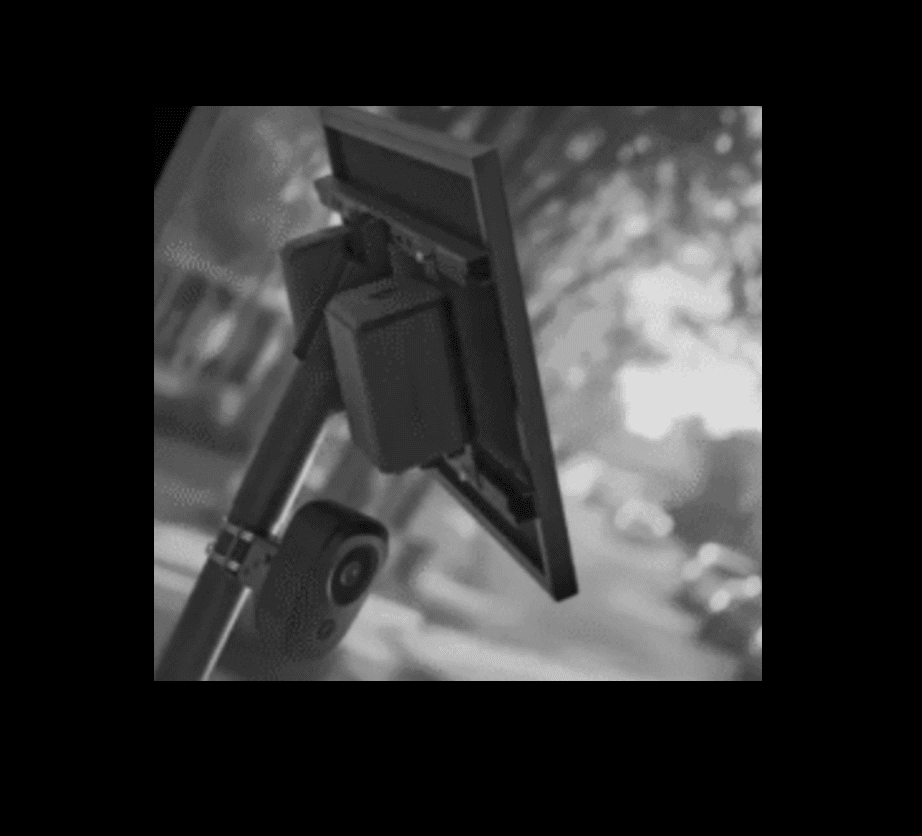
Just the Facts, Rhode Island – Chief Sidney Wordell, RI Police Chiefs Association
Just the Facts, Rhode Island
Every Rhode Island police chief has the same fundamental responsibility: keep the community safe and help victims get the justice they deserve. To do that effectively, police need tools that help them solve crimes, locate dangerous offenders and find endangered people as quickly as possible.
One of those tools is Automated License Plate Reader technology, commonly known as ALPRs.
Despite some of the rhetoric surrounding ALPRs, this is hardly new or experimental technology. License plate recognition technology was first developed in Great Britain in the 1970s and was initially used as a public safety and security tool. Nearly 50 years later, the same basic technology is all around us. It is used for parking systems, toll collection, car washes, access control, security and, yes, policing.
Yet the public debate in Rhode Island has increasingly portrayed ALPRs as something new, mysterious and invasive. In some cases, elected officials are being asked to make policy decisions based on inaccurate information.
Every community has the right to decide whether this technology is appropriate for its police department. But those decisions should be based on facts.
So, let’s start there. With the facts.
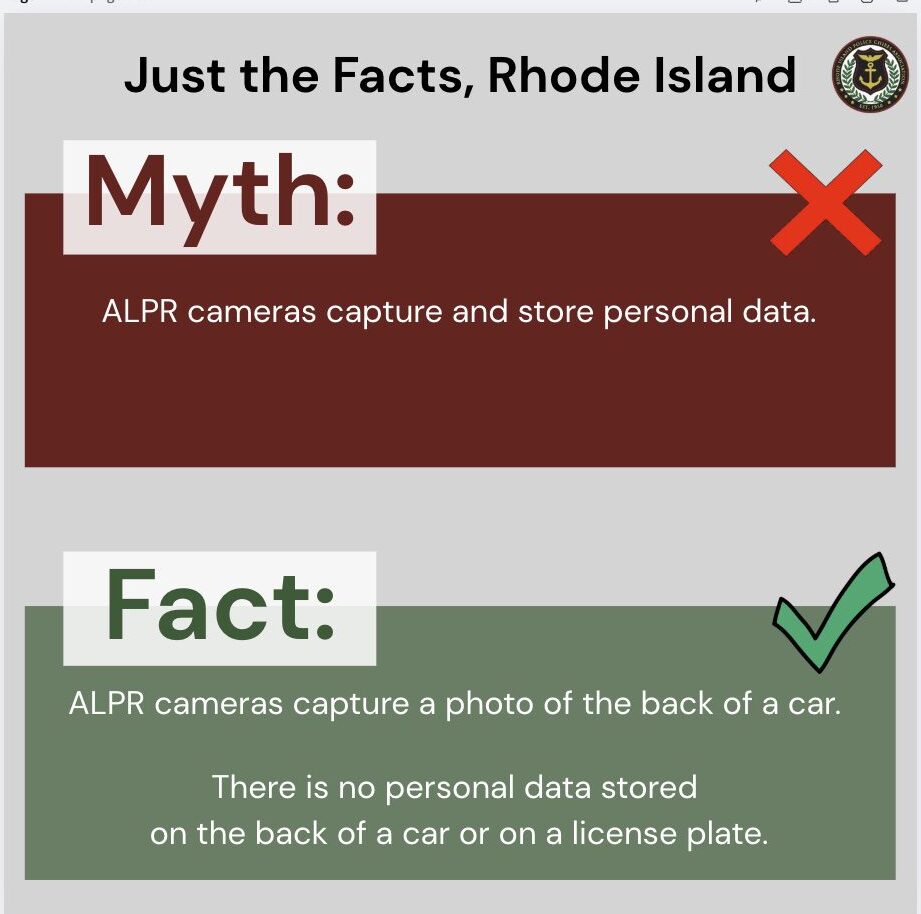
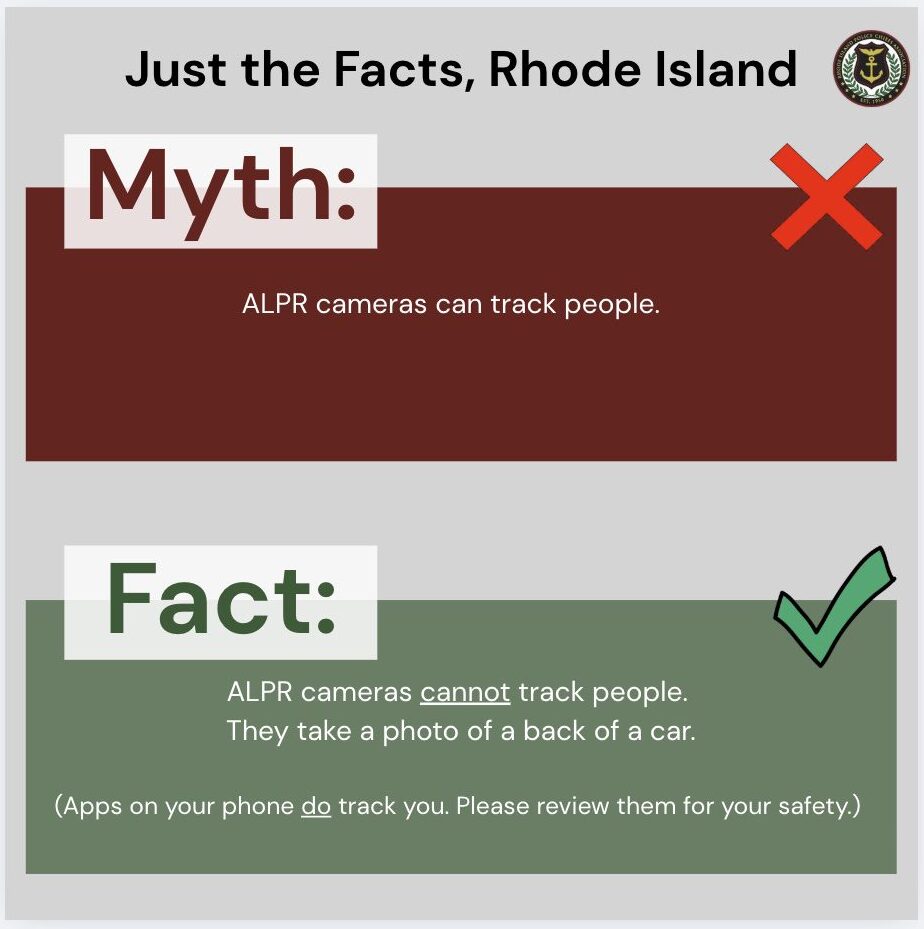
An ALPR is not a surveillance camera that watches people go about their daily lives. It has a specific purpose: it photographs vehicles traveling on public roadways and reads their license plates. It does not use facial recognition. It does not know the driver’s name, home address or phone number. It does not access the personal information stored on your phone.
It takes a photograph of a vehicle and its license plate — information visible to anyone standing on that same public roadway.
Why does that matter to police?
Because a photograph can provide an important lead when time matters most.
When a crime occurs or someone is missing, investigators can search for a vehicle connected to that incident and determine whether an ALPR captured it at a particular location and time. Instead of asking officers across Rhode Island to simply be on the lookout for a vehicle, investigators may have information that helps them determine where it was last seen and where to focus their search.
That can mean the difference between quickly locating a missing person and watching a case go cold.
Rhode Islanders recently saw just how important that kind of information can be.
When a gunman opened fire on Brown University students, police departments across Rhode Island immediately responded to a chilling mutual-aid request for a mass-casualty incident. In an instant, our sense of security was shattered.
During the painful days that followed, investigators reviewed video from buildings and doorbell cameras and appealed to the public for information. A critical break came when investigators were able to use Providence’s ALPR system to pursue a lead involving a vehicle with Florida license plates. Images captured by the system helped investigators piece together the vehicle’s movements and advance the investigation.
Technology did not solve that case by itself. Police work did. But technology gave investigators information they needed to do that work faster.
That is exactly what ALPRs are supposed to do.
Of course, Rhode Islanders should expect police departments to use technology responsibly. We expect the same.
Departments using ALPR technology have policies governing access and appropriate use. Officers must have a legitimate law enforcement purpose for searches, and system activity is monitored and audited. Those safeguards matter, and police departments are transparent about them.
Critics frequently point to examples of police agencies elsewhere misusing technology as an argument for taking ALPRs away from Rhode Island agencies. Our citizens, our agencies and our guidelines are different. We establish rules, enforce them and hold people accountable when they violate them.
Rhode Island’s police departments should be judged by how Rhode Island’s police officers use this technology.
Privacy is a legitimate concern, and we welcome that discussion. In fact, this debate should encourage all of us to think more carefully about our privacy.
Most of us carry a device every day that records vastly more information about us than an ALPR ever could. Phones, apps, social media platforms and location services routinely collect information about where we go, what we search for and what we do. Rhode Islanders concerned about digital privacy should take a few minutes to look at the location and privacy settings on their phones. They may be surprised by how much information they are sharing — and with whom.
An ALPR doesn’t know who you are. It doesn’t know why you’re driving down a particular street. It doesn’t know where you’re going next.
It records a vehicle and license plate at a particular place and time. And when that vehicle is connected to a missing child, a stolen car, a violent crime or another legitimate police investigation, that information can be enormously valuable.
The Rhode Island Police Chiefs Association will continue working to educate the public about ALPR technology, how it works, how it is used and the safeguards surrounding it.
Ask questions. Demand accountability. Debate the appropriate policies.
But let’s have that debate based on what the technology actually does.
Just the facts, Rhode Island.
Chief Sidney Wordell (ret.)
Executive Director, Rhode Island Police Chiefs Association