
Subscribe!

Mike Rowe Works: Julian Barcelos, Rhode Island’s Scholarship Recipient signed the S.W.E.A.T. Pledge
Choose the trade, not just the trend: North Providence graduate earns $13,500 Mike Rowe scholarship – signs the S.W.E.A.T. Pledge
Julian Barcelos is headed to IYRS in Newport to train in Marine Systems — a path he began exploring while still in high school.
Julian Barcelos has always been “better in water than on land,” according to his mother, Manuela Barcelos. When he was young and learning to swim, Julian’s swim lesson began by him taking off his “swimmies” and just swimming. Years later, he became a member of the North Providence High School swim team. Today, the June 2026 graduate works as a lifeguard at the North Providence Pool and Fitness Center.
Now the water is carrying him into a career.
Barcelos will enter the Marine Systems program at the nonprofit IYRS School of Technology & Trades in Newport this fall. He will do so with substantial help: a $13,500 Work Ethic Scholarship from the mikeroweWORKS Foundation.
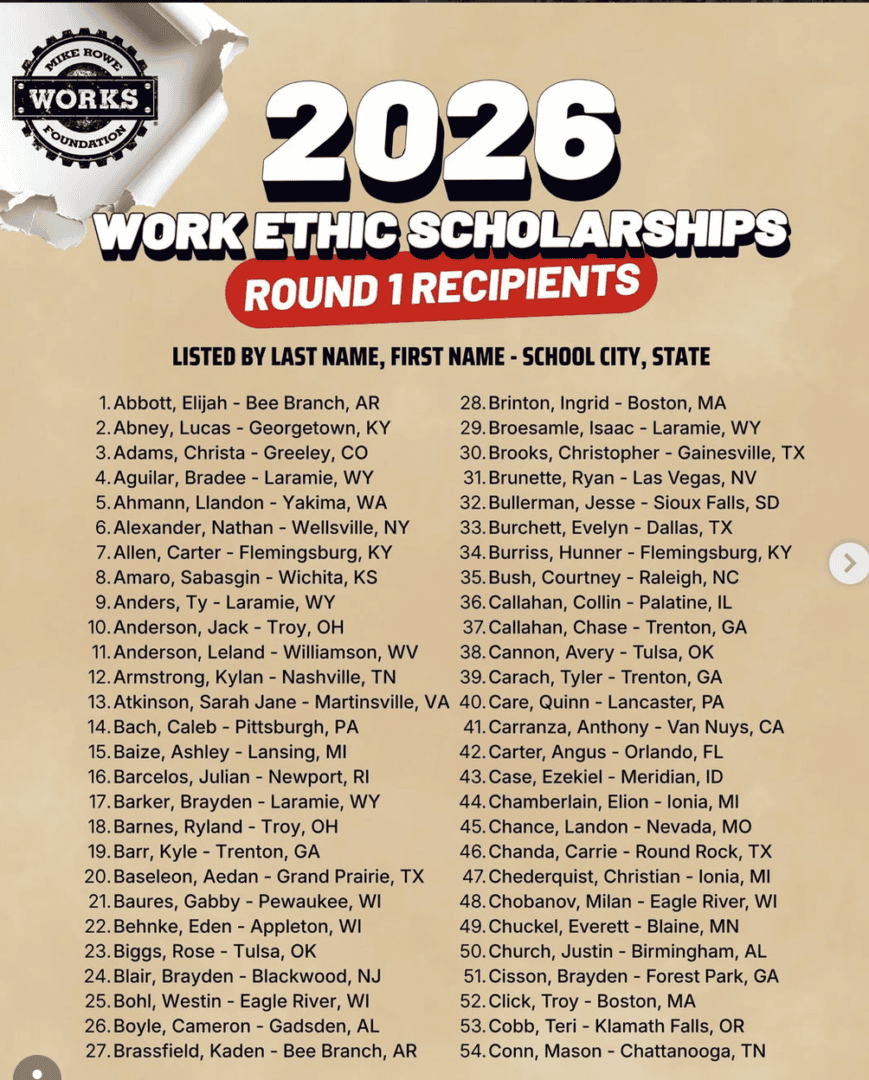
His name appears on the foundation’s first-round recipient list: “Barcelos, Julian — Newport, RI.” The list identifies students by the city and state of their school, not their hometown. Barcelos was the only first-round recipient in Rhode Island.
A scholarship application that required work
The scholarship application was itself something of a test of work ethic. Manuela Barcelos described a demanding process that required written responses, references, school and financial documents, and a precisely timed introductory video — no shorter than 25 seconds and no longer than 30.
Julian first heard about the scholarship at an IYRS open house, where a staff member encouraged him to apply after he interviewed with the school and was accepted.
.
In one of his application essays, he explained why he chose IYRS and the marine trades:
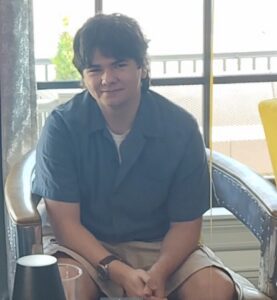
“I don’t understand why kids my age aren’t exploring more opportunities in the trades. Instead, like the website says, they’re going to four-year programs in which they’ll come out with a mound of debt for jobs that may not even be there. College was an option for me because of my good grades. But I opt to learn a useful trade, not rack up debt in a four-year program. And I opt to take my mechanically inclined skills to a new level. I’m going into a field that’s well-insulated from AI taking over my job. I’m excited about this next chapter in my life.”
His decision was not a sudden rejection of a traditional college or a last-minute search for an alternative. At North Providence High School, Barcelos completed the school’s state-approved Marine Technology career and technical education pathway. The program introduces students to boatbuilding, marine engines, systems and electrical work. So, the choice of IYRS was a natural extension.
A few years ago he became active in advocating for the reconstruction of the community pool which had literally “exploded” in an underground pipe incident back in 2023 and the powers that be were thinking that might not reopen. He demonstrated how much the community pool mattered to people in the town by testifying before the Town Council and asking officials to prioritize reopening it. The renovated pool reopened in April 2025 after being closed for nearly 22 months. Today, he works there as a lifeguard.
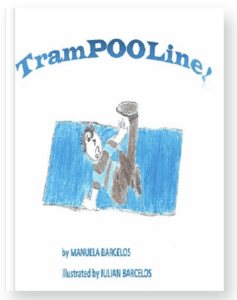
Illustrator and Co-Author:
While marine interests and computers and systems are his forte, Julian and his mom wrote a book together about ten years ago after his family experienced a period of loss as several people died within a short time. Proceeds go to a charity that helps children deal with loss.
TramPOOLine is still available on line – here is the link – LuLu
What Julian will learn at IYRS
IYRS was founded in 1993 as the International Yacht Restoration School. It has since grown into a nonprofit postsecondary school offering four accredited programs on its three-acre working waterfront campus: Boatbuilding & Restoration, Composites Technology, Digital Modeling & Fabrication, and Marine Systems.
The Marine Systems program is an intensive program meeting Monday through Thursday from 7:30 a.m. to 4 p.m. Students spend five months training on campus and complete a one-month industry externship.
Rather than preparing students for one narrow mechanical task, the program takes what IYRS calls a “whole-vessel” approach. Students learn to install, maintain and diagnose diesel and outboard engines; AC and DC electrical systems; marine electronics; fuel, plumbing and tank systems; hydraulics and steering; pumps; and basic fiberglass repair.
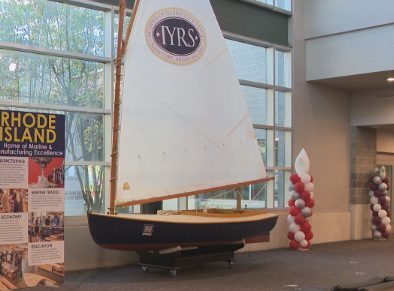
The IYRS boat at TF Green Airport
They also build a working simulation panel incorporating the systems found on a 20- to 60-foot recreational vessel. Students may earn as many as seven industry credentials through the American Boat and Yacht Council, the National Marine Electronics Association and Yamaha.
Barcelos will live at The Sea Whale in Middletown, where IYRS offers student housing. The location is about a 14-minute bicycle ride from the Newport campus — a practical consideration when classes begin at 7:30 in the morning and continue through the afternoon. All part of the immersive experience.
IYRS graduates work in marinas, dealerships, repair yards and manufacturing facilities, as well as aboard commercial, research and privately owned vessels.
Barcelos has considered eventually relocating to Florida, with its enormous recreational boating industry, but he also sees opportunities close to home. Among the Rhode Island employers that interest him are Hinckley Yacht Services and Safe Harbor New England Boatworks, both in Portsmouth, and also Quonset. Both companies are also identified by IYRS among employers of its graduates.
The scholarship makes a material difference. Fall 2026 tuition for Marine Systems is $24,200. Required shop, membership and certification-exam fees bring the school’s listed direct cost to $28,015, before books, tools, a laptop, transportation and housing. Julian’s $13,500 award is equal to more than half the tuition and nearly half the direct program cost.
Choose the trade — not merely the trend
The renewed enthusiasm for skilled trades is healthy, particularly after decades in which many high school students received the message that a four-year degree was the only respectable path to success.
But “learn a trade” should not become the next piece of automatic career advice. A trade-school certificate is no more a guarantee of employment than yesterday’s coding boot camp.
For years, young people were told to “learn to code.” The federal Bureau of Labor Statistics now projects employment specifically for computer programmers to decline 6% between 2024 and 2034. Yet the same agency projects employment for the broader category of software developers to grow 16%. The distinction matters: a narrow, heavily promoted pathway can weaken while technology evolves in rapid-fire order, and while the larger field continues to evolve.
Solar and wind careers provide another useful caution about reading headlines. Wind-turbine technicians and solar-panel installers currently lead the federal list of fastest-growing occupations, with projected growth rates of 50% and 42%, respectively. But those percentages begin with comparatively small workforces. BLS projects about 2,300 wind-technician openings and 4,100 solar-installer openings per year nationwide. And politics is as much likely to influence the industries’ future as technology will. Those may be excellent careers in the right region, but they are not automatic answers for every student in every state.
Students considering any career program should ask basic questions:
Are employers hiring where I intend to live? Does the training lead to credentials employers recognize? Does it include real work experience? Are the skills broad enough to transfer if the market changes? What will I actually owe after grants and scholarships?
Julian’s choice appears to pass those tests. He explored the field in high school, visited the school, researched the work, chose a program teaching several interconnected systems, and identified employers both in Rhode Island and elsewhere. The curriculum includes industry certifications and an externship. The scholarship reduces his financial risk considerably.
The marine-service field has many directions to go in for Julian – commercial, recreational, even military.
Artificial intelligence may help a technician interpret a schematic or narrow down a fault. It cannot board the vessel, trace the circuit, test the fuel system or repair a hydraulic line.
The lesson in Julian’s story is larger than “college bad, trades good.” It is to choose the trade, not merely the trend — and choose training that provides more than one way to earn a living.
About Mike Rowe and the scholarship program
Mike Rowe is an Emmy Award-winning television host, producer, narrator, podcaster and bestselling author best known as the creator and host of the Discovery Channel’s Dirty Jobs, where he worked alongside Americans in more than 350 occupations. Before Dirty Jobs, he sang with the Baltimore Opera for seven seasons and worked as a host on QVC.
Rowe founded the mikeroweWORKS Foundation in 2008 to promote skilled trades and work ethic. The foundation reports that it has awarded more than $16 million in scholarships to more than 2,600 recipients pursuing at least 21 skilled trades.
In the first of four planned 2026 scholarship rounds, the foundation awarded 322 scholarships totaling $3 million. Individual awards ranged from $500 to $34,000, with an average of $9,100. Recipients are pursuing 23 trades at schools in 45 states. The foundation’s stated goal is to award as much as $10 million during 2026, although Rowe has emphasized that applicants must meet its standards.
Watch Mike Rowe on the scholarships available for AI proof jobs:
https://vimeo.com/1186256591/20cc99279b?fl=pl&fe=sh
Applicants must be U.S. citizens and high school seniors or graduates who plan to enroll in an approved program of two years or less at an accredited school. The application includes four short answers tied to the foundation’s S.W.E.A.T. Pledge — “Skill & Work Ethic Aren’t Taboo” — a video, two references, a transcript and a tuition statement.
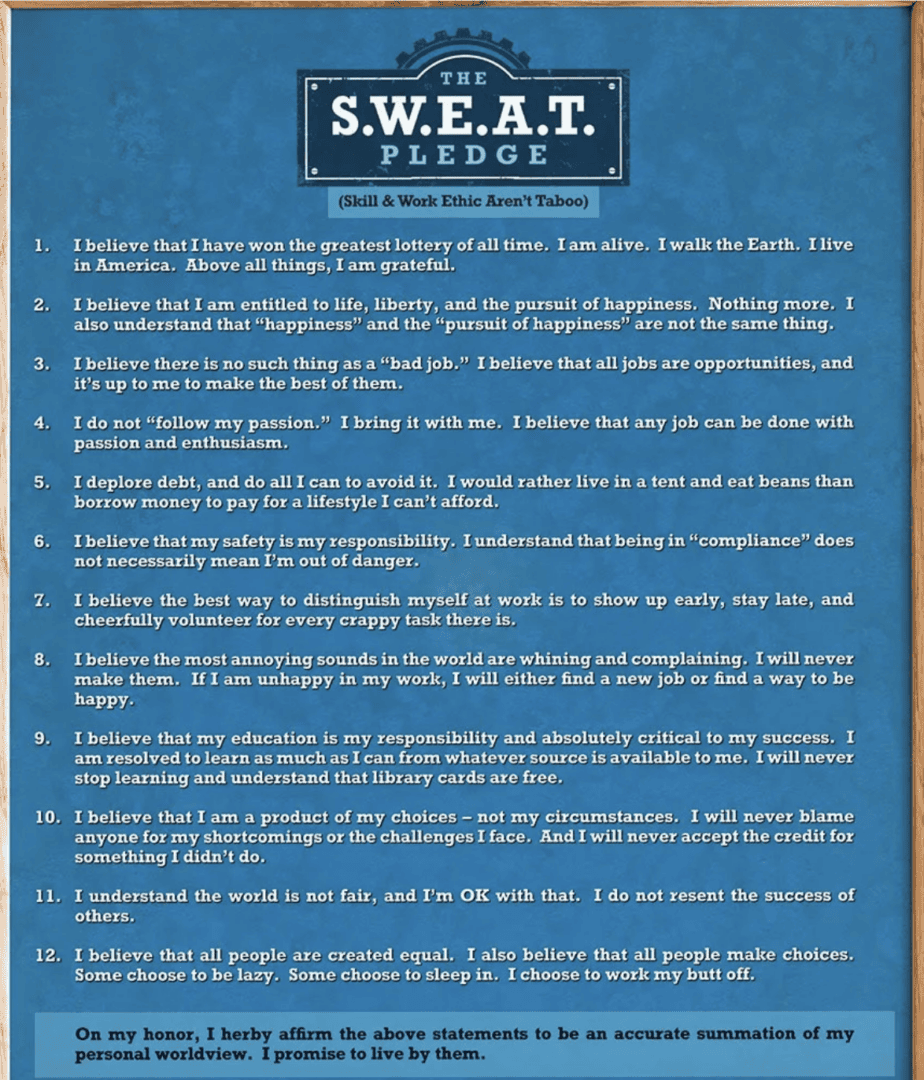
Applications remain open nationwide for the next round of funding through October 31. Those applying by August 30 are scheduled to receive decisions in October; applications submitted by October 31 are scheduled for December decisions.
Learn more or apply for a mikeroweWORKS Work Ethic Scholarship.
Julian is a new Rhode Island hero! He leads the way as a shining example for all young Rhode Islanders. And he is fortunate to have such a dedicated mom like Manuela.