
Subscribe!
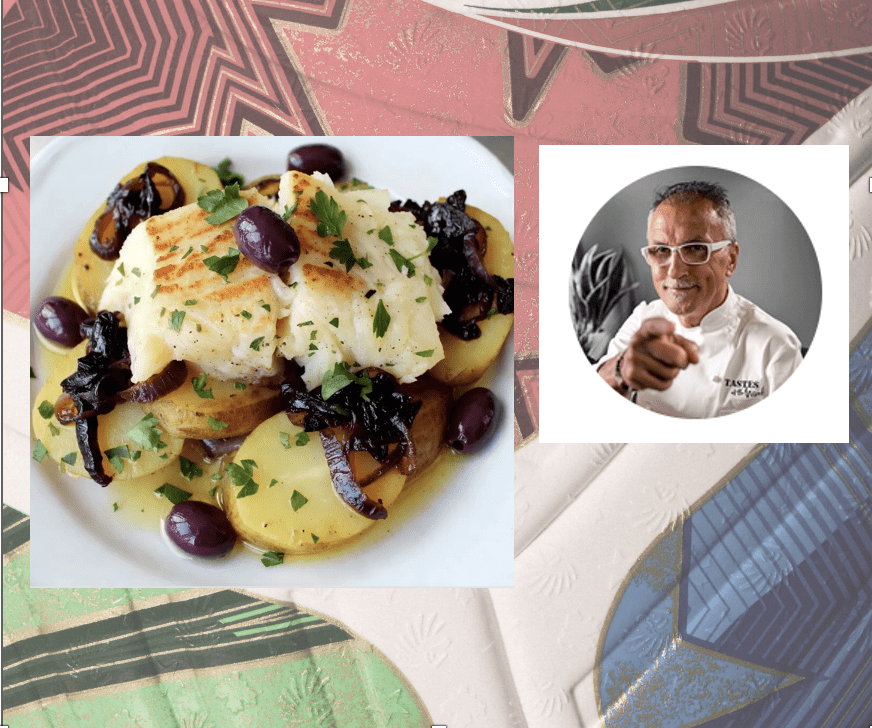
The World Kicking at the Table – Master Chef Walter Potenza
by Master Chef Walter Potenza, contributing writer
Food, fuel, and the beautiful game: what 48 nations eat when the world Is watching
Friends:
I am a big soccer (football) fanatic, and over the years, have been to 5 different World Cup Tournaments and 4 Olympics, but this piece is about the food that surrounds the athletes and the logistics behind the immense setup required. So, here we are, the event is real.
The 2026 FIFA World Cup, the largest in the history of the tournament, kicks off on June 11 in Mexico City — where Estadio Azteca will once again tremble with collective human longing — and runs through July 19, when MetLife Stadium in New Jersey hosts the final. Forty-eight nations. One hundred and four matches. Sixteen cities are spread across three countries: the United States, Canada, and Mexico. A continent as a stage. And feeding all of it — the athletes, the support staff, the millions of traveling fans — is a culinary undertaking of extraordinary ambition and complexity.
I have spent more than fifty years in professional kitchens. I have cooked for royalty, for heads of state, for the grieving and the jubilant. I broke down a whole animal at three in the morning and plated desserts with tweezers at eleven at night. But nothing quite prepares the culinary imagination for what happens when 48 national football teams descend on North America with their appetites, their nutritionists, their cultural identities, and their deep personal relationships with food.
This is not merely a sporting event. It is, from a gastronomic standpoint, one of the most staggering mobilizations of culinary culture the modern world has ever seen.
Let us eat our way through it, in five parts.
Part One: A World Arrives Hungry
The expanded 48-team format — a first in World Cup history — means that the geographic, cultural, and culinary range of participating nations is genuinely breathtaking. Sixteen teams from Europe. Ten from Africa. Nine from Asia. Six from South America. Four from the host continent’s CONCACAF confederation, plus Panama, Curaçao, and Haiti. New Zealand is in Oceania. Each of these nations arrives with its own food culture, dietary traditions, religious food practices, and deeply held convictions about what constitutes proper eating.From the austere precision of Japanese sports nutrition to the unapologetically soulful cooking of Senegal; from the olive-oil-drenched Mediterranean table of Spain and Portugal to the grilled-meat intensity of Argentina; from Germany’s carbohydrate pragmatism to Morocco’s spiced lamb and couscous — the 2026 World Cup is, in culinary terms, a feast of contradictions, a collision of traditions, and a remarkable study in how food expresses identity even at the highest level of athletic performance.
The Host Nations Set the Table
The three host nations — Mexico, the United States, and Canada — bring distinct culinary cultures to the table, and their food scenes will shape the eating experience for millions of arriving fans and players alike. Mexico, opening the tournament on June 11, grounds the event in one of the world’s most complex and celebrated food traditions. Mexican cuisine — a UNESCO Intangible Cultural Heritage since 2010 — is built on ancient foundations: corn, chiles, beans, squash, and the transformative power of the comal. The Mexican national team and its traveling faithful will move through a tournament already saturated with the familiar: mole, pozole, tamales, tlayudas, and birria. For the Tri, eating at this World Cup is, to a meaningful extent, eating at home.
The United States brings its characteristically pluralistic approach. The eleven American host cities span a continent of food cultures — from Boston’s seafood heritage to Miami’s Cuban and Caribbean fusion: from the barbecue temples of Kansas City and Dallas to the farm-to-table sophistication of the San Francisco Bay Area. For the USMNT, playing in cities familiar since childhood, the emotional comfort of home cooking — whatever that means in a nation where the food map is gloriously difficult to draw — is a genuine competitive advantage.
Canada’s two host cities, Toronto and Vancouver, are perhaps the most culturally diverse in North America. Toronto in particular — a city where you can eat authentic Tamil food on the same block as Jamaican patties and Georgian khachapuri — will feel, to arriving delegations from dozens of nations, like a familiar neighborhood writ large. Canada’s own national team, historically underestimated and now finally arrived on the world stage, will eat well.
“At the highest level of sport, food is never just food. It is identity, comfort, memory, and fuel — all on the same plate.”
Part Two: The Kitchens of Champions — Regional Food Profiles
South America: The Fire and the Tenderness
Argentina — Defending Champions
Argentina arrives in North America as the reigning world champion, with Lionel Messi playing what is widely expected to be his final World Cup. La Seleccion’s food culture is a study in the Argentine parrilla tradition: beef, fire, time. Asado — the ritual of slow-grilling cuts over hardwood embers — is not merely a cooking technique in Argentina; it is a liturgy. Players and staff will carry with them a devotion to protein-dense, iron-rich red meat that aligns surprisingly well with the high demands of tournament football.
Argentine performance nutritionists have long worked to integrate the parrilla tradition with the carbohydrate-loading demands of elite sport. The result is a diet that honors cultural identity while meeting the caloric requirements of 90-plus minutes of high-intensity play: choripán before training, milanesa (breaded cutlet) after, dulce de leche for glycogen replenishment, and mate — the caffeinated herbal infusion shared communally from a gourd — flowing continuously through the squad’s waking hours. Mate is not merely a beverage for Argentine footballers. It is social infrastructure.
Brazil — Five-Time ChampionsThe Seleção brings to North America a food culture as layered and vital as the football they have played across a century. Brazilian team nutrition combines West African influences (feijoada — the black bean and pork stew — is deeply embedded in the national food psyche), indigenous Amazonian ingredients, and the Portuguese colonial table. Rice and beans, present in virtually every Brazilian meal, provide a near-ideal carbohydrate-and-plant-protein combination for athletic performance. Brazilian nutritionists at the elite level have increasingly looked to the Amazon’s extraordinary biodiversity: açaí (a calorie-dense superfruit), cupuaçu (high in antioxidants), guaraná (natural caffeine), and fresh tropical fruits that provide micronutrient density unmatched in the northern hemisphere. Expect the Brazilian squad’s kitchen to resemble a market on the Manaus waterfront more than a hospital cafeteria.
Uruguay — The Original Champions
Uruguay — winner of the inaugural 1930 World Cup on home soil — eats with the quiet confidence of a nation that has always known it belongs. The Uruguayan table is dominated by beef (the country has more cattle than people), wine from Tannat grapes, and chivito — the nation’s beloved steak sandwich that is, nutritionally speaking, a performance food of remarkable density. The Uruguayan squad will arrive accustomed to high-quality grass-fed beef, and their nutritionists will build meal plans around that protein foundation.
Europe: Precision and Passion
France — The Perennial Favorites
France arrives ranked third in the world, carrying the culinary weight of a nation that has spent five centuries insisting it invented the art of eating. The French national team — deeply multicultural, reflecting the diaspora of West Africa, North Africa, and the Caribbean — eats with a sophistication that mirrors its football. The federation employs dedicated performance nutritionists who work within the French dietary tradition: high-quality proteins, classical sauce cookery reduced for its anti-inflammatory properties, and the measured use of complex carbohydrates in a periodized program tied to match schedules. What is remarkable about the French squad is the cultural breadth of its food preferences. Players of Malian, Ivorian, Moroccan, Cameroonian, and Caribbean heritage bring North African tagine culture, West African yassa and thiéboudienne traditions, and Antillean accras into the communal table. The French kitchen at a World Cup base camp is, quietly, one of the most interesting meals in the tournament.
Spain — The Tacticians
Spain, the highest-ranked team in the tournament, approaches nutrition with the same tactical intelligence it brings to football. The Spanish dietary tradition — built on olive oil, legumes, fresh seafood, Ibérico pork, and vegetables — is almost inadvertently aligned with contemporary sports science. The Mediterranean diet, as any cardiologist or sports dietitian will confirm, is anti-inflammatory, micronutrient-rich, and high in the monounsaturated fats that support long-term energy metabolism. Spanish players eat well without trying to, because their tradition is already the prescription. La Furia Roja’s performance kitchen will feature gazpacho as a pre-game hydration and micronutrient vehicle; tortilla Española for complex carbohydrates; fresh fish — merluza, lubina, dorada — for lean protein and omega-3 fatty acids; and legume-based stews (fabada asturiana, lentils with chorizo) for the kind of slow-release energy that sustains 90 minutes of pressing football.
Germany, England, Portugal
Germany’s approach is characteristically systematic. The DFB (German Football Federation) operates one of the most professionalized nutrition programs in world football, built around periodization: carbohydrate-loading in the 48 hours before a match, protein-dominant recovery meals within 30 minutes post-game, and micronutrient supplementation protocols developed in partnership with the University of Freiburg’s sports medicine institute. The food itself — bread, potatoes, lean pork, dairy — is not glamorous, but it is effective.
England, historically teased for its relationship with food, has quietly transformed its performance of nutrition. The FA’s team chefs work alongside sports dietitians to produce menus that integrate British culinary identity (quality roasted meats, root vegetables, dairy-based recovery shakes) with contemporary performance science. The days of chips and beans before a World Cup match are a distant memory, though the players likely still dream of them.
Portugal — feeding Cristiano Ronaldo’s legacy squad and a new generation led by Bernardo Silva and Bruno Fernandes — eats from one of Europe’s most underappreciated food cultures. The Portuguese table is built on bacalhau (salt cod, prepared in hundreds of ways), grilled sardines, caldeirada (fish stew), and pastéis de nata (custard tarts that legitimately serve as a high-glycemic post-training recovery food). Portugal’s coastal, seafood-dominated cuisine provides exceptional lean protein and anti-inflammatory omega-3 content.
Africa: The Spice of the Tournament
Morocco, Senegal, Algeria, Egypt, and the CAF NationsThe ten African nations at this World Cup represent a culinary continent of stunning range. Morocco — Africa’s highest-ranked team and semi-finalists at Qatar 2022 — brings the flavors of the Maghreb: tagine slow-cooked with preserved lemon and olives; couscous laden with root vegetables and lamb; harira (a spiced tomato and lentil soup of extraordinary depth). Moroccan cuisine is, almost by accident, a performance dietitian’s dream: anti-inflammatory spices (cumin, turmeric, saffron, cinnamon), complex carbohydrates from semolina and legumes, and lean proteins from the tagine tradition.
Senegal, which will face France in Group I in what promises to be one of the tournament’s most charged matches, carries the tradition of thiéboudienne — a tomato-based rice-and-fish dish considered the national dish. Yassa poulet (marinated chicken with caramelized onions and lime) provides lean protein with remarkable flavor complexity. The Senegalese squad, many of whose players compete in the Premier League and Ligue 1, will negotiate between their European club food programs and the deeply comforting cuisine of Dakar.
Egypt, Algeria, Ghana, Côte d’Ivoire, Tunisia, South Africa, Cape Verde, Congo DR — each brings a food culture shaped by geography, colonial history, and indigenous tradition. The collective African presence at this World Cup means that the tournament’s food landscape includes North African mezze traditions, West African stew and grain cultures, and Southern African braai (grilling) traditions that rhyme with the South American asado.
Asia: Discipline at the Table
Japan, South Korea, Iran, and the AFC Nations
Japan’s approach to sports nutrition is the most sophisticated at this World Cup. The Japan Football Association has invested heavily in performance nutrition science, building meal programs around the core principles of washoku — traditional Japanese cuisine — while integrating contemporary sports medicine protocols. Rice is the foundation: a complex carbohydrate with a moderate glycemic index that provides sustained energy. Fish — salmon, tuna, mackerel — deliver omega-3 fatty acids and lean protein. Fermented foods (miso, natto, pickles) support gut microbiome health, a field of nutrition science increasingly recognized as central to athletic performance and immune function.
South Korea, Iran, Australia, Jordan, Uzbekistan, Qatar, Saudi Arabia, and Iraq represent the full spectrum of Asian food culture — from the fermented, spiced intensity of Korean kimchi-centered cuisine to the saffron-fragrant Persian table of Iran, to the halal-compliant preparations required by the Muslim-majority nations. For Saudi Arabia, Qatar, Iran, Iraq, and Jordan, halal food provision is not a preference but a requirement, and World Cup host cities will need to ensure that certified halal food sources are available at training bases and official team hotels.
Part Three: The Architecture of Performance — Nutrition Science at the World Cup
What a Footballer Actually Needs
Professional football is one of the most metabolically demanding sports in human competition. An elite midfielder covers 10 to 13 kilometers per match, with repeated high-intensity sprints, changes of direction, aerial duels, and the cognitive load of constant tactical decision-making. The caloric expenditure for a 90-minute World Cup match is estimated at between 1,500 and 2,000 calories — on top of a basal metabolic rate already elevated by elite athletic conditioning.
The nutritional architecture for World Cup performance is built on four pillars: carbohydrate periodization, protein timing, hydration management, and micronutrient optimization.
These are not abstract principles. They translate directly into what goes on the plate, when, and in what quantity. Carbohydrates — rice, pasta, bread, potatoes, oats — are the fuel engine of football. In the 48 hours before a match, players will consume 8 to 10 grams of carbohydrate per kilogram of body weight per day to maximize glycogen stores in muscle and liver. A 75-kilogram midfielder requires 600 to 750 grams of carbohydrate on the day before a match. That is a significant volume of food, and it must be palatable, culturally comfortable, and digestively reliable.
Protein — consumed in doses of 20 to 40 grams per serving, every three to four hours — drives muscle repair and adaptation. The sources vary by culture and tradition: Japanese players may favor grilled fish and edamame; Argentines prefer beef and legumes; Moroccans will reach for lamb and chickpeas; Senegalese players may prefer chicken yassa. The science is consistent; the plate is diverse.
The Match Day Meal
The pre-match meal is one of the most scrutinized rituals in professional sport. Consumed three to four hours before kickoff, it serves a single non-negotiable purpose: to fill glycogen stores without creating digestive distress. The rule applied by performance nutritionists across every participating nation is the same: familiar food, familiar preparation, familiar portion. World Cup knockout-round nerves are not the moment to experiment with the local cuisine.
Pasta with a light tomato-based sauce. Grilled chicken breast. Steamed rice. White bread. Low-fiber vegetables. These are the common denominators of the pre-match meal at World Cup level — not because they are exciting, but because they are reliable, well-tolerated, and metabolically optimal.
The cultural inflections come in the details: Spanish players may take their pasta with a drizzle of olive oil and fresh herbs; Japanese players may prefer rice with a simple miso soup; Brazilian players might insist on their rice and beans even on match day. The post-match recovery window — the 30 to 60 minutes immediately following the final whistle — is arguably even more critical. During this window, the muscles are maximally primed to absorb glucose and amino acids. A carbohydrate-protein ratio of roughly 3:1 is the standard protocol: a recovery shake, a banana with yogurt, or a small rice-and-protein meal. For players with European club contracts who have been conditioned on specific recovery nutrition programs, replicating those protocols in a tournament environment is a logistical challenge that the best team nutritionists take very seriously.
“The pre-match meal is not about flavor. It is about trusting the body’s trust that what it receives will not betray it in the seventy-fourth minute.”
Hydration: The Invisible Crisis
In the summer heat of Miami, Dallas, Houston, and Los Angeles — where temperatures during the tournament will regularly reach 90 to 95 degrees Fahrenheit with significant humidity — hydration is not a side consideration. It is a matter of performance survival. A loss of just 2% of body weight impairs cognitive function, reduces sprint speed, and compromises decision-making. In a sport decided by margins of centimeters and fractions of seconds, two percent dehydration is a game-changing deficit.
Elite teams will arrive in World Cup host cities with individualized hydration protocols based on sweat-rate testing conducted during club seasons. Some players lose one liter of fluid per hour; others lose two. Some lose sodium at rates that require aggressive electrolyte replacement; others primarily lose potassium. Performance nutritionists will match these individual profiles to the environmental conditions of each match city, adjusting pre-game fluid loading, in-game electrolyte provision, and post-game rehydration targets accordingly.
The Cultural Coefficient
Here is where sports science meets gastronomy, and where the conversation becomes genuinely interesting to anyone who has spent a life in professional kitchens: the best performance nutrition protocols in the world are useless if a player won’t eat the food. The research on this is unambiguous. Psychological comfort, cultural familiarity, and sensory pleasure are not trivial factors in sports nutrition. They are measurable performance variables. A player who is eating food that reminds him of home — his mother’s beans, the rice he ate before matches as a teenager, the coffee prepared the way his country prepares it — is a player who is recovering more completely, sleeping better, and managing the psychological stress of tournament football more effectively than a player who is consuming an optimal but culturally alien meal plan.
This is why every major national team traveling to the World Cup now employs team chefs alongside team nutritionists. Science defines the parameters; the chef fills them with meaning. The Japanese FA sends Japanese chefs to source tofu, dashi, and specific rice varieties. Brazil’s Confederação Brasileira de Futebol arranges shipments of açaí, the guaraná brand the players prefer, and the ingredients for feijoada on recovery days. The Spanish federation’s chef will pack Spanish extra-virgin olive oil in the team’s luggage rather than use whatever oil the Dallas hotel kitchen provides.
These are not eccentricities. They are competitive intelligence.
Part Four: The Great Logistics — Feeding Thousands Across Three Countries
The Scale of the Operation
Consider, for a moment, the sheer scale of what must be fed at this World Cup. Forty-eight national squads of 26 players each, plus coaches, medical staff, analysts, and support personnel — a delegation of 60 to 80 people per country — spread across 16 host cities in three countries over 39 days. Add the stadium workers, the FIFA and organizing committee staff, the media corps of several thousand journalists, and the roughly five million fans expected to travel to North America for the tournament. The food operation for the 2026 FIFA World Cup is, by any reasonable measure, one of the largest organized feeding undertakings in peacetime history. FIFA’s hospitality and catering specifications for host stadiums run to hundreds of pages.
Each venue must provide certified halal options, vegetarian and vegan alternatives, allergy-managed preparation lines, and the logistical infrastructure to serve 60,000 to 80,000 people in the roughly three-hour window surrounding each match. Waste management, food safety compliance across three different national regulatory regimes, cold chain integrity during July heat, and the cultural range required to serve fans from 48 nations — these are problems that no previous World Cup has faced at quite this scale.
Team Base Camps: The Hidden Kitchens
The true food story of any World Cup is not in the stadiums. It is in the team base camps — the hotels and training facilities where squads spend the bulk of their tournament residency, and where the most consequential eating decisions are made. Each national federation negotiates its base camp arrangements directly with FIFA and the host organizing committee. The wealthier federations — Germany, France, England, Spain, Brazil, Argentina — arrive with elaborate requirements: dedicated kitchen access, imported ingredients, specific cooking equipment, and their own culinary staff. Smaller federations may rely more heavily on the hotel’s existing kitchen infrastructure, supplemented by their team nutritionist’s protocols and targeted ingredient imports.
The supply chain challenges are considerable. A team based in Dallas for the group stage may need Japanese short-grain rice, Brazilian açaí pulp, Argentine yerba mate, Moroccan preserved lemons, Korean gochujang, and Iranian saffron — all sourced locally or imported within tight logistical windows. The host cities’ proximity to international airports is not merely a fan-travel convenience; it is a food-supply-chain asset. Miami, Los Angeles, New York, and Toronto, with their deep immigrant communities and world-class international food supply networks, are particularly well-positioned to serve the dietary needs of arriving delegations. A team based in Miami can find authentic Haitian, Venezuelan, and Brazilian ingredients within a thirty-minute drive of any hotel. Los Angeles — with its extraordinary Korean, Japanese, Mexican, Persian, and Ethiopian food communities — is perhaps the best-provisioned city for international team dietary needs on the continent.
Halal, Kosher, and Religious Dietary Compliance
For the nine Asian nations from Muslim-majority countries — Saudi Arabia, Qatar, Iran, Jordan, Uzbekistan, and Iraq — halal food compliance is not optional. Halal certification governs not merely the source of meat, but the entire chain of preparation: equipment, surfaces, preparation staff, and storage must be free of cross-contamination with non-halal products. Hosting federations and base camp hotels must provide certified halal kitchens or dedicated halal preparation areas. Several African nations — Algeria, Morocco, Tunisia, Senegal, Egypt — also require halal provision. The combined demand for certified halal food across 12 to 14 national teams represents one of the most significant dietary logistics challenges of this World Cup. The good news is that North America’s large and established Muslim communities have built robust halal supply chains in major cities. The challenge is ensuring that supply chain integrity is maintained to the satisfaction of FIFA and each federation.
Sustainability and Waste — The Uncomfortable Conversation
Any honest accounting of the food logistics of a World Cup must include its environmental cost. The carbon footprint of food imported from Argentina, Japan, Morocco, and Senegal to North America; the food waste generated by stadium catering operations serving tens of thousands of people per match; the single-use packaging demanded by fast food concessions — these are genuine sustainability challenges that FIFA and its host organizing committee have pledged to address. The 2026 World Cup has committed to a sustainability framework that includes, wherever possible, locally sourced concession food, waste-reduction targets, and partnerships with food-recovery organizations to redirect surplus food to community programs. The execution of these commitments — against the commercial and logistical pressures of the largest World Cup in history — will be closely watched by food industry observers and environmental advocates alike.
Part Five: The Fan Table — What the Supporters Will Eat
The food story of the 2026 World Cup is not only about the athletes. It is about five million traveling fans, and the extraordinary culinary encounter that happens when supporters from 48 nations descend on American, Canadian, and Mexican cities with their food traditions, their street-food instincts, and their conviction that the best meal of any match day is eaten in a stadium concourse or a food truck queue an hour before kickoff. Mexican fans will arrive in Dallas, Los Angeles, and Kansas City already at home, in cities with deep and vibrant Mexican-American food cultures where a late-night taco after a match is as natural as breathing. Brazilian fans will discover that Miami’s Little Haiti and Little Havana neighborhoods offer the closest approximation of tropical flavors available north of the equator. Japanese supporters in Seattle will find one of North America’s finest Japanese restaurant scenes.
What will the stadiums themselves offer? This is where the commercial reality of World Cup catering meets the aspirations of culinary diversity. FIFA and its official catering partners are under considerable pressure — from fans, from food media, and from the broader cultural conversation about representation — to offer concession food that reflects the event’s global character rather than defaulting to hot dogs and nachos (however excellent those can be). The early indications are that host city operators are taking this seriously: Miami’s Hard Rock Stadium concessions have committed to Caribbean-influenced offerings; Los Angeles’s SoFi Stadium will feature Mexican-American food stations developed in partnership with local chefs; AT&T Stadium in Dallas will offer a Texas barbecue experience that is, it should be said, world-class on its own terms. But the real fan food story of the 2026 World Cup will happen outside the stadiums — in the neighborhoods, the food halls, the taco stands, the food trucks, and the backyard grills of host city residents who will feed the world for 39 days. North America’s culinary culture — at its best, pluralistic, generous, and endlessly inventive — may prove to be the most suitable host in World Cup history.
A Final Course — Thoughts from the Kitchen
I have been writing about food for a long time. I have written about the food of history — the French transformation of the Northern Italian table in the wake of Napoleon. These monastic kitchens kept culinary knowledge alive through centuries of chaos, the johnnycake tradition of Rhode Island that is older than the republic. I have written about the food of the present — the compromised quality of Italian cuisine in the American diaspora, the decline of the real, the triumph of the convenient. And I have written about children’s food, trying to give the next generation a relationship with real ingredients and real cooking before the processed world takes a permanent hold.
The 2026 FIFA World Cup, seen through a culinary lens, is all of these things at once. It is history — the accumulated food wisdom of 48 nations, each with centuries of agricultural knowledge, culinary technique, and food culture embedded in its team of kitchen. It is the present — the sophisticated intersection of sports science and gastronomy, where a plate of rice is also a performance strategy, and a bowl of miso soup is also an anti-inflammatory protocol. And it is the future — the conversation, already underway, about how a global event of this scale navigates sustainability, cultural respect, and the simple, profound human need to eat food that feels like home. When the final whistle blows at MetLife Stadium on July 19, and the world’s newest champions lift the trophy under the New Jersey sky, the food that sustained them — the rice, the beans, the olive oil, the fire-grilled meat, the fermented condiments, the cold mate passed between teammates at dawn — will have played its unremarked but essential role. Athletes don’t win World Cups on talent alone. They win them on sleep, training, and what they eat.
At the table, as on the pitch, everything matters.
___
READ “Ask Chef Walter” every Sunday in RINewsToday

Master Chef Walter Potenza
There is a constant, recognizable thread in the career of Walter Potenza to elevate the level of Italian culinary culture in the United States. Besides his unquestionable culinary talent and winning business perspective, Chef Walter has been a relentless educator with passion and knowledge who defeats stereotypes. His life, career, and values are a model, an example to follow by any chef of Italian gastronomy working outside Italy.
Chef Walter appears regularly on National and International Networks such as Food Network, ABC, CBS, NBC, RAI, FOX, and Publications such as NY. Times, Washington Post, Wall Street Journal, Food & Wine, Saveur, Gourmet, and several Italian media outlets.