
Subscribe!
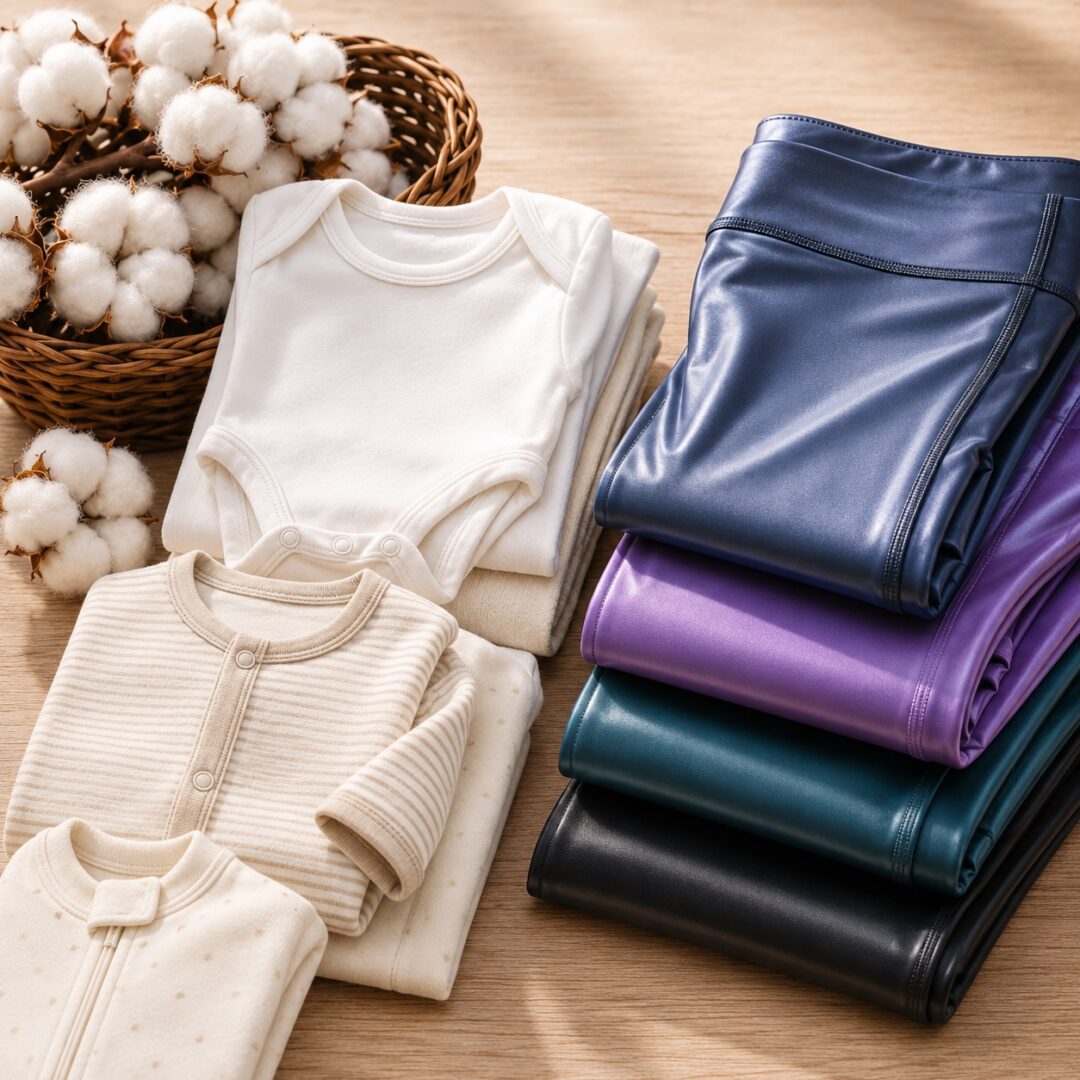
The Fabric of Our Lives became plastic — now Cotton wants a comeback
by Nancy Thomas, publisher
For a generation, Americans knew the words by heart:
“The touch, the feel of cotton — the fabric of our lives.”
It was advertising, yes. But it also felt true.
Cotton was in the underwear drawer, the pajama drawer, the bedsheets, the baby clothes, the school clothes, the summer T-shirts, the sweatshirts, the towels, the crib sheets, the work shirts, and the bras and underwear many mothers and grandmothers wore because they wanted comfort — not molding.
There was a time when women chose cotton not because it was trendy, but because it was comfortable. Some mothers wore cotton bras and would not wear the molded synthetic styles that promised a “better” shape. They chose breathability over sculpting, softness over structure, and comfort over the idea that clothing should reshape the body. Even if they had to iron them (that personal memory says something larger about the way clothing has changed.)
Somewhere along the way, the fabric of our lives became the plastic stretch of our lives.
Ordinary clothing became shiny, slick, seamless, stretchy, sculpting and “performance-driven.” Sweatpants ordered online may arrive feeling more like plastic, petroleum to the touch, than cloth. Contemporary children’s clothing may feel oddly synthetic. Underwear and sleepwear may be marketed as soft, smooth, seamless or buttery, while the actual fiber content may be difficult to find or understand.
And now, suddenly, cotton is back in the national conversation.
The U.S. Department of Agriculture has launched the Great American Cotton Plan, a broad effort to support American cotton farmers, rebuild domestic textile manufacturing, expand trade opportunities and increase demand for products made with American-grown cotton.
The full USDA plan is available here: https://www.usda.gov/sites/default/files/documents/cotton-plan.pdf
The plan includes a consumer-facing campaign with a strikingly simple phrase:
“Plant Not Plastic.”
USDA says cotton farmers are facing a fifth consecutive year of negative returns, squeezed by rising costs, trade distortions and increasing competition from synthetic materials. The agency forecasts that cotton producers could lose approximately $2.6 billion across 9 million planted acres in the upcoming crop year.
The economic story is stark. USDA says the number of U.S. cotton gins has fallen from 2,254 in 1980 to 446 today. Domestic textile production has sharply contracted over the last two decades. Cotton gins are the first major stop after the cotton field — where the fluffy white fiber is separated from the seed before it can become cloth. The U.S. also lost its status as the world’s top cotton exporter to Brazil in 2023.
That is the farm and manufacturing side – but it gets personal – very personal
But USDA and HHS are also tying cotton to a much more personal message: natural fibers, fewer synthetic plastic-based materials, and growing concern about microplastics in everyday life.
USDA describes cotton as natural, breathable, biodegradable and grown by American farmers. It contrasts that with synthetic materials such as polyester, nylon and acrylic — petroleum-based fibers that are chemically manufactured and can shed microplastics into soil, water and indoor environments.
Nearly 70 percent of the world’s textile fibers are now synthetic, most of them plastic-based materials such as polyester.
That means the cotton story is no longer just about farms, trade, mills or exports. It is about what Americans wear against their skin, what children sleep in, what we wash in our homes, and what our clothes release into the environment.
What USDA is proposing
USDA’s Great American Cotton Plan is built around four major goals: promote domestic cotton consumption, increase domestic demand and production, improve cotton trade, and protect cotton growers from economic and agricultural risk.
On the consumer side, USDA and HHS are promoting “Plant Not Plastic,” a campaign encouraging Americans to choose products made with American cotton rather than synthetic, plastic-based alternatives. USDA says it will also continue supporting the BioPreferred Program so biobased products, including cotton products, can use the BioPreferred label.
On the manufacturing side, USDA says it will prioritize cotton processors and manufacturers within Rural Development’s Business and Industry Guaranteed Loan Program to help increase domestic production capacity. The Economic Adjustment Assistance for Textile Mills program payment rate will increase from 3 cents to 5 cents per pound of cotton processed. USDA also says it will continue working with Congress to support the bipartisan Buying American Cotton Act.
On trade, USDA says it is implementing the administration’s Three-Point Trade Plan to expand export opportunities for U.S. cotton. The agency also points to trade-related commitments from Indonesia and Bangladesh that it says could support future U.S. cotton purchases and textile production using American cotton.
On risk protection, USDA says its Agricultural Research Service scientists are advancing research to combat the cotton jassid pest, cotton producers now have expanded access to Supplemental Coverage Option insurance tools, and the Working Families Tax Cuts Act increased the seed cotton reference price for ARC and PLC programs by 14 percent beginning in fall 2026.
In short, this is not only a public-awareness campaign. It is farm policy, trade policy, manufacturing policy and consumer messaging wrapped into one cotton comeback plan.
Secretary Brooke Rollins framed the announcement as both an economic and cultural reset.
“Since 1607, cotton has helped build and sustain rural America,” she said, noting that American farmers grow some of the highest-quality cotton in the world but have been hurt by rising costs, unfair foreign competition and cheap synthetic products. Rollins said the U.S. lost its status as the world’s top cotton exporter to Brazil in 2023, adding, “This change starts today.”
She also tied the cotton plan directly to the Make America Healthy Again (MAHA) agenda, saying more Americans are concerned about microplastics and synthetic materials in everyday products. Cotton, she said, is natural, breathable, biodegradable and grown by American farmers — not manufactured from petroleum-based plastics.
We know this when it comes to babies
The most revealing consumer instinct may be the one parents and grandparents already have with babies.
For babies, we know what we want: soft cotton onesies, cotton sleepers, cotton crib sheets, cotton blankets, breathable fabric, washable fabric, fabric we can understand.
If a baby outfit arrives in the mail with a slick, shiny, plastic-like feel, many parents hesitate. Some reject it immediately. It may be cute. It may be inexpensive. It may look fine in the picture. But if the fabric feels wrong, (and maybe made in China), the instinct is simple: not for our baby.
And yet, as adults, we often stop asking the same question about ourselves.
We put synthetic blends against the closest parts of our bodies all day long — underwear, bras, leggings, workout clothes, shapewear, pajamas. We accept “buttery soft,” “moisture-wicking,” “seamless,” “stretch,” “performance” and “smoothing” as if those words tell us what the garment is actually made of.
They do not.
The question is not whether every synthetic garment is bad. The question is why we have such clear standards for babies and such low curiosity about the fabrics we put next to our own skin.
If cotton is the instinctive choice for babies, why did it become the exception for everyone else?
Before yoga pants were a lifestyle, they were chemistry
The shift from cotton to stretch did not happen by accident.
Modern yoga pants, leggings, shapewear and much of today’s athleisure were made possible by a chemical invention: spandex.
In the late 1950s, DuPont chemist Joseph Shivers developed the elastic synthetic fiber that became widely known through the brand name Lycra. That invention changed clothing. Fabric could now stretch, recover, hug the body, hold shape and move in ways cotton could not.
At first, stretch fibers had obvious uses: girdles, bras, swimwear, dancewear, gymnastics uniforms, cycling shorts, running tights and athletic gear. Then came the aerobics boom of the 1970s and 1980s, when leotards, leggings and Lycra became part of fitness culture. Yoga later softened the image and gave stretch pants a new identity: wellness, comfort, flexibility, calm and everyday ease.
The real cultural shift came when technical clothing left the gym.
What began as performance wear became daily wear. Yoga pants moved from the studio to the grocery store, the airport, the school pickup line, the home office and the couch. A fabric technology created for stretch and performance became the uniform of ordinary life.
That is where the cotton question begins.
There is nothing wrong with stretch when stretch is needed. But did Americans knowingly choose a wardrobe built from petroleum-based synthetic fibers — or did chemistry, marketing and convenience quietly move us away from natural fabrics?
From cotton comfort to synthetic control
The modern clothing drawer has changed.
Fabric is no longer just fabric. Increasingly, it is engineered to stretch, compress, smooth, lift, wick, sculpt and “hold us in.”
Yoga pants, leggings, shapewear, compression tops, “tummy control” waistbands, sculpting jeans, seamless underwear, sports bras, athleisure and even children’s clothes now rely heavily on synthetic blends — polyester, nylon, spandex, elastane and other petroleum-based fibers.
To be fair, stretch clothing became popular for a reason.
Yoga pants, leggings and soft stretch fabrics are comfortable. They move with the body, forgive weight changes, and can make everyday dressing easier. For many women, they are not about vanity at all. They are about comfort, mobility, travel, aging bodies, postpartum bodies, medical issues and getting through the day.
Stretch is not the enemy.
Squeeze is.
There is a difference between stretch clothing and shapewear. Yoga pants, leggings and soft stretch fabrics became popular because they are comfortable, flexible and forgiving. They move with the body. Shapewear is different. Its purpose is to compress the body — to flatten, squeeze, smooth and reshape it into a public-facing silhouette. One is about comfort. The other is about control.
An aside that makes the point was told to us by a wedding attendee – she had worn shapewear under a dress, thinking it would make everything look smoother and more “put together.” Instead, she spent the evening trying to breathe, sit, eat, swallow and act normal in getting up and down from her chair – dancing seemed out of the question. Finally, she went into the ladies’ room, peeled the whole contraption off, stuffed it into her purse and came back to the reception as a free woman – telling her rather wide-eyed tablemates what had happened.
The difference between comfort and compression.
Yoga pants and soft stretch clothing can be comfortable. They move with us. They help us get through the day. Shapewear is something else. It is clothing designed not to fit the body, but to fight it.
And somehow, that has become normal.
First we told women to love their bodies. Then we sold them clothing to compress them.
There is a contradiction in modern body culture that is hard to miss.
The country started down a road of body acceptance. Women were told to embrace their bodies, reject impossible standards and stop apologizing for not being paper thin. That instinct had value. Girls and women should not be taught to hate themselves.
But then came the contradiction.
We tell girls and women to accept their bodies. Then we sell them garments designed to compress, smooth, lift, flatten, cinch and hold those bodies in place – and in some cases, to plump certain parts up.
We celebrate “body positivity,” but red carpets still reward the body that has been sculpted, squeezed, taped, sewn in and styled into submission. Celebrities now joke openly about not being able to breathe, sit down or eat in the clothes they wear for public appearances.
At the same time, the “makeup-less” trend has arrived as a kind of cultural correction — a return to a healthier, fresher, more natural face. That instinct is good. But it also raises the question: why stop at the face?
What about the fabric against the skin? The clothing worn all day? The underwear, bras, pajamas, children’s clothes, leggings, shapewear and sweatpants? (A treatise on acrylic nails, formaldehyde, and phthalates is for another time, another day.)
Now, weight-loss drugs have added yet another layer. For people with diabetes, obesity or serious weight-related health risks, GLP-1 medications can be important medical tools. But culturally, they have also landed in a world already obsessed with being thinner, tighter, smoother and smaller. Surprised we haven’t concocted a drug to make us taller (give it time).
We moved toward natural foods. We started reading labels. We talked about dyes, additives, microplastics, seed oils, ultra-processed food and what we put into our bodies.
Then we went right back to squiggling our bodies into plastic-based stretch fabrics.
Is the answer really to tell girls their bodies are acceptable at every size — and then surround them with products designed to shrink, smooth, compress and correct them?
The USDA’s “Plant Not Plastic” message may be about cotton, farmers and domestic textile manufacturing. But it also opens a more personal question: what kind of clothing lets the body be a body?
Cotton wrinkles. Cotton breathes. Cotton shrinks. Cotton softens. Cotton wears out.
It does not pretend to be plastic.
It lets the body be a body.
Why don’t they wrinkle?
The “natural” conversation has reached the kitchen table – and it’s back to the ironing board or steamer for some. But mostly in America, we buy pants that never wrinkle, collars that never collapse, shirts that never need ironing, and leggings that promise to hold everything in place.
But why don’t they wrinkle?
Often, the answer is simple: because the fabric has been engineered not to.
Polyester, nylon, spandex and other synthetic fibers do not behave like cotton or linen. They resist creasing, snap back into shape, dry quickly and hold a smooth surface. That is why so much modern clothing looks crisp, sleek and easy-care.
Cotton can also be made wrinkle-resistant, but that often requires a finishing process. For decades, textile manufacturers have used durable-press or wrinkle-resistant finishes to make cotton shirts, pants, uniforms and sheets easier to care for. Some traditional finishes have used formaldehyde-based resins, while newer technologies are trying to create wrinkle resistance without formaldehyde.
That does not mean every wrinkle-free garment is dangerous.
It does mean “wrinkle-free” is not just a convenience claim. It is a clue. Something has been done to the fabric to make it behave that way.
Maybe wrinkles deserve a better reputation.
A cotton shirt that wrinkles is not failing. It is being cotton. Linen that creases is not defective. It is being linen. Natural fabric moves, breathes, softens, changes and ages.
The question is whether Americans really want clothing that never wrinkles — or whether we simply stopped asking what it takes to make fabric behave as if it is no longer natural.
Sweating in plastic
Activewear raises a different question from ordinary clothing because it is often worn tight, worn for long periods, and worn while the body is hot and sweating.
That matters.
Skin is the body’s largest organ. Sweat, heat and friction can change the relationship between fabric and skin. A loose cotton T-shirt worn for an hour is not the same as tight synthetic leggings worn through a workout, then through errands, then through the rest of the day.
That does not mean yoga pants are unsafe. It does not mean every synthetic garment is dangerous. It does mean the question is reasonable: what are these fabrics made of, what finishes make them “perform,” and what happens when we sweat in them?
Recent research has looked at textile chemicals as a possible source of skin-contact exposure. One recent study found PFAS and organophosphate esters in children’s garments and household textiles, with higher concentrations in functional garments such as sportswear and water-repellent clothing. The same study found that sweat-mediated migration could increase dermal exposure compared with dry contact, although individual compounds remained below established safety thresholds.
That is the nuance.
This is not a panic story. It is a label story.
If we read food labels because we care about what goes into the body, maybe we should read clothing labels because we care about what sits on the body — especially when the clothing is tight, synthetic, chemically finished and soaked with sweat.
From food labels to clothing labels
The cotton conversation also fits a broader shift already happening in American homes.
Families are reading food labels. They are questioning dyes, additives, plastic containers, bottled water, food packaging and what happens when plastic meets heat. Glass containers are back. Stainless steel water bottles are everywhere. Many parents think twice about plastic touching baby food, formula or hot meals.
But the same conversation does not stop in the kitchen.
Harvard Health has advised consumers trying to reduce microplastic exposure to use glass or stainless steel containers, avoid microwaving food in plastic, and reduce plastic exposure where practical. It has also pointed to the closet, recommending natural fibers where possible and minimizing synthetic fabrics.
Harvard T.H. Chan School of Public Health researchers have also pointed to synthetic clothing as a source of microfibers released during washing and drying.
That connection matters.
Americans already understand the concern when heat and plastic meet food or water. We know not to leave plastic water bottles baking in a hot car. We know not to microwave leftovers in questionable plastic containers. We are told to use glass. We are told to read labels.
Yet much of modern clothing has moved in the opposite direction — toward synthetic stretch, wrinkle-free finishes, stain resistance, water resistance, “performance” fabrics and plastic-based fibers worn close to the skin.
If we are willing to ask what plastic does when it touches hot food, we can also ask what synthetic clothing does when it touches warm skin, sweat and friction.
The cotton shirt does not solve every environmental or health concern. But cotton gives consumers one familiar, breathable, understandable alternative in a marketplace crowded with synthetic stretch, chemical finishes and performance claims.
Maybe the next label-reading movement is not only in the grocery aisle.
Maybe it is in the closet.
The cotton panel is the quiet confession of the synthetic garment
The old advice to wear cotton underwear may sound like something from another generation, but it has not disappeared from medical guidance.
Women have long been told to avoid tight underwear and choose breathable fabrics, especially if they are prone to irritation, yeast infections, vulvar discomfort or moisture-related problems. Medical guidance still commonly recommends underwear with a cotton panel and avoiding tight-fitting pants and underwear when vulvovaginal irritation is an issue.
That does not mean synthetic underwear causes infections. It does not mean every woman must wear cotton every day.
But it does mean the body has not changed just because the marketplace has.
Heat, moisture, friction and low airflow can matter. Tight synthetic clothing worn close to the skin, especially after exercise, can contribute to irritation for some people. Doctors often recommend changing out of sweaty workout clothes quickly and choosing more breathable fabrics close to sensitive skin.
Even the design of some athletic wear seems to acknowledge this. Many bicycle shorts, compression shorts and leggings include a gusset or softer inner panel in the crotch area, and some use cotton or cotton-blend lining where the fabric sits closest to sensitive skin.
Women’s underwear offers the clearest example. Many tight nylon, lace, microfiber or spandex underpants are still lined with cotton at the crotch. The garment may be synthetic on the outside for stretch, shape or appearance, but the part closest to the most sensitive skin is often cotton.
That is not an accident.
It reflects what women were told for generations: breathable fabric matters. Cotton absorbs moisture, allows airflow and is less likely to feel slick, hot or trapped against the skin. Synthetic fabric may stretch and smooth, but even the synthetic underwear market often builds in a cotton lining where it matters most.
The cotton panel may be the quiet confession of the synthetic garment.
The body did not change just because the clothing industry did.
What are we actually wearing?
For many consumers, the issue shows up not in a farm report but in an online shopping package.
A pair of simple sweatpants ordered from a major online retailer arrives with a slick, plastic-like sheen. Pajamas that looked cozy online feel shiny and synthetic in person. Children’s clothes stretch in a way that feels less like cloth and more like a manufactured film. The label may say polyester, nylon, acrylic, rayon, spandex, elastane or “other fibers” — a far cry from the cotton basics many families remember.
That does not mean imported clothing is automatically unsafe. It does not mean every synthetic garment is bad. It does not mean every brand using polyester or spandex is doing something wrong.
But it does mean consumers are right to ask more questions.
Federal labeling rules require most textile and wool products sold in the United States to disclose fiber content, country of origin and the identity of the manufacturer or responsible business. Consumers are not wrong to expect to know what fabric they are buying and where it came from.
There is another reason cotton sourcing has become complicated. Under the Uyghur Forced Labor Prevention Act, U.S. importers face restrictions on goods linked to China’s Xinjiang region, with cotton identified as a high-priority enforcement sector. That means “100% cotton,” “made in China,” and “Chinese cotton” are not the same claim. A garment may be sewn in one country from cotton grown or processed somewhere else. For consumers, it is another reason to look for clearer fiber labels, country-of-origin information and credible sourcing claims.
For children, there is another layer. Children’s sleepwear is subject to federal flammability rules. Depending on the garment, compliance may involve flame-resistance standards or tight-fitting designs. That does not make every synthetic item unsafe, but it does remind us that children’s clothing is not just fashion. It is a regulated consumer product category.
Some parents and grandparents have already made their own decisions. When buying for children, they look for cotton, clear fiber labels, transparent country-of-origin information and, when possible, U.S.-made products.
The cotton conversation is not only about farms.
It is about what we put on children’s skin.
The activewear supply chain
The modern activewear market also shows how far clothing manufacturing has moved from the American cotton field.
One major premium activewear company, in its most recent SEC filing, reported that its finished products were manufactured largely in Asia:
| Country | Share of products manufactured |
| Vietnam | 40% |
| Cambodia | 18% |
| Sri Lanka | 11% |
| Indonesia | 11% |
| Bangladesh | 7% |
| Other regions | 13% |
The same filing reported that the company worked with about 51 manufacturing vendors, with five vendors producing 47% of its products and the largest single manufacturer producing 15%.
The company also reported that its fabric sourcing came largely from Asia, including Taiwan, mainland China, South Korea and Vietnam.
That is not unusual in today’s apparel economy. It is the norm. Many major clothing companies design, market and sell in North America while sourcing fabrics and manufacturing garments through complex global supply chains.
But it does raise a fair consumer question: if a product is marketed as premium, wellness-oriented, performance-driven or healthy, how much do buyers really know about the fiber, finishes, country of origin, factory base and chemical inputs behind it?
PFAS, performance fabric and the next consumer question
The cotton story also arrives as regulators and consumers are asking more questions about chemicals in apparel.
The issue is no longer limited to plastic shopping bags or water bottles. It has moved into clothing: performance fabrics, water-repellent finishes, stain resistance, microfiber shedding and the synthetic blends worn close to the skin.
It is important not to overstate the case. It would be wrong to say that yoga pants are unsafe, that all activewear contains harmful chemicals, or that any particular brand has done something wrong without proof.
The safer and more accurate point is this: regulators have begun asking questions about PFAS in athletic apparel, while some companies say they have phased out or do not use intentionally added PFAS. For consumers, the larger question remains: what makes “performance fabric” perform?
“Moisture-wicking,” “stain-resistant,” “water-repellent,” “performance fabric” and “buttery soft” may sound comforting. But they are marketing words, not fiber labels.
The cotton conversation is not about naming and shaming one brand. It is about a larger marketplace shift: many Americans no longer know what their clothes are made of, what chemicals make them “perform,” or why even basic garments increasingly feel like plastic.
Is “Plant Not Plastic” health advice, farm policy — or both?
As with any industry-backed or government-promoted campaign, “Plant Not Plastic” deserves both attention and scrutiny.
The USDA’s cotton plan is not only a consumer-awareness message. It is also an economic strategy to help struggling cotton farmers, rebuild domestic textile capacity and increase demand for American-grown cotton.
That does not make the concern about synthetic fibers imaginary. Petroleum-based fabrics do shed microfibers, and many consumers are asking more questions about what they wear and wash.
But cotton is not impact-free either. Conventional cotton can require significant water, land, fertilizer and pest management. Cotton farming has its own environmental questions, depending on where and how it is grown.
So the better question may not be cotton versus synthetics as a slogan.
The better question may be whether shoppers deserve clearer labels, better materials and more honest information about the tradeoffs.
Is “Plant Not Plastic” a public-health warning? A farm rescue plan? A manufacturing strategy? A marketing campaign?
It may be all of those things.
And that is why it matters.
Cotton comeback: how to shop the label, not the hype
So how does a consumer go more cotton?
Start with the label.
Not the ad. Not the influencer video. Not the words “soft,” “breathable,” “performance,” “buttery,” “stretch,” “premium,” “natural feel” or “cotton-like.”
The label.
The first question is simple: what is the actual fiber content?
Look for words like “100% cotton,” “organic cotton,” “cotton jersey,” “cotton fleece,” “cotton rib,” “cotton flannel,” “cotton muslin,” or “cotton terry.” If the garment says “cotton blend,” look for the percentage. A shirt that is 60% cotton and 40% polyester is not the same as a 100% cotton shirt. A “cotton feel” garment may contain little or no cotton at all.
For clothing worn close to the skin — underwear, bras, pajamas, children’s clothes, T-shirts, leggings, loungewear and sleepwear — the label matters even more.
Yes, all-cotton clothing can still be found. There are American-made cotton basics, organic cotton sweatpants, cotton underwear, cotton pajamas, cotton T-shirts and cotton baby clothes. Some are sold by smaller specialty companies. Some are available through large online marketplaces, including Amazon. But shoppers have to search carefully.
Try search terms such as:
“100% cotton sweatpants”
“100% cotton pajamas”
“100% cotton underwear”
“100% cotton baby clothes”
“100% cotton made in USA”
“organic cotton made in USA”
“cotton fleece sweatpants”
“cotton flannel pajamas”
Then check the fine print.
If the product listing does not clearly show fiber percentages, country of origin and care instructions, keep looking. If the description says “cotton blend,” find out what else is in it. If the garment is wrinkle-free, moisture-wicking, stain-resistant, water-repellent, smoothing, sculpting or stretch, ask what makes it perform that way.
A 98% cotton shirt with 2% spandex is not pure cotton — but it may be a practical step away from plastic-heavy clothing.
There are also middle-ground choices. A familiar brand may sell a “stretch-cotton poplin” shirt that is 98% cotton and 2% spandex. Poplin describes the weave — the smooth, crisp structure often used in button-down shirts — while spandex adds a small amount of stretch. That is not the same as 100% cotton, but it is very different from a garment that is mostly polyester or nylon. For consumers trying to move away from plastic-based clothing, mostly cotton with a small amount of stretch may be a practical first step. The surprise is that even these cotton-rich basics can be expensive, which shows another challenge in the cotton comeback: better fabric often costs more, while cheap synthetic blends have become the default.
This is not about throwing away every synthetic garment. Stretch clothing has uses. Performance clothing has uses. Athletic wear has uses.
But ordinary life may not require a wardrobe made mostly from plastic-based fibers.
A cotton comeback can start small: cotton underwear, cotton socks, cotton pajamas, cotton sheets, cotton T-shirts, cotton baby clothes, cotton sweatpants.
The goal does not have to be perfection.
The goal can be awareness.
Read the clothing label the way you now read the food label. Ask what the garment is made of. Ask where it was made. Ask whether it is cotton, cotton-rich, synthetic, chemically finished or simply marketed to feel natural.
Because “soft” is not a fiber.
“Performance” is not a fiber.
“Buttery” is not a fiber.
Cotton is.
100% cotton vs. 100% organic cotton
There is a difference.
“100% cotton” tells you the garment is made entirely from cotton fiber.
“100% organic cotton” tells you the garment is made from cotton fiber that was grown under organic agriculture standards, generally without genetically modified seed and with organic soil and pest-management practices.
One describes the fiber.
The other describes how the fiber was grown.
For many consumers, 100% cotton is already a step away from petroleum-based synthetic blends. Organic cotton goes one step further by raising questions about how the cotton was farmed.
But shoppers still need to read carefully. “Cotton blend” is not the same as 100% cotton. “Organic cotton blend” may still include synthetic fibers. And “made with organic cotton” may not mean the entire garment is organic cotton.
Look for clear fiber percentages and, when possible, recognized certifications such as GOTS.
The practical rule:
100% cotton = all cotton fiber.
100% organic cotton = all cotton fiber, organically grown.
GOTS organic = a stronger textile certification that looks beyond the farm and into processing standards.
Put another way: 100% cotton tells you what it is. Organic cotton tells you how it was grown.
The companies we know — and the ones we do not
Most people have heard of the companies selling synthetic stretch, shapewear, athleisure, fast fashion and online basics.
They know the names that promise to sculpt, smooth, lift, wick, stretch and perform.
Far fewer people have heard of smaller companies trying to make plain cotton basics with clearer sourcing.
That tells us where the market went.
The companies selling synthetic stretch became household names. The companies selling cotton basics did not.
We know the brands that promise to sculpt us. We rarely know the brands that simply let us breathe.
The opposite of modern premium athleisure may not be another pair of better leggings. It may be a cotton sweatshirt that does not promise to sculpt anything at all.
Know Your Fiber
The USDA’s cotton plan may give consumers a reason to look again at the clothing label.
Not the marketing language. The label.
Before buying clothing online, especially for children, underwear, sleepwear and items worn close to the skin, consumers may want to ask:
What is the actual fiber content?
Is it cotton, wool, linen, hemp or another natural fiber?
Note: Cotton and linen are cousins in the natural-fiber conversation, but they are not the same. Cotton comes from the fluffy fiber around the cotton plant’s seeds. Linen comes from the stalk of the flax plant. Both are plant-based, both breathe, both wrinkle — and both remind us that natural fabric behaves differently from plastic-based synthetics. Natural fiber does not only mean cotton; linen, wool, silk, hemp and cashmere are natural fibers too. USDA’s plan focuses on cotton, but the bigger consumer question is whether shoppers know when they are buying natural fiber, cotton-rich fabric, synthetic blends or chemical performance finishes.
Is it polyester, nylon, acrylic, spandex, elastane or another synthetic blend?
Does the product listing show the fiber percentages clearly?
Where was it made?
Is the fabric described only with words like “soft,” “stretchy,” “premium,” “performance,” “buttery” or “seamless”?
For children’s sleepwear, does the product meet federal safety labeling and flammability requirements?
Is the item being bought for comfort — or for compression?
Is “wrinkle-free” being used as a convenience claim, and does the label explain what the fabric is?
Is “cotton blend” really mostly cotton, or mostly something else?
Is “organic cotton” certified, and what percentage of the garment is actually organic cotton?
There is nothing wrong with stretch. Comfort is one thing. Compression is another.
There is nothing wrong with performance clothing when performance is what is needed.
But perhaps ordinary life does not always require engineered fabric.
Perhaps pajamas can just be pajamas.
Underwear can just be underwear.
Sweatpants can just be sweatpants.
Children’s clothes can just be soft, breathable clothes.
And a bra can be chosen because it feels good — not because it molds the body into someone else’s idea of better.
Note: In fine menswear, the classic suit is usually wool, not cotton — another reminder that “natural” can mean cotton, wool, linen, silk or cashmere, while “stretch,” “wrinkle-free” and “performance” often deserve a closer look at the label.
The future may be hiding in the past
“The touch, the feel of cotton — the fabric of our lives.”
Maybe that old jingle stayed in people’s memories because cotton was more than a product. It was familiar. It was understandable. It was the fabric of daily life.
The USDA wants to bring cotton back for farmers, manufacturers, exporters and rural economies. That is one story.
But the consumer story may be even more immediate.
What are we wearing?
What are our children wearing?
What are we washing into the water?
What are we breathing from indoor dust?
What fabrics touch our skin all day?
Why do so many clothes no longer wrinkle?
Why do so many garments promise to smooth, squeeze, lift, wick and perform?
And when did so much ordinary clothing begin to feel like plastic?
The future of fabric may not be synthetic, seamless or engineered to hold us in.
It may be something much older: cotton, breathability, comfort — and clothing that lets the body be a body.
Great awareness information. Other natural fibers could have been discussed as well-hemp, etc. and modern manufacturing and processing of fiber based fabrics.